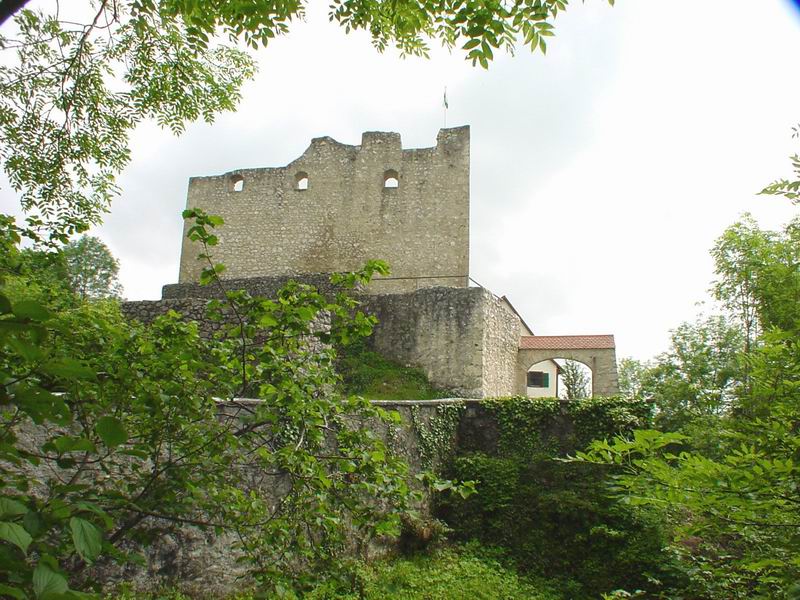
Hohengundelfingen Castle
Hohengundelfingen Castle stands as a significant medieval hilltop fortress near the village of Gundelfingen within the municipality of Münsingen, Germany. Constructed around the early 13th century, the castle was likely founded by Swigger IV von Gundelfingen, a nobleman active between 1160 and 1228. This stronghold served as the ancestral seat of the influential Gundelfingen family, reflecting their regional power and status during the High Medieval period.
The castle's strategic location on a gently sloping spur overlooking the Lautertal valley provided commanding views of the surrounding landscape, including the Große Lauter river and the Alb plateau. Its position was chosen for both defensive advantage and territorial oversight, typical of hill castles built during this era.
Historical background and ownership
The earliest documented mention of Burg Hohengundelfingen dates to 1236, confirming its existence as a noble residence by that time. The castle was a symbol of the Gundelfingen family's prominence until an inheritance division around 1250 weakened their hold on the region. In 1293, ownership transferred to the Habsburg family, marking a significant shift in control.
Throughout the late 13th and 14th centuries, the castle's ownership fluctuated, often used as collateral in pledges and occasionally reclaimed by Gundelfingen descendants. This instability reflects the turbulent political landscape of the region, characterized by conflicts between noble families and emergent imperial cities.
By 1389, records describe the castle as a Burgstall, indicating it had fallen into ruin. This destruction likely occurred during the regional wars involving Eberhard the Greiner and rebellious cities, though exact details of the siege or battles remain unclear.
In later centuries, the site passed through various hands, including the von Landsee family and Carl Joseph Reichsgraf von Palm in 1774. The Palm family incorporated the castle's name into their own, becoming Palm-Gundelfingen. After 1805, the castle ceased to be an imperial territory, coming under the Kingdom of Württemberg's jurisdiction. The Freiherr von Gumppenberg-Pöttmös acquired it in 1812, continuing its legacy of noble ownership.
The 20th century saw renewed interest when industrialist Hans Römer purchased the ruins in 1939. Römer initiated extensive restoration efforts over seventeen years, aimed at preserving and partially reconstructing the medieval fortress.
Architectural features and remains
Hohengundelfingen Castle is classified as a hill castle, characterized by its elevated position and defensive design. The most prominent surviving element is the bergfried, a tall, sturdy main tower approximately twelve meters high. Constructed from rusticated ashlar blocks (known as Buckelquadern in German), this masonry technique is typical of early 13th-century castle building and gives the tower its distinctive rugged appearance.
The castle's layout included fortified walls, gates, and courtyards, though much of these structures have not survived intact. The bergfried would have functioned as a last refuge and lookout point, providing surveillance over the Lautertal valley and access routes below.
Visitors today can appreciate the panoramic views from the bergfried and remaining ruins, which encompass the Lautertal river valley and the surrounding Alb plateau. The castle's siting on a relatively flat spur rather than a steep hill makes it accessible via a marked path from a nearby parking area, requiring only a short, gentle walk.
Conservation and public access
Thanks to the mid-20th-century restoration led by Hans Römer, the ruins of Hohengundelfingen Castle have been stabilized and partially reconstructed. These efforts have preserved key architectural elements, especially the bergfried, allowing the site to serve as a tangible link to the region's medieval heritage.
The castle is open to the public, offering historical insights and scenic views. Its conservation status is best described as partially restored, with ongoing maintenance ensuring the ruins remain accessible and safe for visitors.
The castle in regional context
Hohengundelfingen Castle holds cultural and historical significance within the Lautertal valley and the broader Swabian Jura region. Its connection to the noble Gundelfingen family and later the Habsburgs highlights its role in the medieval power dynamics of southern Germany.
The castle's proximity to the Große Lauter river and the village of Gundelfingen underscores its function as a territorial stronghold overseeing important local waterways and trade routes. Its ruins today stand as a monument to the complex feudal history and architectural heritage of the area.
Visitor information and experience
The site is accessible year-round, with no significant elevation change on the approach path, making it suitable for most visitors. Interpretive signage provides historical context, enhancing the educational value of the visit. The panoramic views from the bergfried and castle grounds are a highlight for photographers and history enthusiasts alike.
Nearby towns and landmarks offer additional attractions, including Münsingen’s historic center and the scenic landscapes of the Swabian Jura. Visitors are encouraged to explore the surrounding region to gain a fuller appreciation of the castle's historical setting.
Frequently asked questions (FAQ)
- How do I get to Hohengundelfingen Castle?
- Hohengundelfingen Castle is located in Münsingen, Germany, and is accessible by car or public transportation. If you are driving, there is parking available nearby. For public transport, check local train and bus schedules that service Münsingen.
- What is the historical significance of Hohengundelfingen Castle?
- Hohengundelfingen Castle dates back to the 13th century and played a crucial role in the region's medieval defense strategy. Its historical significance lies in its architectural style and its connection to local nobility. The castle has witnessed numerous historical events, making it an important landmark in the area.
- When was Hohengundelfingen Castle built?
- Hohengundelfingen Castle was constructed in the early 1200s, reflecting the architectural styles of the medieval period. Over the centuries, the castle has undergone various renovations and restorations that highlight its storied past. The original structure was designed to serve as a stronghold and residence for local lords.
- Can I visit Hohengundelfingen Castle?
- Yes, Hohengundelfingen Castle is open to visitors, allowing you to explore its rich history and architectural beauty. Guided tours are often available, providing insights into the castle's past and its significance in the region. Be sure to check the castle's official website for specific visiting guidelines.
- Why is Hohengundelfingen Castle a popular tourist attraction?
- Hohengundelfingen Castle attracts visitors for its stunning views of the surrounding landscape and its well-preserved architecture. The castle's historical significance and engaging stories from its past captivate history enthusiasts and casual visitors alike. Additionally, its location in the beautiful Swabian Jura makes it a perfect spot for outdoor activities.
- Is it possible to access Hohengundelfingen Castle with limited mobility?
- While Hohengundelfingen Castle offers some access for visitors with limited mobility, certain areas may be challenging due to uneven terrain and stairs. It is advisable to contact the castle administration in advance to inquire about accessibility options and any assistance that may be available during your visit.
- What are the opening hours for Hohengundelfingen Castle?
- Hohengundelfingen Castle typically opens to visitors from late spring to early autumn, with specific hours varying throughout the season. During peak tourist months, the castle may have extended hours to accommodate visitors. Always check the official website for the most current opening hours before planning your visit.
- Are there any nearby attractions to visit along with Hohengundelfingen Castle?
- Yes, the area surrounding Hohengundelfingen Castle is rich in natural beauty and history. Nearby attractions include the picturesque town of Münsingen and various hiking trails in the Swabian Jura. Visitors can also explore other historical sites and castles in the region, making it an excellent destination for a day trip.
- What are the ticket prices for visiting Hohengundelfingen Castle?
- Ticket prices for Hohengundelfingen Castle are generally affordable, with discounts often available for students, seniors, and families. Children under a certain age may enter for free, making it a great family-friendly destination. For the most accurate pricing and available discounts, please refer to the castle's official website before your visit.
Information
Website
Visit websiteSources & official resources
Verify the information above using these authoritative references.
Loading map...
Visitor reviews
No reviews yet. Been here? Write the first review and help other travelers!
Write the first reviewVisited this castle? Share your experience
Your review helps other travelers and adds first-hand knowledge to our encyclopedia.