Hoensbroek Castle
Hoensbroek Castle, known locally as Kasteel Hoensbroek, is one of the largest and most historically significant castles in the Netherlands. Situated in the Limburg province, this imposing Renaissance watercastle is renowned as "the most lordly stronghold between Rhine and Meuse." Its strategic location along key medieval trading routes between Maastricht, Aachen, Cologne, and Flanders made it a vital fortress in the Duchy of Brabant.
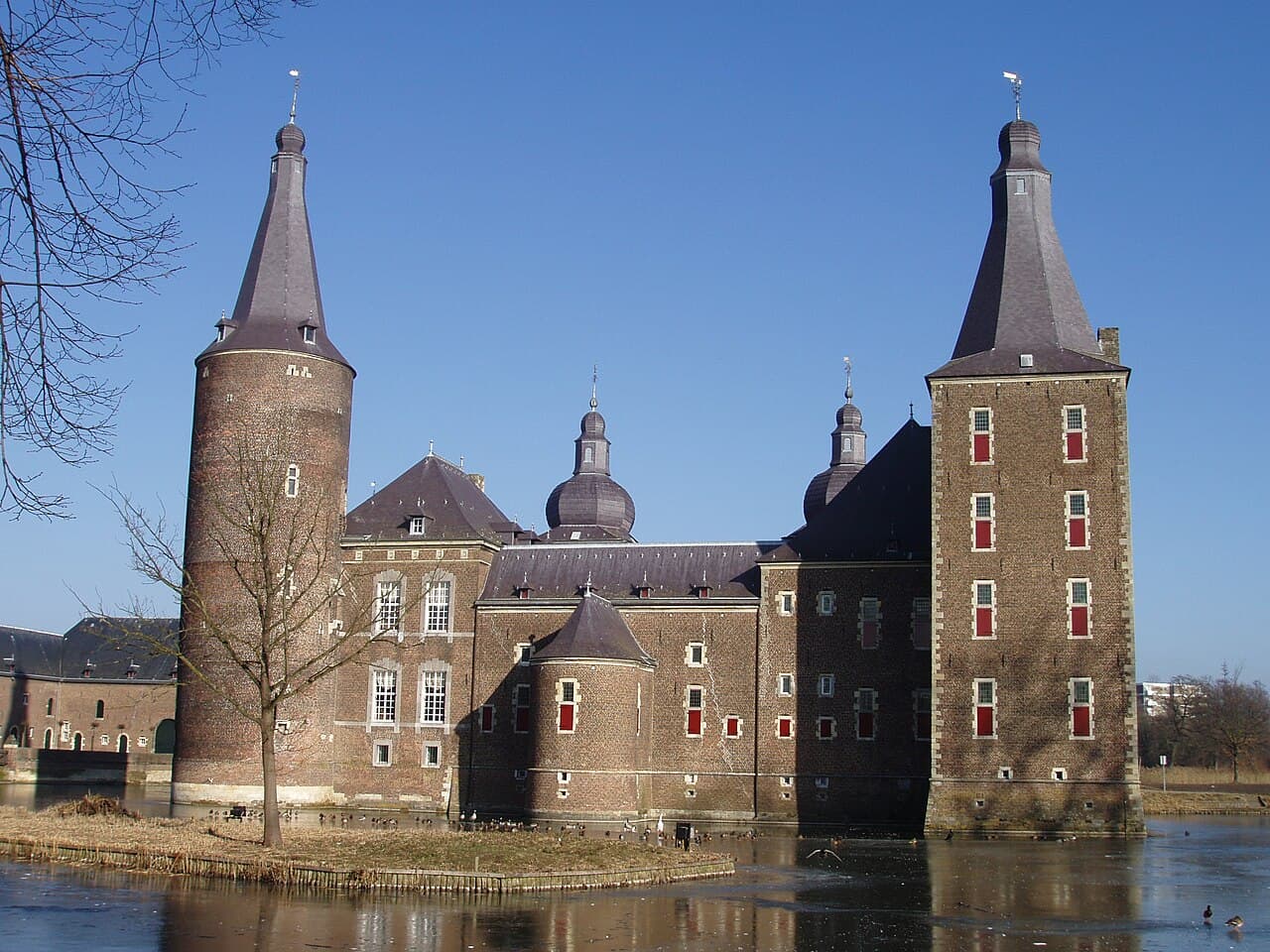
The castle's origins trace back to around 1225, when a motte-and-bailey fortification was first established in the swampy area known as Gebrook. By 1250, a fortified manor replaced this early structure, marking the beginning of a complex architectural evolution that would span several centuries. The oldest surviving part today is the massive round keep, constructed circa 1360 by the powerful Hoen family, who were influential allies of the Dukes of Brabant. This tower, with walls approximately three meters thick, features medieval defensive elements including battlements (later replaced by a spiral roof in the 17th century) and a prison cell at its lowest level.
The architectural evolution of Hoensbroek Castle
Medieval foundations and expansions
The initial medieval castle was a rectangular building, whose foundations still support the courtyard walls seen today. The second fortification, built around 1360, expanded the castle's defenses and residential quarters. The large round keep is the primary surviving element from this period, alongside remnants of a rectangular castle adjacent to it. The castle was originally surrounded by a moat, enhancing its defensive capabilities in the marshy terrain.
Renaissance transformation
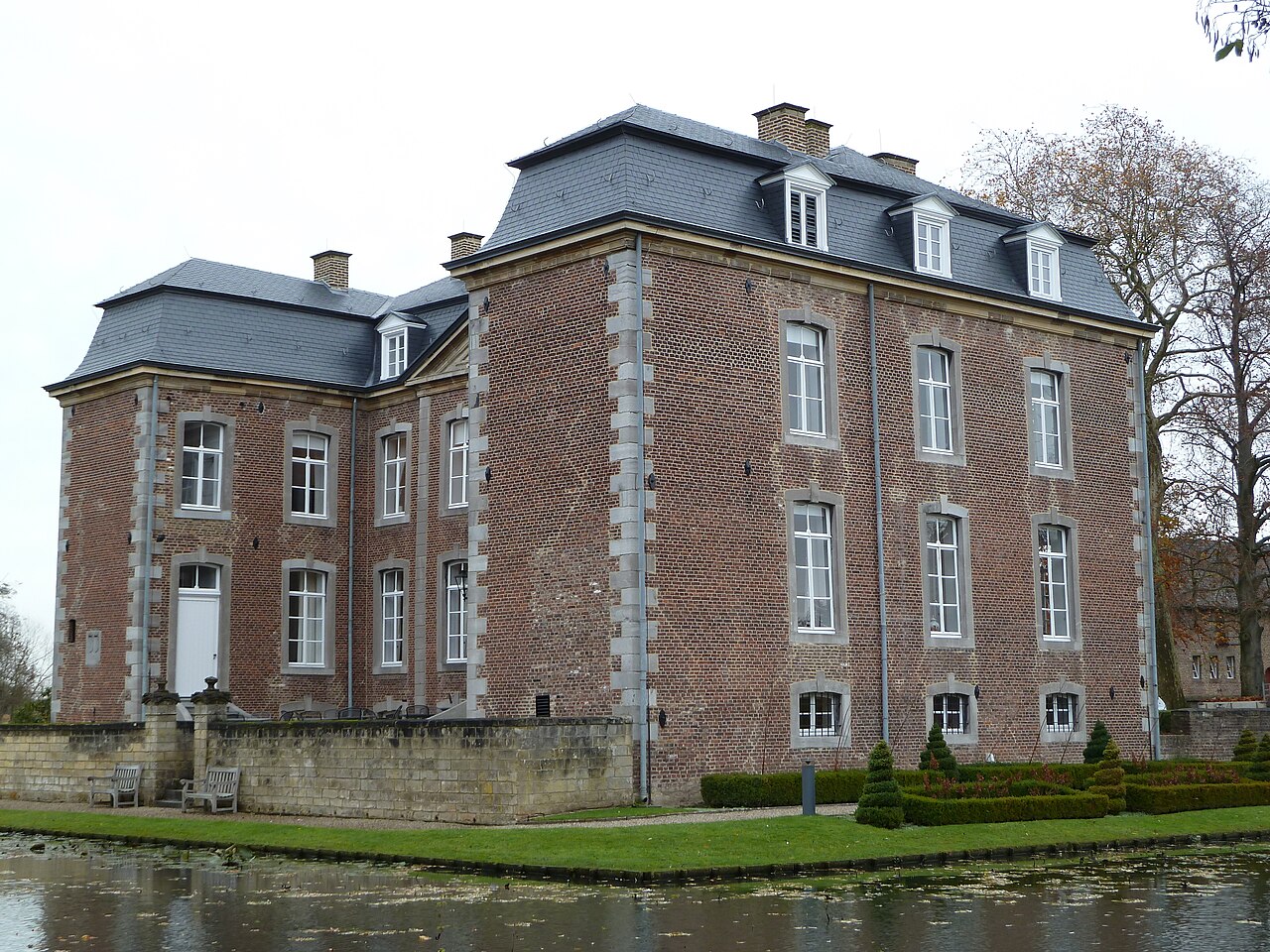
In the 17th century, under the direction of Adriaan von und zu Hoensbroech, the castle underwent significant Renaissance-style renovations. This included the construction of buildings on the two outer baileys, which were adapted for agricultural use, reflecting a transition from purely military functions to more domestic and economic roles. The Renaissance influence is visible in the alternating layers of brick and blue limestone masonry, horizontal bands at window levels, and the symmetrical layout of the four-winged manor house.
Baroque additions and 18th-century rebuilding
The early 18th century saw further expansion and remodeling, including the building of a new north-western wing between 1720 and 1722 by Frans Arnold, Imperial Count van Hoensbroek. The castle's interior was enhanced with illusionistic ceiling paintings depicting classical themes such as the goddesses Venus and Diana, highlighting French Baroque artistic influence. In 1717, a collapse of the medieval part necessitated rebuilding on its foundations, contributing to the castle's layered architectural character.
Layout and structural features
Main manor house and defensive structures
The castle complex consists of three main parts: two outer baileys (Vorburgs) and the central manor house (Herrenhaus) situated on an island surrounded by a moat. Access to the manor is via a stone arch bridge with three arches, complemented by a wooden drawbridge. The manor house features four wings arranged around a rectangular courtyard, flanked by two identical square towers with onion-shaped domes at the entrance and two taller irregular-shaped corner towers at the rear.
Notable towers and interiors
The 14th-century round tower at the northwest corner is the oldest surviving structure, measuring 9.5 meters in diameter with walls three meters thick. It contains a spiral staircase embedded within the walls, a windowless dungeon, vaulted rooms, and defensive embrasures. The uppermost room is situated 42 meters above the water level, equipped with shooting slits for defense.
The southeast wing houses a large dining hall with two serving hatches, a fireplace displaying the alliance coat of arms of Adriaan von und zu Hoensbroech and Isabelle von Loë, and a secret chamber furnished with 17th-century furniture. The castle contains over 40 rooms, many furnished with authentic 17th and 18th-century pieces, including an 18th-century ballroom with ceiling paintings and a dining room decorated with classical motifs.
Historical significance and ownership
The Hoen family legacy
The castle was the ancestral home of the noble Hoen family, later known as the Imperial barons and counts van Hoensbroeck, for nearly six centuries. The family played a prominent role in regional politics, allied with the Dukes of Brabant and holding high offices. They resided at Hoensbroek Castle until 1796, after which they moved primarily to their German estate, Schloss Haag.
Decline and restoration
Following the departure of the Hoen family, the castle fell into disrepair during the 19th century. Significant structural collapses occurred, including the southern corner tower in 1899. In 1927, the castle was sold to the Roman Catholic foundation 'Ave Rex Christi', which undertook extensive restoration efforts between 1930 and 1940. Further restorations took place from 1986 to 1989, preserving the castle as a museum and cultural heritage site.
Present-day museum and visitor experience
Today, Hoensbroek Castle functions as a museum open to the public, showcasing its richly layered history and architectural grandeur. Visitors can explore the extensive interiors, including the medieval keep, Renaissance and Baroque wings, and the atmospheric moat-surrounded grounds. The castle's furnishings, artwork, and historic rooms provide insight into noble life from the Middle Ages through the 18th century.
The surrounding park features two ponds: the smaller castle pond encircling the manor island and the larger "Droomvijver" or Dream Pond. The moat, partly overgrown with reeds, preserves the castle's traditional water defenses and adds to the picturesque setting.
Hoensbroek Castle remains a testament to centuries of architectural evolution, noble heritage, and strategic importance in the Limburg region, making it a must-visit destination for history enthusiasts and castle admirers alike.
Frequently asked questions (FAQ)
- How do I get to Hoensbroek Castle?
- Hoensbroek Castle is located in the town of Hoensbroek, Netherlands, and is easily accessible by car and public transport. If you are traveling by train, the nearest station is in Heerlen, from where you can take a bus or taxi to the castle.
- What is the historical significance of Hoensbroek Castle?
- Hoensbroek Castle is one of the largest and best-preserved water castles in the Netherlands, dating back to the 13th century. It played a crucial role in the regional power struggles and has a rich history that reflects the medieval life of the area.
- When was Hoensbroek Castle built?
- Construction of Hoensbroek Castle began in the 13th century, with significant expansions and renovations occurring in the following centuries. The castle features a mix of architectural styles, showcasing its evolution over time.
- Is it possible to take a guided tour of the castle?
- Yes, guided tours are available at Hoensbroek Castle, providing visitors with an in-depth look at its history and architecture. The knowledgeable guides share fascinating stories and insights that enhance the visitor experience.
- What are the opening hours for Hoensbroek Castle?
- Hoensbroek Castle is typically open to visitors from Tuesday to Sunday, with varying hours depending on the season. It is advisable to check the official website for the most current opening hours before your visit.
- Can I bring my children to Hoensbroek Castle?
- Absolutely! Hoensbroek Castle is a family-friendly destination, offering activities and educational programs suitable for children. The castle grounds and exhibits are designed to engage young visitors while providing an enjoyable experience for the whole family.
- What are the ticket prices for visiting Hoensbroek Castle?
- Ticket prices for Hoensbroek Castle vary depending on age and group size, with discounts available for children and seniors. It's best to consult the official website for the latest pricing information and any special offers.
- When is the best time to visit Hoensbroek Castle?
- The best time to visit Hoensbroek Castle is during the spring and summer months when the weather is pleasant and the castle gardens are in full bloom. Additionally, many special events and exhibitions are held during this time, enriching the visitor experience.
- Are there any nearby attractions to visit while at Hoensbroek Castle?
- Yes, there are several nearby attractions, including the city of Heerlen, known for its shopping and dining, as well as the beautiful landscape of the Limburg region. Visitors can also explore other historic sites and nature reserves within a short drive from the castle.

Information
Sources & official resources
Verify the information above using these authoritative references.
Loading map...
Visitor reviews
No reviews yet. Been here? Write the first review and help other travelers!
Write the first reviewVisited this castle? Share your experience
Your review helps other travelers and adds first-hand knowledge to our encyclopedia.