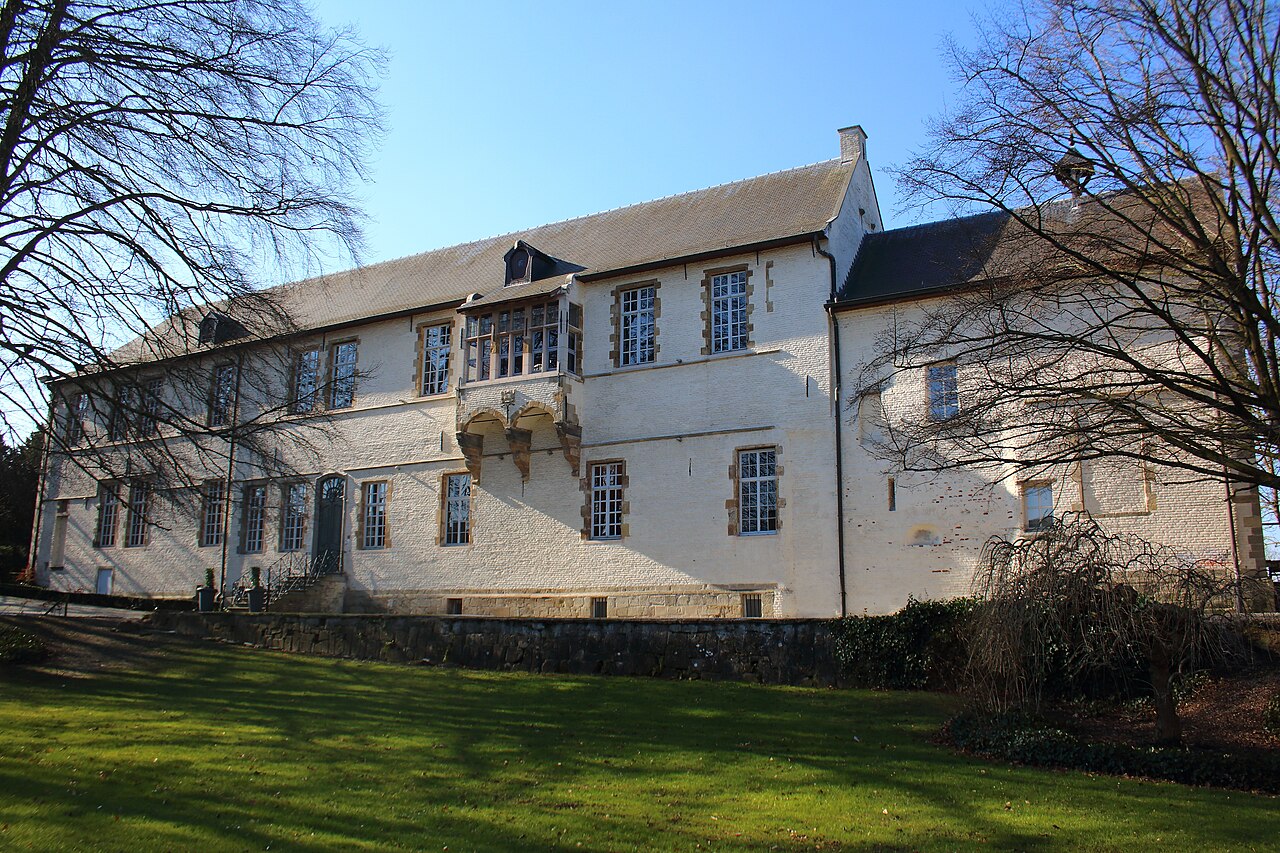
Herzele Castle
Herzele Castle, also known locally as Burcht van Herzele, is a historic hill castle situated in the heart of the town of Herzele in the province of East Flanders, within the Flemish region of Belgium. This castle stands as a testament to the region's turbulent medieval history and evolving architectural styles, with origins tracing back to the early medieval period.
The initial fortification at the site was likely established in the 7th century, primarily as a wooden structure surrounded by earthen walls and water defenses. This early form of the castle served as a refuge against Viking raids, reflecting the defensive needs of the time. The use of water as a natural barrier and the earthen embankments were typical of early medieval fortifications designed to protect local populations and their resources.
Medieval origins and early development
By the 11th century, the wooden fortification was replaced with a more durable castle constructed from sandstone. This transition marked an important evolution in the castle's architecture, moving from timber to stone as a primary building material, which provided enhanced defense capabilities and longevity. The 11th century was a period of significant political change in the region; in 1056, Boudewijn V, Count of Flanders, took control of the area, separating it from the German Empire. This political shift likely influenced the strengthening and stone reconstruction of the castle.
Historical records mention Franco, Lord of Herzele, who went on crusade in 1096. It is probable that he undertook efforts to fortify the castle before his departure, further enhancing its defensive features to protect his family and retain control over his lands during his absence.
Conflicts and destruction in the late medieval period
The castle's history during the 13th century remains largely undocumented, but it reemerges in records during the late 14th century. In 1381, Herzele Castle became embroiled in the conflict between the Count of Flanders and the rebellious townspeople of Ghent. At this time, the castle was owned by Seger, Lord of Herzele. The castle, along with the nearby church and houses, was burned down during the hostilities, illustrating the castle's strategic importance and the intensity of regional power struggles.
In the 15th century, the castle was rebuilt by Jan van Roubaix, restoring its function as a noble residence and military stronghold. However, the castle's fortunes declined dramatically in the late 16th century.
Destruction during the dutch revolt and subsequent ruin
In 1579, the castle suffered severe damage during the Dutch Revolt. Its owner, Pieter van Melun, was a Protestant noble opposing Spanish Catholic rule. Spanish troops besieged the castle, bombarding it with cannons and reducing much of the structure to ruins. Only a corner tower and fragments of walls survived this assault.
Following the siege, the castle was not fully restored to its former grandeur. Repairs in 1616 focused on key surviving parts such as the gatehouse and the northeastern wing, which housed the main living quarters. Over the centuries, the castle gradually fell into ruin, with materials being repurposed for other constructions.
Ownership changes and modern preservation efforts
Throughout its history, the castle passed through the hands of several noble families, including the van Herzele, van Roubaix, van Luxemburg, and de Melun families. The abolition of noble titles during the French Revolution led to the estate transitioning into private ownership.
In 1969, the final private owner donated the castle grounds to the local municipality of Herzele. This transfer marked the beginning of a concerted effort to preserve the site. Between 1970 and 1977, extensive restoration and excavation work stabilized the remaining structures, clarified the castle's layout, and preserved the moat and foundational elements. Additional conservation was undertaken in 2022 to maintain the integrity of the ruins.
Architectural features and layout
Fortifications and defensive structures
Burcht Herzele was designed with a geometric plan typical of medieval fortifications. It was surrounded by a broad moat that served both defensive and economic purposes, such as carp farming. The curtain walls were constructed entirely of sandstone, resting on foundations reinforced with layers of tree trunks to ensure stability.
The donjon, or main tower, was a square structure approximately six meters wide internally, with walls over three meters thick. This massive tower included a cellar accessed by steps, with openings in the walls that functioned as latrines. The donjon once housed several floors, including reception and living quarters above the cellar. Although the tower collapsed in 1592 and was never rebuilt, its sturdy base remains a prominent feature of the ruins.
Gatehouse and residential towers
The castle's gatehouse controlled access through two entrances: one aligned with the drawbridge and another leading into the inner courtyard. Inside the gatehouse was a chamber containing the drawbridge mechanism. Below, a cellar accessible by brick steps likely served as a prison, supported by the presence of latrines.
At the northeast corner of the castle stands a round residential tower with an attached stair tower. The ground floor features a unique brick dome ceiling laid in a spiral pattern. The first two floors contain fireplaces and niches for storage or decoration. Latrines were incorporated on the second floor and in the cellar, which may have also functioned as a prison. Doorways connect this tower directly to the northern and eastern defensive walls.
Interior spaces and functional buildings
Along the eastern curtain wall was the knight's hall, the central gathering space within the castle. Adjacent to this hall were private chambers for the lord and lady, a chapel, and a kitchen. The kitchen is notable for preserving a well, a hearth, and the base of a window. Spiral staircases in stair towers on either side of the hall and kitchen provided vertical circulation; one of these towers remains relatively well preserved.
The western section of the inner courtyard contained practical buildings such as a horse stable and barn. Historical records indicate these facilities were regularly maintained, underscoring their importance to the castle's daily operations.
Visiting herzele castle today
Today, Herzele Castle is a pleasant ruin located within a town park, freely accessible to the public. Visitors can explore the foundations of the gate towers, curtain walls, and the keep, gaining insight into the castle's original layout and defensive features. The restored corner tower, which rises three floors, remains closed to the public, and it is unclear whether interior visits are permitted.
The castle's tranquil setting in the Flemish countryside, combined with its rich history and well-preserved ruins, makes it an appealing destination for those interested in medieval architecture and Flemish heritage.
Frequently asked questions (FAQ)
- How do I get to Herzele Castle?
- Herzele Castle is conveniently located in the heart of Herzele, Belgium. You can reach it by car, with ample parking available nearby, or by public transport via local buses that connect to the nearest train station.
- What is the historical significance of Herzele Castle?
- Herzele Castle dates back to the late 13th century and showcases the rich medieval history of the region. It has served various purposes over the centuries, including as a noble residence and a strategic fortification, reflecting the architectural evolution of the time.
- When was Herzele Castle built?
- Construction of Herzele Castle began in the late 1200s, with significant modifications and expansions occurring in the following centuries. Its architecture showcases a blend of Gothic and Renaissance styles, making it an important example of medieval fortifications.
- Can I visit Herzele Castle?
- Yes, Herzele Castle is open to visitors, with guided tours available to explore its historical and architectural features. It is advisable to check the official website for specific visiting hours and any seasonal events that may be taking place.
- Why is Herzele Castle considered an architectural gem?
- Herzele Castle is renowned for its stunning blend of Gothic and Renaissance architectural styles, featuring beautiful stonework and intricate details. Its well-preserved structure offers insights into medieval construction techniques and aesthetic preferences.
- Is it possible to access Herzele Castle with limited mobility?
- While efforts have been made to accommodate visitors with limited mobility, certain areas of Herzele Castle may still present challenges due to historical preservation. It is recommended to contact the visitor center in advance for information on accessibility options.
- What are the opening hours for Herzele Castle?
- Herzele Castle typically opens from Wednesday to Sunday, with varying hours depending on the season. For the most accurate and up-to-date information, visitors should check the castle's official website before planning their trip.
- What is the best time to visit Herzele Castle?
- The best time to visit Herzele Castle is during the spring and early autumn when the weather is mild and pleasant for outdoor exploration. Additionally, the castle hosts various events and activities during these seasons, enhancing the visitor experience.
- Are there any nearby attractions to visit?
- Yes, there are several interesting attractions near Herzele Castle, including beautiful parks, local museums, and historic towns. Visitors can also explore the surrounding countryside, which offers scenic walks and picturesque views of the region.
- What are the ticket prices for visiting Herzele Castle?
- Ticket prices for Herzele Castle vary depending on age and group size, with discounts available for children, seniors, and families. It is advisable to purchase tickets in advance online for special events or guided tours to ensure availability.
Information
Sources & official resources
Verify the information above using these authoritative references.
Loading map...
Visitor reviews
No reviews yet. Been here? Write the first review and help other travelers!
Write the first reviewVisited this castle? Share your experience
Your review helps other travelers and adds first-hand knowledge to our encyclopedia.