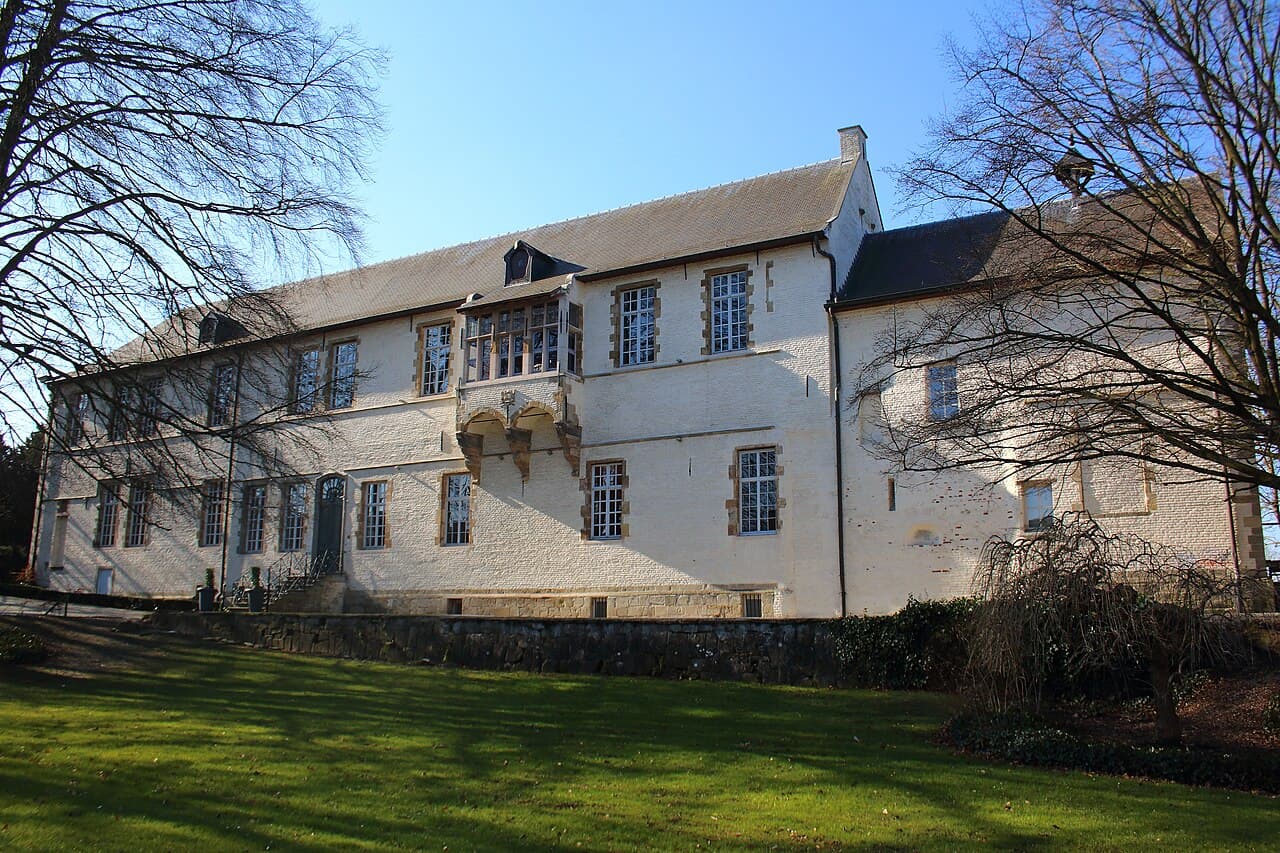
Egmontkasteel
Egmont Castle, also known as the Castle of Lamoral, Count of Egmont, is a historically significant hill castle located in Zottegem, Belgium. This castle is recognized as a cultural heritage monument, reflecting its importance in Belgian history and architecture. Its origins date back to the 11th century, placing it firmly in the high medieval period.
Historical significance and origins
The castle was originally constructed in the 11th century, a time when fortifications were essential for defense and asserting territorial control. Over the centuries, Egmont Castle became closely associated with the noble Egmont family, particularly Lamoral, Count of Egmont, a prominent figure in the 16th century. The castle served as a residence and a symbol of power for the family.
Architectural features and style
As a hill castle, Egmont Castle was strategically positioned on elevated terrain to maximize defensive advantages. The castle's architecture reflects typical high medieval fortification elements, including thick stone walls, towers, and possibly a keep or donjon, although detailed structural descriptions are limited. The castle's layout would have included a courtyard and defensive battlements to protect against attackers.
Defensive structures
The castle's elevated position on a hill allowed for natural defense, complemented by man-made fortifications. The presence of and curtain walls would have been integral to its defense strategy, providing vantage points for surveillance and protection. Moats or ditches may have been part of the original design, although specific details are not well documented.
The castle in the context of Belgian history
Egmont Castle holds a place in the history of the Flemish region and Belgium at large. The castle's association with Lamoral, Count of Egmont, a key figure in the resistance against Spanish rule in the 16th century, adds to its historical importance. Lamoral was executed in 1568, and his legacy is intertwined with the castle's story.
Later developments and preservation
Over time, Egmont Castle underwent various modifications and restorations to maintain its structure and adapt to changing needs. Today, it stands as a well-preserved monument, offering insights into medieval architecture and noble life. The castle is accessible to visitors and often hosts cultural events, reinforcing its role as a heritage site.
Visiting Egmont Castle
Visitors to Egmont Castle can explore its historic rooms, towers, and courtyards. The castle's location in Zottegem makes it a notable destination for those interested in medieval history and architecture. Guided tours provide detailed information about the castle's past and its significance in Belgian heritage.
Frequently asked questions (FAQ)
- What is the best time to visit Egmont Castle?
- The best time to visit Egmont Castle is during the spring and summer months when the weather is pleasant, and the castle often hosts cultural events and guided tours.
- How do I get to Egmont Castle in Zottegem?
- Egmont Castle is located in Zottegem, Belgium. It is accessible by car and public transportation, with local buses connecting the town center to the castle area.
- Is Egmont Castle open to the public?
- Yes, Egmont Castle is open to the public. Visitors can explore the castle grounds, including the towers and courtyards, with guided tours available to enhance the experience.
- What historical figure is associated with Egmont Castle?
- Egmont Castle is closely associated with Lamoral, Count of Egmont, a nobleman who played a significant role in the 16th-century resistance against Spanish rule in the region.
- Are there any special events held at Egmont Castle?
- Egmont Castle hosts various cultural events throughout the year, including medieval fairs, exhibitions, and educational programs that highlight its historical and architectural significance.
Photo gallery

Information
Loading map...
Visitor reviews
No reviews yet. Been here? Write the first review and help other travelers!
Write the first reviewVisited this castle? Share your experience
Your review helps other travelers and adds first-hand knowledge to our encyclopedia.


