Herstmonceux Castle
Herstmonceux Castle stands as one of the most remarkable examples of early brick construction in England, dating back to the 15th century. Located in East Sussex, this late medieval hill castle uniquely combines historical grandeur with architectural innovation for its time. Unlike many medieval fortifications primarily designed for defense, Herstmonceux was conceived with an emphasis on comfort and status, showcasing the wealth and prestige of its builder, Sir Roger Fiennes, Treasurer of the Household to King Henry VI.
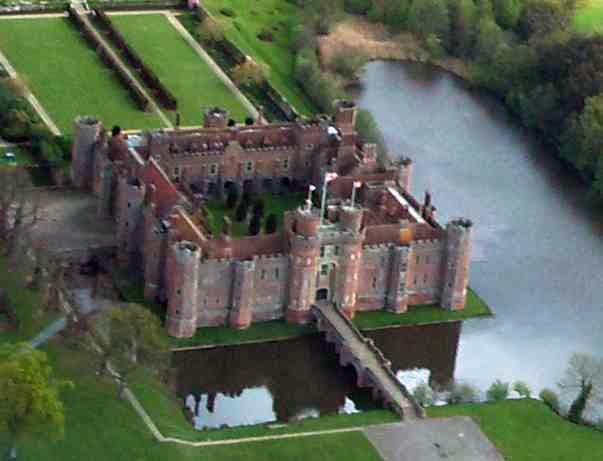
The castle is situated within a sprawling 300-acre estate that includes extensive woodlands, formal gardens, and the iconic moated castle itself. Its red brick construction was a rarity in 15th-century England, where stone was the preferred material for fortifications. The bricks were crafted from local clay and laid by skilled Flemish craftsmen, marking a significant architectural departure and reflecting early adoption of continental building techniques in England.
Historical background and construction
The construction of Herstmonceux Castle began in 1441 under the direction of Sir Roger Fiennes. He invested a substantial sum of £3,800, an enormous amount for the period, to replace an earlier manor house with a grand brick castle that would symbolize his family's status and influence. After Sir Roger's death in 1449, his son, Lord Dacre, continued the building project, ensuring the castle's completion in the latter half of the 15th century.
The castle's design features four internal courtyards originally, a layout that provided both privacy and a sense of openness within the fortified structure. The use of brick not only enhanced the castle's aesthetic appeal but also demonstrated the owner's progressive approach to architecture during the late medieval period.
Notable historical events
In 1541, the castle's history took a dramatic turn when Thomas Fiennes, Lord Dacre, was executed following a controversial poaching-related murder. This event led to the temporary confiscation of the estate by King Henry VIII. However, the property was eventually restored to the Fiennes family, who retained ownership until financial difficulties necessitated its sale in 1708 to George Naylor.
In the 18th century, under the ownership of Robert Hare-Naylor, the castle underwent a radical transformation influenced by the picturesque movement and architect Samuel Wyatt. In 1776, the interior was deliberately demolished to create a romanticized ruin, leaving only the exterior walls intact. This state of partial ruin lasted for over a century, contributing to the castle's unique character and appeal.
20th-century restoration and modern use
Restoration efforts commenced in 1913 under Colonel Claude Lowther and were completed in 1933 by Sir Paul Latham with the guidance of architect Walter Godfrey. The restoration was notable for its innovative approach, merging the original four courtyards into a single large courtyard to enhance the castle's usability and aesthetic coherence.
The restoration incorporated architectural antiques sourced from England and France, enriching the interior with period-appropriate elements that complemented the castle's historic fabric. The work was highly praised by architectural critic Nikolaus Pevsner, who recognized the sensitive balance between preservation and adaptation.
From 1957 until 1988, the castle grounds served an important scientific purpose as the site of the Royal Greenwich Observatory, relocated from Greenwich due to urban light pollution. The Admiralty acquired the estate in 1946 and constructed new buildings to accommodate observatory functions. The estate housed several telescopes, including the notable 100-inch Isaac Newton Telescope, which was later moved to La Palma in the 1970s. Today, some telescopes and the empty dome remain as landmarks, and the observatory buildings have been repurposed as the Observatory Science Centre, a public museum and planetarium.
Architectural features and estate grounds
Herstmonceux Castle's architecture is distinguished by its extensive use of red brick, a pioneering material for English castles of its era. The Flemish brickwork techniques contributed to the castle's distinctive appearance and durability. The moat surrounding the castle adds to its picturesque setting and historical defensive character, although defense was not the primary focus of its design.
The castle's original plan included four internal courtyards, which were combined into a single large courtyard during the 20th-century restoration to create a more open and functional space. The interiors largely date from the restoration period, featuring a blend of medieval style and early 20th-century architectural antiques.
The estate also boasts Grade II* listed parks and gardens, including a Grade II listed walled garden to the north of the castle. These gardens reflect historical landscaping styles and contribute to the overall heritage value of the property.
Scientific heritage and public engagement
The presence of the Royal Greenwich Observatory on the grounds adds a unique layer of scientific heritage to Herstmonceux Castle. The observatory buildings, including the Equatorial Telescope Group, are Grade II* listed and now serve as a public science museum and planetarium, offering educational programs and events that engage visitors with astronomy and the castle's history.
The empty dome of the Isaac Newton Telescope remains a striking visual feature on the estate, symbolizing the castle's mid-20th-century role in advancing astronomical research.
Current function and visitor experience
Today, Herstmonceux Castle operates as an International Study Centre owned by Queen's University, Canada. It hosts undergraduate and graduate students from around the world who come to study in a tranquil and historic environment. The castle also welcomes tourists, residential conferences, corporate events, and weddings throughout the year, making it a vibrant cultural and educational hub.
The castle is renowned for hosting the annual England's Medieval Festival during the August Bank Holiday weekend, attracting visitors interested in medieval history, reenactments, and traditional crafts.
Currently, the castle is undergoing structural remediation since November 2023, expected to last at least 18 months, to preserve its historic fabric and ensure safety for future generations.
Frequently asked questions (FAQ)
- How do I get to Herstmonceux Castle?
- Herstmonceux Castle is located in East Sussex, just a short drive from the A27. If you're using public transport, the nearest railway station is Hailsham, from which you can take a taxi or local bus to the castle.
- What is the historical significance of Herstmonceux Castle?
- Herstmonceux Castle is one of the earliest examples of brick construction in England, built in the late 15th century. It was originally a private residence and has played a significant role in British history, including serving as the headquarters for the Royal Greenwich Observatory in the 20th century.
- When was Herstmonceux Castle built?
- Construction of Herstmonceux Castle began in 1441 and was completed in 1484. The castle has undergone various renovations and restorations over the centuries, preserving its architectural integrity and historical charm.
- Can I visit Herstmonceux Castle year-round?
- Yes, Herstmonceux Castle is open to visitors throughout the year, but specific areas may have seasonal restrictions. It's a good idea to check the official website for the most current opening hours and any special events that may affect access.
- Why is Herstmonceux Castle popular among tourists?
- Herstmonceux Castle attracts visitors for its stunning architecture, beautiful gardens, and rich history. The picturesque grounds provide a perfect backdrop for leisurely walks, and the castle often hosts events, making it a vibrant destination for families and history enthusiasts alike.
- Is it possible to hold events at Herstmonceux Castle?
- Yes, Herstmonceux Castle offers a range of event spaces for weddings, corporate events, and private functions. The scenic surroundings and historic atmosphere make it a unique venue for special occasions.
- What are the ticket prices for visiting Herstmonceux Castle?
- Ticket prices for Herstmonceux Castle vary depending on the season and type of visitor. Discounts are often available for children, seniors, and families, so be sure to check the official website for the latest pricing information.
- What are the opening hours of Herstmonceux Castle?
- Herstmonceux Castle typically opens at 10 AM and closes at 5 PM during the peak season, with reduced hours in the off-season. It’s advisable to verify the current opening times on the castle's official website before your visit.
- Are there any nearby attractions to visit while at Herstmonceux Castle?
- Yes, nearby attractions include the Observatory Science Centre, which offers interactive exhibits and telescope viewings. The charming village of Herstmonceux also features quaint shops and cafes, making it a lovely area to explore after your visit to the castle.
Photo gallery

Information
Website
Visit websiteSources & official resources
Verify the information above using these authoritative references.
Loading map...
Visitor reviews
No reviews yet. Been here? Write the first review and help other travelers!
Write the first reviewVisited this castle? Share your experience
Your review helps other travelers and adds first-hand knowledge to our encyclopedia.