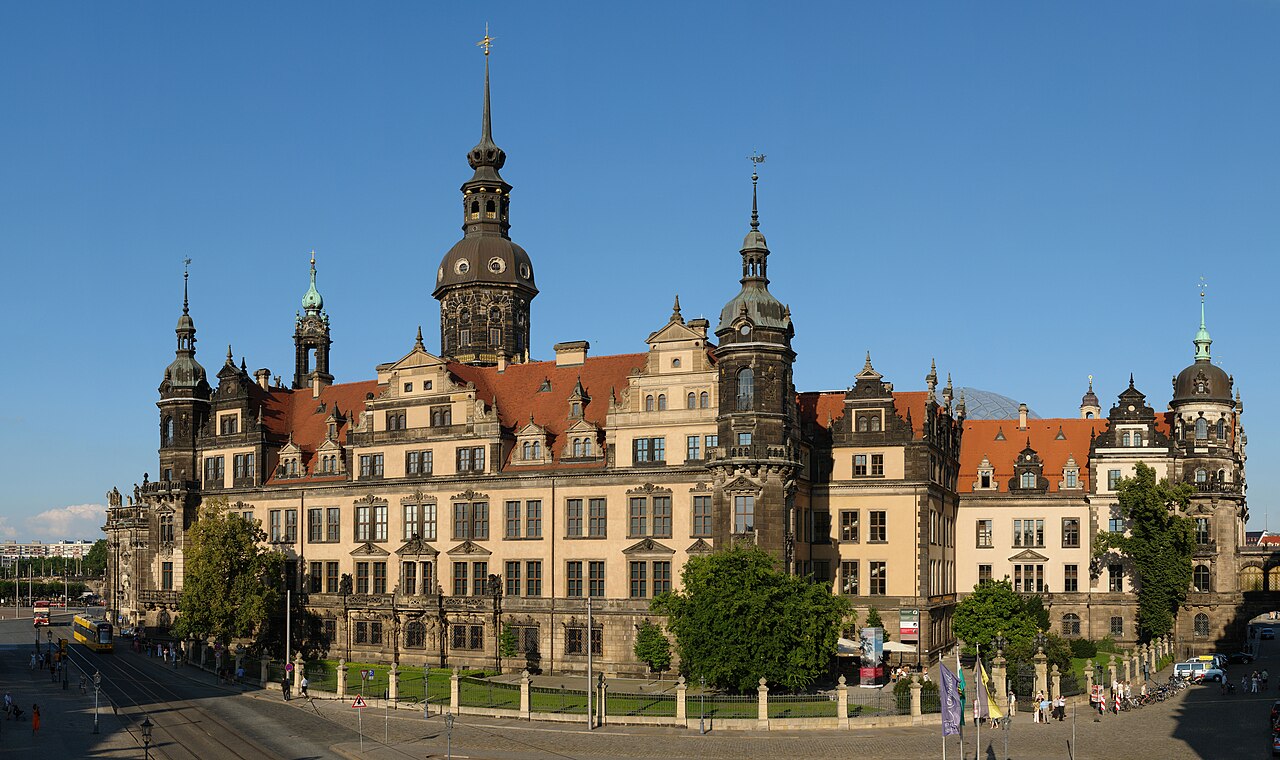
Hermsdorf Castle

Hermsdorf Castle in Ottendorf-Okrilla, Germany
Ottendorf-Okrilla, Germany
Renaissance (15th–17th c.)
Well Preserved

Hermsdorf Castle, located in Ottendorf-Okrilla, Germany, is a historic Renaissance castle with origins dating back to the mid-14th century. First mentioned in 1350, the castle has undergone several significant reconstructions and restorations, reflecting the architectural and historical changes of the region. It stands as a notable example of a Renaissance residence that has survived through centuries of transformation.

Early history and medieval origins

The earliest recorded mention of Hermsdorf Castle dates to 1350, situating it within the Late Medieval period. While the original medieval structure's details are sparse, it likely served as a fortified manor or noble residence typical of the region during this time. The castle's strategic location in Saxony would have made it an important local stronghold.

Renaissance rebuilding and architectural transformation

The castle suffered significant damage from a fire in 1561. In response, Christoph von Carlowitz undertook a major rebuilding project between 1553 and 1575. This reconstruction firmly established Hermsdorf Castle's character as a Renaissance residence, incorporating contemporary architectural elements of the period. The rebuilding likely included the addition of more comfortable living quarters and ornamental features typical of Renaissance noble estates, moving away from purely defensive medieval designs.

Architectural features of the Renaissance rebuild

The Renaissance reconstruction introduced elements such as symmetrical layouts, larger windows for increased natural light, and decorative stonework. The castle's structure would have included a central courtyard surrounded by residential wings, with fortified walls adapted for residential comfort rather than military defense. The use of Renaissance motifs in façades and interiors reflected the cultural influences spreading through Germany during the 16th century.

Baroque influence and later restorations

Hermsdorf Castle experienced further restoration after a devastating fire in 1729. The restoration in 1630 is mentioned, but the chronology suggests the castle underwent multiple phases of repair and modification during the 17th and 18th centuries. During this period, the castle's interiors were updated in the Baroque style, which was popular across Europe. These interiors featured ornate plasterwork, elaborate wood carvings, and richly decorated rooms designed to display wealth and status.

Destruction of the Baroque interiors

Unfortunately, the Baroque interiors did not survive the 20th century. Various factors, including war, neglect, and changing ownership, led to the loss of much of the castle's historic interior decoration. Despite this, the castle's external Renaissance architecture remains a significant aspect of its character.

Current use and preservation status

Today, Hermsdorf Castle is well preserved and serves primarily as a venue for events. Its spacious halls and historic atmosphere make it suitable for cultural activities, weddings, and community gatherings. The castle's preservation allows visitors to appreciate its architectural heritage and historical significance within the Saxony region.

Architectural and cultural significance

Hermsdorf Castle exemplifies the transition from medieval fortification to Renaissance noble residence. Its history of destruction and rebuilding reflects broader historical trends in Saxony, including the impact of fires and the evolution of architectural styles from the Late Medieval period through the Renaissance and Baroque eras. Although much of its interior decoration has been lost, the castle remains an important cultural landmark.

Location and regional context

Situated in Ottendorf-Okrilla, within the state of Saxony, the castle is part of a network of historic sites that illustrate the region's rich past. Its proximity to Dresden and other cultural centers enhances its accessibility for visitors interested in German Renaissance architecture and history.

Visiting Hermsdorf Castle

While primarily used for events, Hermsdorf Castle is accessible to the public during special occasions and cultural programs. Visitors can explore the castle's exterior architecture and enjoy the ambiance of its historic courtyards and gardens. Its preservation as a venue helps maintain the castle's relevance and connection to the local community.

Frequently asked questions (FAQ)

What is the historical significance of Hermsdorf Castle?
Hermsdorf Castle is a remarkable example of medieval architecture in Germany, reflecting the feudal history of the region. Originally built in the 13th century, it has served various roles, from a noble residence to a military stronghold, showcasing the evolution of architectural styles over the centuries.
When was Hermsdorf Castle built?
Hermsdorf Castle was constructed in the 13th century, with its foundations laid around 1230. Over the years, it has undergone numerous renovations and restorations, preserving its historical integrity while adapting to modern needs.
Can I visit Hermsdorf Castle?
Yes, Hermsdorf Castle is open to the public for visits. Guests can explore its rich history through guided tours that offer insights into its architecture and the stories of those who lived there.
What are the opening hours of Hermsdorf Castle?
Hermsdorf Castle is typically open from Tuesday to Sunday, with specific hours varying by season. It is advisable to check the official website for the most current information regarding opening times before your visit.
Is it possible to access Hermsdorf Castle with mobility aids?
Yes, Hermsdorf Castle strives to be accessible for all visitors. There are provisions in place to assist those with mobility aids, although some areas may have limitations due to the castle's historical structure.
What are the ticket prices for visiting Hermsdorf Castle?
Ticket prices for Hermsdorf Castle are generally affordable, with discounts available for students and seniors. It's best to check the official site for the latest pricing information and any special offers.
When is the best time to visit Hermsdorf Castle?
The best time to visit Hermsdorf Castle is during the spring and early autumn when the weather is pleasant, and the surrounding gardens are in bloom. These seasons also tend to have fewer tourists, allowing for a more intimate experience.
Are there nearby attractions to Hermsdorf Castle?
Yes, there are several attractions near Hermsdorf Castle, including beautiful parks and local museums that highlight the area's rich culture and history. Visitors can also enjoy scenic walking trails that showcase the picturesque landscape surrounding the castle.

Information

Lowland Castle

Current owner

Private owner

Loading map...

Visitor reviews

No reviews yet. Been here? Write the first review and help other travelers!

Write the first review

Visited this castle? Share your experience

Your review helps other travelers and adds first-hand knowledge to our encyclopedia.

Write a review

(5/5)

0/2000 characters

Your review will be visible after admin approval

Nearby castles

8.9 km

Klippenstein Castle

Radeberg, Germany

Klippenstein Castle, located in Radeberg, Germany, is a significant example of high medieval fortress architecture that has evolved through centuries into a Renaissance-style noble residence and government building. First documented in 1289 as Castrum Radeberch, the castle's origins lie in the 13th century, marking it as a medieval stronghold of strategic and administrative importance in the region. Early history and medieval foundations The castle was initially constructed during the high medieval period as a defensive fortress to control the surrounding territory. Its early structure was typical of the era, likely featuring robust stone walls, a keep, and defensive battlements designed to withstand sieges and assert the power of its owners. The mention of Castrum Radeberch in 1289 confirms its significance as a fortified site within the Saxon lands. Renaissance transformation under moritz of saxony Between 1543 and 1546, Moritz of Saxony, a prominent ruler from the House of Wettin, undertook a major conversion of the castle. He transformed it from a purely military fortress into a hunting lodge and residential palace that reflected the Renaissance architectural style. This renovation introduced elegant Renaissance details visible in the castle's facades, windows, and interior spaces, blending the defensive medieval elements with more refined and comfortable living quarters suitable for nobility. Moritz's reign was notable for such architectural patronage, and Klippenstein Castle stands as one of the most important surviving examples of sovereign architecture from his period. The castle's dual role as a noble residence and a government administrative center shaped its layout, combining residential chambers with official halls and offices. Role in regional governance and noble residence Throughout the centuries, Klippenstein Castle served as a residence for members of the Saxon nobility and as an administrative hub. The castle housed various officials and functioned as a district court until 1952. The presence of the Langbein family, Electoral officials in the 18th and early 19th centuries, highlights the castle's continued importance in regional governance. The poet August Friedrich Ernst Langbein descended from this family, linking the castle to cultural as well as political history. Architectural features and layout Klippenstein Castle's architecture reflects its layered history. The medieval core includes thick defensive walls and a keep, while the Renaissance conversion added ornate windows, decorative stonework, and expanded living quarters. The castle complex likely includes a courtyard, gatehouse, and various outbuildings that supported both residential and administrative functions. The blend of styles makes the castle a valuable study in architectural evolution from the high medieval fortress to a renaissance palace. Its preservation allows visitors to observe the transition of castle design responding to changing needs of defense, residence, and governance. Modern era and cultural significance After the district court moved out in 1952, Klippenstein Castle was repurposed as a heritage museum. Today, it serves as a cultural center for the Radeberg region, hosting a variety of events, exhibitions, and educational programs. The museum presents the history of the castle and the surrounding town, attracting numerous visitors interested in Saxon history and architecture. The castle's role as a museum and event venue helps preserve its historical legacy while engaging the community and tourists alike. Guided tours offer insights into the castle's architectural features and its historical context, enriching the visitor experience. Educational and community activities Klippenstein Castle provides educational programs tailored for children and adults, focusing on the castle's history, architecture, and the cultural heritage of Saxony. These initiatives support local heritage awareness and foster appreciation for historical preservation. Visitor information and accessibility The castle is open to the public with guided tours available. Its central location in Radeberg makes it accessible for day trips from nearby cities. Visitors can explore the museum exhibits, attend cultural events, and enjoy the castle's historic atmosphere. Architectural and historical importance Klippenstein Castle is a prominent example of how medieval fortifications were adapted over time to meet changing political, residential, and cultural needs. Its high medieval origins combined with the renaissance renovations provide a tangible record of architectural trends and noble life in Saxony from the 13th to the 16th century and beyond. The castle's association with the House of Wettin and notable figures like Moritz of Saxony underlines its importance in regional history. Its preservation as a museum ensures that this heritage remains accessible to future generations.

High Medieval (11th–13th c.)
Details
9.6 km

Moritzburg Castle

Moritzburg, Germany

Moritzburg Castle is a stunning Baroque palace located approximately 13 kilometres northwest of Dresden, the capital of Saxony, Germany. Set on a symmetrical artificial island within a large pond, the castle is renowned for its distinctive four round corner towers and its harmonious integration with the surrounding landscape. Originally constructed as a hunting lodge, Moritzburg Castle evolved over centuries into a magnificent pleasure palace that reflects the tastes and ambitions of Saxony's electors and kings. The castle's origins date back to the mid-16th century when Duke Moritz of Saxony commissioned the building of a hunting lodge between 1542 and 1546. The initial structure, known as Dianenburg, was designed as a Renaissance four-winged complex with four round towers connected by defensive walls. This early phase established the castle's strategic and recreational importance within the rich woodlands and lakes that served as a favored hunting ground for Saxon nobility. Architectural evolution and baroque transformation While the original Renaissance structure laid the foundation, Moritzburg Castle underwent significant modifications and expansions reflecting the changing tastes and political ambitions of its owners. From 1661 to 1672, Elector Johann Georg II added the castle chapel, designed by architect Wolf Caspar von Klengel. This chapel, consecrated as a Catholic church in 1697 following Elector August the Strong's conversion to Catholicism, remains in regular use today, highlighting the castle's religious as well as secular significance. The most transformative phase occurred between 1722 and 1730 under the direction of Elector August the Strong and architect Matthäus Daniel Pöppelmann. Their ambitious project reshaped Moritzburg from a Renaissance hunting lodge into a grand Baroque hunting and pleasure palace. The renovation involved removing the original courtyard walls, enlarging the central building, and connecting it seamlessly with the wings and corner towers. This created a unified and imposing four-winged structure that epitomizes Baroque architectural principles of symmetry, grandeur, and theatricality. The surrounding landscape was also extensively redesigned during this period. New ponds and game enclosures were created, including the merging of four original ponds into the large pond that now surrounds the castle island. A French-style castle park with a U-shaped layout was added in 1728, measuring approximately 230 by 150 meters. This park, although never fully completed due to August the Strong's death, was intended to enhance the palace's role as a setting for lavish hunts and outdoor festivities. Thematic hunting features and royal entertainments August the Strong envisioned Moritzburg as a "Temple of Diana", dedicated to the goddess of the hunt. The palace grounds included exotic animal enclosures housing lions, cheetahs, and European bisons, reflecting the Elector's passion for hunting and spectacle. Opulent banquets and even staged naval battles on the castle pond were part of the entertainment repertoire, showcasing the castle's dual function as a hunting retreat and a venue for grand court festivities. The pheasant-breeding place east of the castle remains a testament to these activities. The nearby Fasanenschlösschen (Little Pheasant Castle), built between 1770 and 1776 by architects Johann Christoph Knöffel and Johann Daniel Schade, served as a Rococo pavilion supporting pheasant breeding and royal hunting pursuits. This pavilion features exquisite Rococo interiors with gilded stucco, murals, and unique materials such as embroidered silk and feathers, highlighting the luxurious lifestyle of the Saxon court. Interior design and notable collections The interior of Moritzburg Castle is a remarkable showcase of Baroque decor and craftsmanship. The castle houses about 200 rooms across twelve residential quarters, accommodating the royal family, guests, and servants. The ground floor features vaulted entrance halls with Renaissance-style cross vaults, while the upper floors contain grand halls and richly decorated chambers. Four grand two-story halls on the first floor are particularly notable: the Billiardsaal, Speisesaal (dining hall), Steinsaal, and Monströsensaal. These halls display extensive collections of hunting trophies, especially red deer antlers. The dining hall exhibits 71 trophies, some between 270 and 400 years old, including the world's heaviest red deer antler weighing nearly 20 kilograms and spanning almost two meters. The Monströsensaal features 39 deformed antlers, including a famous 66-point antler from 1696. The Steinsaal contains reindeer and elk antlers, including a 10,000-year-old giant deer antler gifted by Tsar Peter the Great. The castle chapel is richly adorned with stucco and sandstone decorations, ceiling paintings by court painter Johann Fink, and an altar featuring a 1744 Venetian painting of the Assumption of Mary. It includes a princely loge and faces west, symbolizing its significance during the coronation of Augustus the Strong as King of Poland. Other interior highlights include eleven rooms with gilded leather wall coverings from the 18th century, Augsburg silver furniture inspired by Louis XIV's Versailles, lacquered furnishings, hunting weapons, and monumental leather paintings by Louis de Silvestre. A unique four-poster bed with a canopy woven from approximately one million feathers, originally acquired in 1723 for the Japanese Palace and later moved to Moritzburg, is displayed in the Federzimmer (feather room) after extensive restoration. The Porzellanquartier in the Jägerturm (hunter's tower) presents a fine collection of Chinese, Japanese, and Meissen porcelain decorated with hunting and mythological motifs, reflecting the castle's original hunting lodge function and the Saxon court's fascination with exotic art. Landscape and park features The castle is surrounded by an extensive French-style garden featuring a broad central axis, two cross alleys bordered by linden trees, and several cavalier houses. An eight-armed star-shaped alley system known as the Jagdstern in the adjacent Friedewald forest was designed for parforce hunting, a form of chase hunting favored by the Saxon electors. The Hellhaus, a hunting lodge ruin built in 1787 by Johann Daniel Schade, stands at the intersection of these alleys. It was historically used to signal game movement during hunts and is currently undergoing restoration. Water features play a significant role in the landscape design. The Schlossteich (castle pond) surrounds the artificial island and was created by merging four original ponds during the 18th-century remodeling. Other 16th-century ponds used for carp farming are connected by canals allowing controlled fishing, illustrating the multifunctional use of water in the estate. The Fasanenschlösschen pavilion near the castle includes a lakeside facade with a double staircase leading to a miniature harbour and a 21.8-meter painted brick lighthouse. This harbour was used to stage elaborate naval battles for royal entertainment, including miniature representations of the Dardanelles castles, underscoring the theatricality of the court's leisure activities. Nearby, the Well of Venus, a large Baroque fountain dating from 1772, marks the eastern end of a canal parallel to the garden alley. The fountain features a sculptural group of Venus with Amor and swans on an artificial rock within a shell-shaped basin, adding to the garden's artistic and symbolic richness. Historical significance and modern legacy Moritzburg Castle has played a vital role in Saxony's cultural and political history. It served as a hunting retreat and a venue for extravagant celebrations by the electors and kings, particularly under Augustus the Strong. The castle's transformation into a Baroque palace reflects the broader European trends of absolutism and courtly display in the 18th century. In the 20th century, the castle was a residence of Wettin Prince Ernst Heinrich of Saxony from 1933 until 1945, when the family was expropriated after World War II. Many valuable art treasures were hidden or lost during this turbulent period, with some rediscovered decades later. Today, Moritzburg Castle is a renowned cultural landmark and tourist destination. It is celebrated for its architectural beauty, rich collections of hunting trophies and porcelain, and its picturesque setting. The castle also gained fame as a filming location for fairy-tale movies, including the beloved 1972 film "Three Wishes for Cinderella." Annual cultural events continue to attract visitors, preserving the castle's legacy as a center of Saxon Baroque art and history.

Renaissance (15th–17th c.)
Details
13.7 km
Grünes Gewölbe (Green Vault) — Germany castle

Grünes Gewölbe (Green Vault)

Dresden, Germany

The Grünes Gewölbe (Green Vault) in Dresden, Germany, stands as one of the most remarkable and historically significant treasure chambers in Europe, and arguably the world. It houses an unparalleled collection of treasures, objects d'art, baroque cabinets of curiosity, and intricate royal artifacts that span centuries of European craftsmanship and collecting. Originally assembled as the private collection of Augustus the Strong, Elector of Saxony and King of Poland, the Green Vault encapsulates the opulence and artistic mastery of the Baroque period, alongside other historical epochs represented in its holdings. Located within the Dresdner Residenzschloss (Dresden Castle), a complex with origins dating back to the early 13th century, the Grünes Gewölbe is not only a repository of priceless artifacts but also an architectural palimpsest reflecting styles from Romanesque through Baroque to Neo-Renaissance. The castle itself, originally a Romanesque keep built around 1200, evolved through centuries of expansion and renovation, mirroring the fortunes and tastes of the House of Wettin, Saxony’s ruling dynasty for over 800 years. Historical context and architectural evolution of dresden castle The Dresdner Residenzschloss served as the residence of the electors (1547–1806) and later the kings of Saxony (1806–1918). Its architectural layers reveal a complex history: the Hausmannsturm, a prominent tower, was constructed in the early 15th century, while the keep was transformed into an enclosed four-wing structure between 1468 and 1480 by master builder Arnold von Westfalen. The Renaissance period brought further additions in the mid-16th century, setting the stage for the castle’s Baroque transformation under Augustus II the Strong after a devastating fire in 1701. The Baroque renovations included the creation of the Green Vault’s collection rooms in the western wing, built between 1723 and 1729. These rooms, such as the Silver Room, Heraldic Room, Pretiosensaal, Kaminzimmer, Juwelenzimmer (Jewel Room), Ivory Room, and Bronze Room, were designed to showcase the Elector’s vast and diverse treasures with dazzling artistic flair. The procession of princes and later renovations One of the castle’s most famous exterior features is the Procession of Princes, a 102-meter-long mural painted by Wilhelm Walther that depicts the history of the Wettin dynasty. Due to weather damage, this mural was transferred onto approximately 23,000 Meissen porcelain tiles between 1904 and 1907, preserving this unique homage to Saxon rulers. Between 1889 and 1901, the castle underwent a Neo-Renaissance renovation coinciding with the 800th anniversary of the House of Wettin. Modernizations such as in-floor heating and electric lighting were introduced by 1914, blending historic grandeur with contemporary comforts. The green vault collection: treasures and curiosities The Green Vault is renowned for its extraordinary and eclectic collection of treasures. Augustus the Strong’s passion for collecting led to an assemblage that includes ornate silverware with coral handles, microscopic portrait reliefs carved in cherrywood and ivory requiring magnification to appreciate, and Venetian wind-up automatons that perform intricate motions such as pouring wine. Among the most legendary items is the solid gold drinking bowl of Ivan the Terrible, a piece steeped in history and controversy. The collection also boasts exquisite cabinets and mechanical contraptions that exemplify Baroque craftsmanship and the era’s fascination with artifice and spectacle. The dresden green diamond The crown jewel of the collection is undoubtedly the Dresden Green, a massive, naturally irradiated green diamond from India. This internally flawless gemstone rivals the fame of the Hope Diamond and the Mountain of Light in the Crown Jewels of the United Kingdom. Mounted in a hat clasp, the diamond’s unique color and clarity make it a highlight of the Green Vault, impossible to fully capture in photographs. Impact of world war ii and restoration efforts The Dresdner Residenzschloss suffered catastrophic damage during the February 13, 1945 bombing of Dresden in World War II, reducing much of the castle to a roofless shell. Three rooms of the Green Vault were destroyed in the attack. However, the foresight to relocate the collection to Königstein Fortress early in the war ensured the treasures survived intact. Post-war restoration was slow to begin, with only a temporary roof installed in 1946. It was not until the 1960s that significant restoration efforts commenced, including window replacements and structural repairs. The castle’s restoration accelerated in the late 20th and early 21st centuries, culminating in the completion of renovations in 2013, restoring the castle’s grandeur and enabling the Green Vault to reopen to the public. Current status and visitor experience Today, the Dresden Castle complex houses five museums, including the Historic Green Vault and the New Green Vault, the Numismatic Cabinet, the Collection of Prints, Drawings and Photographs, and the Dresden Armory with its renowned Turkish Chamber. Visitors can also explore the art library (Kunstbibliothek) with its extensive collection of art history literature. The castle’s architectural highlights, such as the Gallery of the Electors and the Hausmannsturm, once Dresden’s tallest tower, are accessible to visitors, offering panoramic views and insights into Saxony’s royal heritage. The Grünes Gewölbe continues to fascinate visitors with its blend of historical significance, artistic mastery, and cultural heritage, making it a must-visit destination for those interested in European history, royal collections, and baroque art.

High Medieval (11th–13th c.)
Details