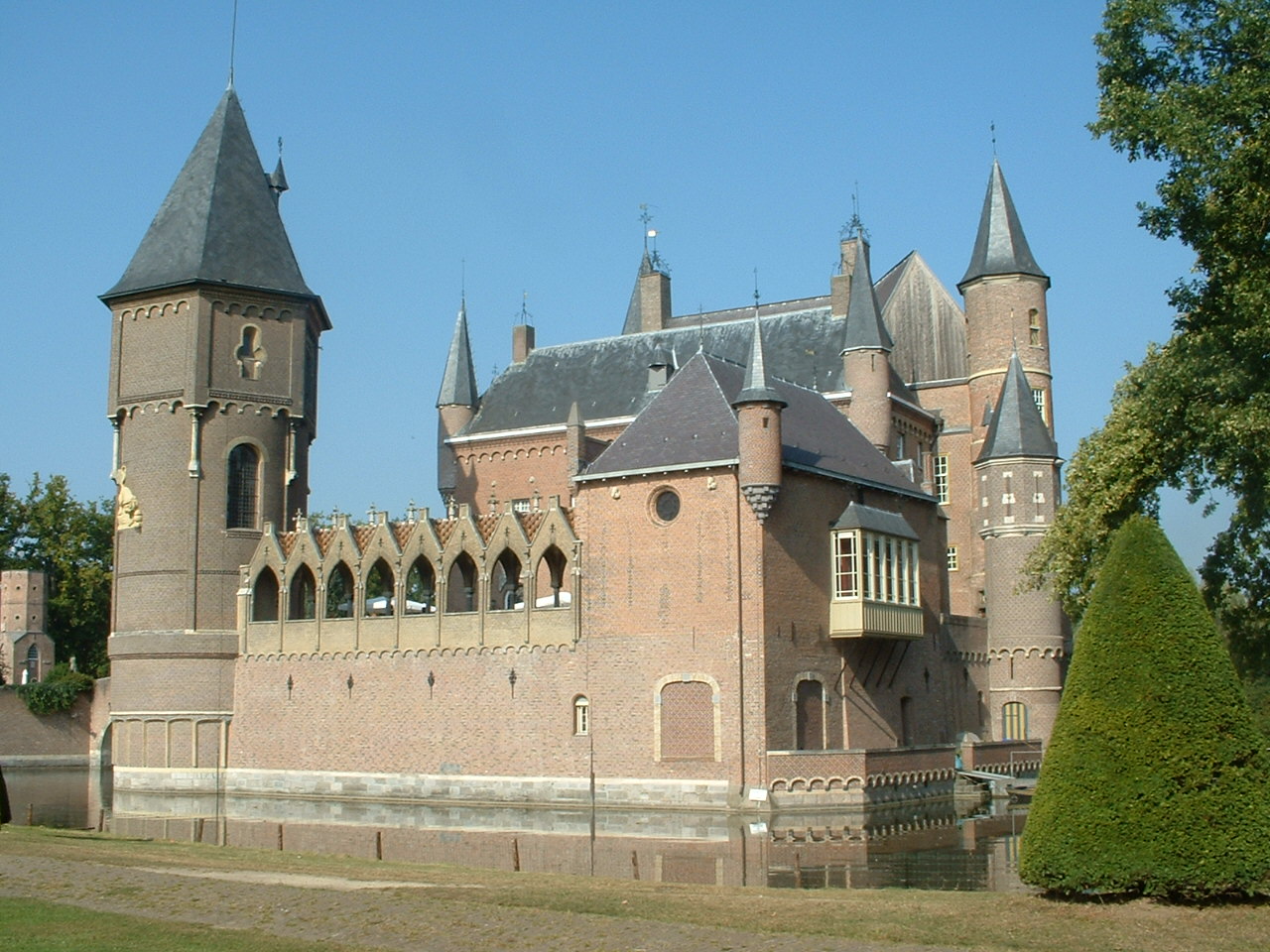
Heeswijk Castle
Heeswijk Castle is a remarkable former water castle located near the village of Heeswijk in the Dutch province of North Brabant. Its origins trace back to the 11th century, making it one of the region's oldest castles with a rich history spanning nearly a millennium. The castle's strategic location and robust fortifications have made it a significant military and residential site throughout the Middle Ages and beyond.
Early origins and medieval development
The earliest known structure on the site of Heeswijk Castle was a motte fortress established around the year 1080. This initial fortification consisted of an earthen mound (the motte) topped with a wooden or stone keep, a common defensive design during the Early Medieval period. Over time, the motte was deliberately flattened to accommodate a more substantial and permanent stone castle, reflecting architectural advancements and the increasing importance of the site.
Throughout the Middle Ages, Heeswijk Castle evolved into a fully developed water castle, a type of castle surrounded by moats or natural water defenses. This design enhanced its defensive capabilities against sieges and attacks. The castle's walls, towers, and gatehouses were reinforced and expanded, adapting to the changing military technologies and political landscape of the region.
Military significance and historical events
Heeswijk Castle played a pivotal role in several notable historical events, particularly during the turbulent conflicts of the 16th and 17th centuries. Around the year 1600, the castle withstood two sieges by Prince Maurice of Nassau, a leading military commander of the Dutch Republic. Despite his efforts, Maurice was unable to capture the fortress, underscoring its formidable defenses.
However, in 1629, Maurice's half-brother, Frederik Hendrik, successfully seized Heeswijk Castle. This victory was strategically significant as it allowed the Dutch forces to proceed with the siege of 's-Hertogenbosch, a major city under Spanish control. The castle thus served as a critical military asset during the Eighty Years' War.
Later, in 1672, during the Franco-Dutch War, the castle briefly hosted an unexpected guest: Louis XIV of France, known as the Sun King. His presence at Heeswijk Castle highlighted the castle's ongoing strategic importance in European power struggles.
At the close of the 18th century, the castle was used as headquarters by General Pichegru, a prominent commander during the French Revolutionary Wars led by Napoleon Bonaparte. This further illustrates Heeswijk Castle's enduring military relevance across centuries.
Restoration and cultural significance in the 19th century
By the early 19th century, Heeswijk Castle had fallen into ruin. In 1835, it was purchased by Governor André baron van den Bogaerde van Terbrugge, who initiated an extensive restoration project to revive the castle's former grandeur. His efforts included structural repairs and expansions, transforming the castle into a residence and cultural site.
The restoration also included the addition of the Arms Room and the Yser Tower, which were designed to house the baron's extensive collections of paintings, medieval sculptures, artifacts, and curiosities. This collection was maintained and expanded by his sons, Louis and Donat, who opened the castle's museum to visitors by appointment, enhancing its role as a cultural institution.
However, much of this collection was sold at auction around 1900, dispersing many of the castle's treasures. Despite this, Heeswijk Castle remains a significant heritage site, reflecting both its martial past and its 19th-century revival as a museum and noble residence.
Architectural features and preservation
Heeswijk Castle exemplifies the characteristics of a water castle with its surrounding moats and fortified walls. The castle complex includes multiple defensive structures such as towers, gatehouses, and battlements that illustrate the evolution of medieval military architecture. The Yser Tower, added during the 19th-century restoration, stands as a notable feature blending historic and revivalist architectural elements.
Today, the castle is well preserved and continues to attract visitors interested in medieval history, military architecture, and Dutch cultural heritage. Its location in North Brabant makes it accessible for those exploring the historical landscapes of the Netherlands.
Visiting Heeswijk Castle
Visitors to Heeswijk Castle can explore its historic grounds, including the moats, towers, and restored interiors. The castle often hosts cultural events, exhibitions, and guided tours that provide insights into its complex history and architectural significance. Its picturesque setting and well-maintained structures make it a valuable destination for history enthusiasts and tourists alike.
Frequently asked questions (FAQ)
- When was Heeswijk Castle originally built?
- Heeswijk Castle dates back to the 11th century, with its earliest fortification being a motte fortress established around 1080.
- What type of castle is Heeswijk Castle?
- Heeswijk Castle is a former water castle, characterized by its defensive moats and surrounding water features.
- What significant historical events took place at Heeswijk Castle?
- The castle resisted sieges by Prince Maurice around 1600, was captured by Frederik Hendrik in 1629, hosted Louis XIV in 1672, and served as headquarters for General Pichegru in the late 18th century.
- Who restored Heeswijk Castle in the 19th century?
- Governor André baron van den Bogaerde van Terbrugge purchased and restored the castle starting in 1835, adding the Arms Room and Yser Tower.
- Is Heeswijk Castle open to visitors today?
- Yes, Heeswijk Castle is well preserved and open to visitors, offering tours and cultural events that showcase its history and architecture.
Information
Loading map...
Visitor reviews
No reviews yet. Been here? Write the first review and help other travelers!
Write the first reviewVisited this castle? Share your experience
Your review helps other travelers and adds first-hand knowledge to our encyclopedia.