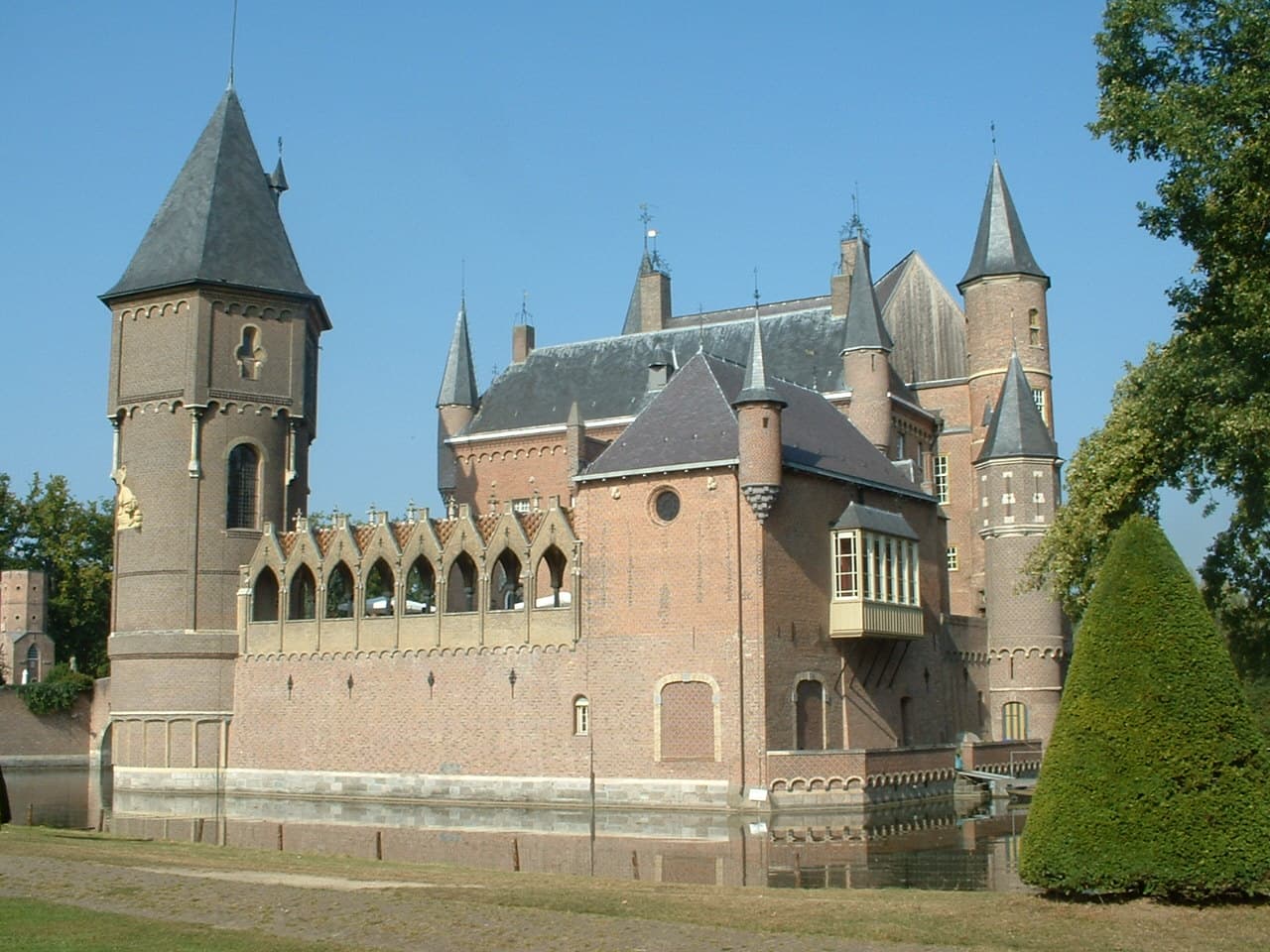
Heeswijk Castle
Heeswijk Castle, located at Kasteel 4 in the province of Noord-Brabant, Netherlands, is a remarkable example of a high medieval hill castle with origins dating back to the 11th century. Situated west of the village of Heeswijk-Dinther, the castle stands on an artificial motte overlooking a bend in the River Aa, a strategic location that historically controlled river traffic and provided natural defense. Over the centuries, Heeswijk Castle evolved architecturally and historically, playing a pivotal role in regional conflicts and Dutch history.
Early origins and medieval development
The initial fortification on the site was a motte-and-bailey structure built before 1100, likely around 1080. This early castle featured a wooden and stone keep atop a raised earthwork, surrounded by a moat fed by the river. The first documented owner was Count Almericus in 1156. By the late 13th century, through marriage, the castle came into the possession of the Van Benthum family, who expanded the fortifications by adding a round tower and a square gate tower, enhancing its defensive capabilities.
Sieges and ownership changes in the 14th and 15th centuries
Heeswijk Castle endured several sieges, notably around 1370 when forces from Guelders and Jülich unsuccessfully attempted to capture it. Following this, Willem van der Aa acquired the castle and initiated a transformation into a large square stronghold. By 1400, the castle passed to Knight Hendrik van der Lecke, whose daughter completed the extensive building campaigns by 1450, solidifying the castle’s medieval form.
Late gothic renovations and military significance
In 1499, Cornelis de Glymes, Lord of Zevenbergen, purchased the castle and remodeled it into a late-Gothic residence while retaining its defensive features. The castle withstood another siege in 1518 by Guelders forces led by Maarten van Rossum. Throughout the 16th century, Heeswijk Castle remained a military stronghold, resisting multiple sieges, including attempts by Prince Maurice of Orange in 1601 and 1603. Its strategic importance was underscored when it finally fell without resistance to Frederick Henry of Orange in 1629 during the siege of nearby Den Bosch.
Baroque transformation and notable visitors
After 1649, under Mathijs van Asperen, the castle was transformed into a baroque residence, losing much of its defensive character. The castle hosted significant figures such as King Louis XIV of France in 1672 during his campaign against the Dutch Republic. The Treaty of Heeswijk, an important diplomatic agreement, was signed here, and other notable visitors included King Charles II of England and bishops from Cologne and Münster. Despite its prominence, post-French occupation left the castle in a dilapidated state.
18th and 19th century ownership and restoration
The Van der Hoeven family acquired the castle in 1684, converting it into a comfortable mansion. By the 18th century, the Speelman family owned the property. During the French Revolutionary Wars, the castle served as headquarters for English and French military leaders, including Lieutenant-General Abercrombie and General Pichegru, highlighting its ongoing strategic relevance.
In 1834, Belgian Baron Andreas van den Bogaerde van Terbrugge purchased the castle, initiating extensive restorations and expansions. He added an armory and the distinctive Iron Tower to house his growing art collection. His family was instrumental in preserving the castle and contributed to regional cultural institutions, including the founding of what became the Noordbrabants Museum.
The bizarre testament and 20th-century history
Following the death of Alberic van den Bogaerde in 1895, a peculiar testament stipulated that the castle remain unoccupied and unchanged until 1963. This unusual clause delayed habitation and restoration, although parts of the art collection were sold. During World War II, the castle suffered only minor damage and was near the landing zones of the 101st Airborne Division during Operation Market Garden in 1944.
Modern restoration and current use
In 1964, descendants of Alberic van den Bogaerde returned to the castle, restoring it to its present appearance. Ownership eventually transferred to the Heeswijk Castle Foundation, which manages the site today. The castle is well preserved, showcasing a blend of medieval, late Gothic, and baroque architectural elements.
The castle functions as a museum reflecting 19th-century life and traditions, with exhibits of the art collections and a notable weapons display. The armory serves as a popular wedding venue, and the castle hosts various cultural activities, receptions, and events in its vaulted cellars and carriage house. The restoration of the River Aa’s original course around the castle further enhances its historical ambiance and landscape authenticity.
Architectural features and layout
Heeswijk Castle’s architecture reflects its evolution from a medieval fortress to a noble residence. The surviving cellars contain remnants of the original 11th-century fortification, including layers of loam, bog iron, and tuff stone. The main structure retains a semi-circular layout, consistent with its motte origins, with two round corner towers and the base of a former gate tower.
Later additions include a large round tower and gallery from the 19th century, which expanded the castle’s footprint without compromising its historical integrity. The outer bailey is a well-preserved example of 16th-century construction, featuring stepped gables, cross-windows, and alternating brick and stone walls creating a distinctive striped appearance. The castle’s moat and walls remain integral to its defensive character.
Cultural and historical significance
Heeswijk Castle is a testament to the layered history of the Netherlands, embodying architectural styles from the high medieval period through the baroque era. It has witnessed sieges, royal visits, and military campaigns, reflecting the turbulent history of the region. Today, it stands as a cultural monument preserving the heritage of North Brabant and offering insights into Dutch noble life and military architecture.
Frequently asked questions (FAQ)
- What are the opening hours of Heeswijk Castle?
- Heeswijk Castle is typically open to visitors from 10 AM to 5 PM during the week and from 11 AM to 5 PM on weekends. However, it's advisable to check the official website for any seasonal changes or special events that may affect these hours.
- What is the historical significance of Heeswijk Castle?
- Heeswijk Castle dates back to the 11th century and has a rich history intertwined with the noble families of the region. It has served various purposes over the centuries, including a defensive stronghold and a residence, making it an important landmark in Dutch heritage.
- Can I take a guided tour of Heeswijk Castle?
- Yes, guided tours are available for visitors who want to learn more about the castle's history and architecture. These tours are led by knowledgeable guides who provide insights into the castle's past and its restoration efforts.
- Is Heeswijk Castle accessible for visitors with disabilities?
- Yes, Heeswijk Castle strives to be accessible to all visitors. There are facilities in place to accommodate those with mobility challenges, including ramps and designated pathways. It's best to contact the castle in advance for specific accessibility inquiries.
- When is the best time to visit Heeswijk Castle?
- The best time to visit Heeswijk Castle is during the spring and early autumn when the weather is mild, and the gardens are in full bloom. These seasons also tend to have fewer crowds, allowing for a more enjoyable experience.
- What are the ticket prices for Heeswijk Castle?
- Ticket prices for Heeswijk Castle vary based on age and group size, with discounts available for children and seniors. It is recommended to check the official website for the most current pricing and any special offers.
- Are there any nearby attractions to visit along with Heeswijk Castle?
- Yes, there are several nearby attractions worth exploring, including the beautiful natural landscapes of the surrounding countryside and other historical sites in the vicinity. Local museums and parks also provide additional options for a full day of exploration.
Photo gallery

Information
Website
Visit websiteSources & official resources
Verify the information above using these authoritative references.
Loading map...
Visitor reviews
No reviews yet. Been here? Write the first review and help other travelers!
Write the first reviewVisited this castle? Share your experience
Your review helps other travelers and adds first-hand knowledge to our encyclopedia.



