Haut-Ribeaupierre Castle
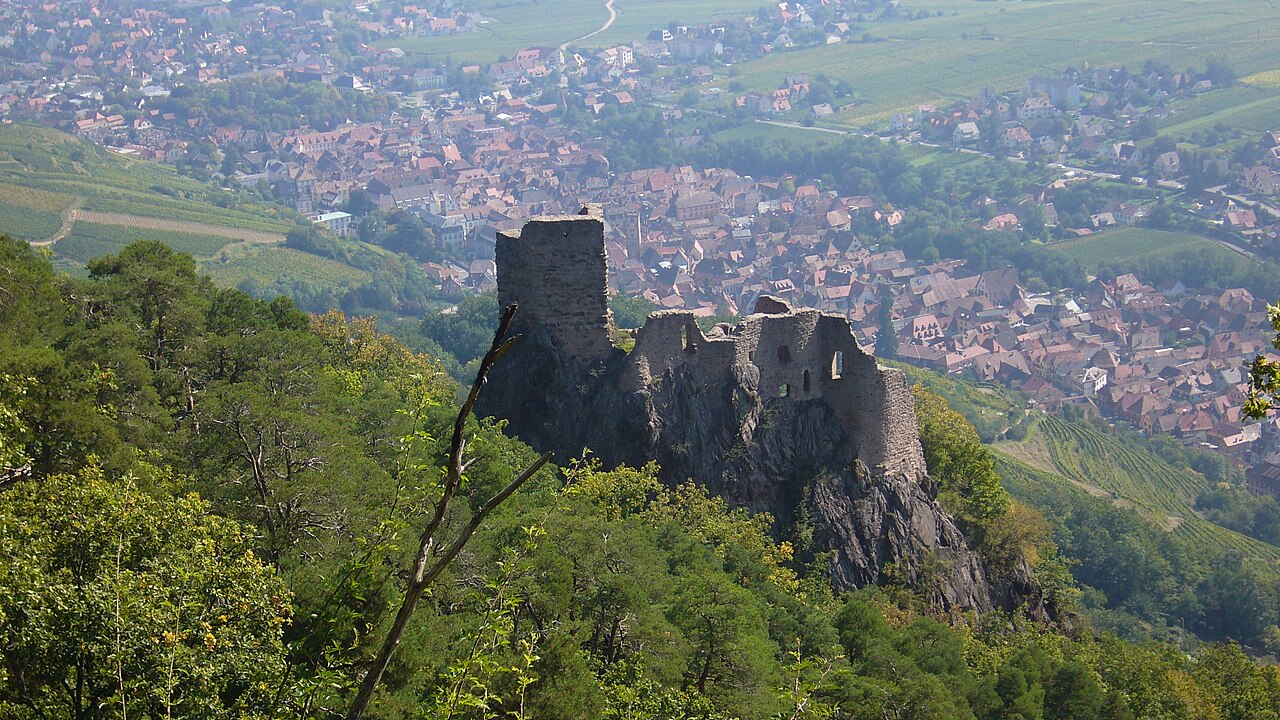
Haut-Ribeaupierre Castle, also known as Château du Haut-Ribeaupierre or Burg Hohrappoltstein, is a significant medieval fortress perched atop a hill near the village of Ribeauvillé in the Haut-Rhin department of Alsace, France. This castle is part of a trio of fortifications known as the Ribeauvillé Castles, alongside St. Ulrich Castle and Girsberg Castle, which are situated further down the mountain. The site, located at an elevation of approximately 640 meters, offers commanding views of the surrounding landscape and holds a rich history dating back to prehistoric times.
Early history and strategic location
The location of Haut-Ribeaupierre Castle has been occupied since prehistoric periods, with archaeological evidence indicating settlements from the Bronze Age and Hallstatt period. Iron Age pottery and Roman coins found at the site confirm continuous human presence before the medieval castle's construction. Between the 9th and 11th centuries, the hilltop served as a fortified site featuring multiple ramparts and ditches, laying the groundwork for the later medieval fortress.
The castle's earliest recorded mention dates to 1038, likely referring to the large enclosure that Haut-Ribeaupierre partially occupies. The site was originally known as Altenkastel or "Old Castle," a name that persisted into the 13th century. Its strategic hilltop position made it a vital defensive and observation post overseeing the surrounding region of Southern Alsace and the Vosges Mountains.
Medieval construction and ownership
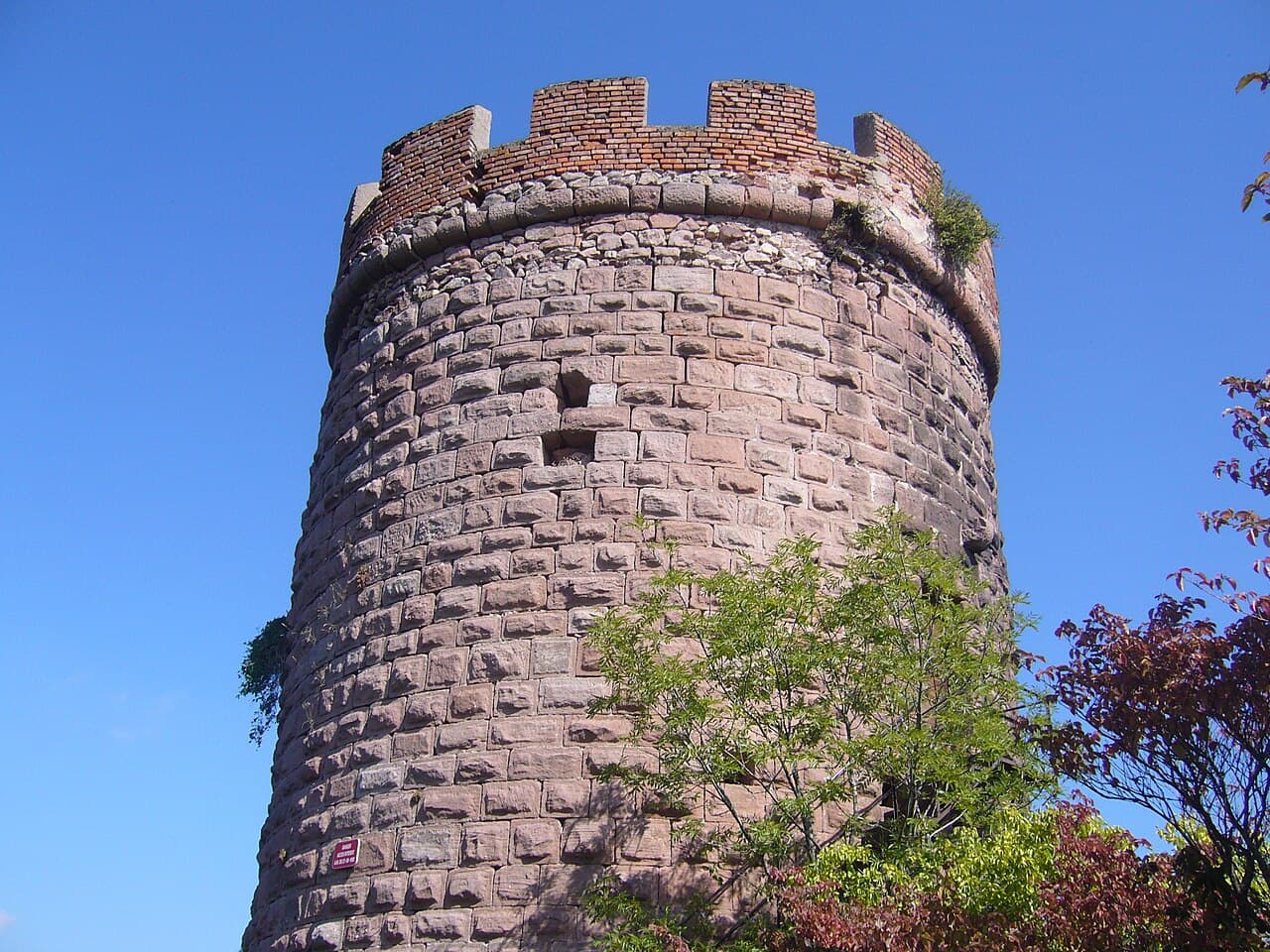
In the 12th century, the noble Lords of Ribeaupierre moved down the mountain to build St. Ulrich Castle. However, in the 13th century, they reoccupied the mountaintop and constructed the current Haut-Ribeaupierre Castle, with the first half of the century marking the erection of its prominent round bergfried (keep). This tower, rising approximately 23 meters tall with walls over three meters thick, was a formidable defensive structure with four floors and a first-floor entrance accessed originally by a wooden gallery.
Throughout the 13th century, the castle was held as a fief under the Bishopric of Bamberg before control shifted to the Bishopric of Basel by 1268, although Bamberg contested this claim into the 14th century. The Rappoltstein family, also known as the Ribeaupierres, maintained ownership from at least 1254 until their lineage ended in 1673.
Historical significance and notable events
Haut-Ribeaupierre Castle played diverse roles over the centuries. It served as a noble residence, a military garrison, and a prison. In 1287, the castle withstood a siege by Rodolphe de Habsbourg during a conflict with its keeper, Anselme de Ribeaupierre. The siege lasted only three days before being lifted.
In the late 14th century, the castle gained notoriety when Bruno I of Rappoltstein imprisoned the English knight John Harleston from 1384 to 1387 despite Harleston holding an imperial safe conduct. Harleston was eventually released after a substantial ransom and imperial pressure. Another notable prisoner was Philippe de Croÿ, Count of Chimay, held captive in 1477 after being captured during the conflicts involving Charles the Bold.
By the 16th century, the castle's primary function shifted to an observation post, monitoring for fires and enemy movements. During the 17th century, it was repurposed as a regional prison. However, by 1643, the castle was depicted as roofless and in ruins, likely due to damage sustained during the Thirty Years’ War.
Architectural features and castle layout
The castle complex occupies a pear-shaped hilltop approximately 150 meters long and between 15 and 51 meters wide. It developed through five main construction phases, beginning with prehistoric fortifications and culminating in the medieval upper castle built in the 13th century. The upper castle sits on a rocky spur about 12 meters above the lower bailey.
The most prominent surviving structure is the round bergfried, which stands roughly 23 meters tall with walls over three meters thick made of local porphyritic granite rubble and sandstone for cornerstones and ashlar blocks. The tower contains four floors with wooden ceilings, and its main entrance was originally on the first floor, accessed by a wooden gallery now lost except for beam holes and a corbel stone.
A vaulted cistern, approximately 3.5 meters in diameter, lies at the southern edge of the upper castle rock, historically used to collect and store water. Nearby are remnants of a residential building, now reduced to a retaining wall constructed of sandstone and granite rubble.
The lower castle, dating from the late 13th or 14th century, extends to the west and north. Its curtain walls reach up to 10 meters high and nearly two meters thick, featuring a northern wall with a former battlement walkway and a small gate. The gate's doorway was reconstructed in the early 20th century using reused stones from the site.
On the west side of the lower castle stood a large two-story residential building with wooden floors and a steep gabled roof, including a latrine turret on the upper floor. The southern side contains a late Gothic double gate complex built in the 15th or 16th century, comprising two stilted arch gateways with slots for drawbridges and pedestrian posterns. The second gate was never fully completed. Adjacent to this gate is a round stair tower that once provided access to the upper castle, which was originally reachable only by drawbridge.
South of the cistern on the slope are remains of a polygonal artillery bastion from the 15th or 16th century, likely built to defend the southern gate and bridge. Surrounding the castle is a complex system of older walls and ditches, partially overlain by the medieval structures.
Current condition and visitor information
Today, Haut-Ribeaupierre Castle is a well-preserved ruin surrounded by dense vegetation. The site is freely accessible to visitors, though climbing the bergfried is no longer permitted for safety reasons. The castle's rugged hilltop location means that reaching it requires a strenuous hike, especially if visiting all three Ribeauvillé Castles.
Visitors are advised to prepare for a few hours of walking along steep and uneven paths. The castle remains a fascinating site for those interested in medieval architecture, regional history, and panoramic views of the Alsace region. Restoration and conservation efforts have been ongoing to stabilize the ruins and preserve this cultural landmark.
Cultural significance and heritage status
The castle is recognized as a French historic monument since 1841 and remains state property. Its long history, architectural features, and association with the noble Ribeaupierre family contribute to its cultural importance in Alsace. Haut-Ribeaupierre Castle stands as a testament to medieval fortification techniques and the turbulent history of the region, offering valuable insights into feudal society and military architecture.
Frequently asked questions (FAQ)
- How do I reach Haut-Ribeaupierre Castle?
- Haut-Ribeaupierre Castle is accessible only by foot via steep and strenuous hiking trails. Visitors should be prepared for a challenging walk and wear appropriate footwear.
- What is the historical significance of Haut-Ribeaupierre Castle?
- Haut-Ribeaupierre Castle was a medieval fortress and noble residence with a rich history, including use as a prison and military observation post. It played a key role in regional conflicts and housed notable prisoners.
- Can I climb the bergfried at Haut-Ribeaupierre Castle?
- Climbing the bergfried is currently not permitted for safety reasons. Visitors can explore the castle ruins and enjoy panoramic views from the hilltop.
- When was Haut-Ribeaupierre Castle built?
- The current castle was constructed in the 12th century, with significant additions in the 13th century, including the prominent round bergfried.
- Is Haut-Ribeaupierre Castle open to the public?
- Yes, the castle ruins are freely accessible to the public year-round, but visitors should exercise caution due to uneven terrain and unstable structures.
Photo gallery

Information
Sources & official resources
Verify the information above using these authoritative references.
Loading map...
Visitor reviews
No reviews yet. Been here? Write the first review and help other travelers!
Write the first reviewVisited this castle? Share your experience
Your review helps other travelers and adds first-hand knowledge to our encyclopedia.