Hasegg Castle
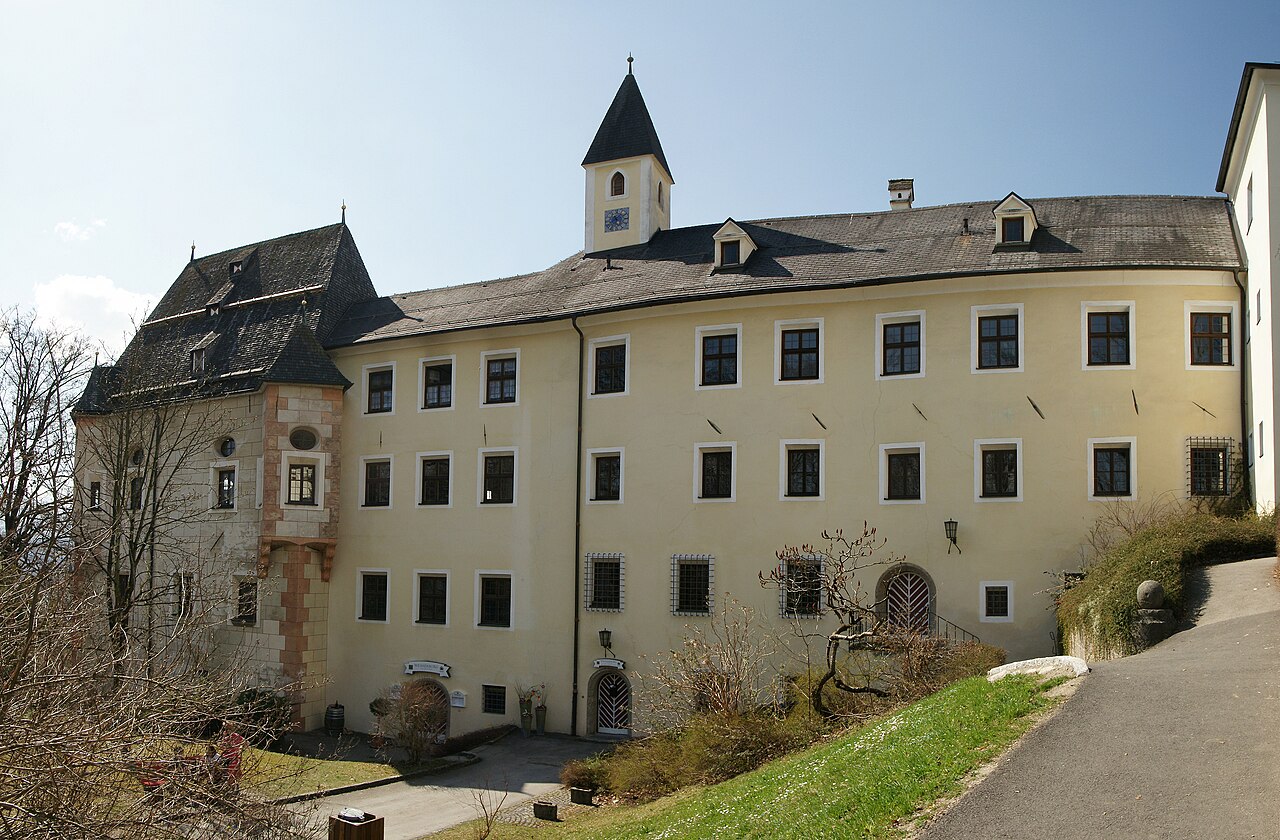
Hasegg Castle, located in Hall in Tirol, Austria, stands as a remarkable example of late medieval fortress architecture intertwined with the region's rich history of salt mining and coin minting. Constructed shortly after 1300, the castle was strategically positioned to protect vital economic assets including the nearby salt mines, the shipping routes along the Inn River, and the ancient Roman road crossing. Over centuries, it evolved from a defensive stronghold into a significant center for coin production, especially renowned for minting the famous silver Thalers.
The castle’s origins are deeply connected to the prosperity of Tyrol during the medieval period, when salt was a precious commodity driving the regional economy. Initially built as part of Hall’s city fortifications, Hasegg Castle’s earliest recorded mention dates to 1306, highlighting its role as a projecting corner of the city walls. A watchtower known as the turris in salina was already referenced in 1296, serving as an essential fire lookout due to the fire hazards inherent in salt production.
Architectural evolution and defensive features
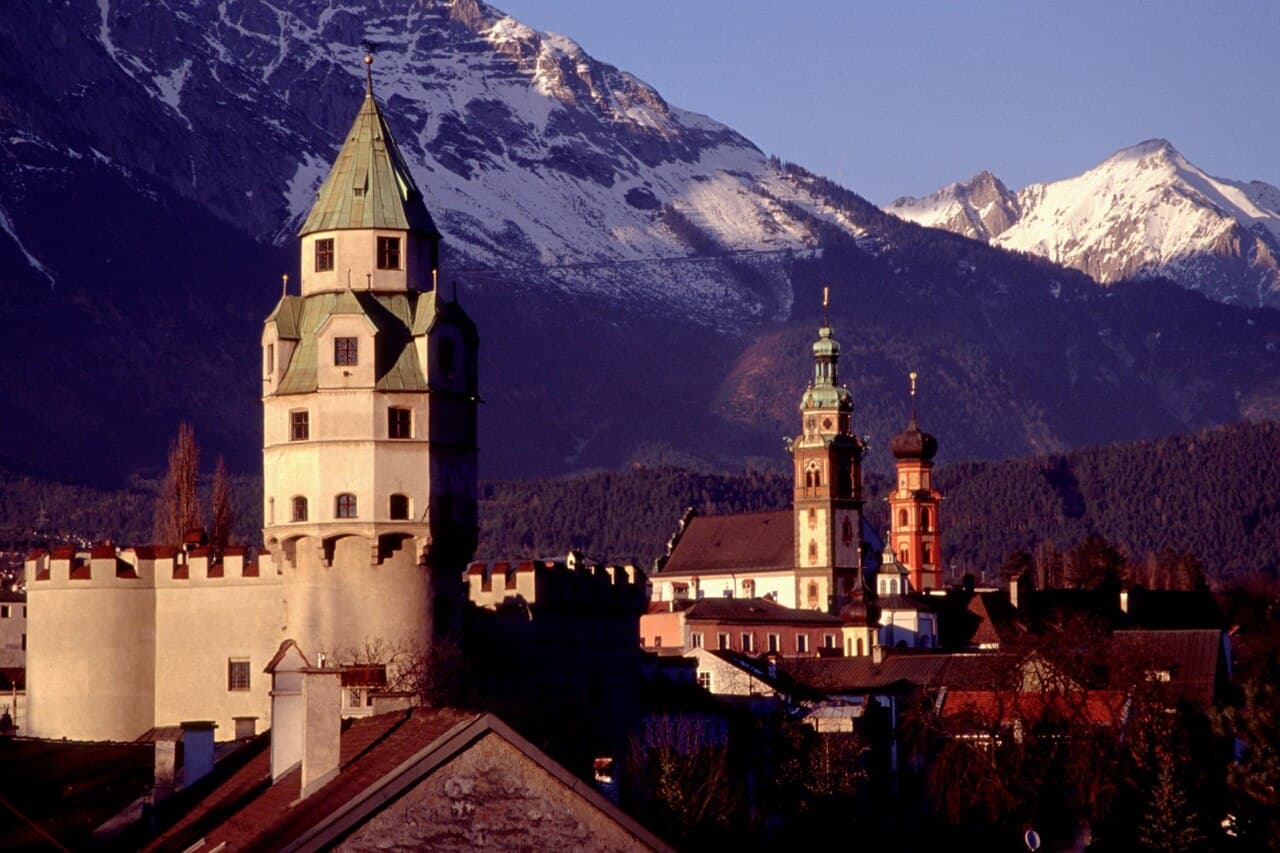
The castle’s architectural fabric reflects its multi-functional history, combining military, industrial, and residential elements. Constructed primarily of rubble masonry, the fortress incorporates typical early Gothic features of Tyrolean fortress design. Its most prominent structure is the Münzerturm or coin tower, completed around 1490 under the patronage of Archduke Sigismund. This tower rises approximately 45 meters and features a spiral staircase winding through five stories within a circular base nearly 10 meters in diameter. Above this, a distinctive three-story dodecagonal (twelve-sided) section topped with a lantern crowns the tower, which historically served as a watchpoint and clock tower for the saltworks.
The tower’s exterior is adorned with baroque sundials and a mechanical clock, underscoring its dual role in defense and timekeeping. The pointed roof, made of heavily tarnished copper, is a notable visual landmark. The castle’s defensive capabilities were further enhanced in 1490 with the construction of the Münzertor (coin gate) and the strengthening of the adjacent Hasegger Tor by adding a bastion, reflecting ongoing military adaptations.
The Georgskapelle: a chapel of imperial significance
Between 1515 and 1617, Emperor Maximilian I commissioned the construction of the Georgskapelle (St. George’s Chapel) within the castle complex. This chapel is architecturally unique, designed as a small, intimate space for the emperor and his close retinue, enclosed within a larger hall to accommodate a broader congregation. The chapel’s side walls contain pierced openings allowing attendees outside the main chapel to participate in services, while an opening in the ceiling enabled the emperor to observe mass privately from chambers above.
The chapel’s apse projects outward as an oriel window into Münzergasse street, an unusual feature ensuring no one would reside above the altar. Inside, the chapel boasts a net rib vault supported by seven angelic busts bearing coats of arms from Tyrol, Carinthia, Burgundy, the Holy Roman Empire, Austria, Styria, and Carniola. The entrance is marked by an iron-plated door painted with symbols of the Order of the Golden Fleece, set within a red marble Gothic portal. Additional decorative elements include 18th-century door wings and a rococo-style grille featuring the imperial eagle, while the interior walls display rich foliate paintings and pointed arch windows with tracery. The altar, dating from the 19th century, is rococo in style and flanked by statues of saints George, Sebastian, and Florian.
The minting legacy and economic importance
Hasegg Castle’s historical prominence is largely due to its role as the site of the Tyrolean mint, established by Archduke Sigismund in 1477. The mint introduced groundbreaking technology, including the first use of mechanical coin production with rolling presses. The first silver coin roughly the size of a dollar was struck here in 1486, marking a significant advancement in European minting techniques.
In 1567, Archduke Ferdinand II transferred the mint operations from the Castle of Sparberegg to Hasegg, catalyzing an economic upswing for Hall in Tirol. Between 1748 and 1768, the mint reached its zenith, producing over 17 million silver Thalers, which gained widespread recognition and circulated extensively across Europe.
The mint’s operations ceased in 1806 due to the Napoleonic Wars and dwindling local silver resources. Later, during the Tyrolean Rebellion of 1809, minting was halted under Bavarian occupation. Subsequently, the mint workshops were repurposed for storage and housing for saltworks employees.
Archaeological excavations in 2015 uncovered artifacts associated with a 16th-century rolling minting machine, providing tangible evidence of the castle’s minting heritage. Today, the mint is preserved as a museum open to the public, featuring demonstrations of historical minting techniques that attract visitors interested in numismatics and industrial history.
Architectural details and interior features
The castle’s interior reveals a complex layering of functions and styles reflecting its long history. During renovations in 1974, a previously hidden princely chamber was discovered, notable for its massive Gothic beam ceiling. Adjacent to this chamber is a preserved 15th-century toilet facility, separated by a wooden door, offering rare insights into medieval domestic arrangements.
The vaulted cellars, originally serving as the saltworks’ armory, feature Gothic net vault ceilings and were equipped with large iron hooks designed to hang leather sacks containing gunpowder and other materials. These underground spaces were adapted over time for mint storage and later residential purposes.
The castle courtyard includes a coin office and workshops built into the western outer defensive wall, or zwinger, constructed in 1567 to support the expanding mint operations. The Münzerturm underwent restoration in 2005 and remains a symbol of Hall in Tirol, its image once featured on the Austrian ten-schilling banknote issued in 1946.
Modern use and cultural significance
Today, Hasegg Castle serves multiple cultural and community functions. It houses the Hall city museum and the Münze Hall coin museum, which showcase the castle’s minting history and regional heritage. The museums display historic minting equipment, produce commemorative coins, and offer educational programs and live demonstrations.
The castle’s buildings are also used for events, exhibitions, and include a restaurant, all integrated within the preserved historical fabric. Ownership remains with Austrian Salines AG, which leases the property to the city for 99 years, ensuring its preservation and public accessibility.
Hasegg Castle stands today not only as a monument to medieval military architecture but also as a testament to the economic and technological history of Tyrol. Its rich legacy in salt mining and coin minting continues to attract historians, tourists, and numismatists from around the world.
Frequently asked questions (FAQ)
- How do I get to Hasegg Castle?
- Hasegg Castle is located in Hall in Tirol, Austria, easily accessible by car and public transport. If you are traveling by train, the Hall in Tirol train station is just a short walk from the castle.
- What is the historical significance of Hasegg Castle?
- Hasegg Castle dates back to the 15th century and was originally built to serve as a residence for the local nobility. It played a crucial role in the administration of the salt trade in the region, contributing significantly to the wealth of Hall in Tirol.
- When was Hasegg Castle built?
- Hasegg Castle was constructed in the mid-15th century, specifically around 1450. Its architecture reflects the Gothic style prevalent during that time, making it an important historical landmark.
- Can I visit Hasegg Castle year-round?
- Yes, Hasegg Castle is open for visitors year-round, although specific opening hours may vary by season. It's advisable to check the castle's official website for the most current visiting information before planning your trip.
- Why is Hasegg Castle famous for its architecture?
- Hasegg Castle is renowned for its impressive Gothic architecture and well-preserved interiors that showcase the style of the era. The castle features stunning towers and walls that provide insight into medieval fortification techniques.
- Is it possible to take guided tours of Hasegg Castle?
- Yes, guided tours are available at Hasegg Castle, providing a deeper understanding of its history and architecture. These tours are led by knowledgeable guides who share fascinating stories about the castle's past.
- What are the ticket prices for Hasegg Castle?
- Ticket prices for Hasegg Castle vary based on age and group size, with discounts available for children and seniors. It’s best to check the official website for the latest pricing information and any special offers.
- What are the opening hours of Hasegg Castle?
- Hasegg Castle typically opens at 9 AM and closes at 5 PM, but these hours may change seasonally. Be sure to confirm the hours before your visit to avoid any inconvenience.
- What are some nearby attractions to Hasegg Castle?
- Nearby attractions include the charming old town of Hall in Tirol, with its historic buildings and shops. The surrounding Tyrolean mountains offer beautiful hiking trails and stunning views, perfect for outdoor enthusiasts.
Photo gallery

Information
Website
Visit websiteSources & official resources
Verify the information above using these authoritative references.
Loading map...
Visitor reviews
No reviews yet. Been here? Write the first review and help other travelers!
Write the first reviewVisited this castle? Share your experience
Your review helps other travelers and adds first-hand knowledge to our encyclopedia.