Hakoinen Castle

Hakoinen Castle: medieval hill fort ruins in Janakkala, Finland
Janakkala, Finland
High Medieval (11th–13th c.)
Ruins

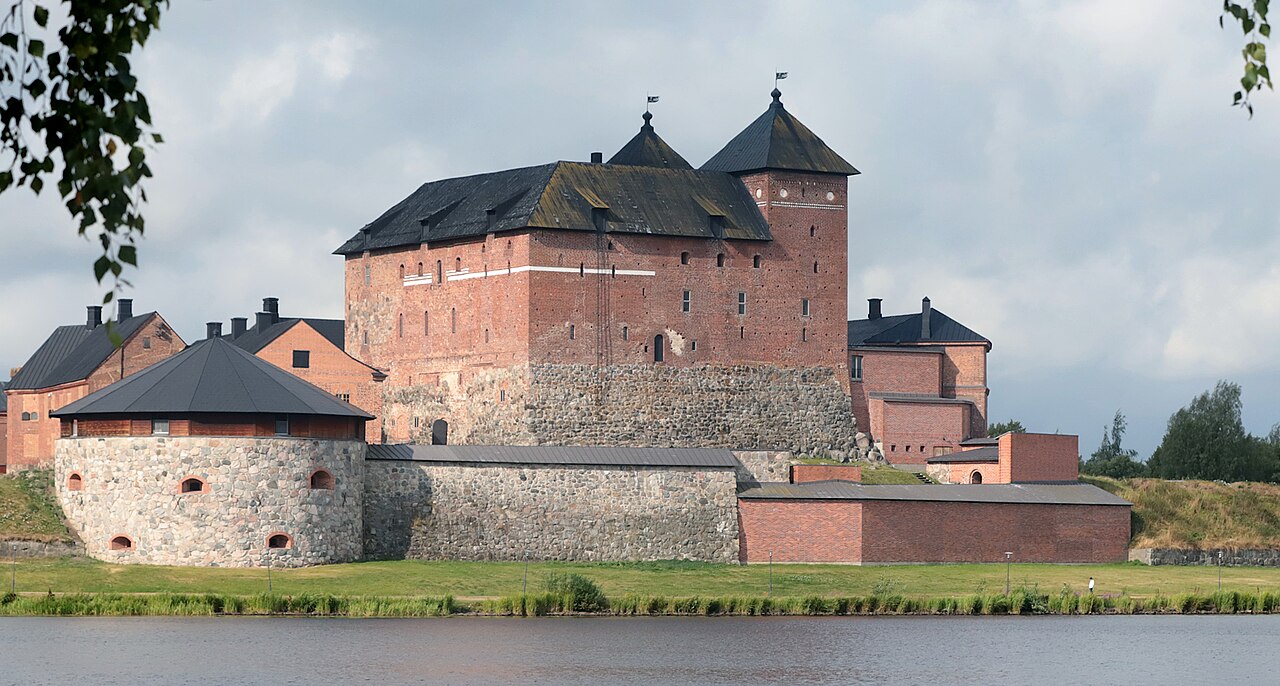
Hakoinen Castle is a medieval hill fortification located in Janakkala, Finland, known today primarily for its ruined remains atop a steep rock overlooking Lake Kernaala (Kernaalanjärvi). The castle's strategic position on a rock rising 63 meters above the lake reflects the traditional hill fort defensive style common in the region during the High Medieval period. Although much of the original structure has been lost to time, archaeological findings and historical records provide insight into its significance and construction.

Historical context and origins

The exact origins of Hakoinen Castle remain somewhat obscure, but it is generally believed to have been constructed in the late 13th or early 14th century, around circa 1250. The castle likely served as a Swedish stronghold in the medieval province of Häme, an area critical for controlling trade routes and territorial defense during the Swedish-Novgorodian Wars. Notably, some historians speculate that Hakoinen was the fort attacked by Novgorodian forces in 1311, as referenced in the Novgorod Chronicle, although definitive proof is lacking.

Following its military use, Hakoinen Castle appears to have been gradually abandoned by the late 14th century, with some activity persisting until the 1380s. Subsequently, the castle rock became part of a large estate managed by the bailiff of Häme Castle, indicating its continued regional importance despite the decline of its fortifications.

Architectural features and layout

Excavations reveal that Hakoinen Castle was divided into two main sections. The lower defensive structures were primarily constructed from wood, a common material choice for fortifications in Finland during this period due to abundant forests and ease of construction. In contrast, the upper parts situated on the rock utilized more durable materials, including bricks and stones, suggesting a focus on stronger defenses at the most vulnerable or critical points.

The castle likely featured a single tower, which would have served as both a lookout and a last line of defense. The use of brick and stone in the upper constructions indicates an architectural transition from purely wooden hill forts toward more permanent medieval castles, reflecting influences from broader European castle-building trends.

Defensive advantages of the site

The castle's location on a steep rock provided natural defensive benefits. The elevation made direct assaults difficult and offered expansive views over the surrounding landscape, including the lake and nearby territories. This vantage point was crucial for early warning against invaders and controlling movement through the region.

Later history and current state

After falling out of military use, Hakoinen Castle's strategic importance diminished, and it was eventually abandoned as a fortress. The site transitioned to agricultural and estate functions under the management of local authorities connected to Häme Castle. Over centuries, the wooden structures decayed, and the stone and brick elements deteriorated, leaving only ruins visible today.

Despite its ruinous condition, the castle hill remains a site of cultural and historical interest. The natural surroundings have preserved medieval flora, and the panoramic views from the top continue to attract visitors. The combination of historical significance and natural beauty makes Hakoinen Castle hill a notable destination for those interested in Finland's medieval heritage and hill fort architecture.

Visiting Hakoinen Castle today

Visitors to Hakoinen Castle can explore the site’s ruins and enjoy the scenic vistas of Lake Kernaala and the surrounding countryside. While little remains of the original fortifications, the site’s elevated position and natural environment offer a glimpse into medieval defensive strategies and landscape use. The area is accessible for hiking and provides an educational experience about High Medieval Finnish fortifications.

The castle hill is also significant for its archaeological value, with ongoing studies contributing to understanding medieval military architecture in Finland. Interpretive signage and guided tours may be available seasonally, enhancing visitor appreciation of the site’s historical context.

Frequently asked questions (FAQ)

What is the historical significance of Hakoinen Castle?
Hakoinen Castle is a significant historical site in Janakkala, Finland, dating back to the medieval period. It played a crucial role in the defense against invasions and served as a residence for local nobility, reflecting the architectural and cultural evolution of the region.
When was Hakoinen Castle built?
Hakoinen Castle was constructed in the late 14th century, with its historical roots deeply embedded in the tumultuous times of medieval Finland. The castle underwent various renovations over the centuries, showcasing different architectural styles and historical periods.
What are the opening hours of Hakoinen Castle?
Hakoinen Castle is open to visitors from May through September, typically from 10 AM to 6 PM. It's advisable to check the official website for any seasonal changes or special events that may affect opening hours.
Can I visit Hakoinen Castle with my family?
Yes, Hakoinen Castle is family-friendly and welcomes visitors of all ages. The site offers guided tours that are engaging for children and adults alike, providing a fascinating insight into the castle's history and architecture.
Is it possible to access Hakoinen Castle by public transportation?
Yes, Hakoinen Castle is accessible by public transportation, with bus services running from nearby towns to Janakkala. However, check local schedules as services may vary, especially outside the peak tourist season.
What is the best time to visit Hakoinen Castle?
The best time to visit Hakoinen Castle is during the summer months, from June to August, when the weather is warm and the castle hosts various events. Additionally, this time of year offers the most extended visiting hours and the chance to explore the castle's beautiful surroundings.
Are there any nearby attractions to explore while visiting Hakoinen Castle?
Yes, visitors can explore several nearby attractions, including the beautiful landscapes of Janakkala and the historic sites of the surrounding area. The local museums and nature trails offer a rich experience for those looking to extend their visit.
What are the ticket prices for visiting Hakoinen Castle?
Ticket prices for Hakoinen Castle are generally reasonable, with discounts available for students and seniors. It's best to check the official website for current pricing and any special offers that may be available during your visit.

Information

Hill Castle

Loading map...

Visitor reviews

No reviews yet. Been here? Write the first review and help other travelers!

Write the first review

Visited this castle? Share your experience

Your review helps other travelers and adds first-hand knowledge to our encyclopedia.
Write a review

(5/5)

0/2000 characters

Your review will be visible after admin approval

Nearby castles

15.7 km
Häme Castle — Finland castle

Häme Castle

Hämeenlinna, Finland

Häme Castle, located in the town of Hämeenlinna on the shores of Lake Vanajavesi in Finland, stands as one of the country's most significant medieval fortresses. Perched approximately 12 meters above the lake's current water level, the castle's origins date back to the late 13th century, although the exact construction date remains a subject of scholarly debate. Traditionally linked with the legendary Second Swedish Crusade, the castle was thought to have been built in the mid-13th century. However, archaeological evidence only firmly supports a construction period from the early 14th century onward, around the 1320s, making Häme Castle a key example of High Medieval fortification in Finland. The castle was strategically constructed as a hill castle on what was originally an island, providing natural defense advantages. Its early role was to secure Swedish control over the Häme region during the expansion of the Swedish kingdom into Finnish territories. The fortress was first mentioned in historical documents in 1308, referred to as "Tauestahus" in royal records, marking its importance as a military and administrative center. The castle's location at the crossroads of vital national roads further enhanced its strategic value even after the border moved away following the Treaty of Nöteborg in 1323. Architectural evolution and construction phases The original castle was built primarily from gray stone, featuring a roughly square layout with sides measuring about 33 meters and walls approximately 7 meters high. It included three defensive towers at the north, east, and south corners, and was surrounded by a perimeter wall. The interior courtyard contained wooden residential buildings and a deep well, which remains visible today. This early structure reflects typical medieval defensive architecture, emphasizing strong stone walls and towers for surveillance and protection. During the 14th and 15th centuries, Häme Castle underwent significant expansion and modification with the introduction of brick construction, a relatively rare material in medieval Finland. This phase saw the raising of walls with brick, the addition of barrel vaults, and incorporation of Gothic decorative elements, which enhanced both the castle's defensive capabilities and residential comfort. The castle's courtyard was largely rebuilt in brick, replacing earlier stone surfaces, and the internal layout was divided into a ground floor accessible to all inhabitants and an upper floor reserved for the castle's governor and court, paralleling the design of Turku Castle. In the mid-16th century, under the reign of King Gustav I of Sweden, two round artillery towers, or "rondells," were added to the castle's defenses, reflecting advances in military technology and the increasing use of cannon warfare. These towers improved the castle's ability to withstand artillery attacks. The main hall was refurbished in the early 17th century and became known as the "King's Hall," symbolizing the castle's continued administrative importance. Historical significance and military role Initially constructed as a border fortress, Häme Castle's military importance declined after the Peace of Nöteborg in 1323, which moved the Swedish-Russian border eastward. Despite this, the castle remained a vital military base due to its strategic position at key road intersections. It experienced periods of relative peace in the 14th and 15th centuries but faced threats during conflicts such as the Novgorodian invasion of 1311 and later during the rise of the Moscow Principality in the late 15th century. In the early 16th century, Häme Castle served as a court maintenance center and administrative hub. It was involved in significant historical events, including the transfer of control during conflicts between Sweden and Denmark, and visits by important figures such as Svante Niilonpoja and Gustavus Adolphus. The castle's defensive readiness was notably restored in the early 1600s, but by the late 17th century, it began to fall into disrepair due to shifting political priorities and warfare focusing on southern Baltic regions. Throughout the 18th century, Häme Castle was occupied by Russian forces during the Great Northern War and the Russo-Swedish War. The Russians improved the castle's defenses slightly during their occupation. Later in the century, under King Gustav III, the castle and its surroundings were fortified with bastions and moats following contemporary military engineering principles, transforming it into a bastioned fortress to better withstand artillery sieges. Transformation into a prison and restoration efforts From the early 19th century, Häme Castle was repurposed as a prison, a role it maintained until the mid-20th century. In 1837, architect Carl Ludvig Engel oversaw its conversion into a formal penitentiary, accommodating up to 300 inmates. The castle housed Finland's only female prison between 1881 and 1953, a period marked by notoriously harsh conditions. Additional prison buildings were constructed along the perimeter walls, including facilities built in 1839 and 1871, significantly altering the castle's internal layout and function. Prison use continued until 1953 for the main castle and until 1972 for the perimeter walls. Following the relocation of inmates, extensive restoration work began under the guidance of architect Nils Erik Wickberg. The restoration aimed to reverse many prison-era modifications and restore the castle's medieval character. Key efforts included bricking up enlarged doors and windows to approximate original forms and relocating the main entrance to the historic well area known as the "Kellari" or "Well House." The main castle restoration was completed in 1979, with the perimeter walls and bastions restored by 1988. Cultural importance and current status Today, Häme Castle stands as a well-preserved example of a High Medieval hill castle with a layered history reflecting Finland's complex political and military past. The castle operates as a museum, offering visitors insights into medieval fortification architecture, Swedish and Finnish history, and the site's later use as a prison. The surrounding bastions and parkland enhance the visitor experience, while nearby museums provide further context about the castle's military and penal history. The castle is also a venue for private events, blending its historical ambiance with contemporary cultural use. Its preservation and presentation contribute significantly to the understanding of medieval and early modern fortifications in the Nordic region, making Häme Castle a vital heritage site in Kanta-Häme region.

High Medieval (11th–13th c.)
Details
46.4 km

Rapola Hill Fort

Valkeakoski, Finland

Rapola Hill Fort is the largest ancient fortification in Finland, located on the Rapola Ridge near Valkeakoski. This hill fort is a significant archaeological site that provides insight into the defensive structures used in the region from the early medieval period through the late medieval period. Despite limited written records, the fort's remains reveal its importance in regional conflicts and settlement patterns. Historical context and origins Rapola Hill Fort's origins are not precisely documented, but archaeological findings suggest it was active from approximately the 7th century through to the 15th century. The site was likely constructed and used by local inhabitants as a stronghold during times of conflict, particularly against incursions by the Novgorodians and Swedes. Its strategic location on a natural hill provided a defensible position overseeing the surrounding landscape. The area around Rapola has been inhabited since at least the 7th century, with evidence of farming dating back to around 200 BCE, making it one of the earliest known agricultural sites in Finland. The proximity of the medieval Sääksmäki Church further indicates the area's long-term significance in regional history. Architectural features and fortifications The fort was built by enhancing a natural hill on the Rapola Ridge, which was eventually surrounded by extensive earth walls. The enclosure measures approximately 400 meters in length and 200 meters in width, making it one of the largest hill forts in the Baltic region. The defensive earthworks consist of multiple layers of ramparts and ditches, which would have served to impede attackers and provide strong defensive positions. Although the fortifications were primarily earthen, they were substantial enough to endure through centuries, and remnants of these walls are still visible today. The design reflects common defensive techniques in the Baltic area during the early to late medieval periods, emphasizing natural topography combined with man-made fortifications. Defensive strategy The fort's location on a ridge provided natural advantages, such as elevated views for early warning and difficult access for enemies. The earth walls and ditches created layered defenses that attackers would have had to overcome. This combination of natural and artificial defenses made Rapola Hill Fort a formidable stronghold in its time. Archaeological excavations and findings Excavations at Rapola Hill Fort have uncovered artifacts and structural remains that date primarily from the 13th to 15th centuries, supporting its use during the late medieval period. However, some evidence points to earlier activity, possibly as early as the 7th century. The finds include remnants of dwellings, tools, and weapons, which provide insight into the daily life and military activities of its occupants. These archaeological studies have been crucial in understanding the fort's role in regional defense and settlement dynamics. They also help clarify the timeline of occupation and the fort's relationship to surrounding historical sites. Cultural significance and preservation Rapola Hill Fort is an important cultural heritage site in Finland, representing one of the most extensive prehistoric fortifications in the country. It offers valuable information about early Finnish society, warfare, and settlement patterns. The site is accessible to visitors via a guided path that starts from the car park of the nearby Voipaala Manor. Today, the fort is in a partially preserved state, with earth walls still visible and protected as a historical monument. Efforts have been made to maintain the site for educational and tourism purposes, allowing visitors to explore the fort's remains and learn about its historical context. Visitor experience The guided path through Rapola Hill Fort provides an opportunity to explore the extensive fortifications and appreciate the scale of the site. Interpretive signs along the route explain the fort's history, construction, and archaeological discoveries. The nearby Voipaala Manor adds to the cultural experience, offering additional historical context to the region.

Late Medieval (14th–15th c.)
Details
78.6 km

Vartiokylä Hill Fort

Helsinki, Finland

Vartiokylä hill fort stands as a significant archaeological site near Helsinki, Finland, representing one of the region's few surviving medieval fortifications. Dating back to the 13th century, this hill fortification offers a glimpse into the defensive strategies employed during the High Medieval period in southern Finland. Although Helsinki itself was not established until the 16th century, Vartiokylä hill fort predates the city and reflects the early medieval attempts to secure and control the surrounding landscape. Historical background and origins The exact origins of Vartiokylä hill fort remain uncertain, as no contemporary written records definitively identify its builders. However, archaeological evidence suggests that the fort was constructed and used during the 13th and 14th centuries. It is widely believed that the fortification was established by Swedish-speaking settlers, possibly under the authority of the Swedish crown or a local noble family, such as the influential Bo Jonsson Grip, who was a powerful Swedish statesman and landowner during the late medieval period. The fort's strategic location on a prominent hill provided a natural vantage point overseeing the surrounding area. This would have been crucial for monitoring movements and defending against potential threats in a time when regional conflicts and territorial disputes were common. Architectural features and fortifications Although the fort was in use only for a relatively short period, the remains of medieval stone foundations are still visible today. The fort was primarily constructed using local stone materials, arranged to form defensive walls atop the hill. The fortification likely included earthen ramparts and wooden palisades in addition to the stonework, which was typical for hill forts of the period in this region. The layout would have been designed to maximize defensive capabilities, with steep slopes enhancing natural protection and limited access points to control entry. The combination of natural terrain and man-made fortifications made Vartiokylä hill fort a formidable defensive site despite its relatively small size. Use and historical context Vartiokylä hill fort's active use appears to have been brief, possibly serving as a temporary refuge or military outpost rather than a permanent settlement. Its construction aligns with a period of increased fortification activity in the Baltic region, reflecting broader geopolitical tensions between emerging powers such as Sweden, Novgorod, and local Finnish tribes. During the First World War, the site saw renewed military use when Russian forces constructed trenches on the hill as part of the Helsinki fortification system. These later additions illustrate the continued strategic importance of the location across centuries, adapting medieval sites for modern warfare needs. Preservation and current condition Today, Vartiokylä hill fort is classified as an archaeological site with visible ruins that attract interest from historians, archaeologists, and visitors interested in Finland's medieval past. The remains consist mainly of stone foundations and earthworks, with no standing structures remaining. The site is protected and managed to preserve its historical value while allowing public access for educational and recreational purposes. Visiting Vartiokylä hill fort Visitors to Vartiokylä hill fort can explore the site and observe the remnants of the medieval fortifications set within a natural hill environment. The location offers insights into the region's early medieval defensive architecture and the historical context preceding Helsinki's foundation. Interpretive signage and local guides may provide additional information about the site's significance and history. Accessibility and best time to visit The site is accessible year-round, but spring through autumn offers the best conditions for walking and exploring the hill. Visitors should wear suitable footwear due to uneven terrain. As an open-air archaeological site, there are no entrance fees or restricted hours, making it an easy destination for history enthusiasts and casual tourists alike. Nearby attractions While in Helsinki, visitors can combine a trip to Vartiokylä hill fort with other historical and cultural sites, including the Helsinki Cathedral, Suomenlinna Fortress, and the National Museum of Finland, all of which provide broader context on Finland's medieval and modern history.

High Medieval (11th–13th c.)
Details

