Gyula Castle
Gyula Castle, located in the town of Gyulai in Hungary's Bekes region, stands as a remarkable example of a late-medieval Gothic brick fortress uniquely situated on a flat plain. Constructed beginning in 1405, this fortress is distinguished not only by its architectural features but also by its pivotal role in Hungarian history, particularly during the era of Ottoman expansion in Central Europe.
The castle's origins are closely linked to the Hungarian royal court, with its first documented construction phase initiated by János Maróti in the early 15th century. Maróti, the Ban of Macsó, began building the fortress around 1405 on an island formed by the branches of the Körös River, a natural defensive advantage. Though the first factual mention of the fortress dates to 1445, it is believed that Maróti's son, László Maróti, played a significant role in completing the construction amid ongoing conflicts with the Ottoman Empire.
Historical significance and royal connections
Gyula Castle's ownership history reflects its importance within the Hungarian Kingdom. After reverting to the crown in 1476, the fortress was granted by King Matthias Corvinus to his son, János Corvinus, who notably enhanced the fortress by constructing the Corvin-bastion. The castle's strategic value increased significantly after the Battle of Mohács in 1526, a turning point that led to intensified Ottoman incursions into Hungary.
Following the battle, Gyula Castle changed hands multiple times, including possession by supporters of János Szapolyai and noblemen from Transylvania. In 1552, it returned to royal ownership through an exchange. The Ottomans, recognizing its strategic importance, engaged in surrounding destruction and constructed palisades nearby to cut off supplies to the fortress.
Siege and Ottoman occupation
The fortress endured a protracted siege in the summer of 1566 by Pertaf Pasha, nephew of Suleiman the Magnificent. Despite a valiant defense lasting nine weeks, the castle capitulated due to starvation and blockade. This siege is historically significant as the longest Turkish siege recorded in Hungary. Under Ottoman rule from 1566 to 1695, Gyula served as the administrative center of a sanjak within the Temesvar vilayet.
During Ottoman occupation, the fortress was maintained primarily for military and administrative purposes. The Ottomans made limited architectural modifications, the most notable being the addition of the Huszár Tower, the only surviving secular Ottoman building in Hungary, which functioned as the main gate to the outer fortifications.
Post-ottoman era and restoration
Christian forces recaptured Gyula Castle in 1695 after a siege, marking the end of Ottoman control. Although its military significance diminished, the castle remained structurally intact despite orders for partial dismantling in the early 18th century. It saw renewed military use during the Rákóczi War of Independence and later operated as a prison following the Hungarian Revolution of 1848–49, notably detaining some of the 13 Martyrs of Arad.
Extensive archaeological research conducted between 1956 and 1961 uncovered detailed insights into the castle's construction phases and historical development. Restoration efforts began in the 1960s, transforming the castle into a cultural venue with the establishment of the Castle Theatre in 1960 and the opening of exhibition spaces.
Further renovations culminated in the 2005 opening of the Renaissance Castle Museum, featuring 24 exhibition rooms that chronicle over six centuries of history. The castle's well-preserved state offers visitors a comprehensive experience of medieval and early modern fortification architecture.
Architectural features and layout
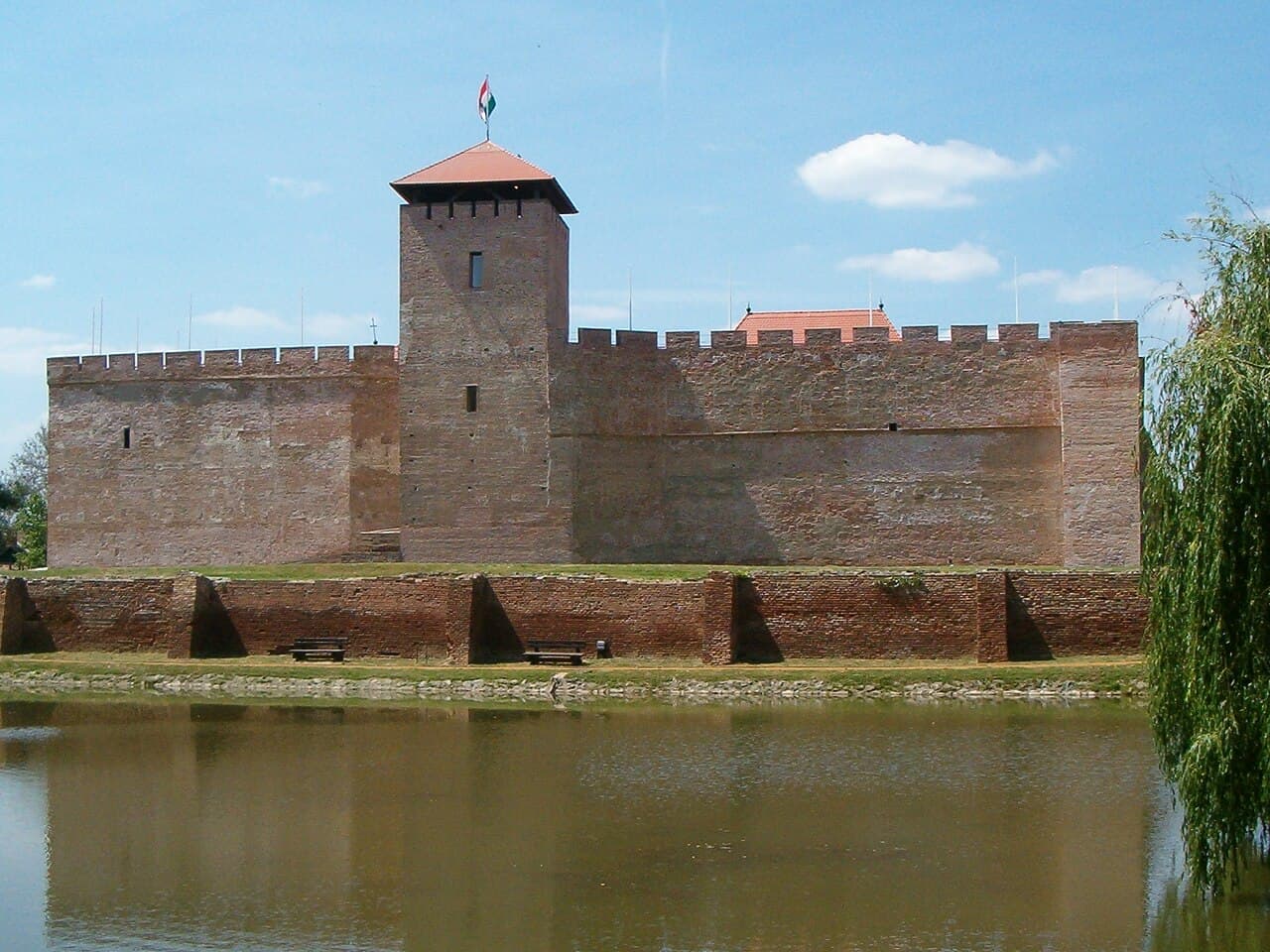
Gyula Castle is unique in Central Europe as the only fully preserved Gothic brick fortress situated on a flat plain, built primarily from locally fired bricks due to the absence of nearby stone quarries. Unlike many castles where the keep was constructed first, Gyula's walls and towers were built simultaneously, reflecting advanced military architectural planning.
A distinctive feature of the fortress is the continuous corridor encircling the courtyard at the first-floor level, created in the early 16th century to facilitate rapid movement and defense. The large round cannon tower, or rondella, added to the western corner during this period, was specifically designed to accommodate artillery with embrasures allowing cannon fire from multiple angles, demonstrating adaptation to evolving warfare technology.
The outer bailey includes the Huszár Tower, a significant Ottoman-era structure that served as the main entrance to the outer defenses. The castle complex also contains a chapel consecrated in 1445, which remains a focal religious space within the fortress.
The courtyard hosts several ancillary buildings such as storerooms, a bakery, a blacksmith's workshop, pottery facilities, and a prison area. These spaces illustrate the castle's multifunctional role as a military, administrative, and residential center. The interior features 24 exhibition rooms, including a four-room dungeon displaying medieval punitive instruments.
Defensive earthworks like ramparts and palisades complemented the brick walls. After the 1566 siege, the outer palisade was rebuilt with reduced wall thickness, reflecting changes in defensive strategies. The upper floors house noble apartments, administrative chambers, a weapons hall, and a knight's hall used for official gatherings and receptions.
Natural defenses and strategic location
Gyula Castle's placement on an island created by the Körös River's branches provided a natural moat, significantly enhancing its defensive capabilities. This geographical advantage contributed to its resilience against sieges and invasions throughout its history.
Cultural significance and modern use
Today, Gyula Castle stands as a well-preserved monument to Hungary's medieval and early modern history. It is a prominent cultural site hosting theatrical performances, exhibitions, and educational programs. The castle's museum offers visitors an immersive journey through its six centuries of history, showcasing the evolution of military architecture and the region's turbulent past.
Ongoing conservation efforts ensure that Gyula Castle remains a vital heritage site. Its recognition by the International Council on Monuments and Sites (ICOMOS) in 2006 and inclusion in Hungary's National Castle Program since 2017 underscore its importance as a cultural and historical landmark.
Frequently asked questions (FAQ)
- How do I get to Gyula Castle?
- Gyula Castle is located in the heart of Gyulai, Hungary, and can be easily reached by public transport or car. If you are traveling by train, take a local bus or a taxi from the Gyula train station, which is just a few kilometers away from the castle.
- What is the historical significance of Gyula Castle?
- Gyula Castle, built in the 15th century, is a significant example of medieval architecture in Hungary. It played a crucial role in the defense against the Ottoman Empire and is one of the best-preserved castles of its kind in the region, showcasing the rich history of the area.
- When was Gyula Castle built?
- Construction of Gyula Castle began in 1405 and was completed in the late 15th century. The castle has undergone several renovations and restorations over the centuries, preserving its architectural integrity while adapting to changing historical contexts.
- Can I visit Gyula Castle during the winter?
- Yes, Gyula Castle is open for visitors year-round, although opening hours may vary in the winter months. It’s advisable to check the official website for any seasonal changes in operation times and to dress warmly for your visit.
- Why is Gyula Castle a popular tourist attraction?
- Gyula Castle attracts visitors due to its impressive architecture, fascinating history, and beautiful surrounding park. Additionally, the castle hosts various cultural events and exhibitions throughout the year, enhancing its appeal to tourists and locals alike.
- Is it possible to explore the interior of Gyula Castle?
- Yes, visitors can explore the interior of Gyula Castle, where they can view exhibitions that detail the history of the castle and the region. Guided tours are also available, providing deeper insights into the castle's significance and architecture.
- What are the opening hours for Gyula Castle?
- Gyula Castle typically opens from 9 AM to 5 PM, but hours may extend during the summer months. It's best to verify the current schedule on their official website before planning your visit.
- What are the ticket prices for Gyula Castle?
- Ticket prices for Gyula Castle are quite affordable, with discounts available for students and seniors. It’s a good idea to check the official website for the latest pricing information and any special promotions that might be available during your visit.
- What are some nearby attractions to Gyula Castle?
- Near Gyula Castle, visitors can explore the beautiful Gyula Spa, renowned for its thermal baths, and the charming town center with its quaint shops and restaurants. Additionally, the nearby historic buildings and parks provide a perfect setting for a leisurely stroll after visiting the castle.

Information
Website
Visit websiteSources & official resources
Verify the information above using these authoritative references.
Loading map...
Visitor reviews
No reviews yet. Been here? Write the first review and help other travelers!
Write the first reviewVisited this castle? Share your experience
Your review helps other travelers and adds first-hand knowledge to our encyclopedia.