Gryf Castle
Gryf Castle stands as a significant medieval fortress located near the village of Proszówka in southwestern Poland. Constructed originally by the Slavic tribe known as the Bobrzans, the castle dates back to the 12th or 13th century, strategically positioned atop a basalt hill that rises between 423 and 448 meters above sea level. This elevated location provided a commanding view of the surrounding landscape, crucial for its role in border defense.
The castle's early history is closely tied to its function as a frontier stronghold near the Kwisa River, which historically marked the boundary between the Duchy of Silesia and the Bohemian-controlled Upper Lusatian district. This positioning made Gryf Castle an important military and administrative center during the High medieval period, particularly in the 13th century when local officials known as Landvögte governed the area from the fortress.
Historical development and ownership transitions
Throughout the 14th century, Gryf Castle experienced numerous changes in ownership reflecting the turbulent political landscape of the region. In 1354, it was pledged to Seyfried von Raußendorf, and after the death of Duke Bolko II in 1368, the castle passed into the hands of King Wenceslaus of Bohemia. Subsequently, the fortress was pledged and sold to Benesch von Chusnik, whose appointed castellan, Wolf von Romke, was executed in 1399 for brigandage. By 1400, the castle was pledged to Gotsche II Schaffgotsch, a figure who expanded his estates significantly and whose family maintained control of Gryf Castle until 1798.
Schaffgotsch family expansions
The 16th century marked a period of substantial enlargement and fortification under Ulrich I and Johann (Hans) von Schaffgotsch. They constructed a middle and a lower bailey, transforming Gryf into a complex with three fortified sections: the upper, middle, and lower castles. These additions enhanced both the defensive capabilities and residential functions of the fortress, adapting it to the evolving military and social needs of the time.
Military significance and decline
During the Thirty Years’ War in the 17th century, Gryf Castle endured two sieges by Swedish forces. It successfully resisted the first assault in 1639 but was captured in a second siege in 1645. Following this period, the castle's military importance waned as the Schaffgotsch family relocated their residence to nearby palatial estates. By the late 18th century, much of the castle's stone was repurposed to build a manor house, signaling the fortress's decline.
Architectural features and layout
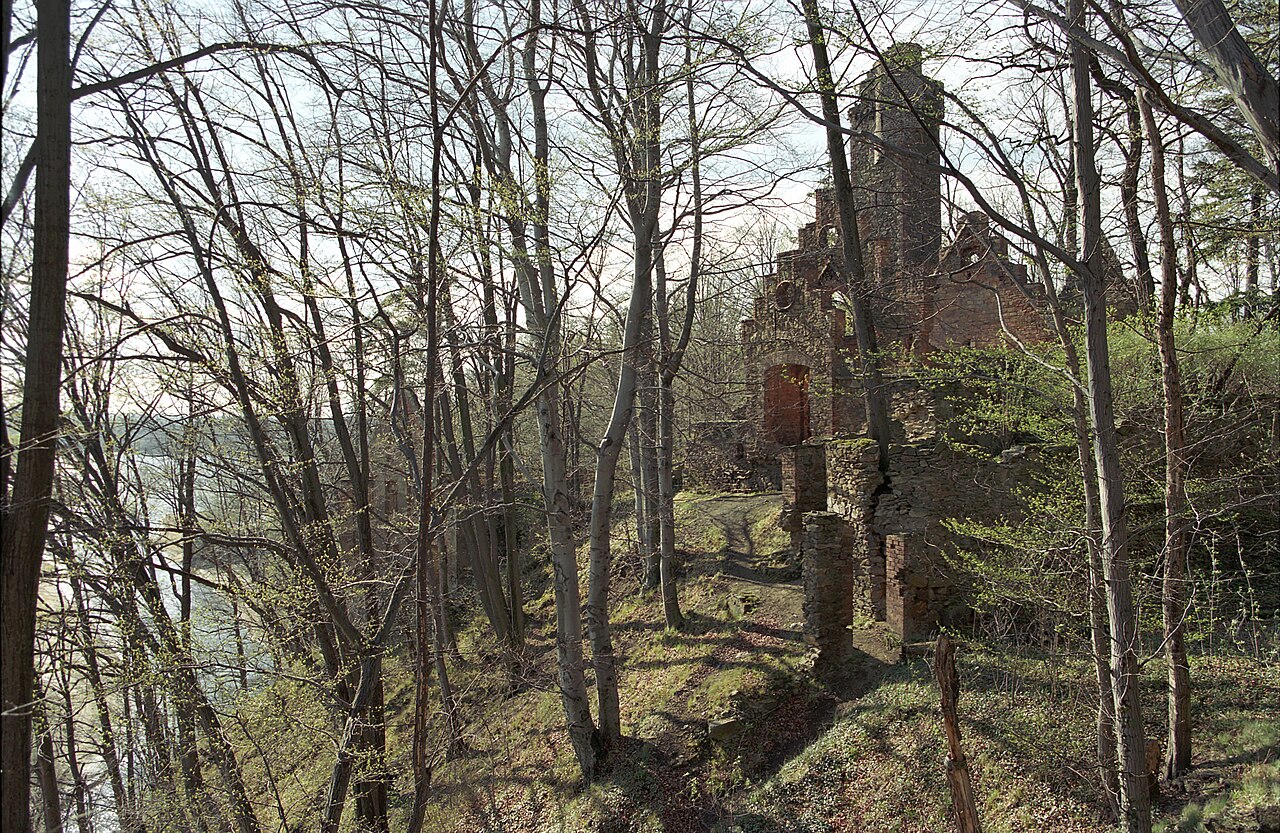
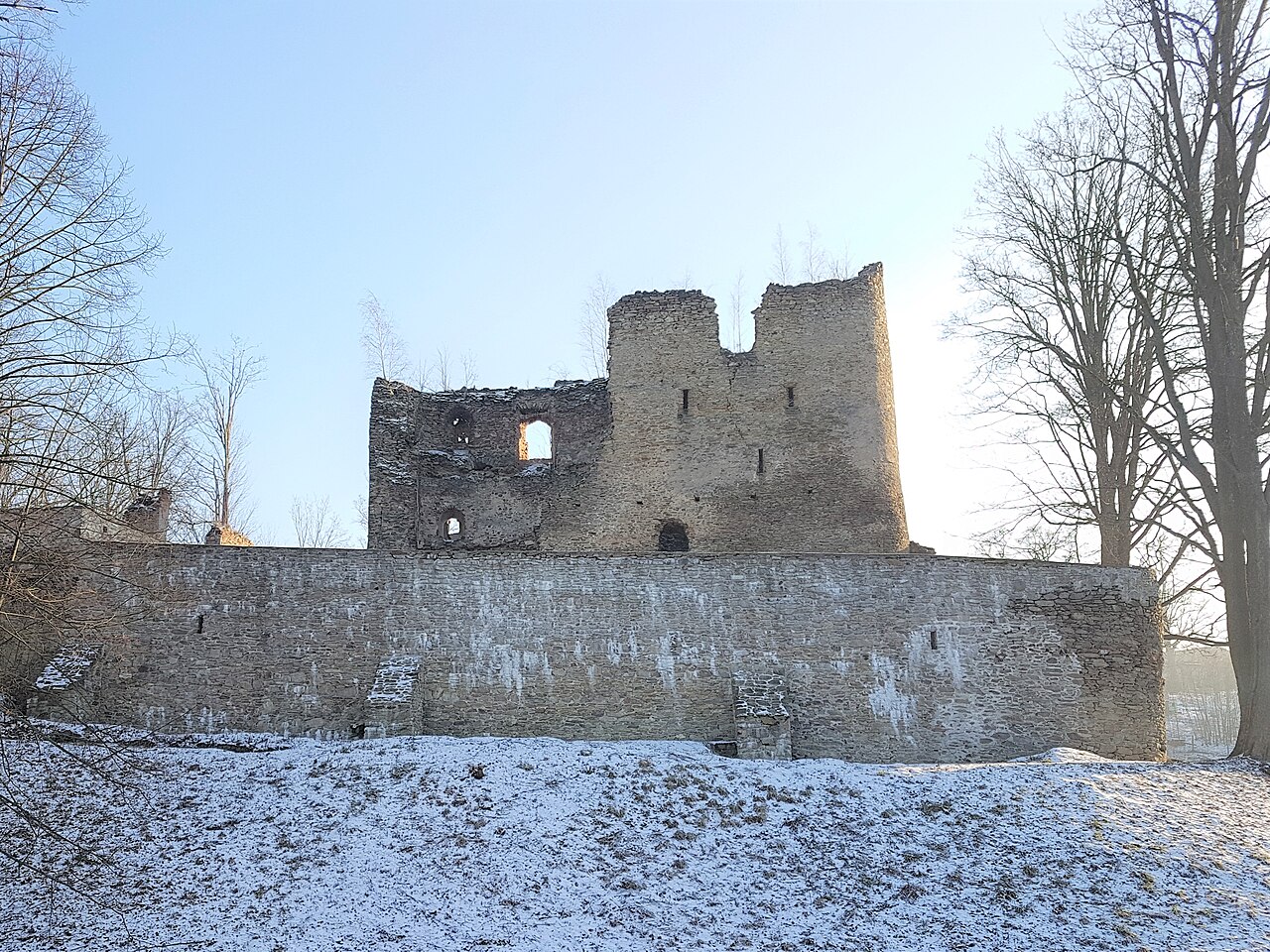
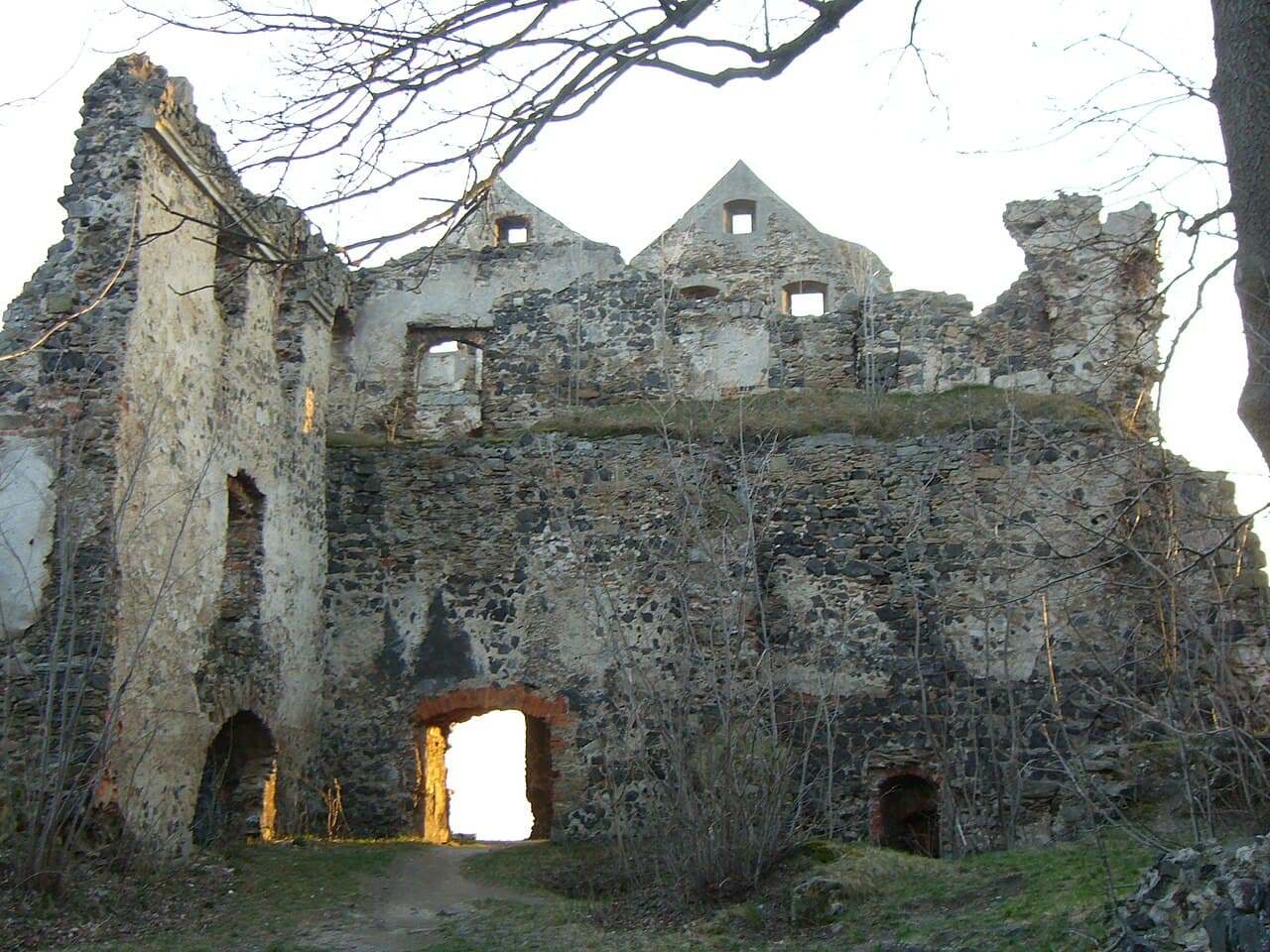
The ruins of Gryf Castle reveal a large fortress complex divided into three main parts, each fortified by its own defensive walls. The upper castle, the oldest section, is arranged in an irregular pentagonal shape and includes remnants of stone walls and a gatehouse. The middle castle lies to the north, added later to strengthen defenses. The lower castle, the newest and largest section to the east, contains remains of a tower and significant wall segments, reflecting its role as a residential and administrative area after the 16th-century expansions.
Constructed primarily from local basalt stone, the fortress's walls demonstrate the use of durable volcanic rock typical of the region. Among the castle's notable features was a chapel adorned with a large painted figure of a gryphon, the mythical creature from which the castle derives its name, symbolizing strength and vigilance.
Cultural legacy and current status
Today, Gryf Castle remains in ruins but continues to dominate the landscape near the route connecting Gryfów Śląski and Mirsk. The site is privately owned and protected as a cultural heritage monument. Its imposing remains have inspired local legends and attracted cultural figures such as the poet Theodor Körner, who dedicated a poem to the fortress. The castle's layered history and architectural complexity make it an important site for understanding medieval fortifications in southwestern Poland.
Frequently asked questions (FAQ)
- How do I get to Gryf Castle?
- Gryf Castle is accessible by road near the village of Proszówka in southwestern Poland, close to the route between Gryfów Śląski and Mirsk. Visitors can reach the site by car or local transport, but should be prepared for a hike up the basalt hill where the ruins are located.
- What is the historical significance of Gryf Castle?
- Gryf Castle played a key role as a border fortress between the Duchy of Silesia and Bohemian territories during the High medieval period. It was an administrative center and witnessed numerous ownership changes reflecting regional political shifts.
- Is Gryf Castle open to the public?
- The castle ruins are privately owned, so public access may be limited. Visitors should check local guidelines or contact the current owner for permission before visiting the site.
- What architectural features remain at Gryf Castle?
- Visitors can see the ruins of the upper, middle, and lower castles, including stone walls, gatehouse remains, a tower, and sections of defensive walls constructed from local basalt stone.
- When was Gryf Castle built?
- The castle was constructed in the 12th or 13th century by the Slavic Bobrzans tribe, originally as a fortified hilltop stronghold.
Photo gallery

Information
Current owner
Private owner
Loading map...
Visitor reviews
No reviews yet. Been here? Write the first review and help other travelers!
Write the first reviewVisited this castle? Share your experience
Your review helps other travelers and adds first-hand knowledge to our encyclopedia.