Grevenburg Castle Ruins
Grevenburg castle ruins stand as a testament to the turbulent history of the Rhineland region in Germany. Constructed in 1350 by Count Johann III of Sponheim-Starkenburg, this hill castle replaced the older Castle Starkenburg as the residence of the Rear County of Sponheim. Strategically perched overlooking the Moselle valley, Grevenburg played a significant role in regional power struggles and military conflicts over several centuries.
Architectural features and original design
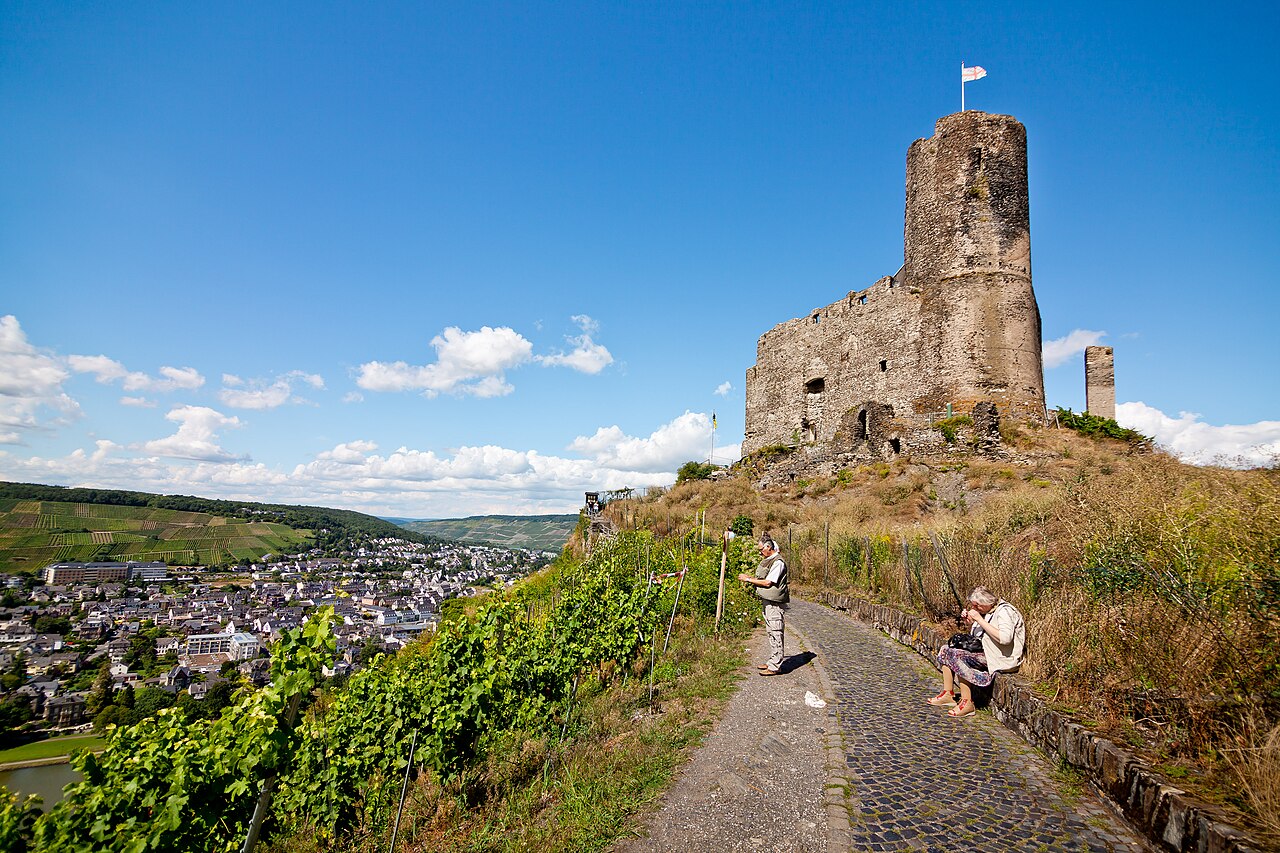
The castle was originally designed as a fortified residence typical of the late medieval period, featuring a robust keep and defensive walls adapted to the hilltop terrain. Its position allowed for commanding views over the Moselle River, providing both a defensive advantage and control over river traffic. Although much of the castle has been destroyed, the western wall of the former keep remains standing, and the foundations of the complex are largely intact, offering valuable insights into its medieval fortification layout.
Historical significance and ownership
After the extinction of the male line of the Rhenish branch of the House of Sponheim in 1437, Grevenburg ceased to be a noble residence and became the administrative seat for the bailiff representing the new counts of Sponheim, including branches from Baden and various Palatinate houses such as Palatinate-Simmern, Palatinate-Zweibrücken, and Palatinate-Birkenfeld. This change marked a shift from a feudal stronghold to a center of regional governance.
Military conflicts and transformations
French conquest and fortification expansion
In 1680, during the expansionist policies of Louis XIV of France, Grevenburg was conquered and integrated into a broader defensive network. It was extended alongside the fort of Mont Royal, situated in the horseshoe bend of the Moselle north of Traben-Trarbach, to strengthen French control over the region. These fortifications exemplify the military engineering of the late 17th century, adapting medieval castles to withstand artillery sieges.
War of the Spanish succession
During the War of the Spanish Succession (1701–1714), Grevenburg changed hands multiple times. In 1702, French forces under Taillardin captured the castle. Two years later, in 1704, the castle was retaken by allied forces commanded by John Churchill, 1st Duke of Marlborough, on the orders of the Duke himself. The castle sustained significant damage during these conflicts and was subsequently occupied by Dutch troops.
Electorate of trier repairs and final destruction
In 1730, the Electorate of Trier undertook repairs to reinforce Grevenburg as part of the defenses protecting Koblenz and the Rhine River corridor. However, during the War of the Polish Succession, the castle was besieged and captured by French forces after a three-week siege in July 1734. Following its capture, the French deliberately destroyed the castle by blowing it up, causing large sections to collapse into the valley below. This marked the end of Grevenburg as a functional fortress.
Current condition and archaeological importance
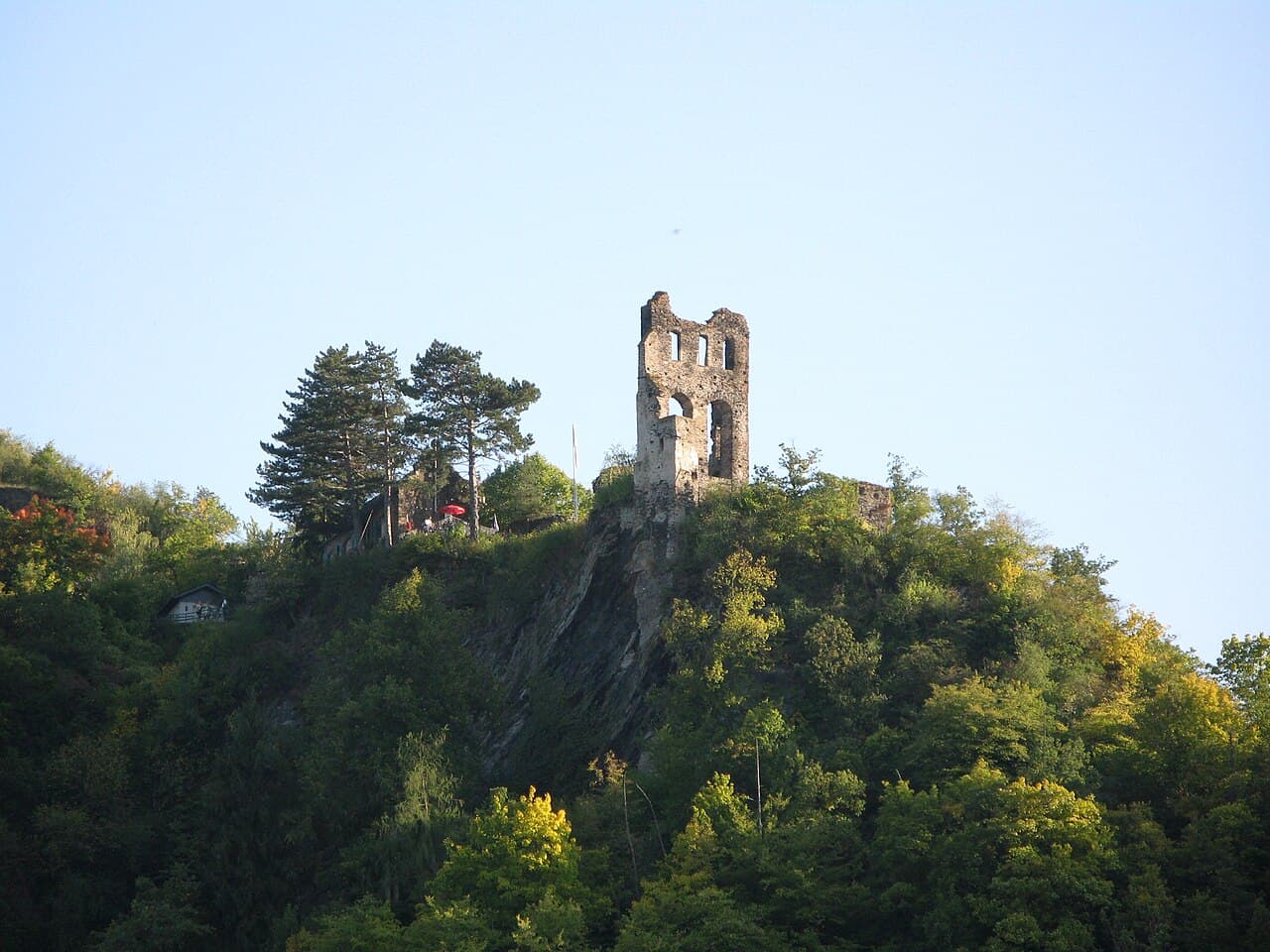
Today, Grevenburg remains a ruined hill castle with only the western wall of the former keep still standing prominently. The extensive foundations that remain provide a valuable archaeological site for understanding medieval castle construction and the evolution of fortifications in the Rhineland. Visitors can explore the ruins and appreciate the strategic location that once made Grevenburg a key defensive and administrative site.
Visiting grevenburg castle ruins
Located near the town of Traben-Trarbach in the Rhineland-Palatinate region of Germany, the Grevenburg castle ruins attract history enthusiasts and tourists interested in medieval architecture and military history. The site offers scenic views of the Moselle valley and the surrounding vineyards, making it a popular destination for hiking and cultural tourism. Although the castle is in ruins, interpretive signage and preserved foundations help visitors understand its historical context and architectural significance.
Nearby attractions and cultural context
Traben-Trarbach itself is known for its picturesque riverfront, historic wine cellars, and Art Nouveau architecture. The proximity of Grevenburg to the town enhances the cultural experience for visitors, combining natural beauty with rich historical heritage. The castle's story reflects the broader narrative of territorial conflicts and shifting power in the Rhineland from the medieval period through the early modern era.
Architectural legacy and historical impact
Grevenburg castle exemplifies the transition from medieval feudal residences to modern fortifications influenced by advances in artillery and military strategy. Its repeated sieges and reconstructions illustrate the strategic importance of the Moselle valley as a contested borderland. The castle's destruction in 1734 symbolizes the decline of traditional castle warfare and the rise of new forms of military architecture.
As a late medieval hill castle, Grevenburg's remains continue to offer insights into the architectural styles and defensive techniques of the period. Its history is intertwined with prominent figures such as Count Johann III of Sponheim-Starkenburg and John Churchill, 1st Duke of Marlborough, linking local history to broader European military and political developments.
Frequently asked questions (FAQ)
- When was Grevenburg castle built and by whom?
- Grevenburg castle was built in 1350 by Count Johann III of Sponheim-Starkenburg as a residence for the Rear County of Sponheim.
- What remains of Grevenburg castle today?
- Today, only the western wall of the former keep remains standing, with the foundations largely intact, marking it as a ruin.
- What major conflicts affected Grevenburg castle?
- Grevenburg was involved in several conflicts including its conquest by Louis XIV in 1680, sieges during the War of the Spanish Succession, and its final destruction by the French in 1734 during the War of the Polish Succession.
- Can visitors access the Grevenburg castle ruins?
- Yes, the ruins are accessible to visitors and offer scenic views of the Moselle valley along with insights into medieval castle architecture.
- Why was Grevenburg castle destroyed?
- The castle was deliberately destroyed by French forces in 1734 to prevent it from being used as a military stronghold during ongoing regional conflicts.
Photo gallery

Information
Loading map...
Visitor reviews
No reviews yet. Been here? Write the first review and help other travelers!
Write the first reviewVisited this castle? Share your experience
Your review helps other travelers and adds first-hand knowledge to our encyclopedia.