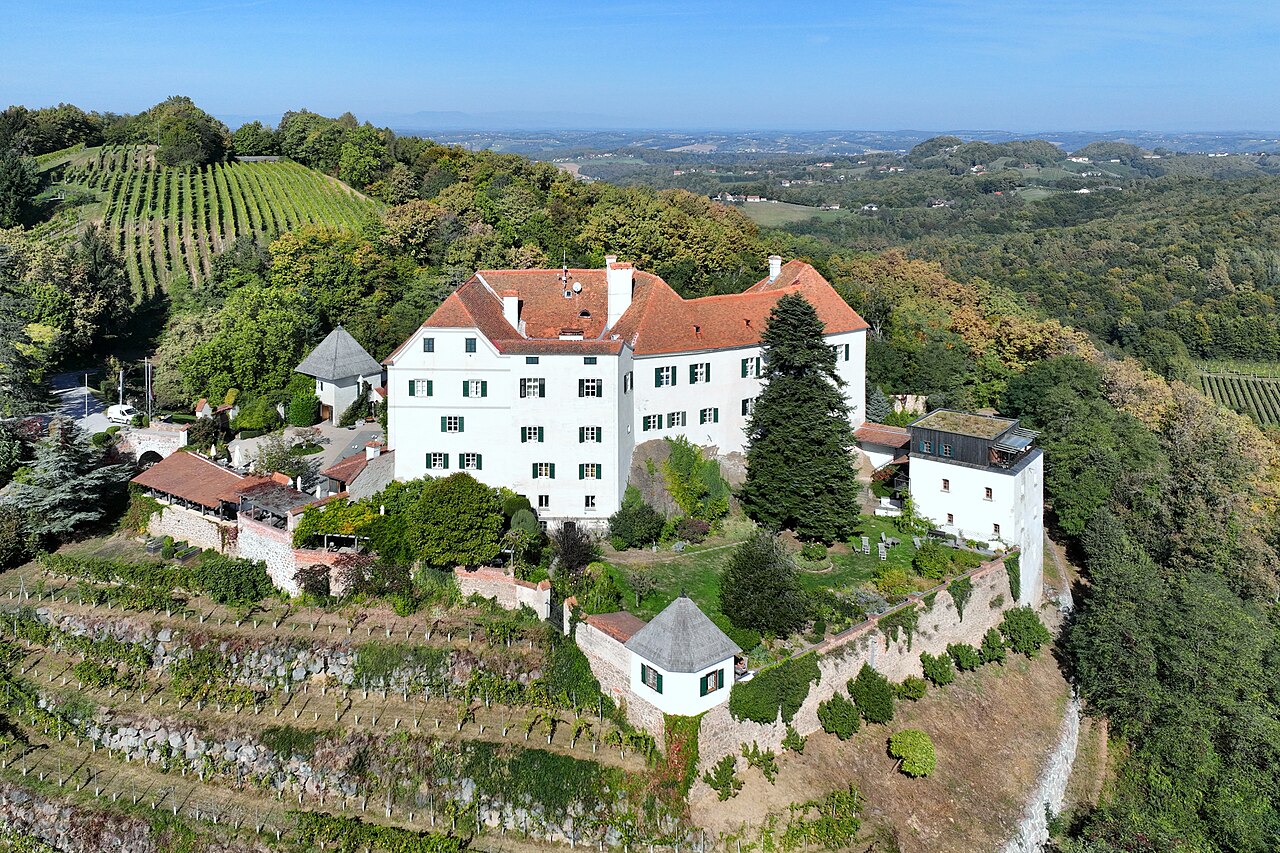
Grad Castle, located in the settlement of Grad in northeastern Slovenia, is one of the largest and most historically significant castle complexes in the country. Its name, meaning simply "castle" in Slovene, reflects its prominence and long-standing presence in the region. Strategically perched on a hill, the castle overlooks the surrounding landscape, offering commanding views that were vital for defense during its active use in the high medieval period.
Architectural layout and features
The castle complex is renowned for its impressive size, boasting a remarkable 365 rooms, which is a unique characteristic often noted in historical records. This extensive layout includes multiple residential quarters, defensive walls, towers, and courtyards. The castle's design reflects the typical high medieval fortress architecture, emphasizing both defense and habitation. Thick stone walls and elevated battlements provided protection against invaders, while the internal spaces accommodated a sizable community.
Defensive structures
The castle's elevated position on a hill allowed for natural defense advantages. It features robust curtain walls and several watchtowers strategically placed to monitor the surrounding territory. These fortifications were essential during the turbulent medieval era, when control over the region was contested by various noble families and external forces.
Residential and functional areas
Inside the castle, the numerous rooms served various purposes, including living quarters for the noble family, servants, and soldiers, as well as storage and administrative functions. The castle likely included a great hall for gatherings and official functions, chapels for religious observance, and kitchens. Over the centuries, modifications and expansions adapted the castle to changing needs and styles.
Historical significance and ownership
Constructed in the 12th century, Grad Castle played a pivotal role in the local power dynamics of the region. It was associated with several noble families who controlled the surrounding lands and influenced regional politics. The castle's strategic location made it a key military and administrative center throughout the high medieval and later periods.
Following centuries of use, the castle's function evolved, especially after the upheavals of the 20th century. After World War II, the castle was repurposed into small residential apartments, reflecting the changing social and economic conditions of the time.
Modern restoration and public access
With Slovenia's accession to the European Union, funding became available for the restoration and preservation of Grad Castle. These efforts aim to stabilize the structure, restore key architectural elements, and make parts of the castle accessible to the public. Visitors can explore selected areas, gaining insight into the castle's extensive history and architectural grandeur.
The restoration projects focus on maintaining the castle's authentic medieval character while adapting it for contemporary use as a cultural and historical site. This balance ensures that Grad Castle remains a valuable heritage landmark, attracting tourists and scholars alike.
Cultural and architectural legacy
Grad Castle stands as a testament to medieval fortification techniques and noble residence design in Slovenia. Its vast size and complex layout illustrate the scale of power and wealth held by its historical owners. The castle's preservation contributes to understanding the region's medieval history and architectural evolution.
Today, Grad Castle continues to be a symbol of the area's heritage, offering a tangible connection to Slovenia's past through its enduring stone walls and expansive chambers.
Frequently asked questions (FAQ)
- What is the historical significance of Grad Castle?
- Grad Castle is a prominent historical site in Slovenia, known for its well-preserved architecture and rich history dating back to the 12th century. It has served various purposes over the centuries, including as a noble residence and a military stronghold, reflecting the region's tumultuous past.
- When was Grad Castle built?
- Grad Castle was originally constructed in the late 12th century and has undergone several renovations throughout the centuries. The castle's architecture showcases various styles, primarily Romanesque and Gothic, which were prominent during its many periods of expansion.
- Can I visit Grad Castle?
- Yes, Grad Castle is open to visitors and offers guided tours that provide insights into its historical and architectural significance. Be sure to check the official website for any visitor guidelines or special events that may be taking place during your visit.
- What are the opening hours of Grad Castle?
- Grad Castle typically opens for visitors from 10 AM to 6 PM, but these hours may vary by season. It is advisable to check the castle's official website or contact them directly for the most current information on opening hours before your visit.
- Is Grad Castle accessible for people with disabilities?
- Yes, Grad Castle has made efforts to improve accessibility for all visitors. Wheelchair access is available in certain areas, but it is recommended to contact the castle in advance to ensure a smooth visit.
- What are the ticket prices for visiting Grad Castle?
- Admission prices for Grad Castle are generally affordable, with discounts available for students, seniors, and groups. Check the castle's official website for the latest pricing information and any special offers that may be available during your visit.
- When is the best time to visit Grad Castle?
- The best time to visit Grad Castle is during the spring and early autumn months when the weather is mild, and the surrounding landscapes are particularly beautiful. Visiting during these seasons also allows you to enjoy various outdoor events and activities hosted by the castle.
- What nearby attractions can I visit while at Grad Castle?
- While visiting Grad Castle, you can explore the charming town of Grad and its picturesque surroundings. Nearby attractions include beautiful hiking trails, local museums, and other historical sites that showcase the rich culture of Slovenia.
Information
Loading map...
Visitor reviews
No reviews yet. Been here? Write the first review and help other travelers!
Write the first reviewVisited this castle? Share your experience
Your review helps other travelers and adds first-hand knowledge to our encyclopedia.