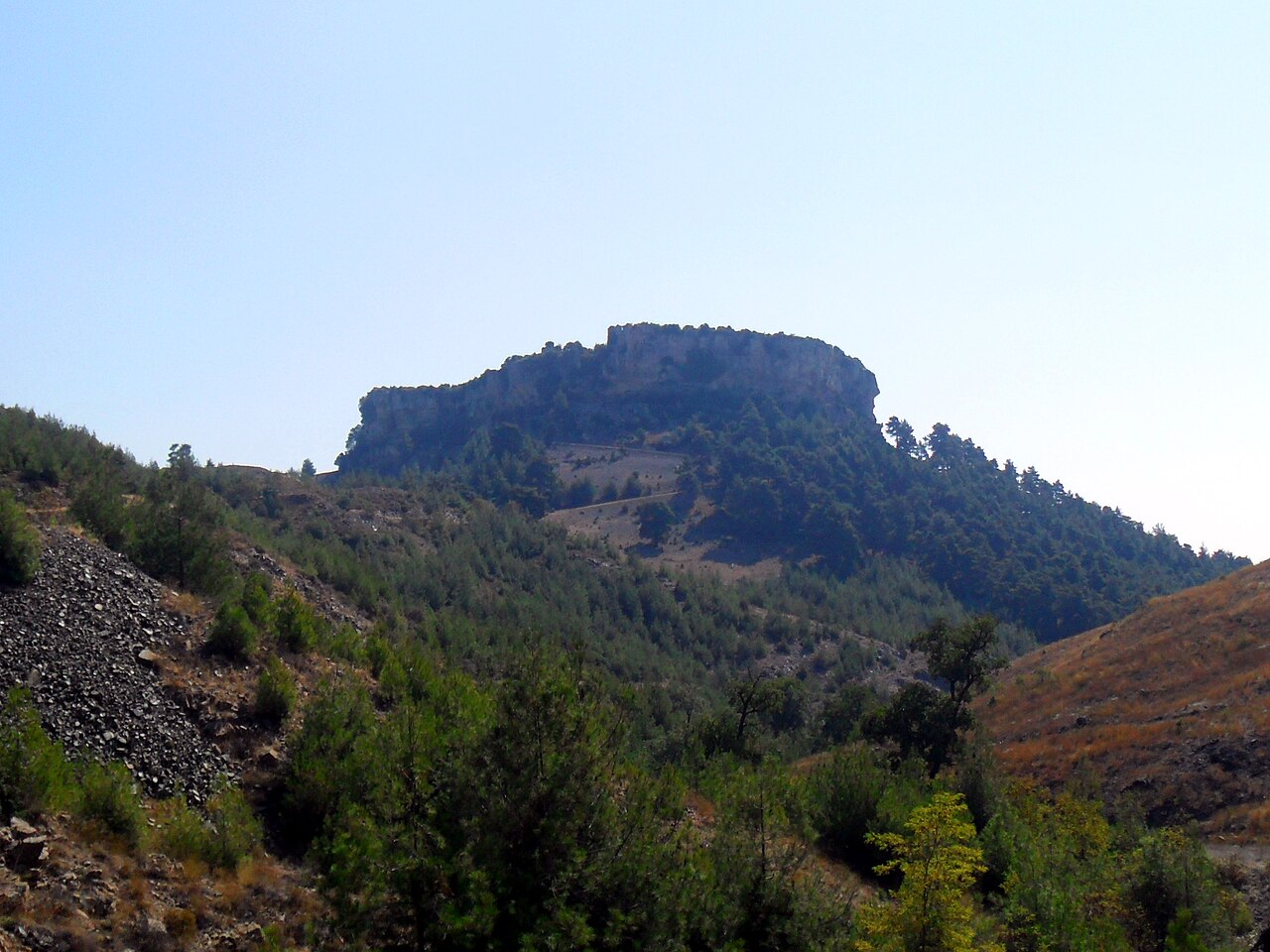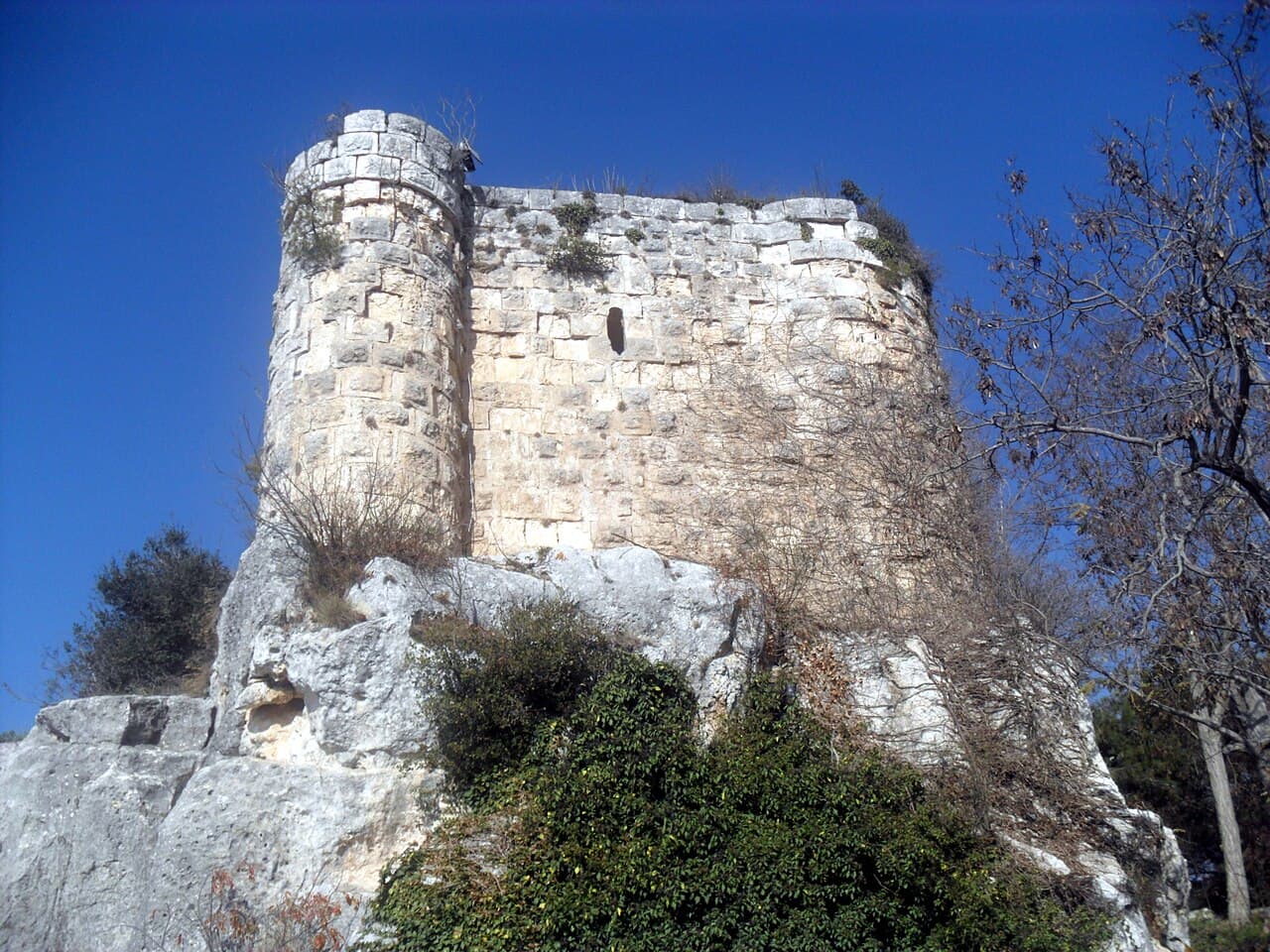
Gözne Castle — Turkey castle

Gözne Castle

Gözne Castle in Mersin Province, Turkey
İstemihan Talay Cd., Turkey
High Medieval (11th–13th c.)
Partially Preserved

Gözne Castle, locally known as Gözne Kalesi, is a medieval fortress situated in the village of Gözne within Mersin Province, Turkey. Positioned in the historical region of Cilicia, this castle is part of a landscape that once belonged to the Armenian Kingdom of Cilicia, which existed from the late 11th century until the late 14th century. Although the original medieval name of the castle is not recorded, its architectural features and location provide important clues to its purpose and era.

Historical context and strategic importance

The castle was most likely constructed in the late 12th or 13th century during the height of the Armenian Kingdom of Cilicia. This kingdom was a significant political entity that served as a bastion of Armenian culture and defense against various invading forces in the region. Gözne Castle's position on a small limestone spur overlooking a valley was strategically chosen to control and protect a nearby important trail, which was vital for trade and military movements.

Unlike larger fortresses designed primarily for military defense, Gözne Castle functioned more as a fortified estate house. It likely served as the residence of a local baron or noble family who administered the surrounding agricultural district. This dual role of habitation and defense reflects the castle’s importance in local governance and regional security within Cilicia.

Architectural features and layout

The castle’s design is characteristic of Armenian military architecture of the period. It consists primarily of a main rectangular keep which would have served as the central living quarters and stronghold. Adjacent to this is a separate polygonal tower, which provided additional defensive capabilities and a vantage point for surveillance over the valley below.

Constructed from local limestone, the castle’s walls and towers exhibit the robust masonry typical of Armenian fortifications. The elevated position on the limestone spur not only offered natural defense advantages but also enhanced visibility over the surrounding terrain, allowing early warning of approaching threats.

Although the interior spaces of the castle are currently closed to visitors, the exterior platform between the keep and the tower remains accessible. This area would have been a key part of the castle’s defensive and domestic functions, possibly serving as a courtyard or gathering space.

Current condition and visitor experience

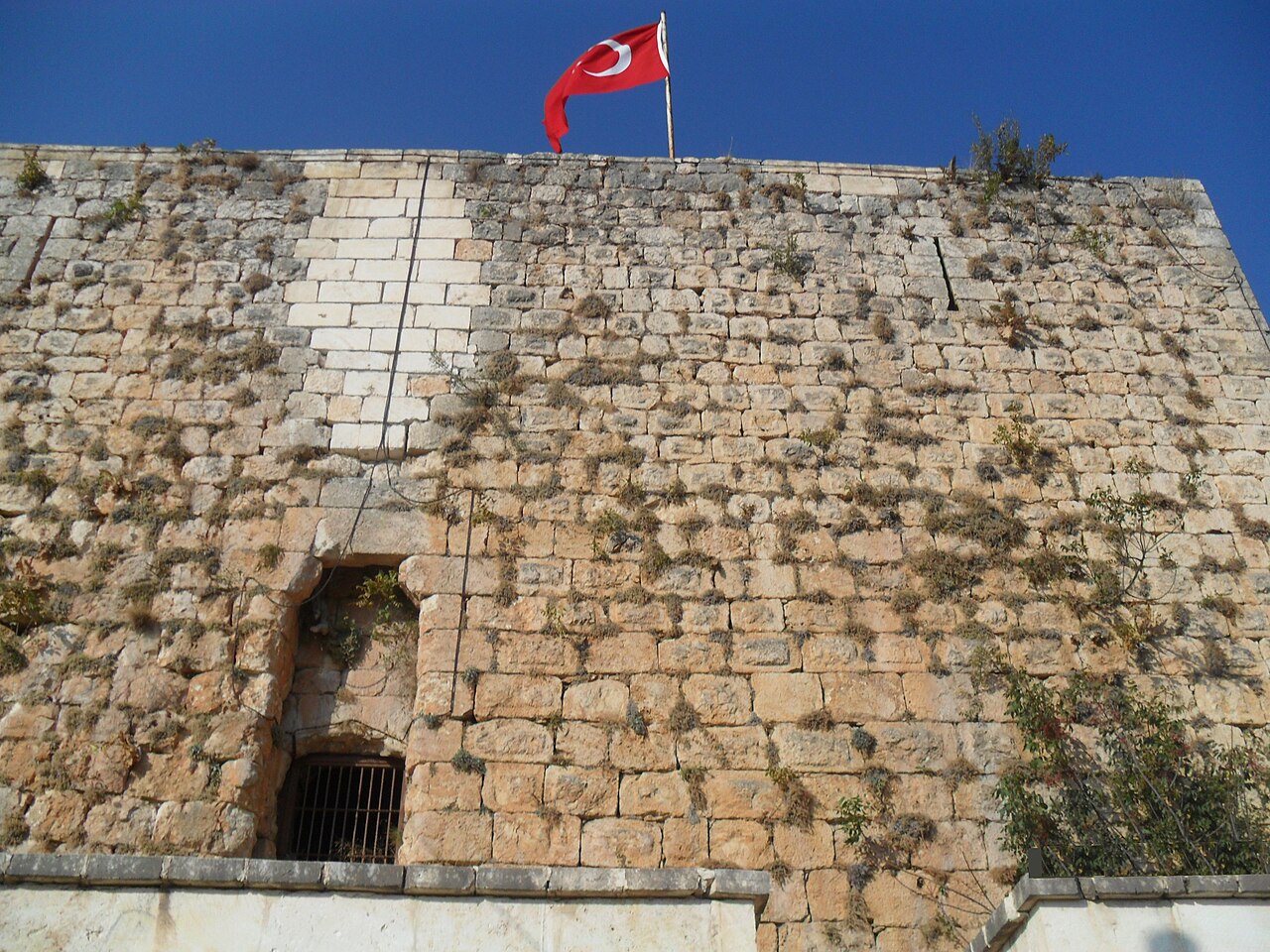
Today, Gözne Castle is partially preserved and accessible to the public for a small entrance fee. Visitors can explore the park area in front of the castle and the platform between the two main buildings. However, the interior of the castle buildings is secured behind grated doors, limiting access to the internal chambers.

The surrounding park, while offering picnic spots, shows signs of neglect and some vandalism, including graffiti. Despite these challenges, the site remains an interesting destination for those interested in medieval Armenian architecture and the history of Cilicia.

Nearby, visitors can also explore Sinap Castle, another medieval fortress that complements the historical narrative of the region’s fortified landscape.

Significance within the Armenian Kingdom of Cilicia

Gözne Castle exemplifies the smaller-scale fortifications that supported the larger political and military framework of the Armenian Kingdom of Cilicia. Its role as a fortified residence reflects the feudal organization of the kingdom, where local lords held authority over agricultural lands and provided defense for key routes.

The castle’s architecture and location provide valuable insights into the defensive strategies and domestic arrangements of the period. It stands as a testament to the Armenian architectural and cultural presence in Cilicia during the High Medieval period.

Frequently asked questions (FAQ)

How do I visit Gözne Castle?
Gözne Castle is open to visitors for a small entrance fee, allowing access to the park and platform between the main buildings. The interior of the castle is closed off for preservation reasons.
What is the historical significance of Gözne Castle?
Gözne Castle was built during the Armenian Kingdom of Cilicia in the late 12th or 13th century. It served as a fortified estate house for a local baron, protecting an important nearby trail.
Can I explore the interior of Gözne Castle?
Currently, the interior spaces of Gözne Castle are closed to visitors and secured with grated doors, so exploration is limited to the exterior areas and platform.
Why is Gözne Castle important for Armenian history?
The castle illustrates the feudal and defensive structures of the Armenian Kingdom of Cilicia, showcasing medieval Armenian military architecture and local governance.
Is there another castle near Gözne Castle worth visiting?
Yes, Sinap Castle is located nearby and offers additional insight into the medieval fortifications of the Cilicia region.

Photo gallery

Gözne Castle
Click to view

Photo by Nedim Ardoğa•CC BY-SA 4.0

1 photo • Click any image to view in full screen

Information

Hill Castle

Address

İstemihan Talay Cd., Turkey

Loading map...

Visitor reviews

No reviews yet. Been here? Write the first review and help other travelers!

Write the first review

Visited this castle? Share your experience

Your review helps other travelers and adds first-hand knowledge to our encyclopedia.
Write a review

(5/5)

0/2000 characters

Your review will be visible after admin approval

Nearby castles

2.9 km
Belenkeşlik Castle — Turkey castle

Belenkeşlik Castle

360. Sk., Turkey

Belenkeşlik Castle, locally known as Belenkeşlik Kalesi, is a medieval fortification located in the village of Belenkeşlik within Mersin Province, Turkey. Situated in the historic region of Cilicia, this castle stands as a relic of the Armenian Kingdom of Cilicia, which flourished from the late 11th century until the late 14th century. Although the castle's original medieval name and detailed history remain unknown, its architectural features and location provide valuable insights into its past. Historical context and significance The region of Cilicia was a strategic area during the High Medieval period, serving as a crossroads between the Byzantine Empire, Crusader states, and the Armenian Kingdom. Belenkeşlik Castle was likely constructed in the late 12th or 13th century by Armenian builders, reflecting the architectural styles and defensive needs of that era. This castle was not a grand fortress but rather a fortified estate house, probably serving as the center of an agricultural district and the residence of a local baron and his family. Architectural features and layout Belenkeşlik Castle is characterized by its simple yet functional design. The castle consists primarily of a single rectangular keep, which is a fortified tower typical of medieval military architecture. The keep has a ground-level entrance located on its southwest wall, which is somewhat unusual since many keeps of the period had elevated entrances for defensive purposes. The castle's construction material is predominantly face stone, which was carefully cut and laid to form sturdy walls. The building currently stands as a two-storey structure; however, the presence of consoles inside suggests that there was once a third floor. Unlike larger castles, Belenkeşlik lacks evidence of an outer defensive wall or curtain wall, indicating its role was more residential and administrative rather than purely military. Function and strategic role As a smaller fortification, Belenkeşlik Castle likely functioned to control local roads and oversee the surrounding agricultural lands. Its position on a hill provided a vantage point for monitoring movement through the area. The castle's modest size and layout imply it was designed to house a local lord and his household rather than accommodate large garrisons or withstand prolonged sieges. Current condition and visitor information Today, Belenkeşlik Castle is well preserved enough to allow visitors to explore its interior. The castle is accessible to the public and has become part of a small park area featuring picnic spots, making it a pleasant destination for tourists and locals alike. Visitors can enter the castle and ascend to the second floor, where they can appreciate the medieval architecture and views of the surrounding landscape. Located approximately 20 kilometres north of the city center of Mersin, the castle is easily reachable by road. Its setting in the rural village of Belenkeşlik offers a glimpse into the historical fabric of the region and the legacy of the Armenian Kingdom of Cilicia. Architectural and cultural importance Belenkeşlik Castle represents a typical example of a hill castle from the High Medieval period in Cilicia. Its Armenian origins highlight the influence of the Armenian Kingdom in this part of Anatolia. The castle's design, focusing on a single keep without extensive outer defenses, reflects the localized nature of many such fortifications that combined residential and defensive functions. The castle contributes to the understanding of medieval fortifications in southern Turkey and the complex political and military landscape of the region during the Middle Ages. Its preservation allows for ongoing study and appreciation of Armenian medieval architecture and the historical interactions between different cultures in Cilicia.

High Medieval (11th–13th c.)
Details
4.7 km
Çandır Castle — Turkey castle

Çandır Castle

Çandır, Turkey

Çandır Castle, known locally as Çandır Kalesi and historically as Paperōn or Barbaron in medieval Armenian, is a significant fortress located on a mountain north of the village of Çandır in Mersin Province, Turkey. This castle stands as a remarkable example of early medieval fortifications in the Taurus Mountains, reflecting a rich history intertwined with Byzantine and Armenian rule. The origins of Çandır Castle trace back to the Byzantine Empire, with construction possibly beginning as early as the 5th century. This dating aligns with historical accounts that suggest the fortress served as a refuge for the Byzantine Emperor Zeno during the turbulent years of 475/6. The castle’s strategic location atop a limestone mountain at an altitude of approximately 1,450 meters provided natural defenses that were enhanced by human ingenuity. Historical context and Armenian influence In the aftermath of the Seljuk invasions in the late 11th century, many Armenian nobles fled the regions north and east of Van, seeking refuge in Cilicia. This region became the foundation for the Armenian Kingdom of Cilicia, which lasted until the late 14th century. Çandır Castle was seized from the Byzantines and became a critical stronghold for Armenian rulers. The castle was notably held by the Hethumid family, one of the most powerful Armenian noble houses. By the late 11th century, Çandır, alongside Lampron Castle, served as a principal seat of the Hethumids. An important figure associated with the castle was Abul-Gharib Arsruni, an Armenian governor who used the fortress as his treasury and was eventually buried there. In 1329, Çandır Castle became a royal possession, marking its elevated status within the Armenian Kingdom. However, the mid-14th century saw the castle briefly fall under the control of the Karamanids, a Turkish principality. Later, it was conquered by the Mamluks in the late 14th century, after which it likely served as a district headquarters before fading from historical records. Architectural features and layout Çandır Castle is uniquely situated on a lofty, triangular plateau atop a limestone mountain in the Taurus range. The plateau's sides are formed by nearly vertical cliffs, creating a natural fortress that required minimal man-made defensive structures. The existing walls primarily act as revetments to stabilize the summit rather than traditional defensive walls or towers. Access to the castle is via a winding staircase carved directly into the eastern cliff face, a remarkable example of medieval engineering adapted to the rugged terrain. This stairway was the only practical route to the summit, enhancing the fortress's defensibility. On the summit, the remains of several significant structures are visible. Among these are the ruins of a 13th-century Armenian church, reflecting the religious and cultural life of the castle’s inhabitants. Additionally, there is a two-story residential building in ruins, which likely served as the living quarters for the castle's elite. A more recent structure, now also in ruins, was once the residence of a fire warden affiliated with the Turkish Ministry of Forestry, indicating the site's continued albeit limited use into modern times. Visiting Çandır Castle today Today, Çandır Castle is accessible to visitors interested in exploring its rugged heritage. The journey to the castle requires a 4WD vehicle due to the challenging unpaved mountain roads, with the shortest route taking over 40 minutes from the nearest paved road. Visitors must locate the entrance to the cliff-carved staircase on the east side to access the summit. While the castle is somewhat off the beaten path and lacks extensive visitor facilities, it offers a unique glimpse into the military and architectural ingenuity of the Byzantine and Armenian periods. The panoramic views from the summit provide a striking perspective of the Taurus Mountains and the surrounding Cilician landscape. Significance in regional history Çandır Castle’s history encapsulates the complex political and military shifts in southeastern Anatolia from the early Byzantine era through the medieval Armenian kingdom and into the period of Turkish and Mamluk control. Its natural fortifications and strategic position underscore its importance as a military stronghold and administrative center over several centuries. The castle's connection to notable Armenian noble families, especially the Hethumids, highlights its role in the governance and defense of the Armenian Kingdom of Cilicia. The presence of religious structures such as the 13th-century church also points to the cultural and spiritual dimensions of the castle community. Despite its current ruined state, Çandır Castle remains a valuable archaeological and historical site, offering insights into the architectural practices and feudal dynamics of the region during the early medieval and high medieval periods. Its preservation as a ruin allows for ongoing study and appreciation of its layered past.

Early Medieval (5th–10th c.)
Details
11.3 km

Hebilli Castle

Hebilli, Turkey

Hebilli Castle, locally known as Hebilli Kalesi, is a medieval fortress located in the village of Hebilli in the Mersin province of Turkey. This castle occupies a strategic position on an elongated hill adjacent to the Deliçay River, overseeing the fertile plains that slope gently toward the Mediterranean coast. The castle's location provided commanding views of the surrounding landscape, including potential visual communication with nearby fortifications such as Tumil Castle to the south. Historical context and regional significance The castle is situated in the historic region of Cilicia, an area of considerable military and political importance during the medieval period. Between the late 11th century and the late 14th century, Cilicia was the seat of the Armenian Kingdom of Cilicia, a Christian state that played a key role in the geopolitics of the eastern Mediterranean. Despite its prominence, the original medieval name and detailed history of Hebilli Castle remain undocumented. Some Turkish sources attribute the castle's origins to the Umayyad period, crediting an Umayyad commander named Kaleh Habellieh with its construction following the Umayyad conquest of the region. However, the Umayyad Caliphate's rule ended by 750 AD, which conflicts with the architectural style and archaeological evidence suggesting a later construction date. It is plausible that an earlier Umayyad fortification existed on the site, which was subsequently replaced or extensively rebuilt during the High to Late Medieval period. Architectural features and design influences The current ruins of Hebilli Castle exhibit characteristics typical of Crusader military architecture, particularly the square plan with four round corner towers. This design contrasts with traditional Armenian military architecture, which rarely employed such a layout. The square keep with rounded towers was a common feature of Crusader castles built in the Levant and surrounding regions during the 12th and 13th centuries. Hebilli Castle shares this architectural typology with nearby castles such as Tumil, Kütüklü, and Yaka, suggesting a common cultural or military influence, possibly linked to Crusader or Frankish military orders operating in the area. The castle's robust stone walls and corner towers would have provided effective defense against siege warfare, while the elevated hilltop location enhanced its strategic value. Structural layout and defensive elements The castle's elongated hilltop setting dictated its layout, with the main enclosure adapting to the natural contours of the terrain. The four round towers at each corner strengthened the curtain walls, allowing defenders to cover all approaches with overlapping fields of fire. The walls likely featured battlements and arrow slits typical of the period, although much of the masonry has deteriorated over time. The interior of the castle, now fenced off for safety, would have contained essential facilities such as living quarters, storage rooms, and possibly a chapel, though these remain largely unexcavated or obscured by ruin. The castle's proximity to the Deliçay River would have ensured a reliable water supply, crucial during sieges. Military and political role during the medieval period Hebilli Castle likely served as a fief or stronghold granted by the Armenian Kingdom of Cilicia to a military order or local lord during the 13th century. Its design and location suggest a role in controlling trade routes and agricultural lands in the fertile coastal plain, as well as providing a defensive outpost against incursions from neighboring powers. The castle's strategic position near the coast and its intervisibility with other fortifications would have been vital for early warning and communication. This network of castles helped maintain the security and stability of the Armenian kingdom amid the complex political landscape involving Crusader states, Muslim emirates, and the Mongol invasions. Current condition and visitor information Today, Hebilli Castle stands as a well-preserved ruin accessible to the public. Visitors can explore the exterior walls and towers, appreciating the castle's sturdy construction and commanding views. The interior area is fenced off to protect both the structure and visitors, but the site offers an evocative glimpse into medieval military architecture in Cilicia. Its location near the village of Hebilli in Mersin province makes it a worthwhile destination for those interested in Crusader-era fortifications and Armenian medieval history. The castle's setting on a hill overlooking fertile plains and the nearby river enhances its appeal for cultural tourism and historical study.

High Medieval (11th–13th c.)
Details