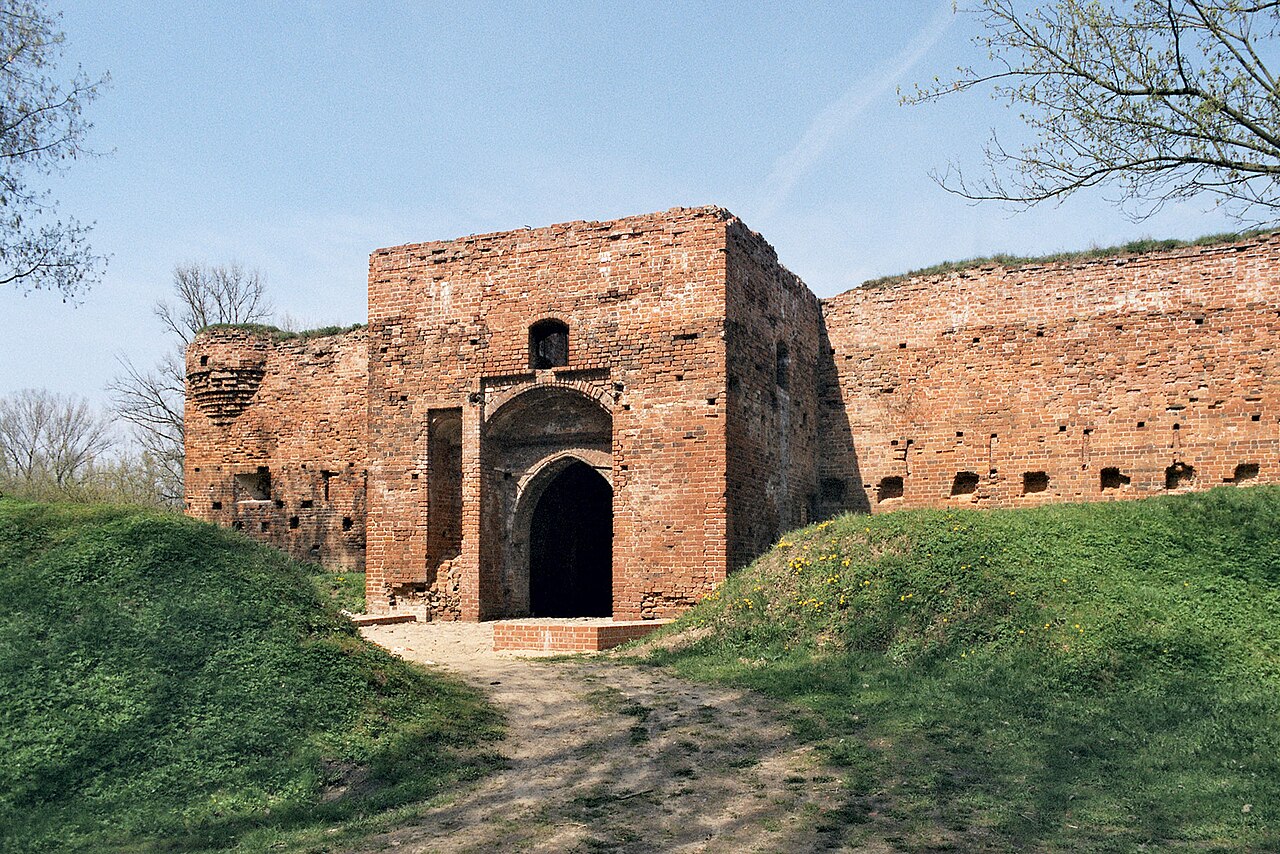
Gniewkowo
Gniewkowo Castle stands as a significant medieval fortress located in the town of Gniewkowo in Poland. This hill castle dates back to the high medieval period, with its origins closely tied to the political and territorial shifts in the region of Kujawy during the 13th and 14th centuries. The castle's history is intertwined with the legacy of the Kujawy dukes, particularly following the death of Duke Kazimierz in 1267, which led to the division of his duchy among his sons and set the stage for Gniewkowo's rise in importance.
The exact nature of the site in the early medieval period remains a subject of scholarly debate. While some historians speculate that an early defensive stronghold or gord existed here, others argue it may have been merely a settlement without fortifications. However, by around 1268, under the rule of Duke Siemomysł, Gniewkowo was granted town rights, marking its emergence as a recognized urban center in western Kujawy.
Historical context and political significance
After Duke Siemomysł's death, his lands were further divided, with Gniewkowo becoming a separate duchy under his youngest son, Kazimierz. This period was marked by political turbulence, especially during the conflict between the Polish crown under King Władysław Łokietek and the Teutonic Order. In 1322, the Teutonic Knights occupied the Gniewkowo duchy as a result of Kazimierz's allegiance to the Polish king.
Teutonic occupation and castle construction
During their occupation, the Teutonic Knights constructed a castle around 1332 near what is now Zamkowa Street. Unfortunately, no detailed descriptions or plans of this fortress survive, making it impossible to reconstruct its exact appearance or architectural features. Nevertheless, its establishment represents the strategic importance of Gniewkowo in the regional power struggles of the time.
The castle in the late medieval period
Following the reclamation of the duchy by Kazimierz Gniewkowski, the territory passed to his son Władysław, known as Władysław Biały (the White), in 1350. Władysław was a colorful and notable figure who, after extensive travels, settled in Dijon, France, adopting a monastic habit. After the death of King Kazimierz Wielki, Władysław was encouraged by some Wielkopolska nobility to pursue the Polish crown.
Władysław Biały's return and the castle's destruction
In 1373, Władysław returned to Kujawy and initially captured several castles with little resistance. However, the determined response of the Inowrocław starost Sedziwoj of Szubin forced him to abandon these strongholds. During these conflicts, the family seat of Gniewkowo was burned down, and the castle was destroyed. Subsequently, Władysław negotiated the sale of the Gniewkowo duchy to King Louis I of Hungary for 10,000 florins, paid in two installments, before returning to France.
Architectural features and preservation
Despite the destruction in the late 14th century, the castle site has remained a notable historical landmark. The castle is classified as a hill castle, typical of medieval fortifications built on elevated terrain for defensive advantage. Although no detailed architectural plans have survived, the castle likely featured common medieval defensive elements such as curtain walls, towers, and a gatehouse, consistent with the military architecture of the Teutonic Order and Polish duchies of the era.
Today, Gniewkowo Castle is considered well-preserved in terms of its archaeological and structural remnants, serving as a cultural heritage site that reflects the region's turbulent medieval past. The castle's location near Zamkowa Street remains a point of interest for visitors and historians alike.
Gniewkowo's role in regional history and heritage
The castle and town of Gniewkowo played a crucial role in the political dynamics of Kujawy and the broader Polish territories during the high medieval period. Its history encapsulates themes of feudal division, military conflict, and shifting allegiances between Polish rulers and the Teutonic Order. The legacy of the Kujawy dukes, particularly figures like Siemomysł, Kazimierz, and Władysław Biały, is intimately connected to the castle's story.
Today, Gniewkowo Castle stands as a testament to medieval fortification architecture and the complex history of Polish duchies. It attracts historians, architecture enthusiasts, and tourists interested in the medieval heritage of Poland.
Visiting gniewkowo castle
Visitors to Gniewkowo can explore the castle's historic site and its surroundings, gaining insight into the medieval history of the Kujawy region. While specific visitor facilities and detailed opening hours may vary, the site offers a valuable glimpse into the architectural and historical significance of this high medieval hill castle.
Frequently asked questions (FAQ)
- What is the historical significance of Gniewkowo Castle?
- Gniewkowo Castle is a significant historical landmark in Poland, known for its rich medieval heritage. It played a crucial role in the region during the Middle Ages, serving as a defensive structure and a residence for local nobility.
- When was Gniewkowo Castle built?
- Gniewkowo Castle was constructed in the 14th century, showcasing the architectural style of the time. It has undergone several renovations, reflecting the changes in styles and purposes throughout its history.
- What are the opening hours for Gniewkowo Castle?
- Gniewkowo Castle is open to visitors from 10 AM to 5 PM, Tuesday through Sunday. It is advisable to check the official website for any seasonal changes in hours or special closures.
- Can I purchase tickets online for Gniewkowo Castle?
- Yes, tickets for Gniewkowo Castle can be purchased online through the official website. This option allows visitors to save time and avoid long queues at the entrance.
- Is it possible to access Gniewkowo Castle with a wheelchair?
- Gniewkowo Castle has made efforts to improve accessibility for all visitors. However, due to its historical nature, some areas may be challenging to navigate, so it is recommended to contact the castle administration for specific accessibility information.
- What is the best time to visit Gniewkowo Castle?
- The best time to visit Gniewkowo Castle is during the spring and early autumn months when the weather is pleasant. These seasons also see fewer crowds, allowing for a more enjoyable experience.
- What nearby attractions can I visit while in Gniewkowo?
- While visiting Gniewkowo Castle, you can explore nearby attractions such as the beautiful Gniewkowo Park and the local historical museum. Additionally, the charming town center offers cafes and shops to enjoy.
- How do I get to Gniewkowo Castle?
- Gniewkowo Castle is easily accessible by car or public transport from major cities in Poland. There are local bus services that connect to Gniewkowo, making it convenient for visitors.
- What are the ticket prices for Gniewkowo Castle?
- Ticket prices for Gniewkowo Castle are quite reasonable, with discounts available for students and seniors. It is recommended to check the official website for the most current pricing and any special promotions.
Information
Loading map...
Visitor reviews
No reviews yet. Been here? Write the first review and help other travelers!
Write the first reviewVisited this castle? Share your experience
Your review helps other travelers and adds first-hand knowledge to our encyclopedia.