
Gibralfaro Castle
Gibralfaro Castle stands prominently on a hill overlooking the city of Málaga, Spain, offering commanding views of the Mediterranean coast and the surrounding landscape. This hill castle dates back to the 10th century, with fortifications on the site tracing back to the Phoenician era around 770 BC. The castle's name derives from the Arabic "Jbel-Faro," meaning "mountain of the lighthouse," reflecting the presence of an ancient lighthouse established by the Phoenicians.
Early origins and medieval expansion
The strategic location of Gibralfaro has been recognized since antiquity. The Phoenicians initially fortified this site, incorporating a lighthouse that guided seafarers along the coast. In 929 AD, the fortress was significantly developed under Caliph Abd-al-Rahman III of the Umayyad Caliphate, who transformed the site into a defensive stronghold to protect the growing city of Málaga.
Further expansion occurred in the 14th century during the reign of Yusuf I of the Nasrid Kingdom of Granada. He extended the fortifications by constructing a double wall linking Gibralfaro Castle to the adjacent Alcazaba of Málaga, a fortified palace complex. This architectural enhancement provided a formidable defense system, combining the two fortresses with a zigzagging wall known as the coracha, designed to enable protected movement and supply between them during sieges.
The siege of 1487 and the castle's role in the reconquista
One of the most pivotal events in Gibralfaro's history was the three-month siege in 1487 by the Catholic Monarchs, King Ferdinand and Queen Isabella. The castle's defenders endured severe hardship, and the siege ended when hunger forced the city's Muslim inhabitants to surrender. This marked a significant moment in the Reconquista, as Málaga fell to Christian forces, ending centuries of Muslim rule in the region.
Following the conquest, King Ferdinand briefly used the castle as a residence, although Queen Isabella chose to live elsewhere in Málaga. The fortress continued to serve primarily as a military installation, housing soldiers tasked with defending the city and the neighboring Alcazaba.
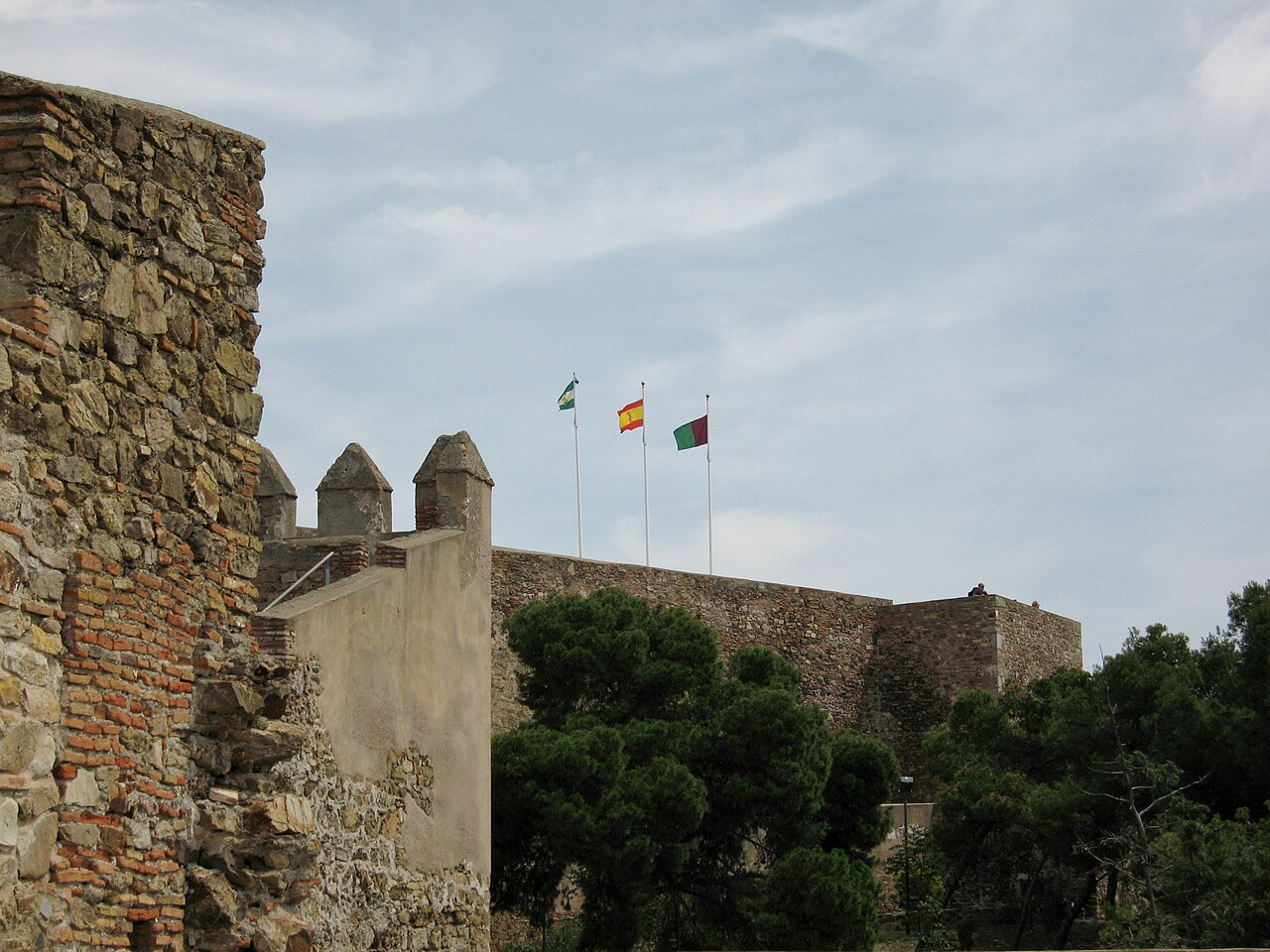
Photo by Olaf Tausch • CC BY 3.0
Architectural features and layout
Gibralfaro Castle is situated at an elevation between 121 and 132 meters above sea level, providing strategic oversight of Málaga, the Strait of Gibraltar, and even the Rif mountains in North Africa on clear days. The castle's defenses comprise two concentric rings of walls fortified with eight towers, including the prominent torre Mayor (main tower) which rises 17 meters high.
The outer wall connects to the Alcazaba via the coracha, a zigzagging defensive wall that allowed secure passage. The inner wall features a continuous patrol path enabling guards to monitor the entire perimeter effectively. The fortress is divided into two main sections: the upper area housing the main courtyard and towers, and the lower area, which contained barracks and stables for troops and horses.
Notably, the castle contains the Pozo de Airón, a deep well carved into the rock reaching approximately 40 meters, believed to be of Phoenician origin. This water source was vital during sieges. The upper section also included baths and various chambers, reflecting the castle's dual role as a military and residential site.
The albarrana tower, or White Tower, is another key feature facing northeast. It housed cisterns (aljibes), storage rooms, and other facilities essential for sustaining the fortress during prolonged attacks. The interconnected design of the towers and walls enhanced the castle's defensive capabilities.
Preservation and cultural significance
Today, Gibralfaro Castle remains in a state classified as ruins, though its ramparts and towers have been preserved and partially restored to allow visitor exploration. The walls offer a scenic and engaging walk, often less crowded than other tourist sites in Málaga, providing panoramic views of the city and the Mediterranean coast.
Within the castle grounds, a modern Interpretation Center is housed in the former powder magazine. This center exhibits military uniforms and artifacts that illustrate the castle's historical role and the lives of its garrisons over the centuries.
The castle was declared a Historic-Artistic Monument in 1931 and later designated a Bien de Interés Cultural in 1985, underscoring its importance as a protected cultural heritage site in Spain. Its enduring presence offers insight into the military architecture and turbulent history of the Iberian Peninsula during the medieval period.
Visitor experience and accessibility
Visitors to Gibralfaro Castle can explore the extensive ramparts, walk the patrol paths along the walls, and enjoy sweeping views that extend beyond Málaga to the sea and distant mountains. The castle's location and preserved structures provide a tangible connection to the past, from ancient Phoenician times through the Islamic period and the Christian Reconquista.
The castle's relatively quiet atmosphere compared to more frequented sites allows for a reflective experience. Visitors often combine their visit with a tour of the nearby Alcazaba, linked historically and physically to Gibralfaro. The site is accessible by foot or local transport, with pathways leading up the hill.
Frequently asked questions (FAQ)
- How do I get to Gibralfaro Castle from Málaga city center?
- Gibralfaro Castle is accessible by a steep walk from Málaga city center or by local bus services that stop near the castle entrance. The walk takes about 20-30 minutes and offers scenic views along the way.
- What is the best time of year to visit Gibralfaro Castle?
- The best time to visit Gibralfaro Castle is during spring and autumn when the weather is mild and pleasant. Summer can be hot, so early morning or late afternoon visits are recommended to avoid the heat.
- Are there guided tours available at Gibralfaro Castle?
- Yes, guided tours are available and provide detailed historical and architectural insights into the castle. These tours can be booked through local tourism offices or on-site.
- Is Gibralfaro Castle suitable for visitors with mobility issues?
- Due to its hilltop location and uneven terrain, access to Gibralfaro Castle may be challenging for visitors with mobility issues. Some pathways are steep and not fully accessible to wheelchairs.
- What can I see from the top of Gibralfaro Castle?
- From the top of Gibralfaro Castle, visitors can enjoy panoramic views of Málaga city, the Mediterranean Sea, the La Malagueta bullring, and on clear days, the Rif mountains in Africa and the Strait of Gibraltar.
Photo gallery

Information
Sources & official resources
Verify the information above using these authoritative references.
Loading map...
Visitor reviews
No reviews yet. Been here? Write the first review and help other travelers!
Write the first reviewVisited this castle? Share your experience
Your review helps other travelers and adds first-hand knowledge to our encyclopedia.