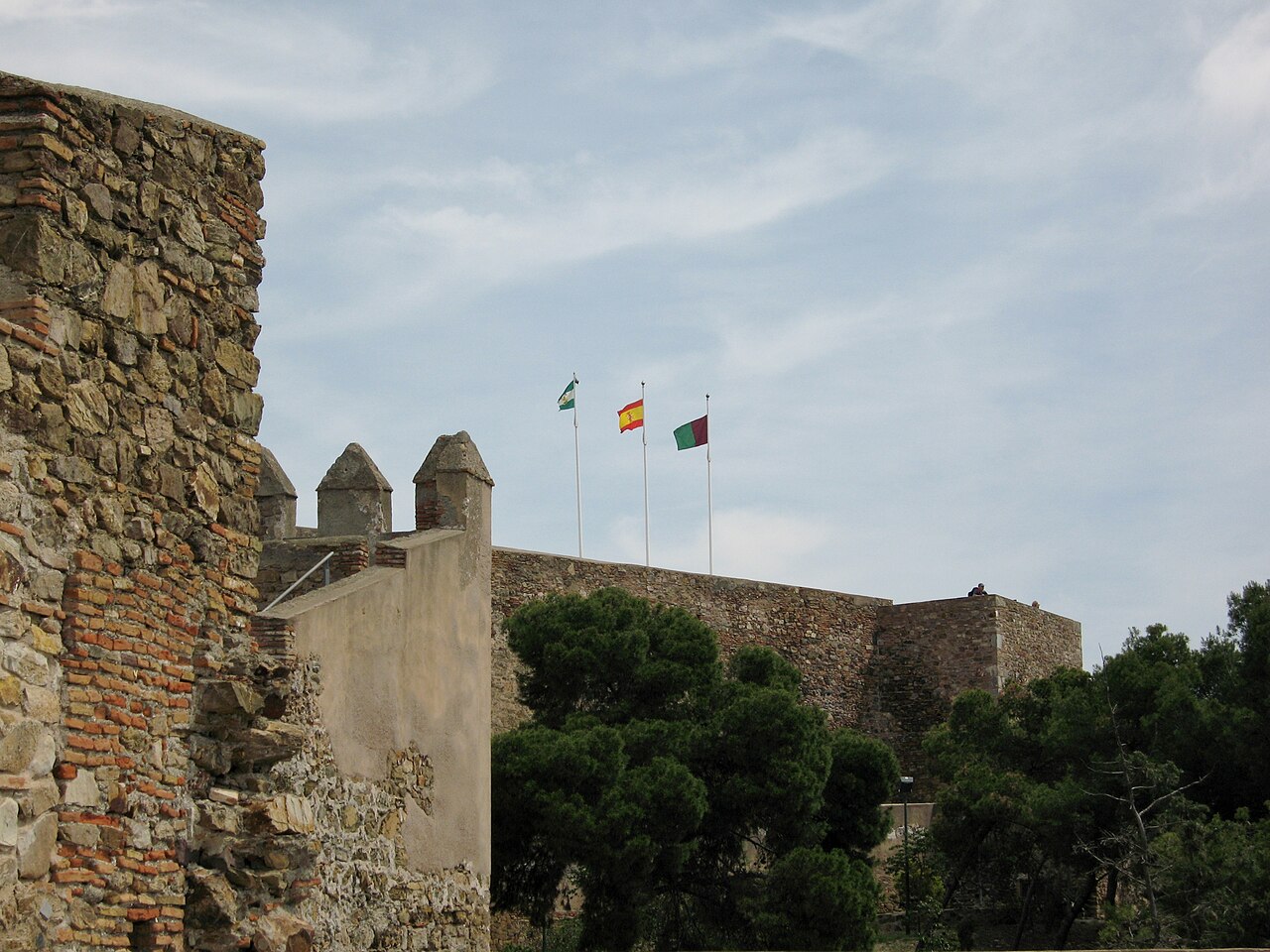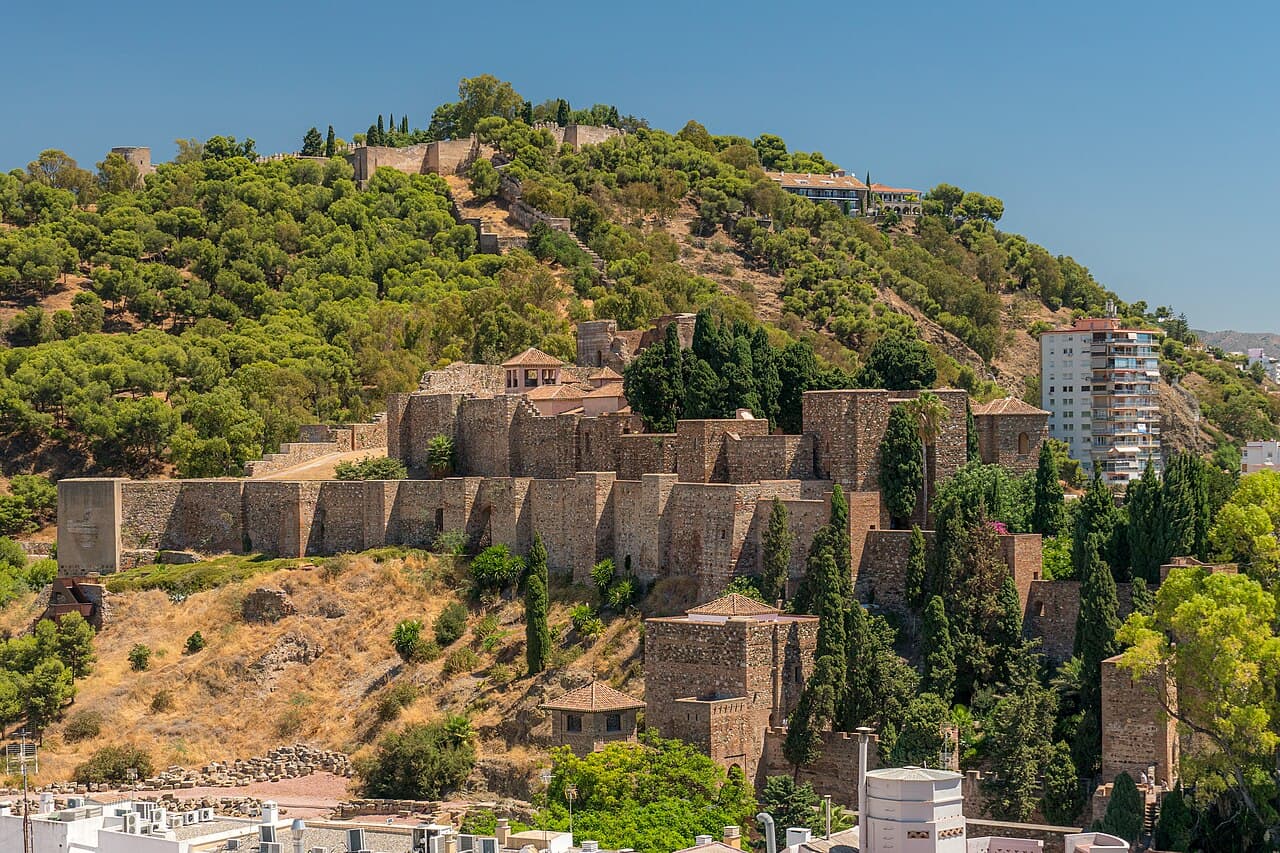
The Alcazaba of Malaga stands as one of the most remarkable examples of Moorish military architecture in Spain. Constructed in the early 11th century by the Hammudid dynasty, this hill castle occupies a strategic position on the slopes of Mount Gibralfaro, overlooking the Mediterranean coast and the city of Malaga. It is widely recognized as the best-preserved alcazaba in Spain, a term derived from the Arabic al-qasbah, meaning a walled fortress within a city, highlighting its dual role as both a defensive stronghold and a palatial residence.
The Alcazaba’s origins trace back to a much earlier period, with a Phoenician-Punic fortification established around 600 BC on the same site. This location’s long history of occupation underscores its strategic importance through various eras, including Roman times when a villa, industrial installations, and a theatre existed nearby. The Islamic period began prominently here in the 8th century when Abd ar-Rahman I reportedly constructed a fortress with a mosque, marking the start of the site's transformation into a formidable Islamic citadel.
Architecture and design of the alcazaba
The Alcazaba is a prime example of Taifa period military architecture, characterized by its double walls and massive entry fortifications. Its defensive design is considered so advanced that it is often compared to the famed Krak des Chevaliers in Syria. The fortress consists of two concentric fortified enclosures built on rocky terrain, covering approximately 15,000 square meters today, which is less than half of its original extent.
Outer citadel
The outer enclosure features a complex bent entrance passage with multiple gates, including the Puerta de la Bóveda and the Puerta de las Columnas. The latter is notable for incorporating reused Roman columns and capitals sourced from the nearby Roman theatre, demonstrating the blend of cultural influences. In the 19th century, this passage was covered by houses, forming what became known as the "Alcazaba Tunnel."
Within the outer citadel lies the Arco del Cristo gate, which opens onto the Plaza de Armas, a flat area that was adapted for artillery use after the Christian conquest. Adjacent to this plaza stands the Torre de la Vela, a tower that housed a bell following the Christian takeover, symbolizing the fortress's new role under Christian rule.
Inner citadel and palatial residences
The inner citadel is accessed through the heavily fortified Puerta de los Cuartos de Granada, rebuilt in the 20th century. This core area contains two palatial residences known as the Cuartos de Granada. The first is an 11th-century Taifa palace distinguished by a southern pavilion with horseshoe arches supported by marble columns. These arches feature intricately carved arabesques and alternating plain and decorated voussoirs, reflecting early caliphal architectural styles. A small annex with intersecting multifoil arches inspired by Cordoban designs complements this palace.
The Nasrid palace, largely rebuilt in the 14th century, includes two rectangular courtyards: the Patio de los Naranjos and the Patio de la Alberca. Both courtyards retain original pools and tile pavements, showcasing the aesthetic qualities of Andalusi palace architecture. A third courtyard, the Patio del Aljibe, contains a cistern approximately 25 square meters in size, now repurposed as a restoration workshop.
At the eastern end of the inner citadel stands the Torre del Homenaje, a nearly square tower dating from the 14th century. This tower contains living quarters with rooms and a patio, although its original staircase has been lost over time.
Historical significance and events
The Alcazaba of Malaga played a pivotal role throughout the Islamic period in southern Spain, serving as a military fortress and a symbol of power for various dynasties. After its initial construction under the Hammudids, it underwent expansions and restorations by the Taifa king Badis ben Habús in the mid-11th century and later by the Nasrid emir Muhammad II in the early 14th century.
The fortress changed hands among several Muslim dynasties, including the Almoravids in 1092 and the Almohads in 1146, before becoming part of the Nasrid Kingdom of Granada in 1279. It was the last Muslim stronghold in Malaga during the Reconquista, enduring a prolonged siege from May to August 1487 by the Catholic Monarchs Ferdinand and Isabella. The fortress surrendered on 18 August 1487, an event marked by the raising of the Christian flag on the Torre del Homenaje.
Following the Christian conquest, the Alcazaba’s military importance declined, and it gradually transformed into a residential area by the 18th century. It suffered damage from earthquakes, notably in 1680, and bombardments in 1693 and during the Spanish Civil War in 1937. Restoration efforts began in the 20th century, particularly under the guidance of architect Leopoldo Torres Balbás, preserving the fortress as a significant historic monument.
Archaeological remains and materials
The Alcazaba’s construction materials reflect a blend of local and reused elements. The walls and towers are primarily built from numulitic limestone quarried nearby, while Roman columns, capitals, and marble baths were repurposed within the fortress. Masonry walls added during the late 13th or early 14th century reinforced the structure against evolving military threats.
Archaeological excavations have revealed Roman concrete walls coated with reddish stucco and small slate pools used for producing garum, a fermented fish sauce prized in Roman cuisine. The site also includes a dungeon that once held Christian captives during the Muslim period, illustrating the fortress's role in the conflicts of the Reconquista.
The Barrio Castrense, located within the inner citadel, is a well-preserved 11th-century military district comprising eight houses arranged along narrow streets. Some houses feature hammams (bathhouses) and latrines, demonstrating advanced urban planning and hygiene practices. The floors combine lime mortar tinted with red ochre, terracotta tiles, and reused marble pieces, while walls are decorated with red-painted dadoes featuring Kufic inscriptions and geometric motifs.
Defensive features and modifications
The fortress’s defensive design includes double walls, multiple towers with arrow slits, and fortified gates designed to slow and expose attackers. The entrance to the upper citadel was modified after the Christian conquest, featuring a ramp leading to the Arco del Cristo with a brick vaulted passage and a stone keystone carved with a key motif. Two stone corbels mark the former location of a machicolation, a defensive opening used to drop projectiles on attackers.
The combination of military strength and aesthetic refinement makes the Alcazaba of Malaga an outstanding example of Andalusi fortress-palace architecture. Its preservation allows visitors to appreciate the complex interplay between defense, residence, and cultural expression that defined Islamic rule in medieval Spain.
Visiting the alcazaba today
Today, the Alcazaba is a major tourist attraction in Malaga, offering panoramic views of the city and the Mediterranean Sea. Visitors can explore its extensive walls, towers, palatial quarters, and archaeological remains. The site is well-preserved and partially restored, with ongoing conservation efforts to maintain its historical integrity.
The fortress's location near Malaga's historic center makes it accessible for visitors interested in exploring the rich cultural heritage of Andalusia. The Alcazaba is often visited in combination with the nearby Gibralfaro Castle, which sits atop the adjacent hill, providing complementary perspectives on Malaga’s medieval defenses.
Frequently asked questions (FAQ)
- How do I get to the Alcazaba of Malaga?
- The Alcazaba is located on Mount Gibralfaro's slopes near Malaga's historic center, accessible by foot or local transport.
- What are the opening hours of the Alcazaba?
- The Alcazaba is generally open daily from 9:00 AM to 8:00 PM, but hours may vary seasonally; check locally before visiting.
- Is there an entrance fee to visit the Alcazaba?
- Yes, there is a modest entrance fee, with discounts for children, seniors, and groups; some days may offer free entry.
- Can I visit both the Alcazaba and Gibralfaro Castle in one trip?
- Yes, the two sites are close and often visited together, connected by a scenic path with panoramic views.
- What architectural styles are visible in the Alcazaba?
- The Alcazaba features primarily <strong>Taifa period</strong> and <strong>Nasrid Islamic architecture</strong>, including horseshoe arches, arabesques, and multifoil arches.
- Why is the Alcazaba of Malaga historically significant?
- It is the best-preserved Moorish fortress in Spain, representing key phases of Islamic rule and the Reconquista's final siege.
- Is the Alcazaba accessible for visitors with mobility issues?
- Due to its hillside location and uneven terrain, accessibility is limited; some areas may be difficult for those with mobility challenges.
Photo gallery

Information
Sources & official resources
Verify the information above using these authoritative references.
Loading map...
Visitor reviews
No reviews yet. Been here? Write the first review and help other travelers!
Write the first reviewVisited this castle? Share your experience
Your review helps other travelers and adds first-hand knowledge to our encyclopedia.