Gerdauen Castle Ruins
Gerdauen Castle Ruins, located in Kaliningrad Oblast, Russian Federation, represent a significant medieval fortress originally constructed by the Teutonic Knights in the early 14th century. The castle's history is deeply intertwined with the military and administrative ambitions of the Teutonic Order during the High Medieval period. Built initially around 1270 as an earth and timber stronghold, the site evolved through destruction and reconstruction into a stone and brick fortress by 1310, fortified with embankments, moats, and shelters. This transformation marked the castle's emergence as a key defensive and administrative center, although it never became the seat of a commander due to its vulnerable position near Lithuanian lands.
Historical context and teutonic origins
The construction of Gerdauen Castle began under the auspices of the Teutonic Knights, a German military order tasked with the Christianization and conquest of the Baltic region. The initial fortress was destroyed during a Prussian uprising, reflecting the turbulent nature of the region during the late 13th and early 14th centuries. After the suppression of the uprising, the Knights rebuilt the castle with more durable materials, completing a new stronghold by 1310. The castle was consecrated in 1325 on the feast day of Saints Peter and Paul, underscoring its religious as well as military significance.
Throughout the 14th century, Gerdauen faced repeated attacks from Lithuanian forces, notably in 1336, 1337, and 1366, which shaped its defensive architecture. Despite the addition of a fortified wall ring by 1406, the castle suffered severe damage during the Thirteen Years' War in 1455, a conflict between the Teutonic Order and the Kingdom of Poland. By the late 17th century, specifically in 1670, the castle was abandoned and ceased to function as a military stronghold.
Architectural features and evolution
Medieval fortifications
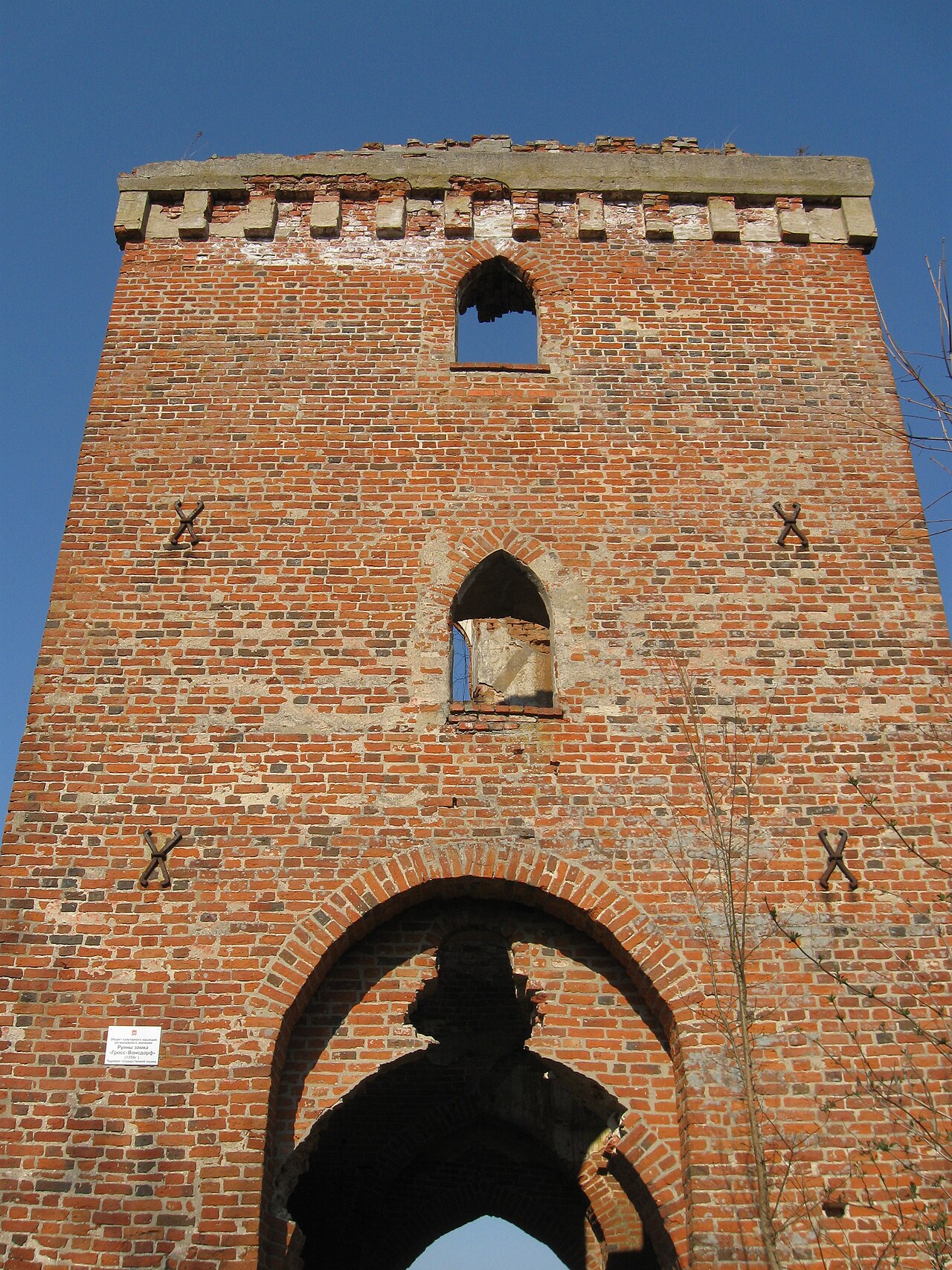
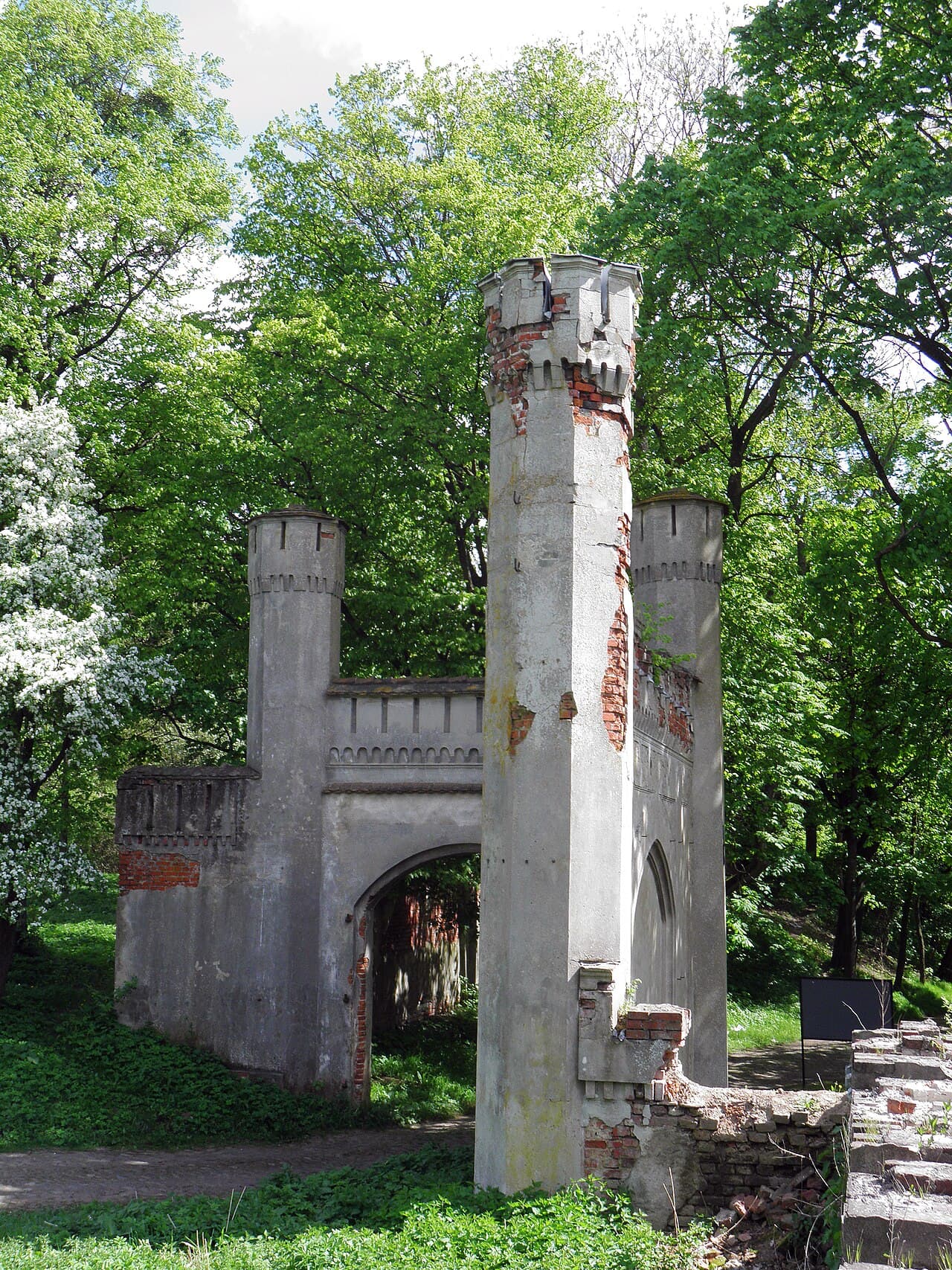
The castle's medieval design featured stone and brick buildings arranged within a ring of fortifications that included embankments, moats, and shelters. These defensive elements were typical of High Medieval hill castles constructed by the Teutonic Knights to secure their territorial claims. The surviving ruins include the main gate, parts of the western wing, and a reconstructed well, which provide insight into the castle's layout and defensive capabilities.
19th-century transformations
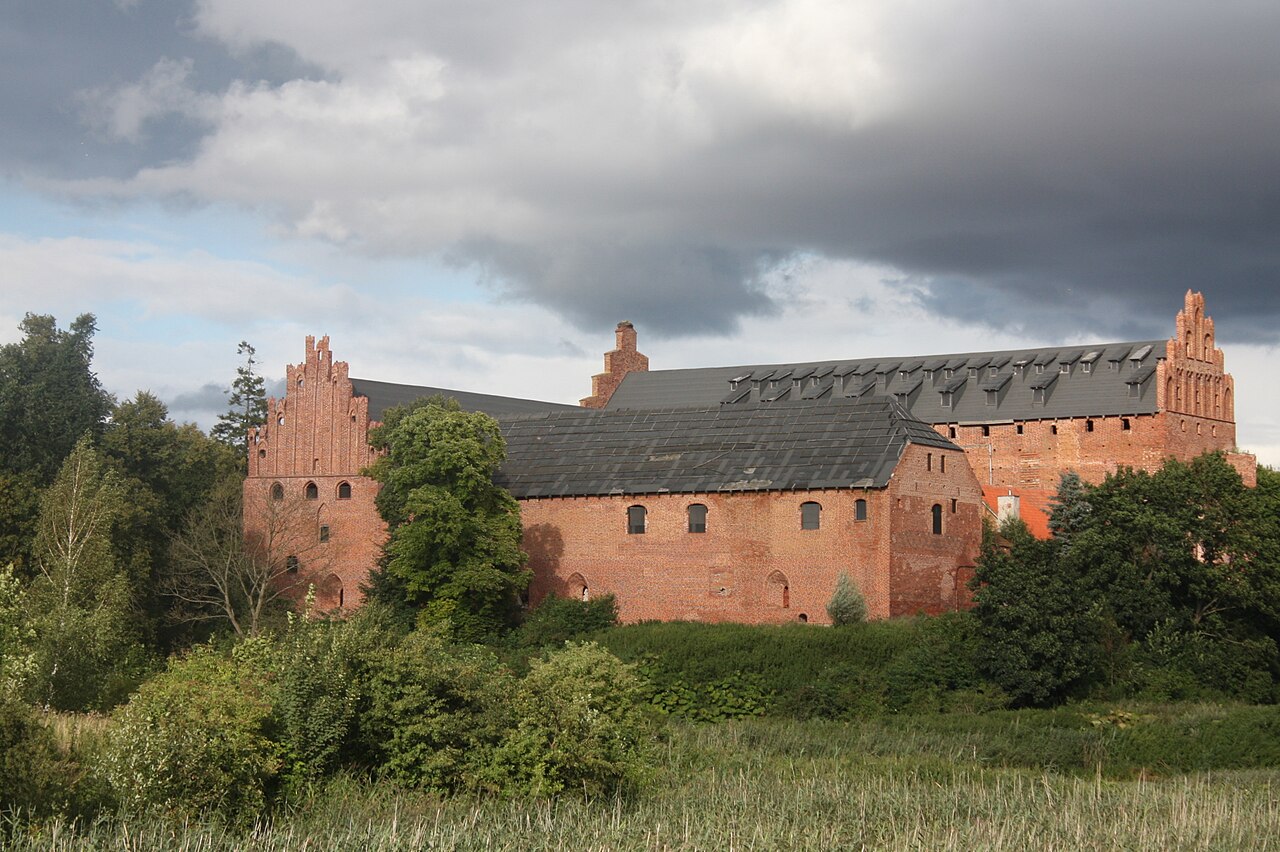
In the 19th century, much of the original medieval structure was demolished by the son of Baron von Romberg, who built a manor house on the site, preserving only the underground cellars of the original castle. This manor significantly altered the medieval character of the site but reflected the era's architectural tastes and the transition from fortress to residence. The manor later came into the possession of Alfred von Jansen, who lived there until 1945.
Modern history and preservation
During World War I, the town of Gerdauen witnessed severe fighting, but the manor house itself was only slightly damaged during World War II. Post-war, the estate's stable was converted into a veterinary clinic, demonstrating adaptive reuse of the castle grounds. However, structural issues became apparent by the late 20th century, with partial collapses of cellar walls and damage to the veterinary building.
In the late 1970s, the grounds served as a filming location for the war film "Long Miles of War," highlighting the site's atmospheric historical presence. Attempts to develop the ruins into a hotel and restaurant in 1990 were halted due to the financial crisis of 1991. Recognizing its cultural and historical importance, the Government of Kaliningrad Oblast designated Gerdauen Castle a cultural heritage site of regional significance in 2007.
Remaining structures and archaeological significance
Today, the ruins of Gerdauen Castle stand as a testament to its layered history, combining elements from its medieval origins, 19th-century modifications, and 20th-century adaptations. The surviving cellars beneath the manor house are archaeologically significant, preserving the footprint of the original fortress. The main gate and fragments of defensive walls offer visitors a glimpse into the castle's strategic design and military role in the region.
The stable building, despite structural vulnerabilities, remains a functional reminder of the estate's continuous use over centuries. While decorative features and inscriptions have not been documented, the ruins' evocative atmosphere and historical layers contribute to the cultural heritage of Kaliningrad Oblast.
Visiting information and cultural impact
Gerdauen Castle Ruins attract visitors interested in medieval history, military architecture, and the complex history of the Baltic region. The site offers a unique opportunity to explore the remnants of a Teutonic Knights fortress and understand the challenges faced by the order in securing their eastern frontiers. Preservation efforts continue to maintain the ruins and promote awareness of their historical value.
Visitors should note that the site is in a fragile state, with ongoing conservation needs. The castle's proximity to the town of Zheleznodorozhny makes it accessible for day trips, combining historical exploration with regional cultural experiences.
Frequently asked questions (FAQ)
- When was Gerdauen Castle originally built and by whom?
- Gerdauen Castle was originally constructed in 1270 by the Teutonic Knights as an earth and timber stronghold, later rebuilt in stone by 1310.
- What architectural features remain visible at Gerdauen Castle ruins?
- Visible remains include the main gate, parts of the western wing, a reconstructed well, and the underground cellars beneath the 19th-century manor house.
- Why was Gerdauen Castle never the seat of a commander?
- Due to its proximity to Lithuanian lands and frequent attacks by Lithuanian troops, the Teutonic Knights abandoned plans to make Gerdauen the seat of a commander.
- What happened to the castle during the 19th century?
- Most medieval structures were demolished by Baron von Romberg's son, who built a manor house on the site, preserving only the original cellars.
- Is Gerdauen Castle accessible to visitors today?
- The ruins are accessible and attract visitors interested in medieval history, though the site is fragile and requires careful conservation efforts.
Photo gallery

Information
Website
Visit websiteSources & official resources
Verify the information above using these authoritative references.
Loading map...
Visitor reviews
No reviews yet. Been here? Write the first review and help other travelers!
Write the first reviewVisited this castle? Share your experience
Your review helps other travelers and adds first-hand knowledge to our encyclopedia.