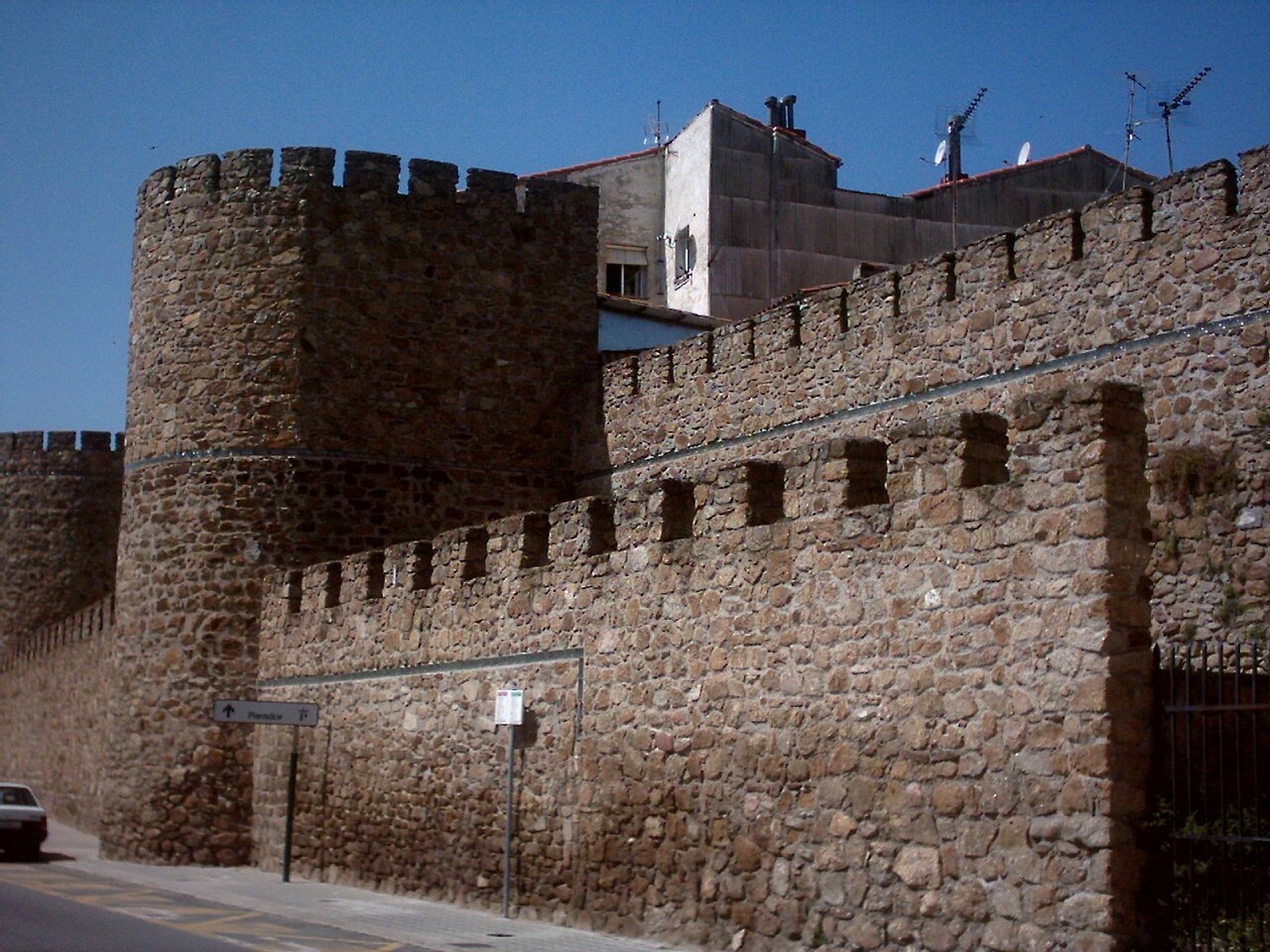
Galisteo Castle and City Walls
Galisteo Castle and city walls in Galisteo, Spain, stand as a remarkable example of medieval fortification that reflects the complex history of the region. The origins of Galisteo date back to the Roman and Moorish periods, but its most significant development occurred during the High Medieval period, particularly in the 13th century. This era marked the town's golden age when it served as the capital of the Galisteo Estate, overseeing nearby villages such as Pozuelo de Zarzón, Guijo de Galisteo, Montehermoso, and Carcaboso.
Historical context and significance
The strategic location of Galisteo in the Alagón Valley contributed to its importance as a defensive and administrative center during the medieval period. The town's fortifications were crucial in protecting the population and the estate's lands from external threats. The city walls that encircle the historic center of Galisteo are a testament to the town's defensive priorities and its role in regional power dynamics. These walls have survived remarkably well, preserving the original layout and enclosing the majority of the town's historic buildings.
Architectural features of the city walls
The Almohad-period walls are notable for their construction technique, which incorporates logs and river pebbles. This method reflects the Islamic architectural influence prevalent during the period when the Moors controlled much of the Iberian Peninsula. The walls form a continuous circuit around the old town, maintaining their integrity and providing a clear outline of the medieval urban plan. Their good state of preservation allows visitors to appreciate the scale and defensive capabilities of the fortifications.
The picota tower: the town’s emblematic keep
Adjacent to the city walls stands the Picota Tower, the most iconic symbol of Galisteo. This keep was constructed in the 14th century by the Christian conquerors on the site of the earlier Almohad fortress. The tower was part of a palace complex integrated into the defensive system. Its name, "Picota," meaning "peak," derives from the distinctive pyramidal top with an octagonal base that crowns the structure, giving it a sharp, pointed silhouette visible from afar.
Religious architecture within the walls
Within the fortified enclosure lies the Church of Nuestra Señora de la Asunción, which features a Mudéjar apse dating from the 13th century. This apse exemplifies the Romanesque Mudéjar style typical of the Castile-León region, characterized by the use of blind brick arches arranged in two superimposed sets. The church's nave underwent significant remodeling in the 16th century, reflecting Renaissance influences while preserving the original Mudéjar elements. The church remains a key architectural and cultural landmark within Galisteo’s historic core.
Preservation and visitor experience
Galisteo’s fortifications and historic buildings have benefited from conservation efforts that maintain their well-preserved condition. The intact walls and the Picota Tower offer visitors a tangible connection to the town’s medieval past. Walking along the ramparts provides panoramic views of the surrounding valley and insight into medieval defensive strategies. The compact layout of the old town within the walls allows for an immersive experience of Galisteo’s architectural heritage, combining military, religious, and residential structures from different periods.
Loading map...
Visitor reviews
No reviews yet. Been here? Write the first review and help other travelers!
Write the first reviewVisited this castle? Share your experience
Your review helps other travelers and adds first-hand knowledge to our encyclopedia.