
Gaillard Castle
Gaillard Castle is a remarkable example of High Medieval Gothic military architecture located in Les Andelys, Normandy. Constructed between 1196 and 1198, this hill castle was commissioned by Richard the Lionheart, King of England and Duke of Normandy, as a strategic fortress to defend the Duchy of Normandy against French forces. Its commanding position overlooking the Seine River allowed it to control a vital passage and protect the region from invasion.
Historical context and strategic importance
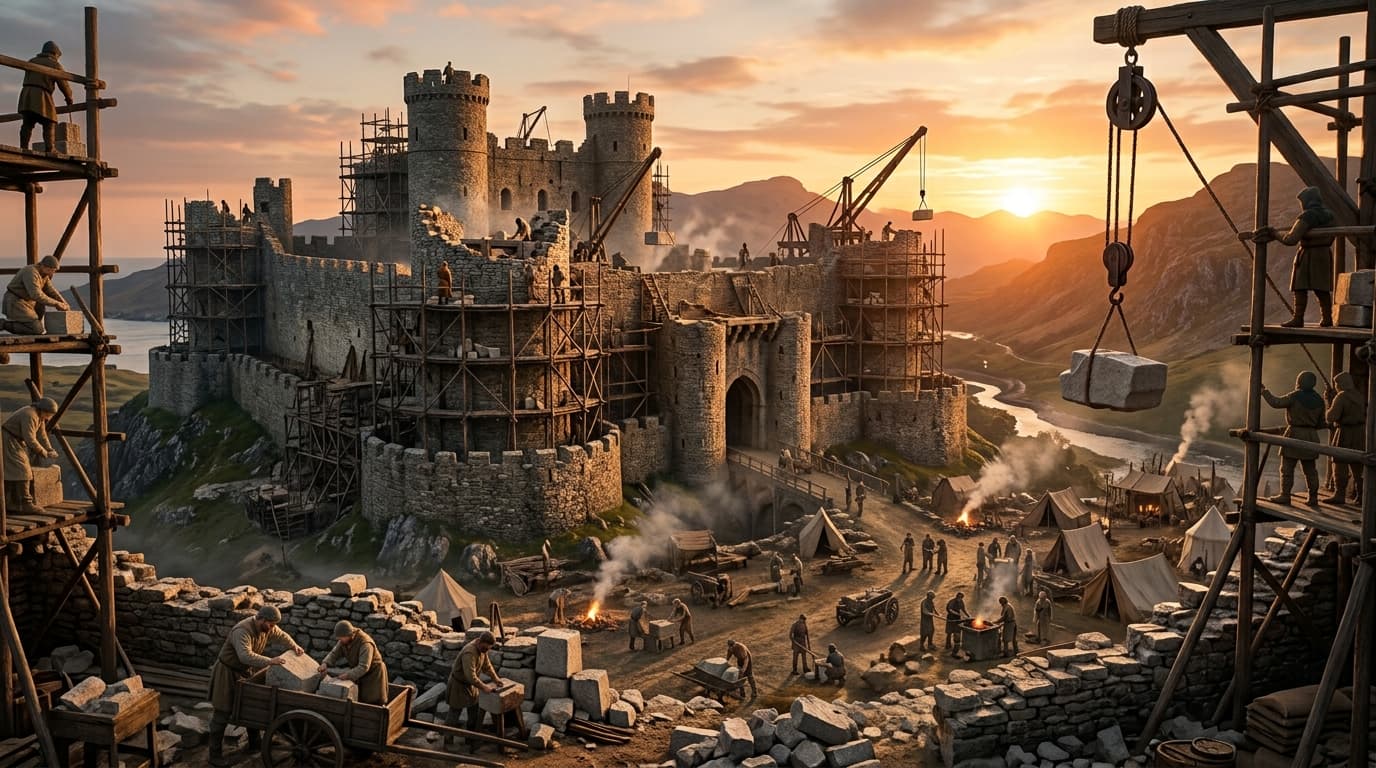
The construction of Gaillard Castle took place during a period of intense conflict between England and France in the late 12th century. Following the loss of key territories, Richard the Lionheart sought to reinforce his holdings in Normandy by building a fortress that could withstand sieges and serve as a military stronghold. Gaillard Castle was part of a broader defensive network designed to secure the border and assert English dominance in the region.
Despite its formidable defenses, the castle was captured by French forces in 1204, shortly after Richard's death. It then became a royal French fortress and was maintained as such for several centuries, reflecting its ongoing military and political significance.
Architectural features and design
Gaillard Castle is a classic example of a hill castle with a complex layout adapted to the natural topography of the site. The castle's design includes multiple layers of fortification, with thick stone walls, towers, and a keep that provided both defensive strength and residential quarters.
The castle's Gothic style is evident in its pointed arches and robust construction, which emphasized functionality and defense. The use of machicolations and battlements allowed defenders to repel attackers effectively. The castle also featured a moat and strategically placed gatehouses to control access.
The keep and fortifications
The central keep of Gaillard Castle was a formidable stone tower that served as the last line of defense. It housed the lord's living quarters and included storage rooms and armories. Surrounding the keep were curtain walls with towers at intervals, providing overlapping fields of fire against besiegers.
Adaptations to the landscape
Built on a steep hill overlooking the Seine, the castle took advantage of natural cliffs and slopes to enhance its defensive capabilities. The terrain made direct assaults difficult and allowed defenders to monitor river traffic and movements across the valley.
Later history and restoration
After its capture by the French crown, Gaillard Castle continued to serve as a military fortress through the Middle Ages. Over time, advances in artillery and changes in military tactics reduced its strategic value, and it eventually fell into disuse.
The castle suffered damage during various conflicts and periods of neglect but was subject to restoration efforts in the 19th and 20th centuries. These restorations aimed to preserve its historical structure and make it accessible to the public as a cultural heritage site.
Visiting gaillard castle today
Today, Gaillard Castle is a restored historical monument open to visitors interested in medieval military architecture and Norman history. Its elevated position offers panoramic views of the Seine River and the surrounding countryside.
Visitors can explore the remains of the walls, towers, and keep, gaining insight into the castle's defensive design and its role in the turbulent history of Normandy. Interpretive signage and guided tours provide context about the castle's construction, historical significance, and architectural features.
Access and amenities
The castle is accessible via walking paths from the town of Les Andelys, which provides facilities such as parking, restaurants, and accommodations. The site is suitable for visitors with a moderate level of mobility due to the steep terrain.
Cultural significance
Gaillard Castle remains an important symbol of the medieval history of Normandy and the legacy of Richard the Lionheart. Its preservation contributes to understanding the military architecture of the High Middle Ages and the complex political landscape of Anglo-French relations during that era.
Frequently asked questions (FAQ)
- What is the historical significance of Gaillard Castle?
- Gaillard Castle, built in the 13th century by Richard the Lionheart, is a remarkable example of medieval military architecture. It played a crucial role during the Hundred Years' War and offers fascinating insights into the history of Normandy and its strategic importance in France.
- When was Gaillard Castle built?
- Gaillard Castle was constructed between 1196 and 1198, during the reign of King Richard I of England. Its strategic location overlooking the Seine River was chosen to strengthen the defenses of the region against potential invasions.
- How do I get to Gaillard Castle?
- Gaillard Castle is accessible by car and public transportation from nearby cities. The nearest train station is in Les Andelys, from where you can take a short taxi ride or enjoy a scenic walk to the castle.
- What are the opening hours of Gaillard Castle?
- The castle is typically open to visitors from April to October, with specific hours varying by season. It’s best to check the official website for the most current information regarding opening times and any seasonal variations.
- Can I take guided tours of Gaillard Castle?
- Yes, guided tours are available at Gaillard Castle, offering visitors an in-depth look at its history and architecture. These tours are conducted in multiple languages and are a great way to enhance your understanding of the site.
- Is it possible to visit Gaillard Castle year-round?
- While Gaillard Castle is primarily open to visitors from April to October, special events may be organized during the off-season. It’s advisable to check the castle’s website or contact the visitor center for any winter opening days or events.
- What is the best time to visit Gaillard Castle?
- The best time to visit Gaillard Castle is during the spring and early autumn months when the weather is mild and the surrounding landscapes are particularly beautiful. Additionally, visiting during these times often means fewer crowds, allowing for a more enjoyable experience.
- Are there any nearby attractions to see when visiting Gaillard Castle?
- Yes, nearby attractions include the picturesque town of Les Andelys, the Seine River, and the historic ruins of Château Gaillard. Visitors can also explore local cafes and shops that highlight the charm of this beautiful region in Normandy.
- What are the ticket prices for Gaillard Castle?
- Ticket prices for Gaillard Castle are generally affordable, with discounts available for students, seniors, and children. It's recommended to check the official website for the latest pricing information and any special offers that may be available during your visit.
Information
Website
Visit websiteFeatured in
Articles on the Castlopedia blog that feature Gaillard Castle.
Sources & official resources
Verify the information above using these authoritative references.
Loading map...
Visitor reviews
No reviews yet. Been here? Write the first review and help other travelers!
Write the first reviewVisited this castle? Share your experience
Your review helps other travelers and adds first-hand knowledge to our encyclopedia.



