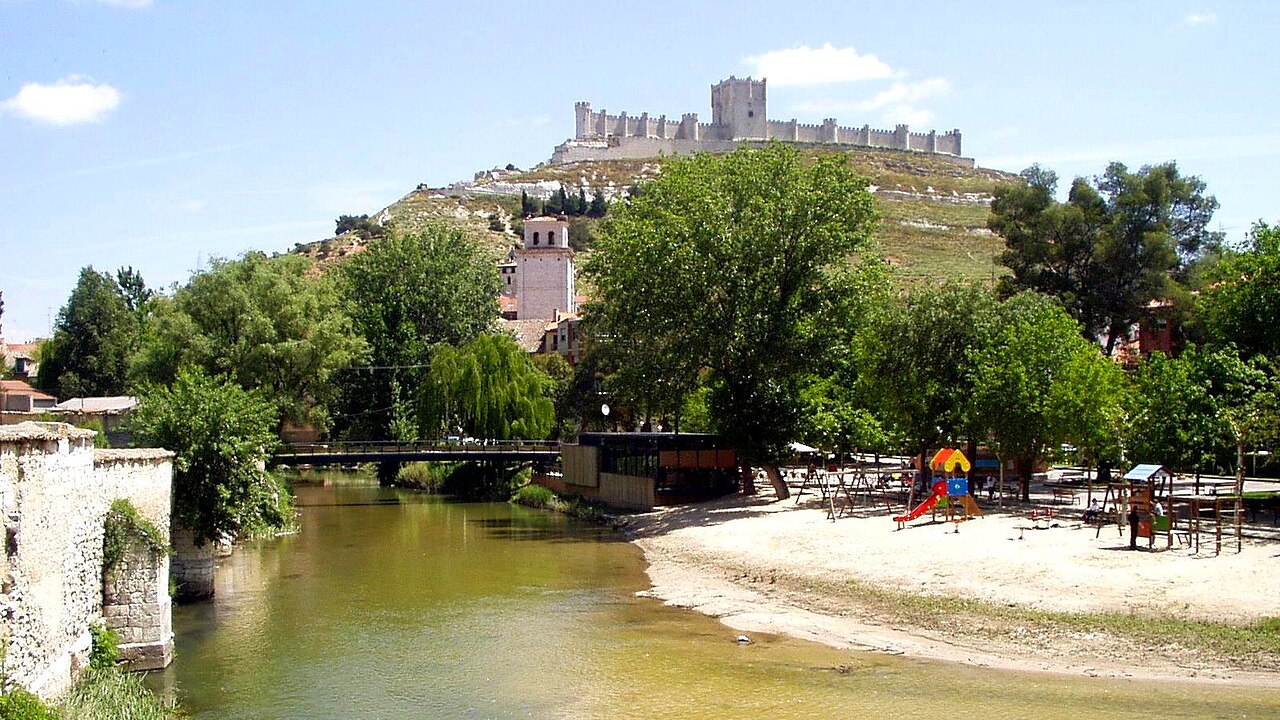
Fuentidueña Castle
Fuentidueña Castle is a medieval fortress located in the village of Fuentidueña, in the northern part of the province of Segovia, Spain. Perched above a narrow valley carved by the Duratón River, the castle's position takes advantage of the natural topography, making it a formidable defensive site during the High Medieval period. The village itself is enclosed by walls on the north, south, and west sides, emphasizing its defensive role in the region.
Strategic location and natural defenses
The castle's placement atop a rocky promontory overlooking the river valley provided a natural barrier against invaders. The terrain includes an impressive rock cut which enhanced the fortress's defense by making direct assault difficult. The village's fortifications were designed to control access and protect the inhabitants, with only one of the three original gates allowing intramural entry, reinforcing the security of the settlement.
Architectural features and defensive structures
The castle's walls, which date back to the 12th and 13th centuries, reflect typical High Medieval military architecture in Spain. The fortifications include thick stone walls adapted to the irregular rocky terrain, with battlements and towers positioned to maximize surveillance and defense. The use of the natural rock formations as part of the defensive system is a notable feature, reducing the need for extensive artificial construction on certain sides.
Castle gates and access points
Access to the castle and village was strictly controlled through three gates, with only one still serving as the main entrance. These gates were fortified to withstand sieges and regulate movement, essential in a period marked by frequent conflicts. The limited points of entry enhanced the castle's defensibility and allowed for effective monitoring of visitors and potential attackers.
Historical significance and medieval context
While there are no detailed records about the exact origins of Fuentidueña Castle, its construction is generally attributed to the 12th century, coinciding with the reign of Alfonso VII of León and Castile. The castle gained prominence during his rule, notably hosting the Cortes (medieval parliamentary assemblies), which underscores its importance as a political and military center. In 1204, a peace treaty was concluded here with the Kingdom of Navarra, marking the castle as a site of diplomatic significance.
Role during Alfonso VII's reign
Alfonso VII's use of the castle for holding Cortes highlights its strategic and administrative value. The castle was not only a military stronghold but also a venue for governance and negotiation. The peace treaty with Navarra, granted testament in 1204, reflects the castle's role in shaping regional politics during the turbulent medieval period.
Preservation and current condition
Today, Fuentidueña Castle remains partially preserved, with significant portions of its walls and defensive structures intact. The integration of natural rock formations into the fortifications has contributed to the durability of the site. Visitors can explore the castle's remains and appreciate the blend of natural and constructed defenses that typify medieval military architecture in the region.
Visitor experience and accessibility
The castle's location offers panoramic views of the Duratón River valley and surrounding landscape. Access to the site involves navigating the village's historic layout, with the remaining gate providing entry to the intramural area. Interpretive signage and guided tours help contextualize the castle's history and architectural features for visitors.
Fuentidueña village and its medieval heritage
The village of Fuentidueña complements the castle's historical narrative. Its medieval walls and narrow streets reflect the settlement patterns of a fortified town designed for defense and community cohesion. The castle and village together illustrate the interplay between military architecture and urban development during the High Medieval period in Castile.
Architectural integration with the village
The castle's fortifications are integrated with the village walls, creating a cohesive defensive system. This integration highlights the dual role of the castle as both a military fortress and a protector of the local population. The preservation of these structures provides valuable insight into medieval urban defense strategies.
Frequently asked questions (FAQ)
- How do I get to Fuentidueña Castle?
- Fuentidueña Castle is located in the picturesque village of Fuentidueña, Spain. You can reach it by car via the A-1 highway, which is approximately 90 kilometers from Madrid. Public transportation options may be limited, so planning ahead is recommended.
- What is the historical significance of Fuentidueña Castle?
- Fuentidueña Castle dates back to the 11th century and played a crucial role in the defense of the region during the Reconquista. It is notable for its strategic position overlooking the valley, which allowed for surveillance and protection against invaders. The castle is a prime example of medieval military architecture in Spain.
- When was Fuentidueña Castle constructed?
- Fuentidueña Castle was constructed in the early 11th century, during a time of significant conflict and territorial changes in the Iberian Peninsula. It underwent various modifications and renovations over the centuries, reflecting different architectural styles and military needs. Today, it stands as a testament to the historical importance of the area.
- Can I enter Fuentidueña Castle?
- Yes, visitors are welcome to explore Fuentidueña Castle. However, access may be limited to certain areas due to preservation efforts. It's advisable to check local guidelines before your visit to ensure a fulfilling experience.
- Why is Fuentidueña Castle worth visiting?
- Fuentidueña Castle offers a unique glimpse into Spain's medieval past, showcasing impressive stonework and breathtaking views of the surrounding landscape. Its historical significance and architectural features make it a must-see for history enthusiasts and photographers alike. Additionally, the serene village atmosphere enhances the overall experience.
- Is it possible to visit Fuentidueña Castle year-round?
- Yes, Fuentidueña Castle is open to visitors throughout the year. However, the best time to visit is during the spring and fall when the weather is more pleasant and the surrounding scenery is particularly beautiful. Be sure to check for any seasonal hours or special events that may affect access.
- What are the opening hours for Fuentidueña Castle?
- Fuentidueña Castle typically opens at 10 AM and closes at 6 PM, but hours may vary depending on the season and local holidays. It’s recommended to verify the hours on the official website or contact local authorities before planning your visit. This ensures you have the most accurate information for your trip.
- Are there any ticket prices for visiting Fuentidueña Castle?
- Admission to Fuentidueña Castle is usually free or involves a nominal fee to support maintenance efforts. Special guided tours may have associated costs, so it's best to check in advance. This allows you to plan your visit accordingly and make the most of your experience.
- What nearby attractions can I visit while in Fuentidueña?
- While in Fuentidueña, you can also explore the beautiful countryside, including the nearby Sierra de Cuenca natural park. Additionally, the village itself has charming streets and local eateries where you can enjoy traditional Spanish cuisine. Other historical sites in the area can provide a rich context to your visit.
Loading map...
Visitor reviews
No reviews yet. Been here? Write the first review and help other travelers!
Write the first reviewVisited this castle? Share your experience
Your review helps other travelers and adds first-hand knowledge to our encyclopedia.