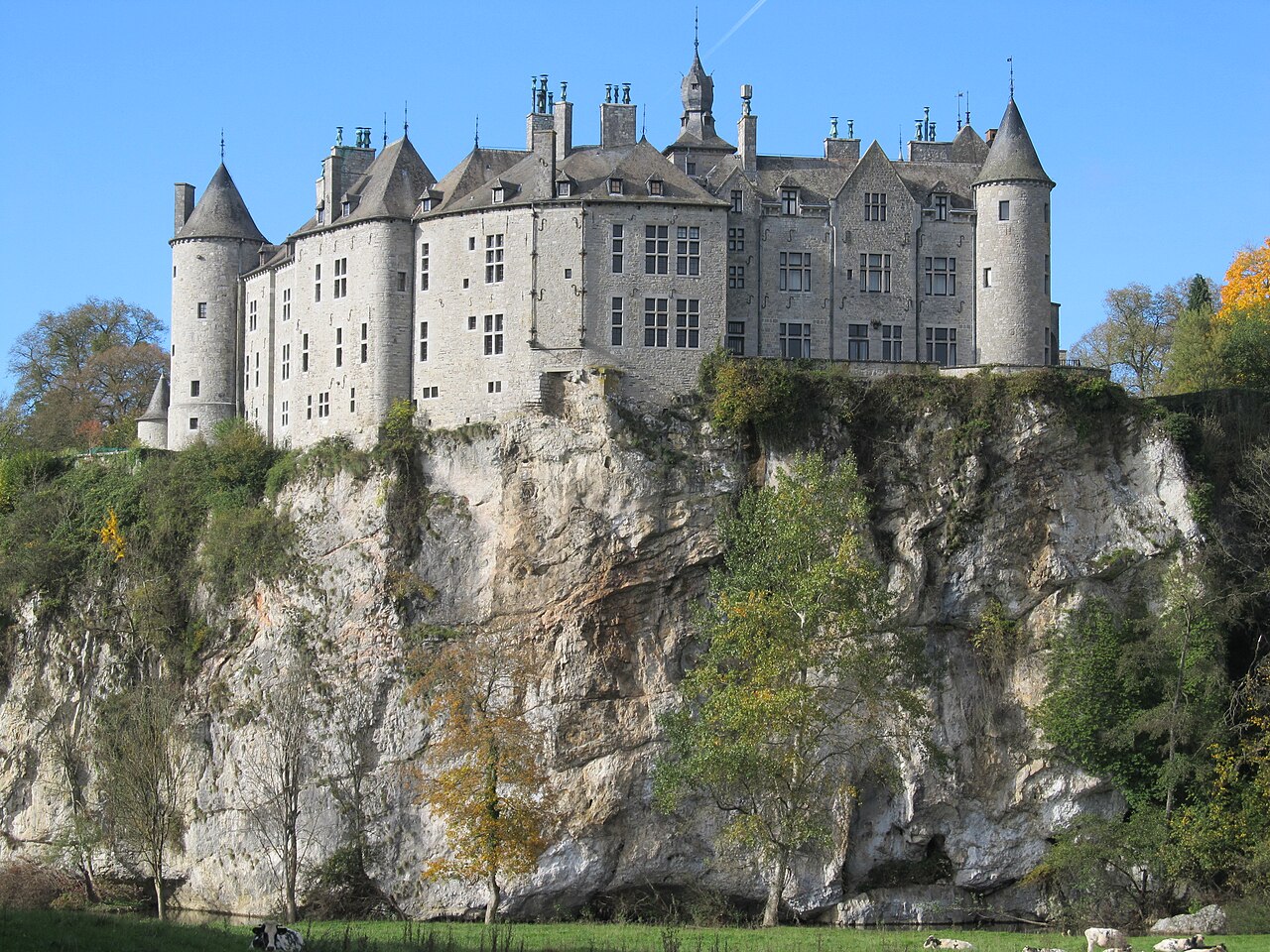
Freÿr Castle
Freÿr Castle, located in Hastière, Belgium, is a remarkable example of Renaissance architecture combined with a rich medieval heritage and some of the most exquisite gardens in Wallonia. Its history stretches back to the Middle Ages when it began as a fortified keep. The estate has been continuously owned by the descendants of the original noble family since the 14th century, making it a rare example of enduring aristocratic lineage in Belgium.
The medieval origins and Renaissance transformation
The site of Freÿr Castle was originally a medieval keep granted in fief in 1378 by the Count of Namur to Jean de Rochefort Orjol. This early fortification was part of the feudal landscape, serving military and administrative purposes. The keep was destroyed in 1554 during the wars involving Emperor Charles V, when French forces attacked the region.
The castle as it stands today began with the construction of the east wing in 1571, which is one of the earliest examples of the Renaissance Mosane style. This architectural style is characterized by its use of local stone, elegant proportions, and classical details that blend Flemish and Italian Renaissance influences. The 16th-century rebuilding marked a shift from purely defensive architecture to a residence emphasizing comfort and status.
Throughout the 17th century, the castle was expanded with the addition of three more wings, creating a square courtyard that enclosed the original east wing. This layout reflected the evolving tastes and needs of the noble family, balancing grandeur with domestic functionality. Around 1760, the south wing was removed to open the courtyard and replaced with a wrought iron gate inspired by the work of Jean Lamour in Nancy, enhancing the castle's aesthetic appeal and providing a grand entrance.
Interior features and historical significance
The interior of Freÿr Castle exemplifies the style of an 18th-century noble summer residence. The main hall is particularly notable for its wall paintings by Frans Snyders, a Flemish Baroque painter renowned for his detailed animal and still-life scenes. The ceiling features Louis XV frescoes that add an air of elegance and reflect the rococo tastes of the period.
The castle chapel retains its Regency wooden panelling and a Baroque altar, showcasing the blend of artistic styles that evolved over the centuries. The rooms are furnished with antique pieces belonging to the Dukes of Beaufort-Spontin, the noble family that has preserved the estate through generations.
Freÿr Castle has hosted several prominent historical figures, including Louis XIV of France, who stayed as a guest of Jeanne d'Harscamp, the Dowager Duchess of Beaufort-Spontin. Other notable visitors include Archduchess Maria-Christina, daughter of Empress Maria Theresa, and King Stanislas I. These visits underscore the castle's importance as a political and social hub in the region.
The castle was the site of significant diplomatic events, such as the signing of the Coffee Treaty (Treaty of Freÿr) in 1675 between France and Spain, and the negotiation of the Treaty of the Borders in 1772 between France and the Prince-Bishopric of Liège. These treaties highlight Freÿr's role in European diplomacy during the early modern period.
Gardens designed in André Le Nôtre style
The gardens of Freÿr Castle are among its most celebrated features. Created in the style of André Le Nôtre, the famed French landscape architect known for the gardens of Versailles, they were designed around 1760 by Canon Guillaume de Beaufort-Spontin and later expanded by his brother Philippe in 1770.
Set on walled terraces overlooking the Meuse River, the gardens offer stunning views of the surrounding woods and cliffs. The design incorporates formal elements such as hedge mazes spanning six kilometers, geometric patterns inspired by card games, and terra cotta statues by Cyfflé that add artistic interest.
The lower terraces feature ponds and fountains, alongside some of the oldest orange trees in Europe, dating back over 350 years. These trees were imported from Lunéville, the residence of the Duke of Lorraine, and are housed in wooden cases built according to their original 18th-century design. The orangery at Freÿr is the oldest in the Low Countries and combines both elegance and simplicity.
At the garden's summit stands a Rococo pavilion decorated with delicate stucco work featuring fertility motifs such as cornucopias and tritons. This pavilion commands a panoramic view of the Meuse and the dramatic cliffs on the river's opposite bank, which rise over 100 meters and provide a striking natural backdrop.
Architectural and cultural importance
Freÿr Castle is classified as one of Wallonia's major heritage sites, reflecting its architectural, historical, and cultural significance. The estate is a rare surviving example of a noble residence that has retained its original family ownership and many of its authentic furnishings and artworks.
The castle's blend of medieval origins, Renaissance rebuilding, and 18th-century enhancements illustrates the evolution of aristocratic residences in Belgium. Its gardens represent a masterful adaptation of French formal garden principles to the local landscape, creating a harmonious balance between nature and design.
Today, Freÿr Castle continues to attract visitors interested in history, architecture, and horticulture. Its well-preserved interiors and extensive gardens offer insight into the lifestyle of European nobility across several centuries, making it a valuable cultural asset.
Frequently asked questions (FAQ)
- How do I get to Freÿr Castle?
- Freÿr Castle is located in Hastière, Belgium, easily accessible by car or public transport. If you're coming by train, the nearest station is in Dinant, from where you can take a taxi or local bus to the castle.
- What is the historical significance of Freÿr Castle?
- Freÿr Castle dates back to the 15th century and has been an important site for the aristocracy in Belgium. It showcases the rich history of noble families and the architectural evolution from the Renaissance to the Baroque period.
- When was Freÿr Castle built?
- The original structure of Freÿr Castle was constructed in the late 15th century, with significant renovations and expansions occurring in the 17th century. This blend of styles reflects the changing tastes and influences of its time.
- Can I visit Freÿr Castle year-round?
- Yes, Freÿr Castle is open to visitors throughout the year, though specific areas may be restricted during certain seasons. It is advisable to check the official website for seasonal hours and any special events.
- Why is the architecture of Freÿr Castle noteworthy?
- The architecture of Freÿr Castle is a stunning blend of Renaissance and Baroque styles, characterized by its ornate facades and beautifully landscaped gardens. It is considered one of the finest examples of 17th-century castle architecture in Belgium.
- Is it possible to take guided tours of Freÿr Castle?
- Yes, guided tours are available at Freÿr Castle, providing visitors with in-depth knowledge about the castle's history and architecture. It's recommended to book your tour in advance, especially during peak tourist seasons.
- What are the opening hours for Freÿr Castle?
- Freÿr Castle typically opens to visitors from 10 AM to 6 PM during the summer months, with reduced hours in the winter. Always check the official website for the most current information on opening hours and any holiday closures.
- What are the ticket prices for visiting Freÿr Castle?
- Ticket prices for Freÿr Castle vary depending on age and the type of tour selected. Discounts are often available for students, seniors, and groups, so it’s best to check the official site for the latest pricing information.
- What are some nearby attractions to visit after Freÿr Castle?
- After visiting Freÿr Castle, you might explore the nearby Meuse River for scenic views or visit the charming town of Dinant, known for its stunning cliffs and the Collegiate Church of Notre Dame. There are also several hiking trails in the surrounding area for those who enjoy outdoor activities.
Information
Website
Visit websiteSources & official resources
Verify the information above using these authoritative references.
Loading map...
Visitor reviews
No reviews yet. Been here? Write the first review and help other travelers!
Write the first reviewVisited this castle? Share your experience
Your review helps other travelers and adds first-hand knowledge to our encyclopedia.