Fortress of Saint Barbara — Spain castle

Fortress of Saint Barbara

Fortress of saint barbara in lanzarote, spain
Teguise, Spain
Renaissance (15th–17th c.)
Well Preserved

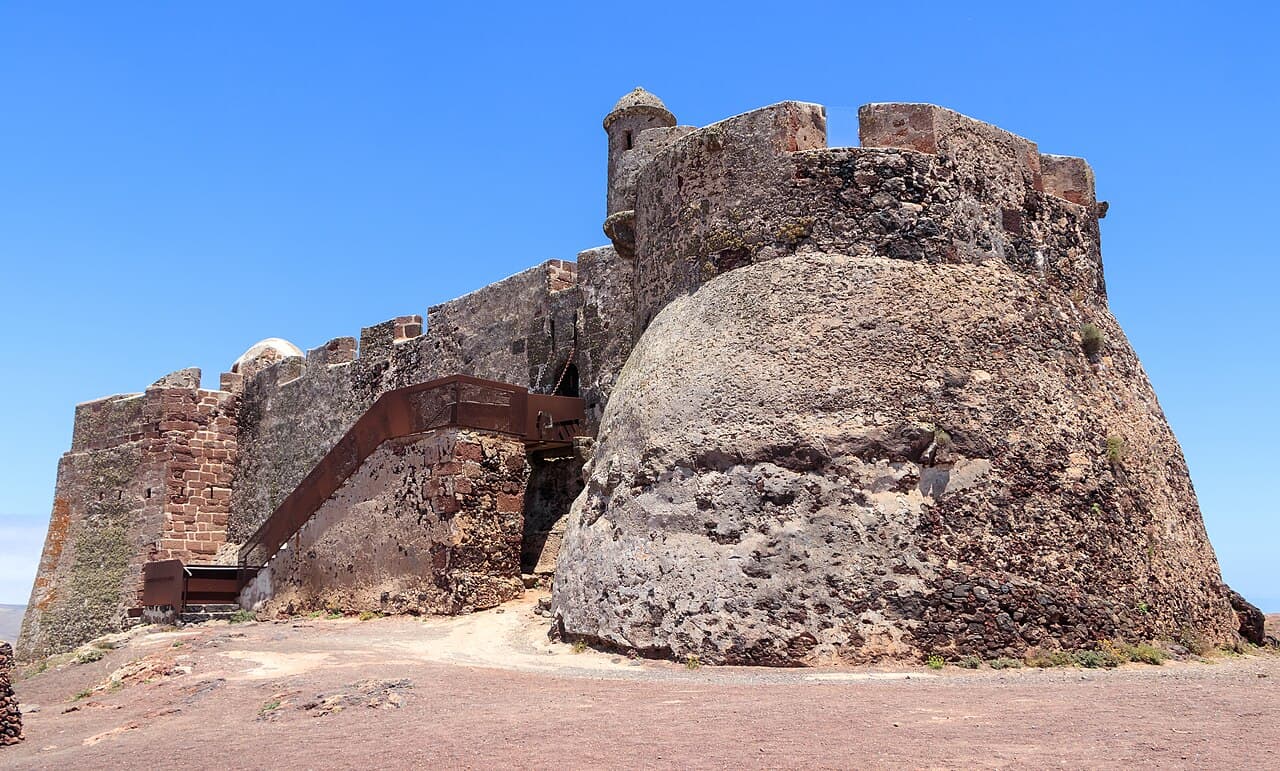
Santa Bárbara Castle, officially known as Castillo de Santa Bárbara y San Hermenegildo, is a prominent 16th-century bastioned fortress located on the island of Lanzarote in the Canary Islands, Spain. Perched atop the Guanapay volcano at an elevation of approximately 458 meters, the fortress offers commanding views over the surrounding landscape and the nearby town of Teguise, situated about one kilometer to the south. Its strategic placement on the edge of the volcanic crater allowed it to serve as a vital defensive stronghold during the Renaissance period.

Historical background and strategic importance

The construction of Santa Bárbara Castle began in the 16th century amid the heightened military tensions of the Renaissance era, when coastal fortifications were essential to protect the Canary Islands from frequent pirate raids and naval invasions. The fortress was named after Saint Barbara, the patron saint of artillerymen and miners, reflecting its military purpose.

Throughout its history, the fortress played a crucial role in defending Lanzarote against attacks by pirates and privateers who targeted the island for its resources and strategic location along Atlantic maritime routes. Its elevated position allowed early detection of approaching enemy ships and provided a formidable vantage point for the deployment of artillery.

Architectural features and design

Santa Bárbara Castle exemplifies the bastioned fortress design typical of the Renaissance, characterized by angular bastions that allowed defenders to cover all approaches with overlapping fields of fire. The fortress walls are thick and robust, constructed from local volcanic stone, which provided resilience against cannon fire and natural erosion.

The fortress layout includes several key architectural elements: bastions at the corners for artillery placement, a main gate fortified with defensive features, and internal buildings such as barracks, storage rooms, and powder magazines. The design reflects the military engineering advances of the time, integrating both offensive and defensive capabilities.

The Guanapay volcano setting

Built on the rim of the Guanapay volcano, the fortress benefits from natural topographical defenses. The volcanic rock foundation not only strengthens the structure but also contributes to its imposing silhouette visible from great distances. The location on the crater edge provided a natural moat on some sides, enhancing its defensibility.

Use and preservation through time

Over the centuries, Santa Bárbara Castle has undergone various modifications and restorations to maintain its structural integrity and adapt to changing military needs. Although it no longer serves a defensive military role, it remains a significant cultural and historical landmark on Lanzarote.

Today, the fortress is open to the public and houses the Piracy Museum (Museo de la Piratería), which offers exhibitions on the history of piracy in the Canary Islands and the fortress's role in maritime defense. Visitors can explore the fortress's ramparts, bastions, and interior chambers while enjoying panoramic views of the island.

Cultural significance and tourism

Santa Bárbara Castle is an important heritage site that attracts tourists interested in military architecture, Renaissance fortifications, and the maritime history of the Canary Islands. Its combination of natural volcanic landscape and historical architecture makes it a unique destination for cultural tourism.

The fortress also hosts cultural events and educational programs that highlight its historical context and architectural features, contributing to the preservation and promotion of Lanzarote's rich history.

Frequently asked questions (FAQ)

How do I get to the Fortress of Saint Barbara?
The Fortress of Saint Barbara is located in Teguise, Spain, and can be easily accessed by car or public transport. If you're coming from Lanzarote's main towns, there are regular bus services that connect you to Teguise, making it convenient for visitors.
What is the historical significance of the Fortress of Saint Barbara?
The Fortress of Saint Barbara was built in the 16th century to defend against pirate attacks and protect the island of Lanzarote. It stands as a testament to the military architecture of the period and played a crucial role in the island's history, reflecting the strategic importance of Teguise.
When was the Fortress of Saint Barbara constructed?
The construction of the Fortress of Saint Barbara began in 1596 and was completed in 1620. It was designed to withstand attacks and has served various purposes throughout its history, including as a military barracks and prison.
Can I take a guided tour of the Fortress of Saint Barbara?
Yes, guided tours are available at the Fortress of Saint Barbara, providing visitors with in-depth knowledge about its history and architecture. These tours are conducted by knowledgeable guides and are a great way to fully appreciate the site's significance.
Is the Fortress of Saint Barbara accessible for visitors with mobility issues?
The Fortress of Saint Barbara has made efforts to accommodate visitors with mobility challenges, including wheelchair access to certain areas. However, due to the historic nature of the site, some parts may have limited accessibility, so it's advisable to contact the management beforehand for specific arrangements.
What are the opening hours for the Fortress of Saint Barbara?
The Fortress of Saint Barbara is typically open to visitors from 10 AM to 5 PM, but hours may vary seasonally. It is recommended to check the official website or contact the fortress directly for the most current information before planning your visit.
What is the ticket price for visiting the Fortress of Saint Barbara?
The ticket prices for the Fortress of Saint Barbara are generally affordable, with discounts available for children, seniors, and groups. It's best to check the official website for the latest pricing details and any special offers that may be available during your visit.
When is the best time to visit the Fortress of Saint Barbara?
The best time to visit the Fortress of Saint Barbara is during the spring and fall months when the weather is mild and comfortable. These seasons also tend to be less crowded, allowing for a more enjoyable experience while exploring the fortress and its surroundings.
Are there nearby attractions to visit while in Teguise?
Yes, Teguise is rich in history and culture, with several nearby attractions such as the historic town center, the Teguise Market, and the Casa Museo del Timple. Exploring these sites can enhance your visit and provide a deeper understanding of the island's heritage.

Photo gallery

Fortress of Saint Barbara
Click to view

Photo by H. Zell•CC BY-SA 3.0

1 photo • Click any image to view in full screen

Information

Bastioned Fortress

Loading map...

Visitor reviews

No reviews yet. Been here? Write the first review and help other travelers!

Write the first review

Visited this castle? Share your experience

Your review helps other travelers and adds first-hand knowledge to our encyclopedia.
Write a review

(5/5)

0/2000 characters

Your review will be visible after admin approval

Nearby castles

9.8 km
Castillo de San José — Spain castle

Castillo de San José

Arrecife, Spain

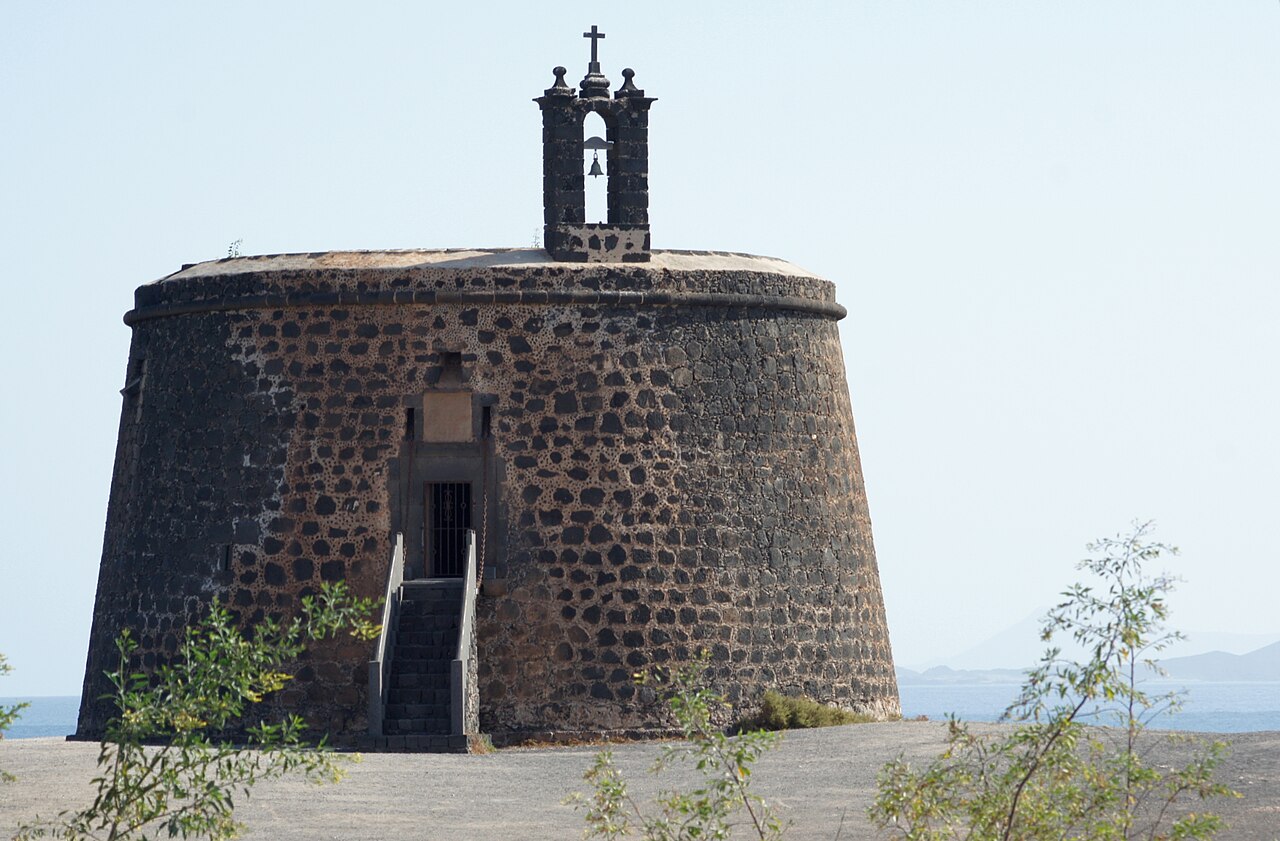
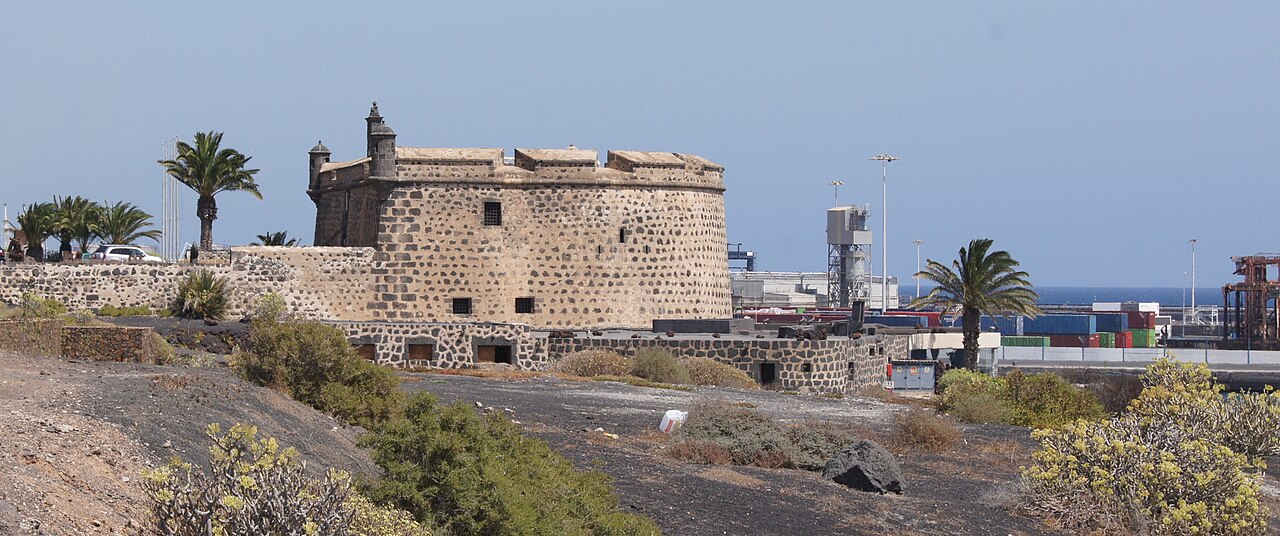
The Castillo de San José, located in Arrecife on the Canary Island of Lanzarote, is a significant 18th-century fortress that combines military architecture with cultural heritage. Originally built in the post-Renaissance period, this hill castle was constructed to defend the island's main port from pirate attacks and naval threats during a time when the Canary Islands were strategically important for maritime routes. Historical background and strategic importance Constructed in the 18th century, the Castillo de San José was part of a broader defensive network designed to protect Lanzarote and its capital, Arrecife. The fortress was commissioned as a response to frequent raids by pirates and privateers who threatened the safety of the island's inhabitants and its growing economic activity, especially in maritime trade. Its position on a hill overlooking the harbor allowed for a commanding view of approaching ships, making it a crucial point of defense. Architectural features and design The castle is a classic example of post-Renaissance military architecture adapted to the specific needs of island defense. Its design includes robust stone walls and bastions that provided protection against cannon fire and assaults. The fortress features a rectangular plan with angled bastions at the corners, typical of the era's fortification style, which allowed defenders to cover all approaches with overlapping fields of fire. The walls are constructed from local volcanic stone, which not only provided strength but also helped the structure blend with the island's terrain. The castle's interior originally included barracks, storage rooms for munitions, and a central courtyard, all arranged to facilitate rapid defense and troop movement. Defensive structures The bastions are equipped with cannon embrasures, and the castle's entrance is protected by a fortified gatehouse. Surrounding the fortress is a dry moat, enhancing its defensive capabilities by impeding direct assaults on the walls. These features reflect the military engineering principles of the 18th century, emphasizing both durability and strategic positioning. Transformation into a cultural site In the 20th century, the Castillo de San José underwent a significant transformation. It was repurposed from a military installation into a cultural venue, housing the International Museum of Contemporary Art (Museo Internacional de Arte Contemporáneo, MIAC). This adaptation preserved the fortress's historical fabric while giving it a new role as a center for art and culture. The museum showcases works by prominent contemporary artists, integrating the castle's historic ambiance with modern artistic expression. This unique combination draws visitors interested in both history and the arts, making the castle a prominent cultural landmark on Lanzarote. Visitor experience and significance today Today, the Castillo de San José is well preserved and open to the public. Visitors can explore the castle's fortified walls, bastions, and courtyard, while also enjoying the art exhibitions within. The site offers panoramic views of Arrecife's harbor and the surrounding coastline, enhancing its appeal as a tourist destination. The castle's dual identity as a historic fortress and an art museum exemplifies the adaptive reuse of heritage sites, preserving important architectural and historical elements while providing contemporary cultural value. Access and facilities The museum is accessible from Arrecife's city center, with visitor facilities including guided tours, exhibition spaces, and educational programs. The castle's location on a hill ensures it remains a visible and iconic feature of the city's landscape.

Post-Renaissance (17th–18th c.)
Details
33.9 km
Castillo de las Coloradas — Spain castle

Castillo de las Coloradas

, Spain

Castillo de las Coloradas is a notable hill castle located in Spain, distinguished by its strategic placement atop elevated terrain which provided significant defensive advantages during its period of use. Although the exact city location is not specified, the castle's placement in a hilly region is typical of medieval fortifications designed to oversee and control surrounding lands. Historical context and significance The castle dates back to the medieval period, likely constructed between the 12th and 14th centuries, a time when castles played a crucial role in territorial defense and administration. Its name, "Coloradas," which translates to "reddish" in Spanish, may refer to the color of the stone or soil in the area, or possibly to historical events or legends associated with the site. During the High to Late Medieval periods, castles such as Castillo de las Coloradas were essential in the power struggles between local nobility, the Crown, and emerging kingdoms. This castle would have served both as a military fortress and a residence for nobility or military commanders. Architectural features The architecture of Castillo de las Coloradas reflects typical hill castle characteristics, including thick defensive walls adapted to the uneven terrain. The castle likely includes a keep or donjon—a central fortified tower serving as the last line of defense and the lord's residence. Other features probably include battlements, arrow slits, and possibly a moat or natural defensive barriers enhanced by man-made fortifications. The use of local stone would have influenced the castle's appearance, contributing to its reddish hue and robust construction. Defensive structures The castle's elevated position would have allowed for extensive visibility over the surrounding landscape, crucial for early warning of approaching enemies. Its walls would have been reinforced with towers at strategic points to provide overlapping fields of fire. Current condition and preservation While the exact condition of Castillo de las Coloradas is not detailed, many hill castles in Spain have varying states of preservation, ranging from well-preserved to ruins. Given the lack of extensive modern restoration records, it is possible that Castillo de las Coloradas exists today as partially preserved or ruins, retaining significant architectural elements that offer insight into its medieval past. Visiting information and cultural importance Castillo de las Coloradas, like many historic castles in Spain, holds cultural and historical importance as a symbol of medieval military architecture and regional history. Visitors interested in medieval fortifications and Spanish history may find the site compelling, especially if it offers panoramic views from its hilltop location. Access and visiting hours are not widely documented, suggesting the castle may be less frequented by tourists or located in a remote area. Visitors should seek local information for access details and consider guided tours to fully appreciate the site's historical context. Nearby attractions Castillo de las Coloradas may be situated near other historical sites or natural landmarks typical of Spain's diverse landscape, providing opportunities for extended exploration of the region's heritage. Architectural and historical legacy As a hill castle from the medieval era, Castillo de las Coloradas exemplifies the military and residential functions of such fortifications. Its design reflects the need for defense, control, and habitation, characteristic of castles built during turbulent periods in Spain's history. Though specific historical events tied to Castillo de las Coloradas are not well-documented, the castle contributes to the broader understanding of medieval fortifications in Spain and their role in shaping regional power dynamics.

High Medieval (11th–13th c.)
Details
61.5 km
Torre del Tostón — Spain castle

Torre del Tostón

La Oliva, Spain

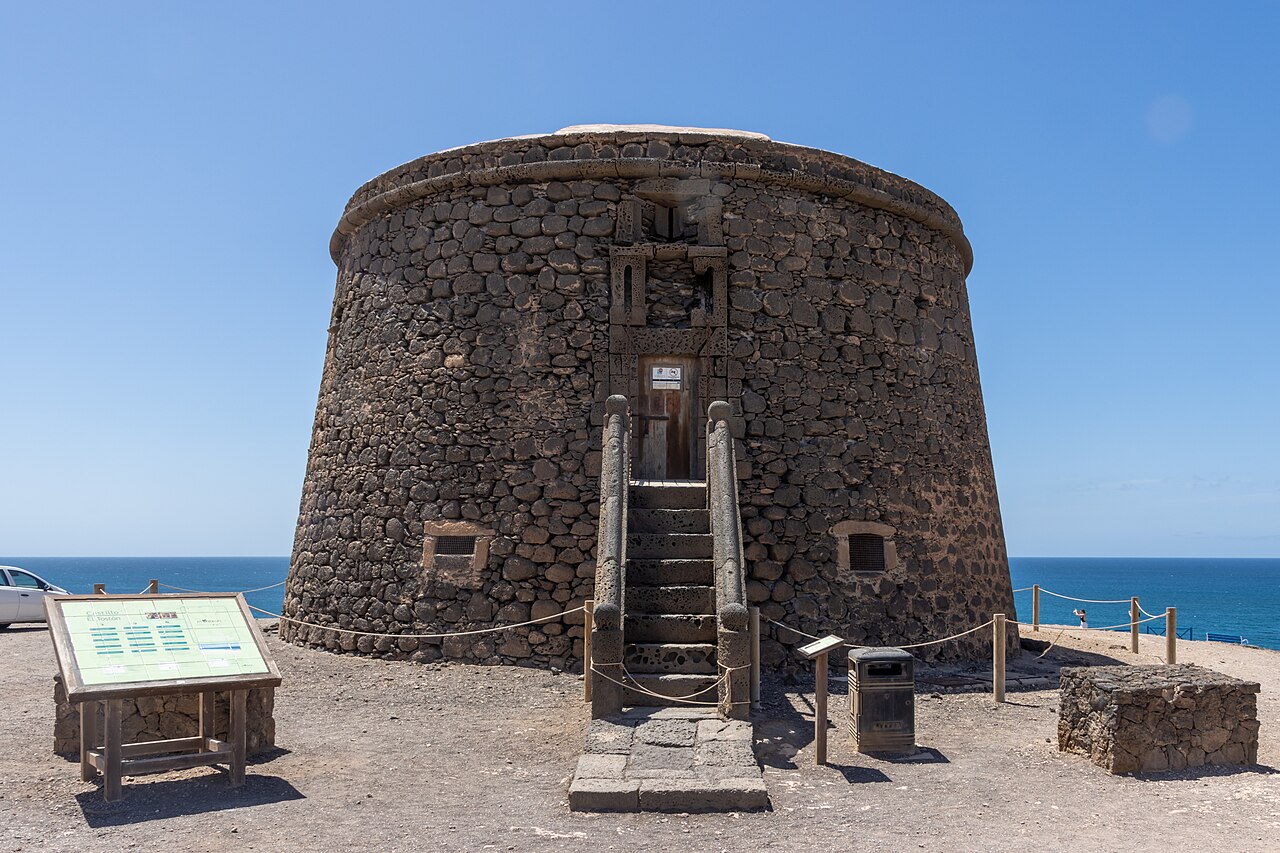
Torre del Tostón stands as a remarkable example of 18th-century coastal defense architecture on the island of Fuerteventura in the Canary Islands, Spain. Constructed between 1740 and 1743, this military watchtower was a strategic response to the increasing threat of pirate raids that plagued the northern coast of the island. Its establishment reflects the broader Spanish efforts to fortify their Atlantic territories during a period of intense maritime conflict and piracy. Historical context and construction The tower was commissioned following a significant pirate attack by British forces in 1740, which exposed the vulnerabilities of Fuerteventura's northern coastline. In reaction to this threat, Andrés Bonito y Pignatelli, the Spanish General Captain of the Canary Islands, ordered the construction of two key defensive towers. These fortifications aimed to protect vital harbors from incursions by Berber, French, and British pirates. The design and construction were overseen by Claudio de L’Isle, a military engineer tasked with ensuring the towers' effectiveness and durability. Contrary to earlier beliefs, Torre del Tostón was not built on the ruins of a 15th-century fortress known as Rico Roque. This misconception was clarified through historical research that located the original Rico Roque fortress nearly five kilometers away on Fuerteventura’s east coast near Pozo Negro. This distinction underscores the tower's unique place in the island's defensive network rather than a continuation of earlier fortifications. Architectural features and design Strategically positioned on a cliff southeast of El Cotillo, the tower is constructed primarily from dark volcanic stones sourced locally near the adjacent church. Its truncated conical form features a circular base with a diameter of 14.5 meters tapering to 12.5 meters at the top, with walls over 1.5 meters thick. This robust construction was designed to withstand attacks and provide a formidable defensive presence. The tower comprises two main floors and a rooftop platform. The lower floor housed a powder magazine and an adjacent storage room, essential for maintaining the tower's armaments and supplies. The upper floor served as living quarters for a garrison of up to twelve soldiers, accessible via a landward entrance reached by a stone staircase and a wooden drawbridge suspended by iron chains. A defensive loophole above the entrance allowed defenders to repel attackers effectively. Inside, staircases lead to the lower floor and the rooftop platform. The rooftop was equipped with three iron cannons positioned to defend the harbor and coastline. Additionally, a cistern built into the rooftop collected rainwater, providing a vital resource for the stationed garrison during sieges or prolonged watch periods. Although initial plans included a surrounding defensive moat, this feature was never realized. Nearby, two 19th-century lime kilns have been restored, offering insight into the site's industrial activities beyond its military function. The presence of the skeletal remains of a Cuvier’s beaked whale stranded in 2004 near the tower adds a unique natural history element to the location. Influence and legacy Torre del Tostón served as an influential model for subsequent coastal defenses in the region. Its architectural design inspired similar towers constructed in Menorca during the late 18th century, such as the Torre d’Alcalfar and Torre de Son Ganxo. The tower's robust and functional design also prefigured the British Martello towers built in the late 1700s and early 1800s, which became a widespread coastal defense feature in the British Empire. Since 1949, Torre del Tostón has been protected under Spain's Bien de Interés Cultural designation, recognizing its cultural and historical significance. It remains one of the best-preserved examples of 18th-century military architecture in the Canarian archipelago, offering valuable insights into the island's defensive strategies and colonial history. Visitor experience and preservation Today, Torre del Tostón stands prominently as a cultural heritage site, attracting visitors interested in military history, architecture, and the natural beauty of Fuerteventura's coastline. Its well-preserved structure allows visitors to explore the defensive features, including the powder magazine, living quarters, and rooftop artillery platform. The surrounding landscape offers scenic views of the Atlantic Ocean and the harbor it once protected. The tower's preservation efforts have maintained its original materials and form, highlighting the use of local volcanic stone and traditional construction techniques. The nearby restored lime kilns add depth to the historical narrative, illustrating the site's multifaceted past. Interpretive signage and guided tours provide educational context, enhancing the visitor experience.

Post-Renaissance (17th–18th c.)
Details