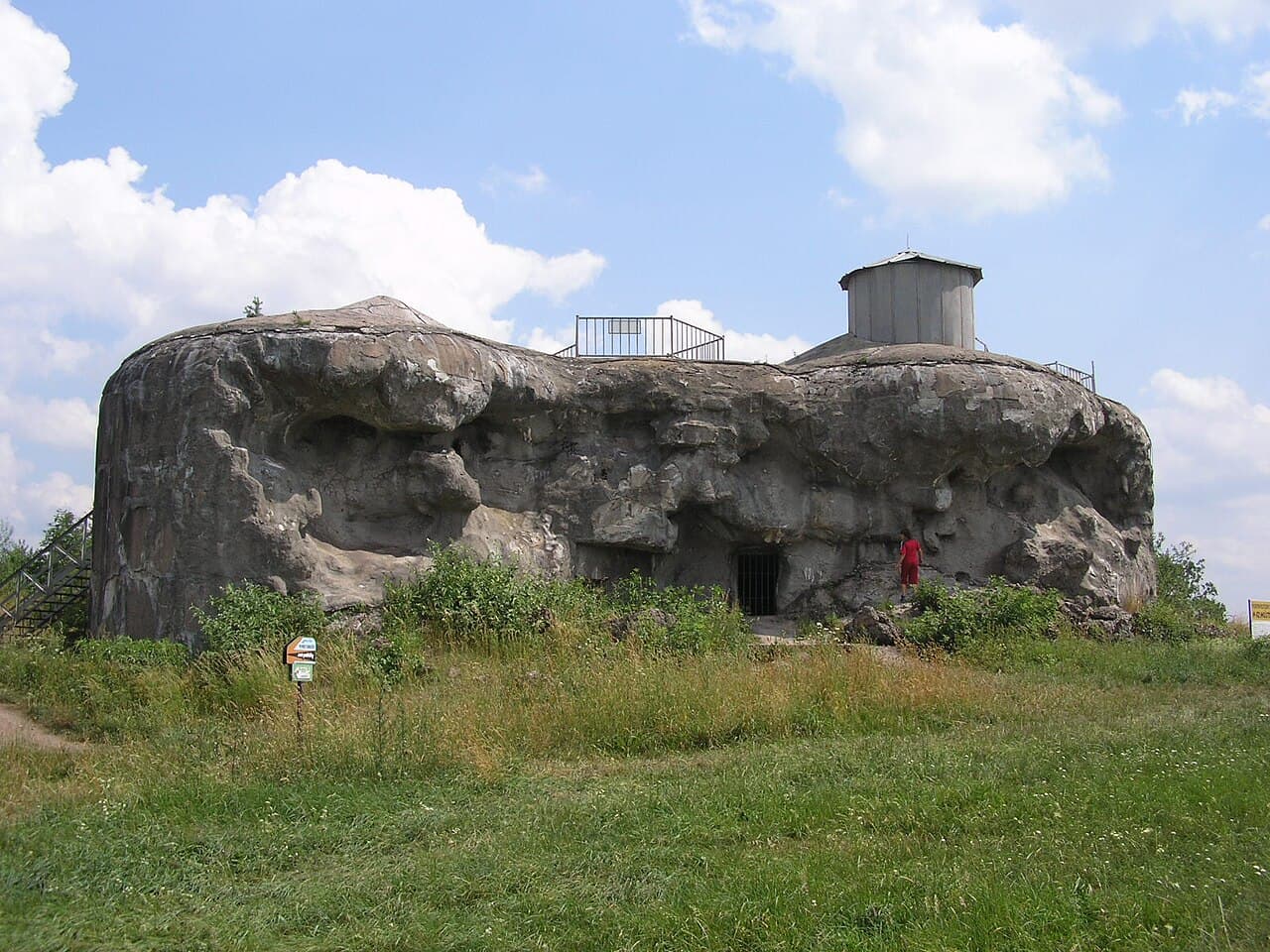
Fortress Dobrošov
Fortress Dobrošov is a prominent example of a bastioned fortress constructed in the interwar period of the 20th century, located near the town of Náchod in Czechia. Built during the 1930s as part of Czechoslovakia's extensive border fortification system, it was designed to defend against potential invasions from Germany and Poland. The fortress represents a significant chapter in modern military architecture, reflecting the strategic military thinking of the era.
Historical context and strategic importance
Constructed between 1935 and 1938, Fortress Dobrošov was part of the extensive Czechoslovak border fortifications built in response to rising tensions in Europe during the interwar years. This network aimed to protect the country's borders from the threat of German aggression, particularly after the rise of the Nazi regime. The fortress was strategically placed near Náchod, a town close to the Polish border, to guard key transportation routes and prevent enemy forces from penetrating into the heart of Czechoslovakia.
The fortifications at Dobrošov were designed to withstand heavy artillery bombardments and infantry assaults, reflecting the lessons learned from World War I. The fortress was intended to serve as a strongpoint in the defensive line, capable of resisting enemy advances for extended periods.
Architectural design and features
Fortress Dobrošov exemplifies the bastioned fortress type, characterized by angular bastions projecting outward from the main walls to provide overlapping fields of fire and reduce blind spots. The fortress complex includes multiple defensive structures such as reinforced concrete bunkers, artillery casemates, and infantry blockhouses.
The construction utilized modern materials and techniques for the time, including thick reinforced concrete walls designed to resist direct hits from artillery shells. The fortress also incorporated underground tunnels and communication galleries connecting various parts of the complex, allowing safe movement of troops and supplies during combat.
Defensive features include machine gun embrasures, anti-tank obstacles, and observation cupolas for spotting enemy movements. The layout allowed defenders to cover all approaches with overlapping fields of fire, maximizing the fortress’s defensive capabilities.
Role during World War II
During the Munich Crisis of 1938, the fortress was not fully manned or operational due to political decisions that forced Czechoslovakia to cede border territories to Germany. As a result, Fortress Dobrošov did not see significant combat during the initial stages of World War II. After the occupation of Czechoslovakia, the fortress was used by German forces for various military purposes, including as a training facility.
Despite its limited combat role, the fortress remains a testament to the military engineering efforts of the Czechoslovak Republic and the challenges faced during a turbulent period in European history.
Preservation and current status
Fortress Dobrošov is currently well preserved and functions as a museum and historical site open to the public. Visitors can explore the extensive underground galleries, bunkers, and artillery positions, gaining insight into the defensive strategies and living conditions of soldiers stationed there.
The site offers guided tours, educational programs, and exhibitions detailing the fortress’s construction, military significance, and the broader context of Czechoslovak border defenses. Its preservation provides valuable cultural heritage and serves as a reminder of the geopolitical tensions that shaped Central Europe in the 20th century.
Architectural significance and legacy
Fortress Dobrošov stands as an important example of 20th-century military architecture, particularly the bastioned fortress design adapted to modern warfare. It reflects the transition from traditional fortresses to complex, reinforced concrete structures capable of resisting mechanized and artillery attacks.
The fortress is part of a broader system of fortifications that illustrate the evolution of military engineering between the two world wars. Its design influenced later fortification concepts and remains a subject of study for military historians and architects.
Frequently asked questions (FAQ)
- How do I get to Fortress Dobrošov?
- Fortress Dobrošov is located near Náchod in the Hradec Králové region of Czechia. It is accessible by car or local public transportation from Náchod town center.
- What can I see during a visit to Fortress Dobrošov?
- Visitors can explore the extensive underground tunnels, bunkers, artillery casemates, and observation posts. Guided tours provide detailed historical and architectural insights.
- When was Fortress Dobrošov built?
- The fortress was constructed between 1935 and 1938 as part of Czechoslovakia's border defense system.
- Is Fortress Dobrošov wheelchair accessible?
- Due to the nature of the fortress's underground and rugged structures, accessibility is limited. Visitors with mobility issues should inquire in advance about accommodations.
- What is the ticket price for Fortress Dobrošov?
- Admission costs €5 for adults and €3 for children, with tickets available at the entrance or online.
Photo gallery

Photo by Lukáš Malý•Public domain
Information
Opening hours
10:00-16:00, daily
Ticket prices
€5 adult, €3 child
Current owner
State museum
Loading map...
Visitor reviews
No reviews yet. Been here? Write the first review and help other travelers!
Write the first reviewVisited this castle? Share your experience
Your review helps other travelers and adds first-hand knowledge to our encyclopedia.


