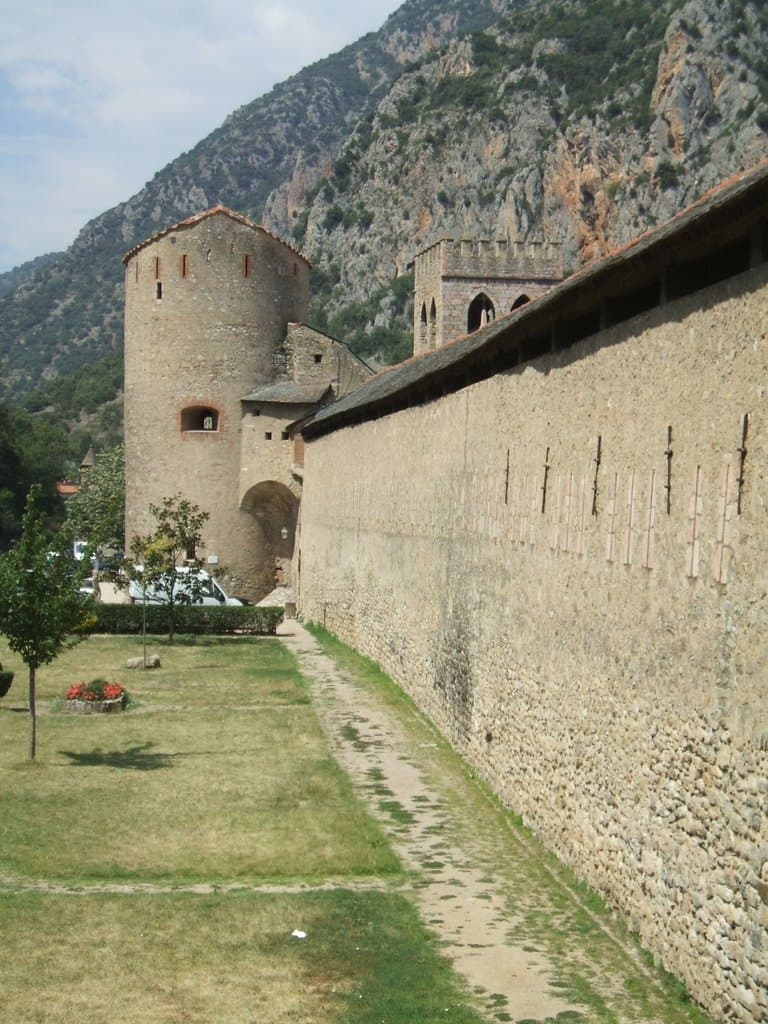
Fortifications of Vauban
The Fortifications of Vauban represent a remarkable collection of military architecture spanning several decades during the reign of King Louis XIV in 17th-century France. This UNESCO World Heritage Site comprises twelve distinct groups of fortified buildings and sites strategically located along France's borders. These fortifications were designed by the eminent military engineer Sébastien Le Prestre de Vauban (1633–1707), whose innovations profoundly influenced the development of bastioned fortresses and military defense systems across Europe and beyond.
Vauban's fortifications include a diverse range of military structures such as citadels, bastion walls, towers, mountain batteries, and sea fortifications. Additionally, some sites feature entire fortified cities constructed under Vauban's supervision, as well as communication towers integral to the defensive network. This ensemble illustrates the evolution of military engineering from the late 17th century through to the 20th century, showcasing the enduring legacy of Vauban's designs on both military and civilian architecture.
Historical context and vauban's role
Sébastien Le Prestre de Vauban served as the chief military engineer for King Louis XIV and was responsible for revolutionizing fortress design during a period marked by frequent warfare and territorial disputes. Vauban's approach combined geometric precision with practical defense mechanisms, emphasizing the use of angled bastions to eliminate blind spots and improve the firing range of defenders. His work was pivotal in strengthening France's borders against invasions and played a significant role in consolidating royal power.
The twelve sites selected for the UNESCO listing represent the best-preserved and most illustrative examples of Vauban's fortification system. These fortifications were constructed or modernized primarily in the late 17th and early 18th centuries, reflecting the military needs of the era and the strategic importance of France's frontiers.
Architectural features of the fortifications
Bastioned fortress design
Vauban's signature innovation was the bastioned fortress, characterized by angular bastions projecting outward from curtain walls. This design allowed defenders to cover adjacent walls with overlapping fields of fire, effectively eliminating dead zones where attackers could seek shelter. The bastions were supplemented by ravelins, glacis, and moats to create multiple layers of defense.
Citadels and fortified towns
Several of the sites include citadels, which served as the last line of defense within fortified towns. Vauban also designed or upgraded entire fortified towns, integrating military architecture with urban planning. These towns featured fortified walls, gates, and bastions arranged to optimize defense while accommodating civilian life.
Sea and mountain fortifications
The network includes specialized fortifications adapted to different terrains, such as sea fortresses protecting coastal areas and mountain batteries positioned to control strategic passes. These adaptations demonstrate Vauban's versatility and understanding of varied military challenges.
The twelve unesco sites and their significance
The twelve groups of fortifications recognized by UNESCO include some of the most important military sites in France, such as the Citadel of Besançon, Mont-Dauphin, and Saint-Martin-de-Ré. Each site exemplifies different aspects of Vauban's fortification principles and adaptations to local geography.
The network was formalized as an association of cities on 30 March 2005, initiated by the city of Besançon. This collaboration aimed to preserve and promote the heritage of Vauban's military architecture. The French Ministry of Culture selected the application for UNESCO inscription on 5 January 2007, and the sites were officially inscribed on 7 July 2008 during the UNESCO annual meeting in Quebec City.
Legacy and influence on military architecture
Vauban's fortifications set new standards in military engineering, influencing fortress construction throughout Europe and the Americas for centuries. His principles of defense, including the use of layered fortifications and geometric bastions, became foundational in the design of modern fortresses and defensive systems.
Beyond their military function, many of these sites have become cultural landmarks and tourist attractions, offering insights into 17th-century military strategy and architectural innovation. Preservation efforts continue to maintain these structures, highlighting their historical importance and architectural ingenuity.
Visiting the fortifications today
The Fortifications of Vauban are accessible to visitors interested in military history, architecture, and French heritage. Many of the sites offer guided tours, museums, and interpretive centers that explain the historical context and architectural features of the fortifications. Visitors can explore bastions, walls, ditches, and citadels, gaining a comprehensive understanding of Vauban's defensive systems.
Due to the geographic spread of the twelve sites, visitors often plan trips focusing on specific regions or individual fortresses. The network's association helps coordinate preservation and tourism efforts, ensuring that these historic sites remain well-maintained and informative.
Frequently asked questions (FAQ)
- How do I visit the Fortifications of Vauban?
- The Fortifications of Vauban are spread across twelve sites in France, many of which are open to the public with guided tours and museums. Visitors should check individual site websites for opening hours and ticket prices, as these vary by location.
- What makes Vauban's fortifications unique?
- Vauban's fortifications are known for their geometric bastion designs that allowed overlapping fields of fire, eliminating blind spots and greatly improving defensive capabilities compared to earlier medieval castles.
- When were the Fortifications of Vauban built?
- Most of the fortifications were constructed or modernized during the late 17th and early 18th centuries under the direction of Sébastien Le Prestre de Vauban during the reign of King Louis XIV.
- Can I visit all twelve UNESCO sites in one trip?
- Visiting all twelve sites in a single trip can be challenging due to their geographic spread across France. Many visitors choose to focus on one or two regions or specific fortresses to explore in depth.
- Why were these fortifications inscribed as a UNESCO World Heritage Site?
- These sites were inscribed because they exemplify Vauban's innovative military engineering and have had a lasting influence on fortress design globally from the 17th to the 20th century.
Photo gallery

Information
Current owner
State museum
Loading map...
Visitor reviews
No reviews yet. Been here? Write the first review and help other travelers!
Write the first reviewVisited this castle? Share your experience
Your review helps other travelers and adds first-hand knowledge to our encyclopedia.



