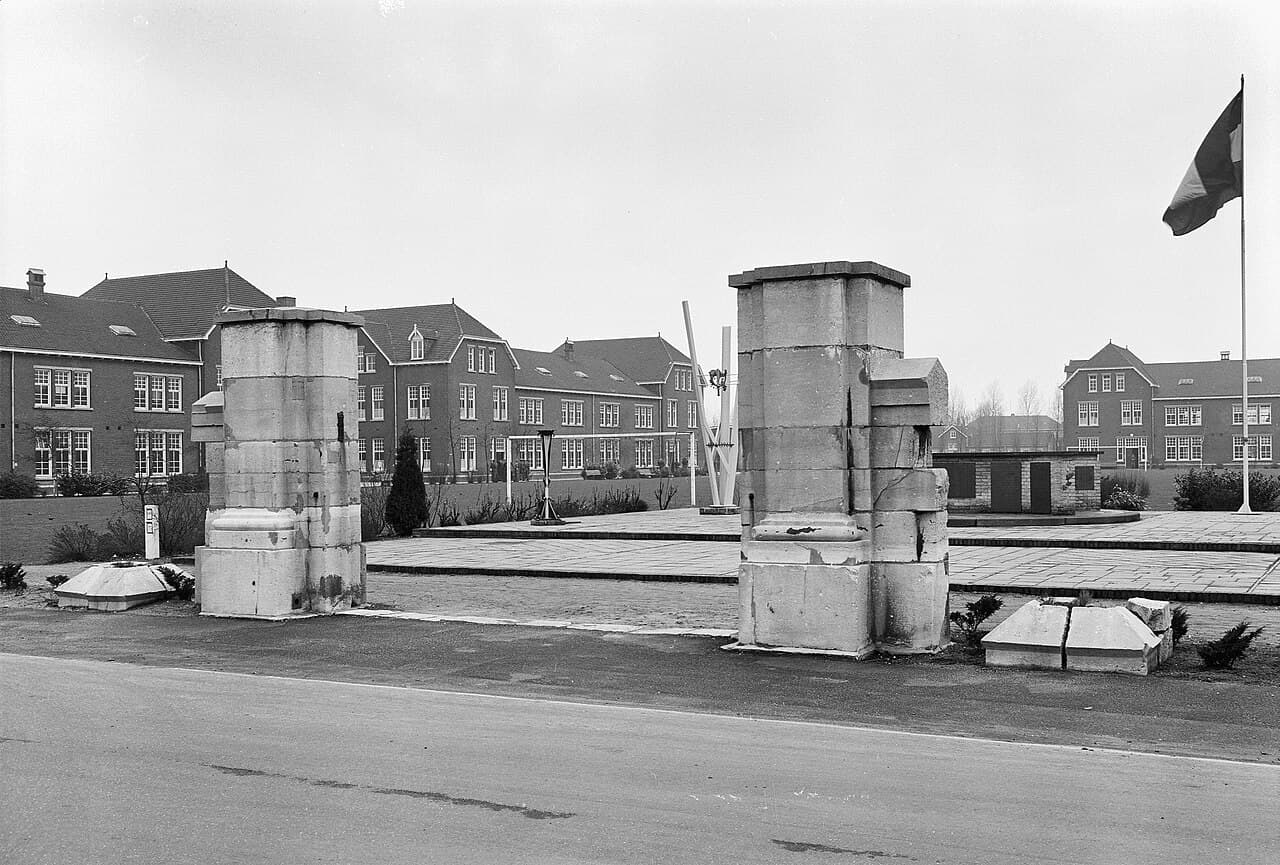
Fort Sint-Michiel
Fort Sint-Michiel was a significant Spanish fortification located in Venlo, Netherlands. Named after Archangel Michael, the fort's construction began on Michaelmas, September 29, 1641, during the height of the Renaissance period. It was part of the military efforts by the Spanish Habsburgs to control strategic points in the region amid the ongoing conflicts of the Eighty Years' War.
Historical context and strategic importance
During the early 17th century, the Spanish crown sought to fortify its holdings in the Low Countries. Fort Sint-Michiel was constructed as a defensive bastion to protect the city of Venlo, which was a key strategic location on the Meuse River. The fort's position allowed control over river traffic and acted as a deterrent against Dutch forces advancing into Spanish-held territories.
The fort's construction in 1641 came at a time when the Spanish were reinforcing their military infrastructure to maintain dominance in the region. Despite its strategic design and robust fortifications, the fort was eventually overtaken as political and military control shifted in the centuries that followed.
Architectural design and features
Fort Sint-Michiel was built following the principles of Renaissance military architecture, characterized by angular bastions designed to withstand artillery fire. The fort's layout was likely a bastioned fortress style, which was common for the period and reflected advances in defensive design that replaced medieval castle concepts.
The fort would have included thick curtain walls, angled bastions for crossfire coverage, and possibly a moat or other water defenses, taking advantage of the nearby river. These features were intended to provide overlapping fields of fire and reduce blind spots, making the fort difficult to assault.
The construction materials would have included brick and stone, typical for the region and period, ensuring durability against siege warfare. The fort's design also reflected the transition from purely defensive medieval castles to more complex military installations adapted to gunpowder weaponry.
Demolition and current state
Fort Sint-Michiel was demolished in 1867, marking the end of its military relevance. The demolition was part of broader efforts to remove obsolete fortifications that no longer served strategic purposes due to advances in military technology and changes in political boundaries.
Today, the site of Fort Sint-Michiel is classified as archaeological ruins. While much of the original structure no longer stands, archaeological investigations have provided insights into the fort's layout and construction techniques. The ruins offer valuable information about 17th-century military architecture in the Netherlands and the role of Spanish fortifications in the region.
Legacy and cultural significance
Though the fort itself no longer exists, Fort Sint-Michiel remains an important historical landmark in Venlo's heritage. It symbolizes the turbulent history of the region during the Spanish-Dutch conflicts and the broader European struggle for control over the Low Countries.
Researchers and visitors interested in military history and Renaissance fortifications find the site significant for understanding the evolution of defensive architecture and the strategic military thinking of the 17th century.
Frequently asked questions (FAQ)
- When was Fort Sint-Michiel built and by whom?
- Fort Sint-Michiel was constructed in 1641 by the Spanish during their control of the Low Countries, named after Archangel Michael.
- What architectural style characterizes Fort Sint-Michiel?
- The fort reflects Renaissance military architecture, featuring bastioned designs adapted to artillery warfare.
- Why was Fort Sint-Michiel demolished?
- It was demolished in 1867 as part of the removal of obsolete military fortifications no longer strategically necessary.
- Can visitors see any remains of Fort Sint-Michiel today?
- Today, only archaeological ruins remain, with limited visible structures, but the site is valuable for historical and archaeological study.
- Where is Fort Sint-Michiel located?
- Fort Sint-Michiel was located in Venlo, in the Limburg region of the Netherlands, near the Meuse River.
Photo gallery

Information
Loading map...
Visitor reviews
No reviews yet. Been here? Write the first review and help other travelers!
Write the first reviewVisited this castle? Share your experience
Your review helps other travelers and adds first-hand knowledge to our encyclopedia.



