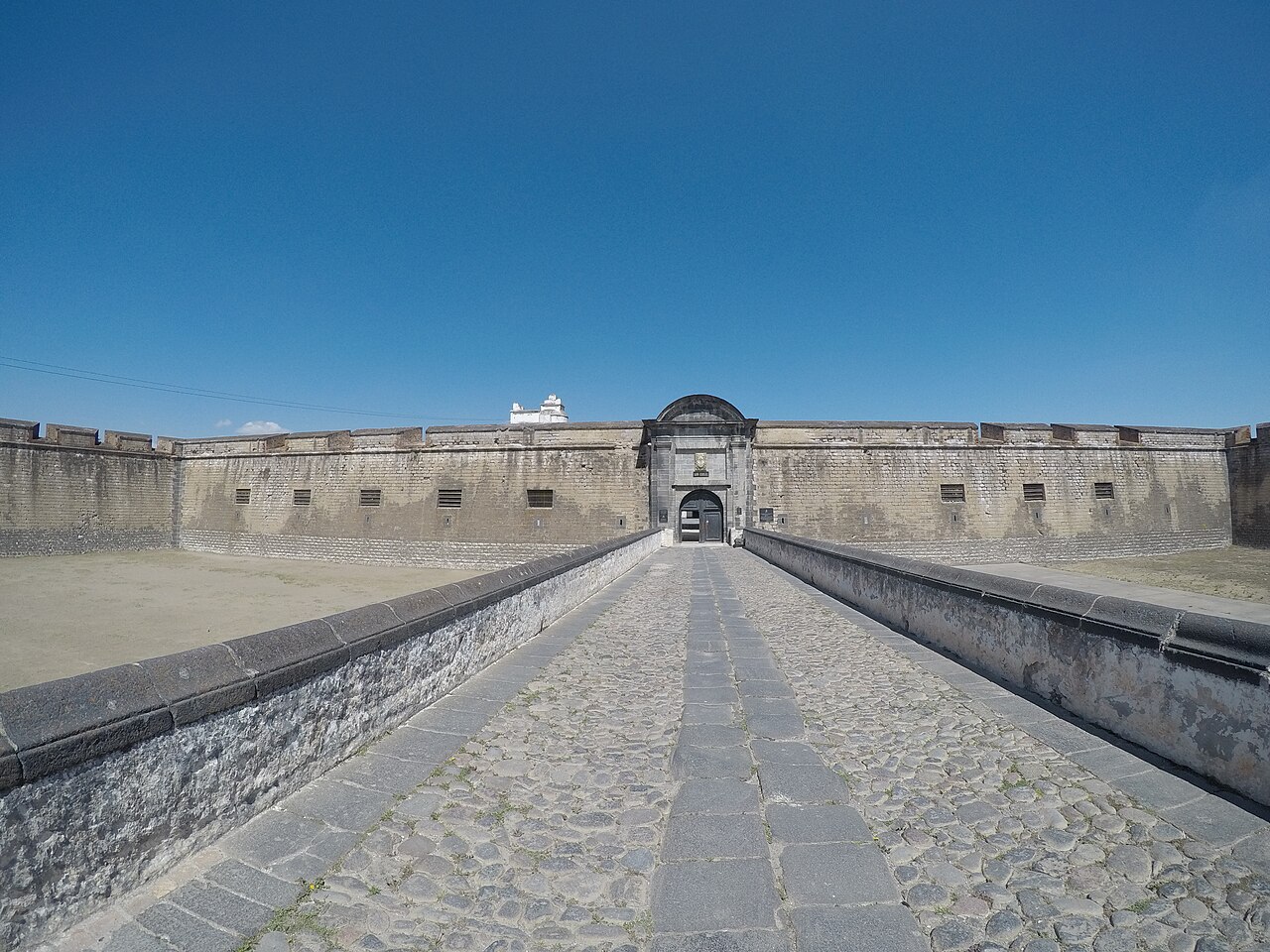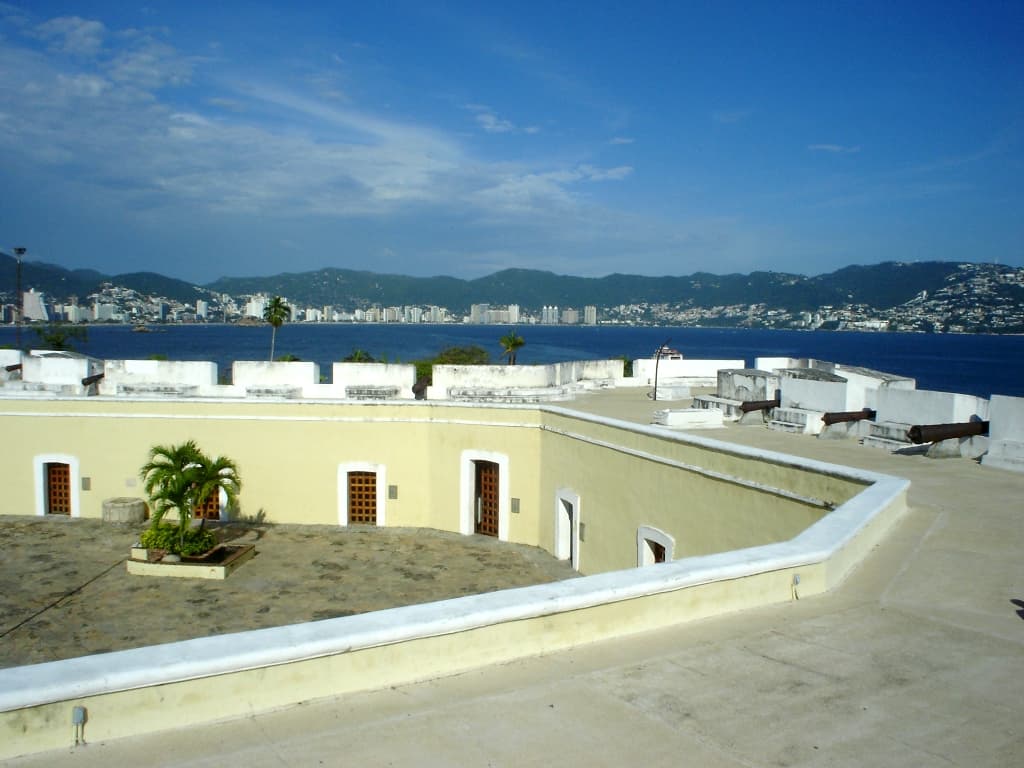
Fort San Diego — Mexico castle

Fort San Diego

Fort San Diego in Acapulco, Mexico
Acapulco, Guerrero, Mexico
Renaissance (15th–17th c.)
Well Preserved

Fort San Diego, also historically known as Fort San Carlos, is a prominent star fort located in Acapulco, Guerrero, Mexico. Constructed originally in the 17th century by the Spanish Empire, it served as a critical military fortification guarding the important Pacific port of Acapulco. This fortification was part of Spain's strategic defense system along the Pacific coast, protecting the vital maritime trade routes and the valuable galleon fleets that transported silver and goods between the Americas and Asia.

The fort's initial construction began in the early 1600s, designed in the Renaissance style typical of star forts, characterized by angular bastions and thick walls capable of withstanding cannon fire. However, the original structure suffered damage from natural disasters and attacks, leading to a comprehensive reconstruction in the 18th century. The rebuilding enhanced the fort's defensive capabilities, incorporating more advanced bastioned elements and adapting to evolving military technology.

Architectural design and fortifications

Fort San Diego exemplifies the bastioned fortress design, a hallmark of Renaissance military architecture. The fort's star-shaped layout includes multiple bastions projecting outward, allowing defenders to cover all approaches with overlapping fields of fire. The thick, sloped walls were constructed to absorb and deflect cannonballs, while the fort's moat and drawbridges added additional layers of defense against attackers.

The fort's interior includes a central courtyard surrounded by barracks, storerooms, and command quarters. The defensive walls feature cannon embrasures positioned to maximize coverage of the harbor and surrounding land. The design reflects the strategic importance of Acapulco as a gateway for the Manila Galleons, making Fort San Diego a key point of defense against pirates and foreign naval powers.

Historical significance and events

Throughout its history, Fort San Diego played a crucial role in protecting Spanish colonial interests in the Pacific. It was a deterrent against pirate raids and served as a military base during various conflicts. The fort witnessed several sieges and attacks, notably during the 17th and 18th centuries, as European powers and privateers sought to disrupt Spanish trade.

In the 18th century, the fort was rebuilt under the supervision of Spanish military engineers, reflecting the latest advancements in fortress design. This reconstruction ensured that Fort San Diego remained a formidable stronghold well into the colonial period.

Modern use and cultural heritage

Today, Fort San Diego stands as an important cultural and historical landmark in Acapulco. It has been converted into the Acapulco Historic Museum (Museo Histórico de Acapulco), showcasing exhibits on the history of the fort, the city, and the broader region. The museum's collections include artifacts from the colonial era, maritime history, and the indigenous cultures of Guerrero.

The fort is well-preserved and accessible to the public, offering visitors a chance to explore its bastions, walls, and courtyards while learning about the military and maritime history of the Pacific coast. Its location overlooking Acapulco Bay provides scenic views and highlights the strategic importance of the site throughout history.

Visiting Fort San Diego

The fort is open to visitors, typically during standard museum hours, and offers guided tours that explain the architectural features and historical context. Its well-maintained structure and informative displays make it a key destination for those interested in colonial military architecture and Mexican history.

Frequently asked questions (FAQ)

When was Fort San Diego originally built?
Fort San Diego was originally constructed in the 17th century by the Spanish Empire to protect the port of Acapulco.
What architectural style characterizes Fort San Diego?
Fort San Diego is designed in the Renaissance bastioned fortress style, featuring angular bastions and thick defensive walls.
Can visitors tour Fort San Diego today?
Yes, Fort San Diego is open to the public as the Acapulco Historic Museum, offering guided tours and exhibits on its history.
Why was Fort San Diego important during the colonial period?
The fort protected Spanish maritime trade routes on the Pacific coast and guarded the valuable Manila Galleon fleet from pirate attacks.
What can visitors see inside Fort San Diego?
Visitors can explore the fort's bastions, walls, central courtyard, and museum exhibits showcasing colonial and maritime history.

Photo gallery

Fort San Diego
Click to view

Photo by Mitrush•CC BY-SA 3.0

1 photo • Click any image to view in full screen

Information

Bastioned Fortress

Loading map...

Visitor reviews

No reviews yet. Been here? Write the first review and help other travelers!

Write the first review

Visited this castle? Share your experience

Your review helps other travelers and adds first-hand knowledge to our encyclopedia.

Write a review

(5/5)

0/2000 characters

Your review will be visible after admin approval

Nearby castles

295.8 km

Chapultepec Castle

Mexico City, Mexico

Chapultepec Castle, located in the heart of Mexico City, stands as a remarkable and unique example of a castle in North America. Unlike the grand medieval fortresses of Europe or the sprawling palatial complexes of Asia, Chapultepec Castle embodies a distinctive blend of colonial history, military significance, and imperial ambition. It is the only castle on the continent to have housed actual sovereigns, making it an exceptional monument in the context of North American architecture and history. The origins of Chapultepec Castle date back to 1725, when it was commissioned by Viceroy Bernardo de Gálvez, the commander-in-chief of the Spanish colony known as New Spain. Initially conceived as a grand manor house rather than a traditional defensive fortress, the castle was designed to serve as the residence of the Viceroy and a symbol of colonial authority. Its location atop Chapultepec Hill provided strategic oversight of the surrounding valley and the city below, combining both prestige and practical military advantage. Architectural evolution and styles Chapultepec Castle’s architecture reflects a fascinating evolution influenced by changing political regimes and aesthetic preferences. Originally built with elements typical of colonial Spanish architecture, the castle underwent significant transformations during the 19th century. The most notable redesign occurred during the reign of Emperor Maximilian I of the Second Mexican Empire (1864-1867), who commissioned several architects to remodel the castle in the neoclassical style, then fashionable across Europe and the Americas. The neoclassical redesign introduced symmetrical façades, elegant columns, and refined decorative details that enhanced the castle’s grandeur and imperial dignity. This period also saw the expansion of the castle’s floor plan, adding new wings and formal gardens that integrated European landscaping principles. The castle’s architecture today is a testament to this blend of colonial origins and 19th-century imperial aspirations, making it a unique architectural landmark. Chapultepec castle in mexican history Military academy and the battle of chapultepec After Mexico gained independence from Spain, Chapultepec Castle experienced a period of neglect before being repurposed as a Military Academy. This role placed it at the center of one of Mexico’s most dramatic historical events: the Battle of Chapultepec during the Mexican-American War in 1847. The castle’s strategic position made it a key defensive site against the invading American forces. The battle is especially remembered for the heroic stand of the so-called Niños Héroes, six teenage cadets who died defending the castle. According to popular Mexican folklore, one of these cadets, Juan Escutia, wrapped himself in the Mexican flag and leapt from the castle’s battlements to prevent the flag from falling into enemy hands. This act of valor has become a powerful symbol of patriotism and sacrifice in Mexican culture. Imperial residence of maximilian and carlota During the brief reign of the Second Mexican Empire, Chapultepec Castle served as the official residence of Emperor Maximilian I and Empress Carlota. Maximilian, an Austrian prince from the Habsburg dynasty, was installed as emperor by French-backed monarchists who sought to extend European influence in the Americas. His tenure at Chapultepec marked a period of significant architectural and cultural investment in the castle, reflecting his imperial ambitions and European heritage. The castle’s transformation under Maximilian included the addition of luxurious interiors, formal gardens, and enhancements that aligned with the neoclassical style. Despite the political turmoil and eventual fall of the empire, this era left a lasting imprint on Chapultepec’s identity as a symbol of monarchy and European influence in Mexico. Chapultepec castle today Today, Chapultepec Castle stands as a well-preserved historic monument and museum situated within Chapultepec Park, one of the largest city parks in the Western Hemisphere. It offers visitors a rich experience combining architectural beauty, historical significance, and cultural heritage. The castle houses the National Museum of History, showcasing extensive collections related to Mexico’s colonial past, independence, and imperial episodes. Visitors can explore the castle’s grand halls, ornate chambers, and extensive gardens, gaining insight into the lives of its former inhabitants and the turbulent history of Mexico. The castle’s elevated position provides panoramic views of Mexico City, adding to its appeal as a cultural and tourist destination. Architectural features and layout The castle is characterized by a combination of defensive and residential architectural elements. Its location atop Chapultepec Hill afforded natural defense advantages, while its design incorporates fortified walls, battlements, and watchtowers. The interior spaces reflect the transition from a military academy to an imperial palace, featuring formal reception rooms, private apartments, and ceremonial halls. The castle’s grounds include beautifully landscaped gardens inspired by European styles, with fountains, terraces, and walkways that enhance the visitor experience. The blend of military functionality and royal elegance makes Chapultepec Castle a unique architectural specimen. Cultural and historical significance Chapultepec Castle holds a special place in Mexican national identity. It symbolizes the country’s colonial heritage, struggles for independence, and complex political history involving monarchy and republicanism. The story of the Niños Héroes and the castle’s role in the Mexican-American War are deeply ingrained in Mexican patriotic narratives. As a museum and cultural site, Chapultepec Castle educates visitors about Mexico’s multifaceted past and preserves important artifacts and artworks. Its status as the only North American castle to have housed sovereign rulers enhances its uniqueness and historical value.

Post-Renaissance (17th–18th c.)
Details
313 km

Ex-Hacienda de Chautla

San Lucas el Grande, Mexico

Ex-Hacienda de Chautla is a remarkable historic site located in San Lucas el Grande, Puebla, Mexico. Originating in the 18th century, this estate was once a prosperous sugar plantation and textile factory, playing a significant role in the economic and social development of the region. Today, it stands as a prominent cultural landmark, showcasing the agricultural heritage and architectural splendor of colonial Mexico. Historical background and economic significance The Ex-Hacienda de Chautla was established during the colonial period when haciendas were central to agricultural production and local economies. This hacienda specialized in sugarcane cultivation and processing, which was a major industry in Puebla and surrounding areas. The estate’s operations also included textile manufacturing, highlighting its diversified economic activities. Over time, the hacienda evolved, reflecting changes in ownership, technology, and regional economic conditions. The castillo de gillow: a french-inspired architectural gem One of the most striking features of the Ex-Hacienda de Chautla is the Castillo de Gillow, a castle-like structure built in the early 20th century by the Gillow family, who owned the estate at that time. The castle is perched atop a hill, offering commanding views of the surrounding landscape. Its design is heavily influenced by French architecture, particularly the 19th-century romantic style reminiscent of European chateaux. The castle's exterior is characterized by intricate stonework, turrets, and a grand central tower that serves as a lookout point. The use of steeply pitched roofs, ornate cornices, and decorative ironwork further emphasize its romantic aesthetic. This blend of European architectural motifs with Mexican context makes the Castillo de Gillow a unique example of cultural fusion in architecture. Interior features and preservation The interiors of the Castillo de Gillow are lavishly decorated, reflecting the tastes and wealth of the Gillow family. Visitors can admire opulent furnishings, period artwork, and finely crafted woodwork. The castle’s rooms are arranged to maximize natural light and views, with large windows and balconies enhancing the experience. Preservation efforts have maintained much of the castle’s original charm, allowing visitors to step back in time and appreciate early 20th-century luxury within a historic hacienda setting. Grounds and surrounding features The hacienda grounds include expansive gardens, water features, and agricultural lands that once supported the estate’s operations. The landscape design complements the castle’s romantic style, with winding paths, ornamental plants, and scenic viewpoints. The presence of water bodies, such as lakes or ponds, adds to the picturesque environment, making it a popular destination for both history enthusiasts and nature lovers. Cultural and tourism importance Today, the Ex-Hacienda de Chautla serves as a cultural and recreational site, attracting tourists interested in history, architecture, and natural beauty. The site hosts events, guided tours, and educational programs that highlight its historical significance and architectural uniqueness. Its preservation contributes to the understanding of Mexico’s colonial past and the evolution of hacienda culture. Architectural classification and conservation status The Ex-Hacienda de Chautla, with its prominent Castillo de Gillow, can be classified as a hill castle due to the castle’s elevated position on a hilltop. The architectural style of the castle is best described as romantic neo-gothic with strong French influences. The original hacienda structures date back to the 18th century, placing them in the late colonial period, while the castle itself was constructed in the early 20th century. The site is well preserved, with ongoing maintenance ensuring the longevity of both the castle and the surrounding hacienda buildings. This careful conservation allows visitors to experience a blend of colonial agricultural heritage and early modern architectural grandeur.

Late Medieval (14th–15th c.)
Details
412.9 km
San Carlos Fortress — Mexico castle

San Carlos Fortress

Perote, Mexico

The San Carlos Fortress (Spanish: Fortaleza de San Carlos) is a prominent 18th-century bastioned fortress located in the city of Perote, within the Mexican state of Veracruz. Constructed between 1770 and 1776 under the direction of Manuel de Santisteban, the fortress was originally designed as a strategic military guard post and a secure repository for treasure awaiting shipment to Spain. Its robust bastioned design reflects the military engineering principles of the post-Renaissance period, emphasizing strong defensive walls and angular bastions to repel artillery attacks. Architectural features and military design The fortress exemplifies the bastioned fortress typology common in the 18th century, characterized by thick stone walls, low and angled bastions, and a layout optimized for cannon defense. Its walls are constructed from locally sourced stone, providing durability against siege weaponry. The fortress's design includes multiple bastions positioned at strategic points to cover all approaches with overlapping fields of fire, a moat that once surrounded the structure, and fortified gates allowing controlled access. Inside, the complex housed barracks, armories, and storage rooms, arranged around a central courtyard to facilitate troop movements and defense. Historical significance and military use Following Mexico's War of Independence, the fortress transitioned from a Spanish colonial stronghold to a key military installation for the nascent Mexican state. In 1823, General Guadalupe Victoria, the first President of Mexico, established the Perote Military College within the fortress complex, marking its importance in military education and national defense. Prison for texan expedition survivors Between 1841 and 1844, the fortress served as a prison for soldiers from the Republic of Texas, including survivors of the Texan Santa Fe Expedition, the Dawson Massacre, and the Mier Expedition. Approximately 300 members of the failed Santa Fe expedition were detained during the harsh winter of 1841–42. Later, around fifty men captured by General Adrián Woll in 1842, including Dawson's company members, were confined here. In 1843, about 160 survivors of the Mier Expedition were imprisoned after forced labor near Mexico City. These prisoners faced severe conditions, with many succumbing to wounds, disease, or starvation, while others escaped or were released through diplomatic efforts. Role in mexican-american war and later conflicts During the Mexican–American War (1846–1848), the fortress was captured by American forces on April 22, 1847. The U.S. military used San Carlos as a garrison to secure the vital communication route between Veracruz and Mexico City, protecting it from guerrilla attacks. The fortress's strategic location and robust defenses made it an essential military asset during this conflict. 20th-century use and preservation At the close of World War II, after Mexico declared war on the Axis powers, San Carlos Fortress was repurposed as a prison for German and Italian detainees. Subsequently, from 1949 until March 2007, it functioned as a state prison. Following its decommissioning as a penitentiary, the fortress was opened to the public, allowing visitors to explore its extensive military and penal history. Notable figures and events General Guadalupe Victoria, Mexico's first president, died within the fortress complex in March 1843 while receiving medical treatment for epilepsy. His association with the site underscores its historical importance beyond military functions. The fortress also witnessed significant events tied to Mexico's turbulent 19th-century history, including the imprisonment of Texan soldiers and its role in the Mexican–American War. Cultural and heritage importance Today, the San Carlos Fortress stands as a well-preserved example of post-Renaissance military architecture in Mexico. It offers insight into colonial military strategies, the country's struggle for independence, and 19th-century conflicts involving the United States and Texas. The fortress is a cultural landmark in Veracruz, attracting historians, architects, and tourists interested in Mexico's colonial and military heritage. Visiting information and accessibility Since its opening to the public in 2007, the fortress has been accessible for tours that showcase its bastioned walls, dungeons, courtyards, and historical exhibits. Visitors can learn about its architectural features and the varied roles it played over centuries. The site provides educational programs and guided tours, enhancing understanding of its significance in Mexican history.

Post-Renaissance (17th–18th c.)
Details