Fort Provintia — Taiwan castle

Fort Provintia

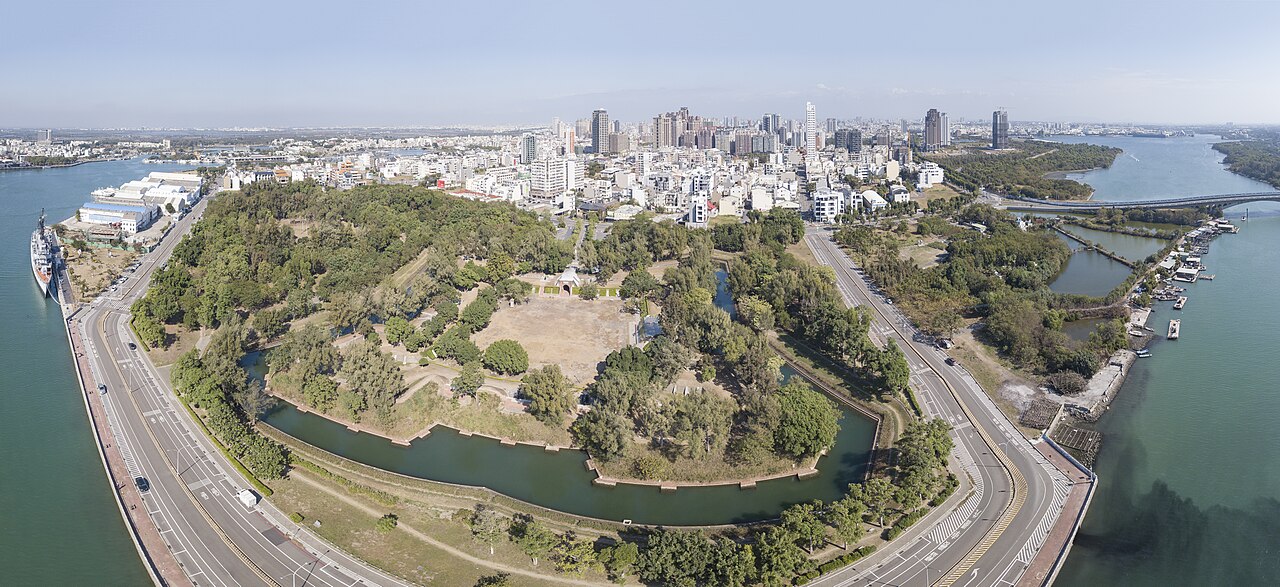
Fort Provintia: historic Dutch bastioned fortress in Tainan, Taiwan
Tainan, Tainan, Taiwan
Renaissance (15th–17th c.)
Partially Preserved

Fort Provintia, also known as Providentia and locally as Chihkan Tower (Chinese: 赤嵌樓; pinyin: Chìkǎnlóu; Pe̍h-ōe-jī: Chhiah-khám-lâu), is a significant 17th-century bastioned fortress located in the West Central District of Tainan, Taiwan. Constructed in 1653 during the period of Dutch colonization of Taiwan, the fort served as a strategic military outpost on the island then known as Formosa. Its establishment was part of the Dutch East India Company's efforts to consolidate power and control trade routes in East Asia.

The fort was originally built near the Taiwanese aboriginal village recorded by the Dutch as Sakam, situated approximately 2 miles east of what is now the Anping district. The name Fort Provintia itself is derived from this indigenous settlement. Over time, the area expanded significantly, with the Chinese referring to it as Chhiah-kham. This growing settlement was fortified with high brick walls, transforming it into a prominent urban center that eventually became the capital of Taiwan under the Qing dynasty, known as Taiwan-fu.

Architectural features and design

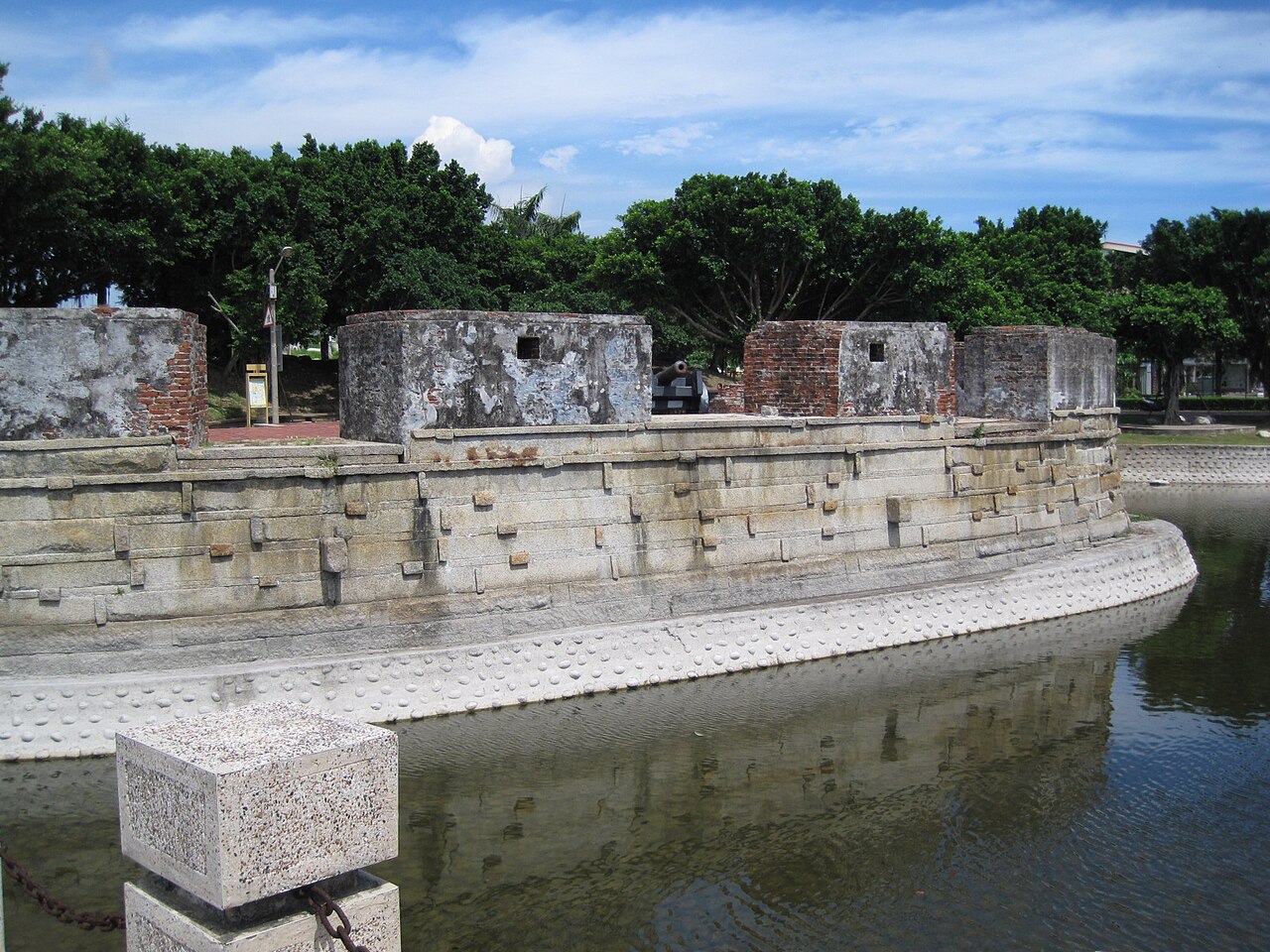
Fort Provintia exemplifies the Renaissance-era bastioned fortress design, a style characterized by angular bastions that allowed defenders to cover all approaches with overlapping fields of fire. This design was a response to the evolution of artillery warfare in the 16th and 17th centuries. The fort’s walls were constructed using brick and stone, materials chosen for their durability against cannon fire and natural disasters.

The fortress layout included a central courtyard surrounded by thick defensive walls and bastions at the corners, which provided strategic vantage points for artillery and lookouts. The main gate was heavily fortified, serving as the primary point of entry and defense. Inside the fort, there were various buildings including barracks, storehouses, and administrative offices, reflecting its dual military and colonial administrative functions.

Historical context and events

The fort played a key role during the Dutch colonial period in Taiwan, serving as a military and administrative center. In 1662, during the Siege of Fort Zeelandia, Koxinga (Zheng Chenggong), a Ming loyalist general, successfully besieged the Dutch forces, leading to the surrender of Fort Zeelandia and the fall of Dutch rule on the island.

Following the Dutch defeat, Fort Provintia came under the control of Koxinga’s regime and later the Qing dynasty. The fort suffered significant damage in the 18th century due to a combination of rebellion and several earthquakes. Despite this, it was rebuilt in the 19th century during Qing rule, preserving its historical and architectural legacy.

Cultural significance and preservation

Beyond its military and colonial importance, Fort Provintia holds considerable cultural value. It houses a library containing dictionaries and business transaction records that document the Siraya language, spoken by the indigenous inhabitants during Dutch rule. This makes the site an invaluable resource for linguistic and anthropological studies related to Taiwan’s native peoples.

Today, the fort is recognized as a heritage site and a symbol of the complex colonial history of Taiwan. It is a popular tourist attraction, offering visitors insight into the island’s past through its preserved structures and museum exhibits.

Modern redevelopment and future plans

The fort is currently undergoing a redevelopment project aimed at transforming it into a modern museum. This initiative is led by the Taiwanese architecture studio HOU x LIN, whose partners have personal connections to the Netherlands, symbolizing the historical ties between Taiwan and the Dutch.

The redevelopment is scheduled for completion in 2024, coinciding with the 400-year anniversary of relations between Taiwan and the Netherlands. This project seeks to enhance the visitor experience while preserving the fort’s architectural integrity and historical significance.

Frequently asked questions (FAQ)

What is the historical significance of Fort Provintia?
Fort Provintia, built in 1653 by the Dutch during their rule in Taiwan, is a key site representing the colonial history of the island. It served as a military fortification and a trading post, playing a crucial role in the Dutch East India Company's operations in the region. Today, it stands as a testament to Taiwan's multicultural heritage and the historical interactions between different cultures.
When was Fort Provintia constructed?
Fort Provintia was constructed in 1653 during the Dutch colonial period in Taiwan. It was initially named Fort Zeelandia but was later renamed after the nearby Provintia district. The fort showcases the architectural style of the time, blending Western and local influences.
What are the opening hours of Fort Provintia?
Fort Provintia is open to visitors daily from 9:00 AM to 5:00 PM. It is advisable to check for any seasonal changes in hours or special holiday closures before planning your visit. The fort can be enjoyed at a leisurely pace, allowing time to explore its grounds and exhibits.
Can I visit Fort Provintia with children?
Yes, Fort Provintia is a family-friendly destination, suitable for visitors of all ages, including children. The site offers educational insights into Taiwan's history, making it a great learning experience for younger visitors. The spacious grounds allow children to explore safely while adults can appreciate the historical context.
Is it possible to access Fort Provintia using public transportation?
Yes, Fort Provintia is accessible via public transportation, including buses and taxis, from various parts of Tainan. Visitors can take local buses that stop near the fort or opt for a taxi for a more direct route. It's recommended to check local transit schedules for the most convenient options.
What is the ticket price for visiting Fort Provintia?
The ticket price for Fort Provintia is typically around 50 NTD (New Taiwan Dollars) for adults, with discounted rates for students and seniors. Children under a certain age may enter for free, making it an affordable outing for families. Be sure to bring cash, as some ticket counters may not accept cards.
When is the best time to visit Fort Provintia?
The best time to visit Fort Provintia is during the cooler months from October to March, when the weather is more pleasant for outdoor exploration. Early mornings or late afternoons are ideal to avoid the midday heat and crowds, allowing for a more enjoyable experience. Spring and autumn also offer beautiful scenery in the surrounding areas.
What nearby attractions can I explore after visiting Fort Provintia?
After visiting Fort Provintia, you can explore the nearby Anping Old Street, known for its local snacks and traditional shops. The Anping Tree House and the historic Anping Fort are also within walking distance, providing additional insights into the area's rich history. These attractions complement your visit to Fort Provintia, creating a full day of exploration.

Photo gallery

Fort Provintia
Click to view

Photo by Koika•CC BY-SA 3.0

1 photo • Click any image to view in full screen

Information

Bastioned Fortress

Loading map...

Visitor reviews

No reviews yet. Been here? Write the first review and help other travelers!

Write the first review

Visited this castle? Share your experience

Your review helps other travelers and adds first-hand knowledge to our encyclopedia.
Write a review

(5/5)

0/2000 characters

Your review will be visible after admin approval

Nearby castles

4.3 km
Fort Zeelandia (Taiwan) — Taiwan castle

Fort Zeelandia (Taiwan)

Anping, Taiwan

Fort Zeelandia is a notable bastioned fortress constructed by the Dutch East India Company (VOC) between 1624 and 1634 in the town of Anping, now part of the Anping District of Tainan, Taiwan. This fortress was a key military and trading post during the Dutch colonial period on Taiwan, then known as Formosa. The site has been known by several names including Fort Orange, Fort Anping, and Taiwan City. The modern Chinese name, Anping Old Fort (安平古堡), reflects its historical significance in the region. Historical context and strategic importance During the 17th century, European powers were expanding their maritime trade networks in Asia. The Dutch saw Formosa as a strategic location to control regional trade routes and to challenge the Spanish and Portuguese dominance in East Asia. The fortress was established to secure Dutch interests in the region, particularly to disrupt the Spanish trade between Manila and China and the Portuguese trade between Macau and Japan. By exerting military control from Fort Zeelandia, the Dutch aimed to monopolize commerce and establish a foothold for their operations in Asia. Architectural features and construction Fort Zeelandia was designed as a bastioned fortress, a style that emerged during the Renaissance period, characterized by angular bastions that allowed defenders to cover all approaches with gunfire. The fortress was built with thick walls and bastions to withstand artillery attacks, reflecting contemporary European military architecture. Its construction took about a decade, utilizing local materials and labor under the direction of the Dutch East India Company. The design included defensive walls, moats, and gun ports to protect against both land and sea attacks. Economic and cultural role in east asia Fort Zeelandia served as a major hub for international trade during the Dutch colonial period. Ships departing from the fortress could travel north to Japan, west to the Fujian province of China, or south to various parts of Southeast Asia including Vietnam, Thailand, Indonesia, Cambodia, as well as further to India, Iran, and Europe. The fortress's location made it a critical point for controlling maritime trade routes and facilitating the exchange of goods, cultures, and ideas across East Asia. Trade and military strategy The Dutch strategy relied heavily on military strength to maintain control over trade markets. Fort Zeelandia was not only a commercial center but also a military stronghold designed to protect Dutch interests and disrupt rival European powers' trade activities. This dual role underscored the importance of the fortress in the broader geopolitical landscape of 17th-century Asia. Legacy and preservation Today, Fort Zeelandia stands as an important historical site in Taiwan, attracting visitors interested in colonial history and military architecture. Although parts of the fortress have deteriorated over time, significant sections remain well-preserved, offering insight into the Renaissance-era bastioned fortifications and the Dutch colonial impact on Taiwan. The site is managed to balance preservation with public access, allowing exploration of its walls, bastions, and courtyards. Cultural significance The fortress is a symbol of Taiwan's complex colonial past and its role in the global maritime trade networks of the early modern period. It also reflects the architectural and military innovations of the time, representing a blend of European design adapted to an Asian context. Visiting information Visitors to Fort Zeelandia can explore the extensive remains of the fortress and learn about its history through onsite exhibits and guided tours. The site provides a tangible connection to the 17th century and the era of European colonial expansion in East Asia.

Renaissance (15th–17th c.)
Details
4.5 km
Eternal Golden Castle — Taiwan castle

Eternal Golden Castle

Tainan, Taiwan

The Eternal Golden Castle (億載金城), also known as the Erkunshen Battery (二鯤鯓砲台), is a significant bastioned fortress located in the Anping District of Tainan, Taiwan. Constructed in the 19th century, it represents a key example of modern military architecture designed to defend the coastline against naval threats during a period of increasing foreign incursions in East Asia.The fortress was built under the Qing Dynasty's efforts to strengthen coastal defenses following the Opium Wars and other foreign pressures. Its name, Eternal Golden Castle, reflects the desire for enduring protection and prosperity. The site was strategically chosen on the coast of Anping, a historically important port area, to guard against potential invasions and pirate attacks.Architectural design and featuresThe Eternal Golden Castle is a classic example of a bastioned fortress, characterized by its angular bastions designed to provide overlapping fields of fire, minimizing blind spots and maximizing defensive capabilities. The fortress is constructed primarily of solid brick and stone, materials chosen for their durability against artillery bombardment.The layout includes multiple bastions projecting outward from the main enclosure, enabling defenders to cover the surrounding moat and walls effectively. The walls are thick and relatively low, optimized to absorb cannon fire rather than to repel scaling attempts. The fortress features a surrounding moat that adds a layer of defense against infantry assaults.Defensive armamentsThe fortress was originally equipped with a series of cannons positioned along the bastions and ramparts, intended to engage enemy ships approaching the harbor. These artillery placements were carefully arranged to cover the approaches to the port and to create crossfire zones. The design reflects the influence of European military engineering principles adapted to local conditions.Historical context and significanceBuilt during a period of significant geopolitical tension, the Eternal Golden Castle was part of the Qing government's response to threats from Western powers and Japan. It was constructed shortly after the Second Opium War and during a time when Taiwan was increasingly recognized as strategically important.The fortress played a role in coastal defense throughout the late 19th century but saw limited direct military action. Its presence, however, served as a deterrent and a symbol of Qing authority in the region. After Taiwan was ceded to Japan in 1895, the castle's military role diminished as the new colonial administration developed different defense strategies.Preservation and current statusToday, the Eternal Golden Castle is well preserved and maintained as a cultural heritage site. It is open to visitors who can explore its bastions, walls, and moat. The site includes interpretive displays that explain its historical and architectural importance.The castle is a popular tourist attraction in Tainan, offering insights into Taiwan's military history and Qing-era coastal defenses. Its location near other historical sites in Anping makes it a key destination for those interested in Taiwan's colonial and military past.Visiting informationThe Eternal Golden Castle is accessible to the public with regular visiting hours. Visitors can walk along the ramparts and explore the interior courtyards. The site often hosts cultural events and exhibitions related to its history.

Modern (19th–20th c.)
Details
4.5 km
Anping Small Fort — Taiwan castle

Anping Small Fort

Tainan, Taiwan

The Anping Small Fort (traditional Chinese: 安平小砲臺; simplified Chinese: 安平小炮台; pinyin: Ānpíng Xiǎo Pàotái) is a 19th-century bastioned fortress situated in the Anping District of Tainan, Taiwan. This fort represents an important example of modern military architecture in Taiwan, reflecting the strategic defensive needs during the late Qing Dynasty period. Historical background and strategic significance Constructed in the 19th century, the Anping Small Fort was part of a broader effort to strengthen coastal defenses in Taiwan amid increasing foreign naval threats. The fort was built during a time when Taiwan was under Qing rule, and the island's coastal areas were vulnerable to incursions by Western powers and pirates. Its location in Anping District was chosen for its strategic advantage, overseeing the coastal approach and protecting the vital port of Tainan. The fort's establishment coincided with a period of modernization in military fortifications, influenced by Western bastion designs that emphasized angled walls and artillery placements to maximize defensive coverage. The Anping Small Fort served as a smaller complement to larger fortifications in the area, designed to provide additional layers of defense. Architectural features and design The Anping Small Fort is classified as a bastioned fortress, a style characterized by projecting bastions at the corners of the fortification walls. This design allowed defenders to cover adjacent walls with crossfire, reducing blind spots and enhancing the fort's ability to repel attackers. The fort's walls were constructed using locally sourced materials, with thick masonry designed to withstand artillery bombardment. Its compact layout includes a perimeter wall with bastions at key points, a central courtyard, and artillery platforms. The fort's small size distinguished it from larger coastal forts but allowed for efficient defense with a limited garrison. Key architectural elements include embrasures for cannons, narrow firing slits for muskets, and a gatehouse designed to control access. The fort's layout reflects the military engineering principles of the late Qing era, integrating both traditional Chinese and Western fortification techniques. Role during conflicts and historical events While the Anping Small Fort did not witness major battles, it played a role in the broader defense network of Taiwan's coast. Its presence contributed to deterring smaller-scale raids and piracy during a turbulent period in Taiwan's history. The fort also symbolizes the Qing government's attempts to assert control and modernize defenses in the face of foreign pressures. During the transition from Qing rule to Japanese colonial administration in the late 19th century, the fort's military importance declined. Under Japanese rule, many coastal fortifications were either repurposed or fell into disuse as new military strategies and technologies emerged. Current status and preservation Today, the Anping Small Fort is recognized as a historical site in Tainan. Although it is relatively small and less famous than other Taiwanese forts, it remains an important cultural relic reflecting Taiwan's coastal defense history. The fort is partially preserved, with some original walls and bastions still visible. Efforts have been made to maintain the structure and promote it as a heritage site for visitors interested in Taiwan's military architecture and history. The site offers insight into the adaptation of Western military designs in East Asia and the local responses to geopolitical challenges in the 19th century. Visiting the Anping Small Fort The fort is accessible to the public and is often included in cultural and historical tours of the Anping District. Visitors can explore the remaining bastions and walls, gaining a sense of the fort's defensive capabilities and architectural style. Interpretive signage and local guides provide context about the fort's construction, historical role, and architectural features. The site is a valuable destination for those interested in military history, colonial-era fortifications, and Taiwanese heritage. Nearby attractions The Anping Small Fort is located near other notable historical sites such as the Anping Old Fort (Fort Zeelandia), traditional markets, and cultural museums, making it a worthwhile stop for visitors exploring the rich history of Tainan. Frequently asked questions about Anping Small Fort When was Anping Small Fort built? The fort was constructed in the 19th century during the Qing Dynasty's efforts to strengthen coastal defenses in Taiwan. What type of fort is Anping Small Fort? It is a bastioned fortress featuring angled bastions designed for artillery defense. Is Anping Small Fort open to visitors? Yes, the site is accessible to the public and can be visited as part of historical tours in Anping District. What architectural styles influenced the fort? The fort combines traditional Chinese military architecture with Western bastion fort design principles. How well preserved is the fort? The fort is partially preserved, with some original walls and bastions still intact. Are there other historical sites near Anping Small Fort? Yes, it is close to the Anping Old Fort (Fort Zeelandia) and other cultural attractions in Tainan. Why was the fort built in Anping? Its location was strategic for protecting the coastal approach to Tainan and deterring foreign naval threats.

Modern (19th–20th c.)
Details