Fort Point, San Francisco
Fort Point, historically known as the Castillo de San Joaquín, is a prominent bastioned fortress located at the southern side of the Golden Gate, the narrow strait that serves as the entrance to San Francisco Bay. This masonry seacoast fortification occupies a strategic promontory that was critical for controlling naval access to one of the most important harbors on the west coast of the United States. The fort’s location beneath the iconic Golden Gate Bridge offers a unique vantage point and a tangible connection between 19th-century military architecture and modern engineering marvels.
Early history and spanish origins
The site of Fort Point was initially fortified in 1794 by the Spanish colonial forces as part of their efforts to defend the Presidio of San Francisco and the surrounding territory. Originally named Castillo de San Joaquín, the fortification was intended as a complementary defense outpost to protect the entrance to the bay from foreign naval threats. The Spanish fortifications consisted mainly of earthworks and rudimentary masonry designed to mount cannons overlooking the waterway.
Construction of the current fort and american civil war era
Following the U.S. conquest of California in 1846 during the Mexican-American War, the strategic importance of the Golden Gate was recognized by the United States Army. Construction of the current Fort Point structure began in 1853 and was completed by 1861, just before the outbreak of the American Civil War. The fort was designed in the bastioned fortress style, characterized by thick masonry walls, angled bastions for overlapping fields of fire, and a low profile to better withstand naval bombardment.
The fort’s design reflects military engineering principles of the mid-19th century, combining traditional European bastion concepts with adaptations for coastal defense. It was equipped with multiple tiers of cannon embrasures and casemates, allowing defenders to fire upon enemy ships attempting to enter the bay. Despite its formidable construction, Fort Point never saw combat, as the anticipated naval threats during the Civil War did not materialize in this region.
Architectural features and design elements
Fort Point is notable for its massive brick and granite walls that rise directly from the rocky shoreline. The fort’s walls are approximately 4 feet thick and rise to a height of about 40 feet, designed to absorb and deflect cannon fire. The bastions at each corner provide overlapping fields of fire, a hallmark of bastioned fortifications, allowing defenders to cover all approaches.
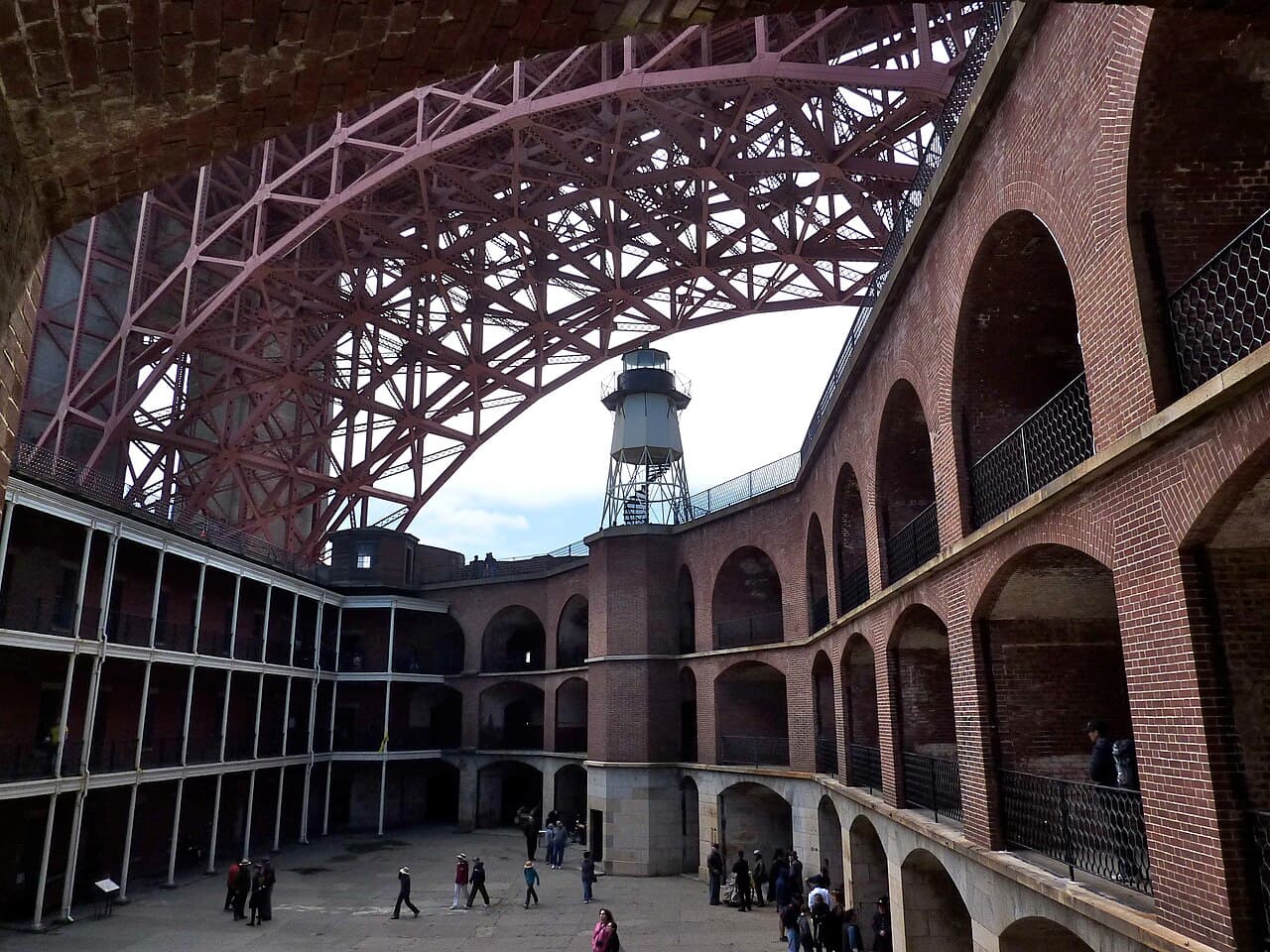
The fort’s interior includes multiple levels of casemates—vaulted chambers that housed artillery pieces and served as protected firing positions. The parade ground at the center of the fort was used for troop assembly and drills. The fort also features magazines for storing gunpowder and ammunition, as well as barracks and officers’ quarters integrated into the structure.
One of the fort’s unique architectural aspects is its location directly beneath the Golden Gate Bridge. The bridge’s southern approach was constructed over the promontory, and its towering suspension cables and roadway frame the historic fort, creating a striking visual and historical juxtaposition.
Fort point in the modern era
After its military use declined in the late 19th and early 20th centuries, Fort Point was preserved as a historic site. It is now managed by the National Park Service as part of the Golden Gate National Recreation Area. The fort is open to the public and serves as a museum and educational center, showcasing exhibits on its history, coastal defense, and the engineering of the Golden Gate Bridge.
Visitors to Fort Point can explore the well-preserved bastioned walls, casemates, and parade ground, gaining insight into mid-19th-century military architecture and coastal defense strategies. The site also offers unparalleled views of the Golden Gate Bridge from below, making it a popular destination for tourists and history enthusiasts alike.
Cultural and heritage significance
Fort Point is recognized as a National Historic Site and is listed on the National Register of Historic Places. It represents an important chapter in the military history of the United States, particularly in the context of west coast defense during a period of rapid expansion and conflict. The fort’s preservation allows for the study and appreciation of 19th-century bastioned fortress architecture and its adaptation to American coastal defense needs.
Visitor information and accessibility
The fort is accessible via the Golden Gate National Recreation Area and is typically open daily from morning to late afternoon, though hours may vary seasonally. Admission is generally free, with guided tours and educational programs available to enhance the visitor experience. The site is wheelchair accessible with some limitations due to the historic nature of the structure and its terrain.
Fort point’s role in san francisco’s maritime defense network
Fort Point was a key component of a broader network of coastal defenses protecting San Francisco Bay, which included the nearby Presidio and other fortifications such as Fort Baker and Fort Cronkhite. Together, these installations formed a layered defense system designed to prevent enemy ships from threatening the vital port and city.
The fort’s strategic position at the narrow Golden Gate allowed it to control naval traffic effectively, with its artillery positioned to cover the main shipping channel. This defensive posture contributed to the security and growth of San Francisco as a major port city during the 19th and early 20th centuries.
Frequently asked questions (FAQ)
- What is the historical significance of Fort Point?
- Fort Point, completed in 1861, is a vital part of San Francisco's military history. It was built to protect the Golden Gate Strait during the Civil War and is one of the best-preserved examples of coastal fortifications in the United States.
- When was Fort Point built?
- Construction of Fort Point began in 1853 and was completed in 1861. It was designed by the prominent military engineer, Robert E. Lee, and its strategic location has made it a key defensive structure over the years.
- Can I visit Fort Point, and is there an admission fee?
- Yes, Fort Point is open to visitors, and there is no admission fee to explore the fort. However, donations are appreciated to help maintain the site.
- What are the opening hours of Fort Point?
- Fort Point is typically open to the public daily from 10 AM to 5 PM, but it's always a good idea to check the official website for any seasonal changes or special events that may affect hours.
- Is Fort Point accessible for individuals with disabilities?
- Yes, Fort Point is committed to accessibility and has made efforts to ensure that visitors with disabilities can enjoy the site. Accessible parking, routes, and facilities are available, so all guests can explore the historic fort.
- When is the best time to visit Fort Point?
- The best time to visit Fort Point is during the spring and fall when the weather is mild and comfortable for outdoor exploration. Additionally, visiting during weekdays can help avoid larger crowds compared to weekends.
- What nearby attractions can I explore after visiting Fort Point?
- After visiting Fort Point, you can explore the stunning Golden Gate Bridge, which is just a short walk away. The Presidio, a former military post turned national park, also offers beautiful trails, scenic views, and historical exhibits to enjoy.
- What type of architecture is featured at Fort Point?
- Fort Point is designed in the Italianate style, characterized by its brick masonry and arched openings. The structure includes a distinctive three-tiered design, which not only adds to its aesthetic appeal but also serves practical military purposes.
Photo gallery

Information
Loading map...
Visitor reviews
No reviews yet. Been here? Write the first review and help other travelers!
Write the first reviewVisited this castle? Share your experience
Your review helps other travelers and adds first-hand knowledge to our encyclopedia.