Fort Mason
Fort Mason is a historic bastioned fortress and former United States Army post located in the northern Marina District of San Francisco, California, alongside the scenic San Francisco Bay. Serving the nation for more than a century, Fort Mason played a critical role initially as a coastal defense site and later as a major military port facility during pivotal moments in American military history, particularly throughout World War II.
The origins of Fort Mason trace back to the American Civil War, when it was established as a strategic coastal defense installation. The property’s core was originally owned by John C. Frémont, a notable explorer and military officer, and legal disputes over compensation by the United States government extended until 1968. By 1882, the defenses were officially named in honor of Richard Barnes Mason, a military governor of California prior to its statehood.
Early military significance and development
From 1904 to 1907, Fort Mason served as the headquarters for an Army command overseeing military operations in California and the Hawaiian Islands. Recognizing the strategic importance of the Pacific region, the Army initiated construction in 1912 of a comprehensive port facility at Fort Mason. This included the development of piers, warehouses, and logistical infrastructure to support the Army Transport Service, which operated supply routes to Alaska, Hawaii, the Philippines, and other Pacific posts.
Transformation into a major port of embarkation
On May 6, 1932, the port facility at Fort Mason was designated the San Francisco Port of Embarkation, modeled after the New York Port of Embarkation that had been critical during World War I. This designation marked Fort Mason as the central hub for the Pacific theater, coordinating the movement of troops, equipment, and supplies. The San Francisco Port of Embarkation consolidated several military logistics functions, including the Army Transport Service, the General Quartermaster Depot at Fort Mason, and the Overseas Replacement and Discharge Service based at Fort McDowell, California.
As global conflict intensified with the outbreak of war in Europe in 1939, Fort Mason’s port became increasingly vital. However, the existing facilities were soon deemed inadequate to support the scale of operations required for the Pacific campaign. Consequently, in early 1941, the Army began acquiring additional land and expanding port facilities in nearby locations such as Oakland and Seattle, creating a network of thirteen facilities that together formed the expanded San Francisco Port of Embarkation by the end of World War II.
Role during World War II
During the war, the San Francisco Port of Embarkation was the second largest among the eight major U.S. Army Ports of Embarkation. Fort Mason served as a vital embarkation point for troops and materiel bound for the Pacific theater, supporting campaigns across the vast oceanic expanse. The port’s warehouses, docks, and transportation infrastructure facilitated the rapid deployment of forces, playing a key logistical role in the Allied victory.
Post-war use and preservation
Following the conclusion of World War II, the San Francisco Port of Embarkation was disestablished on October 1, 1955. Fort Mason then transitioned to serve as the headquarters for the Pacific Transportation Terminal Command, continuing its military significance during the early Cold War era.
Today, Fort Mason is part of the Golden Gate National Recreation Area, a protected cultural and recreational space. It hosts a variety of cultural facilities and public events, preserving its historic legacy. The entire fort area is recognized as a historic district listed on the National Register of Historic Places, encompassing 49 buildings of historic significance spread over approximately 1,200 acres (490 hectares). The lower port area is designated as a National Historic Landmark District in recognition of its crucial role during World War II.
Architectural and structural features
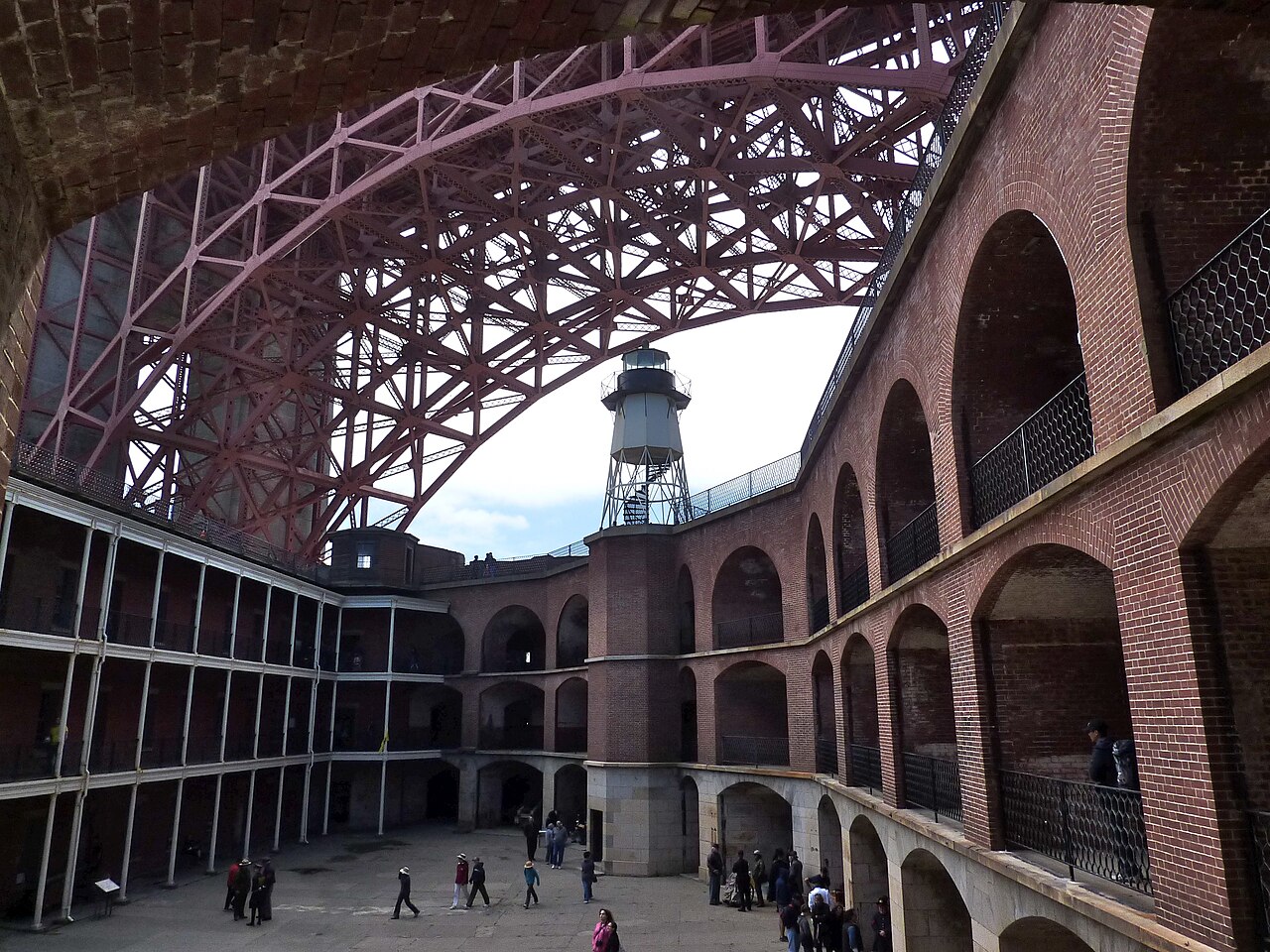
As a bastioned fortress, Fort Mason’s design reflects military architectural principles intended for coastal defense, including fortified walls and strategic placement along the bay. Over time, the site evolved to incorporate extensive port infrastructure such as piers, warehouses, and transportation facilities essential for maritime logistics. Although the original military fortifications have largely given way to port and administrative buildings, the site retains key architectural elements that illustrate its dual function as both a defensive installation and a logistical hub.
Historic buildings and layout
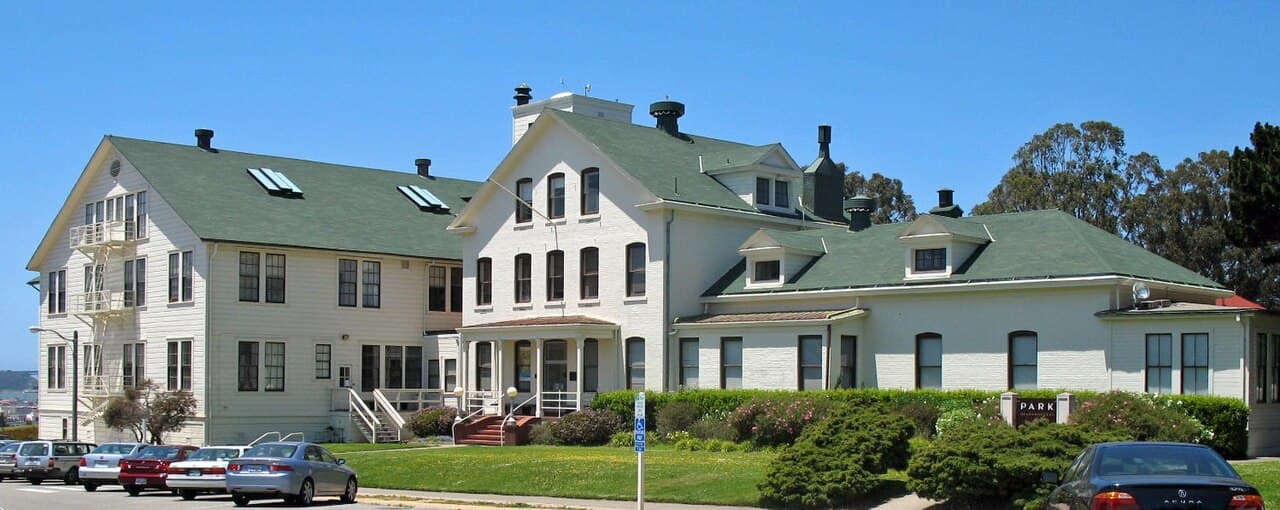
The fort’s 49 historic buildings include warehouses, barracks, administrative offices, and support structures arranged to optimize military and logistical operations. Many of these buildings date from the early 20th century and exhibit functional military architectural styles characteristic of their era. The layout reflects the transition from a traditional coastal defense fortress to a modern military port complex, with an emphasis on efficient movement of troops and materials.
Legacy and cultural significance
Fort Mason stands as a testament to the evolution of American military strategy from coastal defense to global power projection. Its role in supporting the Pacific campaigns during World War II marks it as a site of national historical importance. The preservation of Fort Mason within a national recreation area ensures that its military heritage and architectural features remain accessible to the public, fostering education and remembrance.
Visitors to Fort Mason can explore its historic buildings, enjoy waterfront views of San Francisco Bay, and participate in cultural events held within the site. Its designation as a historic district and National Historic Landmark District underscores its significance in American military and architectural history.
Frequently asked questions (FAQ)
- What is the historical significance of Fort Mason?
- Fort Mason played a crucial role in the defense of San Francisco during the 19th and early 20th centuries. Established in 1850, it served as a military base and was pivotal during the American Civil War and World War II. Today, it is recognized for its historical architecture and as a cultural center.
- When was Fort Mason constructed?
- Fort Mason was constructed in 1850 and was one of the first military installations in the San Francisco area. It was built to protect the city and its harbor from potential naval threats. Over the years, it has undergone various modifications and restorations to preserve its historical integrity.
- Can I visit Fort Mason year-round?
- Yes, Fort Mason is open to visitors year-round. However, specific attractions and facilities may have varying opening hours, so it's best to check ahead of your visit. The scenic waterfront views and historical sites make it a popular destination for locals and tourists alike.
- What are the opening hours for Fort Mason?
- Fort Mason typically opens at 8:00 AM and closes at 5:00 PM daily. However, some facilities, such as museums and galleries, may have different hours, so it’s advisable to check their specific schedules before planning your visit.
- Is Fort Mason accessible for individuals with disabilities?
- Yes, Fort Mason is committed to accessibility and offers facilities for individuals with disabilities. Wheelchair access is available to most areas, and accessible restrooms are provided on-site. It’s recommended to plan your visit in advance to ensure a smooth experience.
- What is the best time to visit Fort Mason?
- The best time to visit Fort Mason is during the spring and fall months when the weather is mild and pleasant. Summer can be quite foggy and chilly, while winter may bring rain. Visiting during weekdays can also help you avoid the crowds.
- Are there any nearby attractions to Fort Mason?
- Yes, Fort Mason is located near several popular attractions, including the Golden Gate Bridge, the Presidio, and Fisherman's Wharf. These nearby sites offer additional opportunities for exploration and enjoyment, making Fort Mason a great starting point for a day of sightseeing.
- How much do tickets cost for Fort Mason?
- Entrance to Fort Mason is free, allowing visitors to explore the grounds and enjoy the beautiful views at no cost. Some specific attractions or events may have fees, so it’s best to check the official website for any special exhibitions or programs that may require tickets.
Photo gallery

Information
Loading map...
Visitor reviews
No reviews yet. Been here? Write the first review and help other travelers!
Write the first reviewVisited this castle? Share your experience
Your review helps other travelers and adds first-hand knowledge to our encyclopedia.