Fort of São Paulo da Gamboa
The Fort of São Paulo da Gamboa, also known as the São Paulo da Gamboa Battery or simply the Fort of Gambôa, is a significant 17th-century bastioned fortress located in Salvador, Bahia, Brazil. Constructed during the Renaissance period, this military fortification was part of a strategic network of defenses designed to protect the city of Salvador from European colonial powers, particularly the Dutch and French.
Historical context and strategic importance
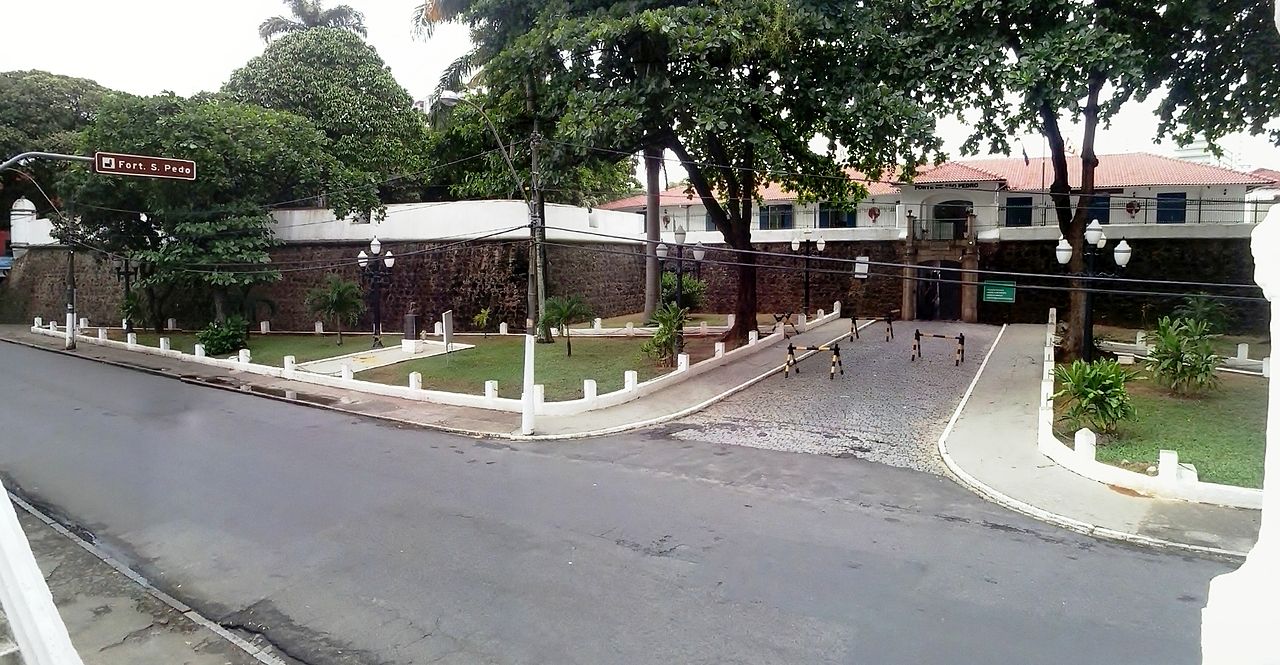
The fort was built in the early 17th century under the direction of Jean Massé (known locally as João de Massé), a French military engineer who played a crucial role in the fortification of Salvador. The São Paulo da Gamboa Battery served as an extension of the nearby Fort of Saint Peter, enhancing the city's coastal defenses. During this period, Salvador was a key colonial capital and a target for rival European powers seeking control over Brazil's valuable resources and strategic ports.
Architectural features and design
The fort exemplifies the bastioned fortress style, characterized by angular bastions designed to provide overlapping fields of fire and resist artillery attacks. Its construction reflects military architectural principles of the Renaissance era, incorporating thick stone walls, low-profile ramparts, and strategically placed cannon emplacements. The design allowed defenders to cover the bay and approaches to the city effectively.
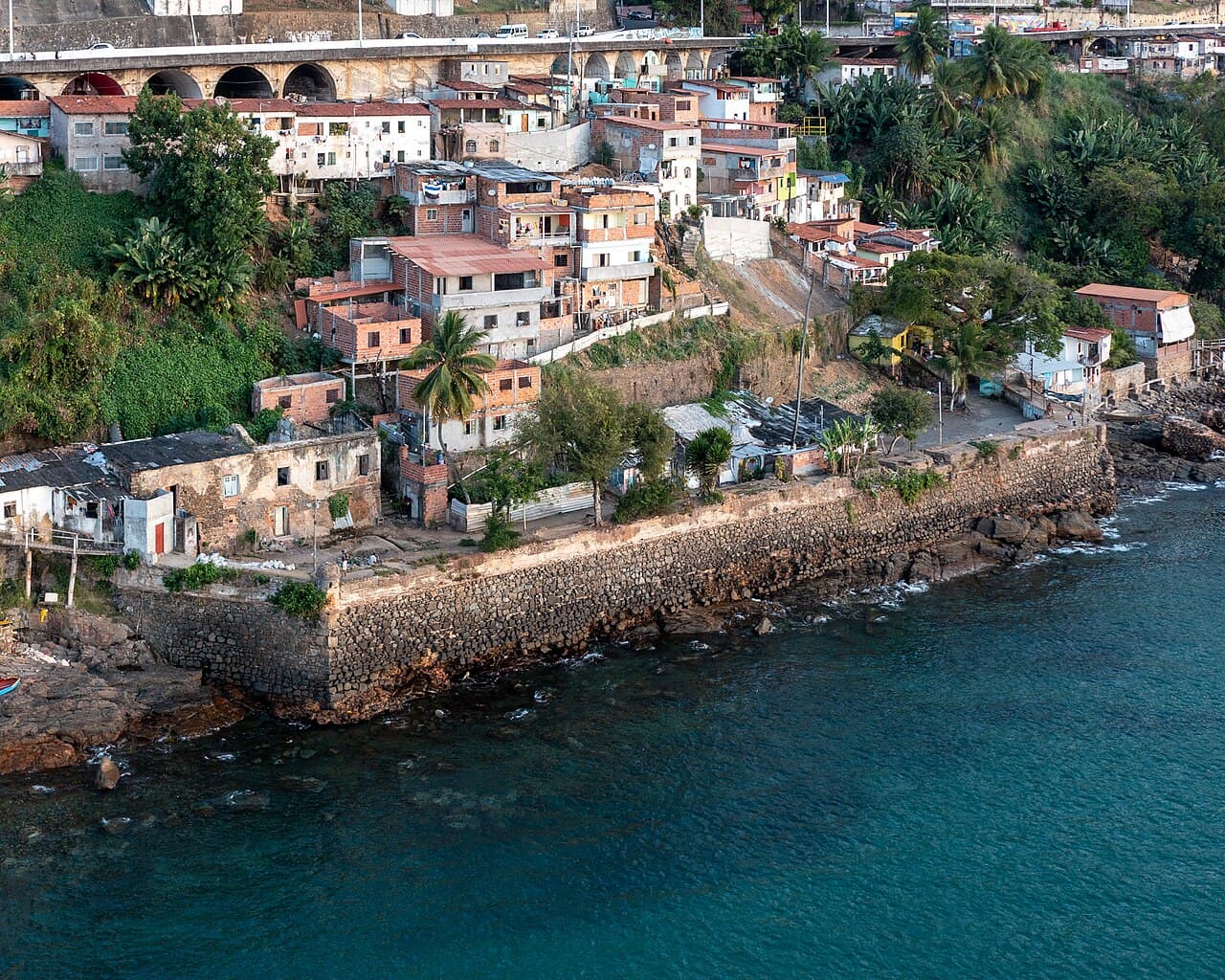
Despite its robust design, the fort's location below a slope has made it vulnerable to natural hazards, including landslides, which have contributed to its current state of disrepair.
Current condition and preservation challenges
Although the Fort of São Paulo da Gamboa was officially listed as a historic structure by the National Institute of Historic and Artistic Heritage (IPHAN) in 1938, it has suffered from neglect. It is not currently maintained by any public agency or institution, resulting in significant deterioration. The site is partially occupied by informal settlements, complicating preservation efforts and access.
The fort's advanced state of decay contrasts with its historical and cultural significance as part of Brazil's colonial military heritage. Preservationists face challenges related to structural instability, environmental risks, and social factors.
Cultural significance and heritage status
The Fort of São Paulo da Gamboa holds an important place in Brazil's colonial history, representing the military strategies employed to defend one of the earliest European settlements in the Americas. Its inclusion in the IPHAN registry underscores its value as a cultural landmark, despite the current lack of active conservation.
Efforts to raise awareness about the fort's historical importance continue, emphasizing the need for sustainable preservation plans that balance heritage conservation with community needs.
Visiting and accessibility
Due to its deteriorated condition and informal occupation, the Fort of São Paulo da Gamboa is not a typical tourist destination and may have limited public access. Visitors interested in colonial military architecture and Brazilian history should seek information from local heritage organizations or guided tours in Salvador that include the fort as part of broader historical explorations.
Frequently asked questions (FAQ)
- What is the historical significance of the Fort of São Paulo da Gamboa?
- The Fort of São Paulo da Gamboa was built in the early 17th century to defend Salvador, Brazil, against Dutch and French colonial attacks. It played a key role in the city's coastal defense system during the Renaissance period.
- Can I visit the Fort of São Paulo da Gamboa today?
- The fort is in an advanced state of disrepair and partially occupied by informal settlements, which limits public access. Visitors should check with local heritage organizations for any guided tours or access opportunities.
- Why is the fort in poor condition despite its historic status?
- Although listed by the National Institute of Historic and Artistic Heritage (IPHAN) in 1938, the fort is not maintained by any public agency, leading to neglect, structural decay, and vulnerability to natural hazards like landslides.
- What architectural style characterizes the Fort of São Paulo da Gamboa?
- The fort exemplifies the bastioned fortress style typical of the Renaissance period, featuring angular bastions, thick walls, and cannon emplacements designed to resist artillery attacks.
- Where is the Fort of São Paulo da Gamboa located?
- The fort is located in Salvador, the capital of Bahia state in Brazil, overlooking the bay and forming part of the city's historic coastal defenses.
Photo gallery

Information
Loading map...
Visitor reviews
No reviews yet. Been here? Write the first review and help other travelers!
Write the first reviewVisited this castle? Share your experience
Your review helps other travelers and adds first-hand knowledge to our encyclopedia.