Fort Mifflin
Fort Mifflin, originally known as Fort Island Battery and also called Mud Island Fort, is a significant bastioned fortress located on Mud Island (also called Deep Water Island) in the Delaware River below Philadelphia, Pennsylvania. Commissioned in 1771, the fort was strategically positioned to protect the vital river approaches to Philadelphia, a key colonial city and port. Its location near the present-day Philadelphia International Airport underscores its enduring military importance over centuries.
Construction and design of fort mifflin
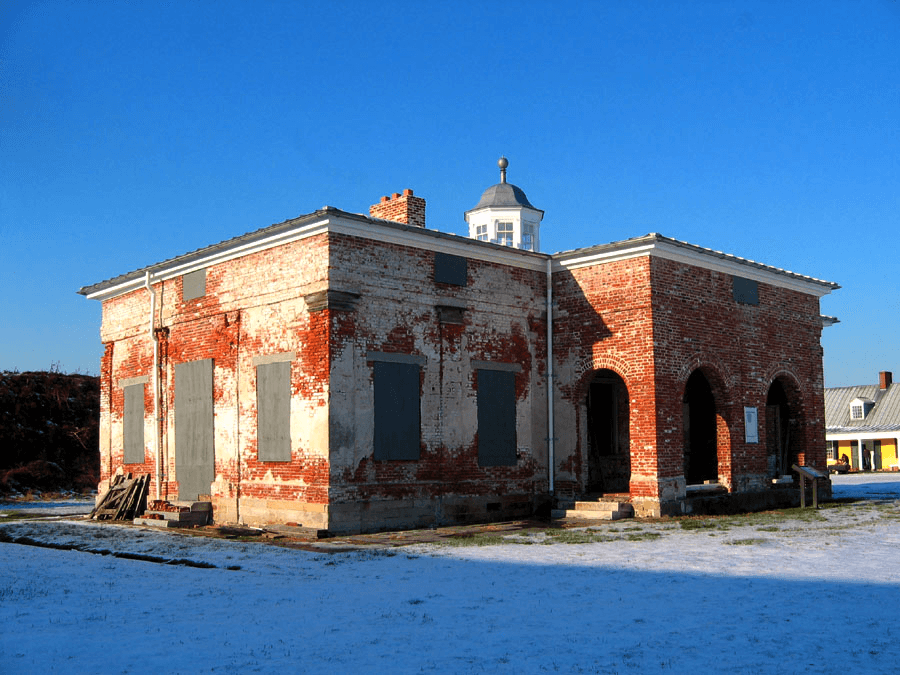
The original design of Fort Mifflin reflected the post-Renaissance military architectural principles of the 18th century, featuring a bastioned fortress layout. This design included angled bastions projecting from the main walls, allowing defenders to cover all approaches with overlapping fields of fire, a common feature in European fortifications of the era. The fort's walls were constructed primarily of brick and stone, materials chosen for their durability and resistance to artillery bombardment.
The fort's structure included multiple defensive elements such as ramparts, moats, and casemates—vaulted chambers within the walls used for housing troops and storing munitions safely. The layout was designed to maximize defense against naval and land attacks, controlling access along the Delaware River and protecting Philadelphia from hostile forces approaching by water.
Role in the american revolutionary war
During the American Revolutionary War, Fort Mifflin played a crucial role in the defense of Philadelphia. In the autumn of 1777, British forces bombarded the fort heavily as part of their campaign to capture the city. Despite intense shelling and siege conditions, the American defenders held out for several weeks, disrupting British supply lines along the Delaware River. Ultimately, the fort was captured by the British, but its resistance delayed British operations and demonstrated the strategic importance of river fortifications in colonial warfare.
Post-revolutionary developments and civil war use
Following the war, the fort was renamed in 1795 to honor Thomas Mifflin, a prominent Continental Army officer and the first governor of Pennsylvania after independence. Beginning in 1794, the U.S. Army undertook extensive rebuilding efforts to modernize the fortifications in response to evolving military technology and threats. These improvements continued into the 19th century, maintaining the fort's role as a key defensive position.
During the American Civil War, Fort Mifflin was repurposed as a prison for Confederate soldiers. Its secure location and robust construction made it suitable for detaining prisoners of war. The fort's military use extended well beyond the Civil War, adapting to changing defense needs through the 19th and 20th centuries.
20th-century military use and preservation efforts
The fort remained an active military installation until 1962, when the U.S. Army decommissioned it for active infantry and artillery use. However, part of the fort's grounds continues to be used by the U.S. Army Corps of Engineers, making Fort Mifflin the oldest fort still in use by the U.S. military. This unique status highlights the fort's long-standing strategic value and continuous adaptation over more than two centuries.
Historic preservationists have worked to restore Fort Mifflin, recognizing its architectural and historical significance. The fort has been designated a National Historic Landmark, ensuring protection and public awareness of its heritage. Restoration efforts have focused on stabilizing the remaining structures, interpreting the site for visitors, and preserving the fort's distinctive bastioned design and military features.
Architectural features and layout
Fort Mifflin exemplifies the bastioned fortress style with its characteristic angular bastions designed to provide overlapping fields of fire. The fort's walls are thick and robust, constructed to withstand artillery bombardment. Defensive features include casemates for protected artillery placements, ramparts for infantry defense, and a moat surrounding the structure to impede attackers.
The fort's interior includes various chambers and barracks arranged around a central parade ground, facilitating troop movements and command operations. The layout reflects 18th-century military engineering principles aimed at maximizing defense and operational efficiency.
Visiting fort mifflin today
Today, Fort Mifflin is open to the public as a historic site, offering visitors a chance to explore its well-preserved ramparts, bastions, and casemates. Interpretive programs and guided tours provide insights into the fort's role in American military history, including its pivotal defense during the Revolutionary War and its use during the Civil War.
The site hosts educational events and reenactments that bring to life the fort's storied past. Visitors can learn about the architectural innovations of bastioned fortifications and the strategic importance of river defenses in early American history.
Frequently asked questions (FAQ)
- How do I get to Fort Mifflin?
- Fort Mifflin is located on Mud Island in the Delaware River near Philadelphia. Visitors can reach the site by car, with parking available nearby, or by boat tours that include the fort as a stop.
- What is the historical significance of Fort Mifflin?
- Fort Mifflin played a key role in the defense of Philadelphia during the American Revolutionary War, delaying British forces in 1777. It also served as a prison during the Civil War and remains the oldest military fortification in use by the U.S. Army Corps of Engineers.
- When was Fort Mifflin built?
- Construction of Fort Mifflin began in 1771, reflecting 18th-century bastioned fortress design principles.
- Can I tour Fort Mifflin?
- Yes, Fort Mifflin is open to the public with guided tours available. Visitors can explore the fort's bastions, ramparts, and historic buildings, learning about its military history and architecture.
- Why is Fort Mifflin called Mud Island Fort?
- The fort is situated on Mud Island, also known as Deep Water Island, which gave rise to the nickname Mud Island Fort. This location was strategic for controlling river access to Philadelphia.
Photo gallery

Information
Address
Mud Island, Delaware River, Philadelphia, PA, USA
Loading map...
Visitor reviews
No reviews yet. Been here? Write the first review and help other travelers!
Write the first reviewVisited this castle? Share your experience
Your review helps other travelers and adds first-hand knowledge to our encyclopedia.