Fort Louvois
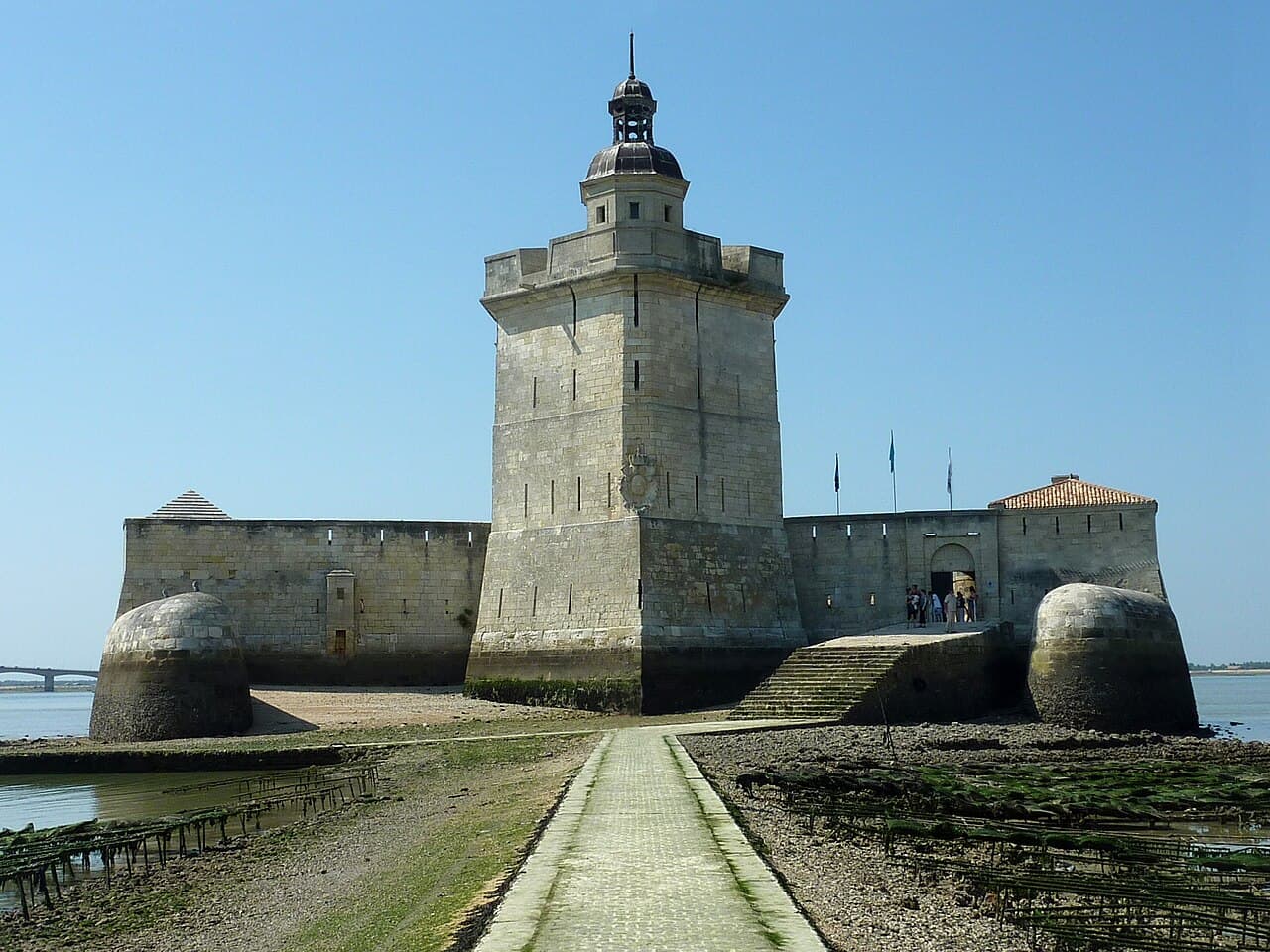
Fort Louvois, also locally known as Fort Chapus or Fort du Chapus, is a distinctive bastioned fortress constructed between 1691 and 1694 during the reign of King Louis XIV. It is situated on the Chapus islet, approximately 400 metres offshore from the town of Bourcefranc-le-Chapus in the Charente-Maritime department of southwestern France. The fort occupies a strategic position facing the citadel of Château d'Oléron on the nearby island of Oléron, forming a crossfire zone to control the Pertuis de Maumusson (Passage of Maumusson) and to prevent hostile vessels from accessing the Rochefort roads from the south.
Architectural design and military purpose
The design of Fort Louvois reflects the military engineering principles of the late renaissance period, with influences from the Vauban style of fortification that emphasized angular bastions to deflect cannon fire and provide overlapping fields of fire. The fort is a compact, polygonal structure built primarily of stone, featuring bastions at its corners, thick defensive walls, and a surrounding moat that is filled by the tidal waters. Its location on a small tidal islet made it a formidable coastal defense installation, controlling naval passage and protecting the mainland and nearby naval facilities.
Structural features
The fort's original armament included up to sixteen embrasures for artillery, designed to maximize its offensive and defensive capabilities. However, in 1755, modifications were made to adapt to evolving artillery technology, reducing the number of embrasures to ten and removing the roof from the battery to accommodate new types of guns. The fort also received functional improvements such as latrines integrated into the walls, reflecting the practical needs of its garrison.
Historical context and military use
Fort Louvois was constructed as part of a broader network of coastal defenses commissioned by Louis XIV and his military engineers to secure France's Atlantic coastline against naval threats, particularly from England and the Dutch Republic. Its strategic role was to work in conjunction with the Château d'Oléron fortress to create a crossfire that would effectively block enemy ships from entering the Rochefort naval base, a critical military and shipbuilding center.
Throughout the 18th and 19th centuries, the fort underwent several upgrades to keep pace with advancements in artillery and military technology. By 1824, it was armed with four 24-pounder guns and three 32-pounder mortars, and in 1870, it received six 22-pounder howitzers. Repairs in 1875 addressed damage from sea erosion and included the installation of a telegraph station and six 16-pounder guns, reflecting its continued strategic importance into the late 19th century.
Role in 20th-century conflicts
Although Fort Louvois was largely obsolete by the 20th century, it was briefly reactivated during World War II. The fort was subjected to bombardment near the end of the war, which caused significant damage. Following the war, the French military abandoned the site, and it fell into disuse before restoration efforts began.
Modern restoration and cultural significance
Since 1972, Fort Louvois has been repurposed as a museum dedicated to the region's oyster farming heritage, capitalizing on the nearby oyster beds adjacent to the causeway connecting the fort to the mainland. The museum includes a permanent exhibition detailing the fort's history and features scale models of various fortifications along the Charente coast, providing visitors with insight into the area's military architecture.
The fort is accessible to visitors via a causeway at low tide or by a shuttle boat during high tide, making it a unique historical site that combines military heritage with maritime culture. Its preservation as a well-preserved bastioned fortress offers a tangible link to France's coastal defense strategies during the renaissance and subsequent centuries.
Visitor experience and accessibility
Visitors to Fort Louvois can explore the fort's ramparts, bastions, and interior spaces, gaining an understanding of the defensive mechanisms employed in coastal fortifications. The site provides interpretive materials and guided tours during the summer months, enhancing the educational value of the visit. The surrounding natural environment, including the oyster beds, adds ecological interest to the historical experience.
Frequently asked questions (FAQ)
- What is Fort Louvois?
- Fort Louvois is a historic coastal fortress located in Bourcefranc-le-Chapus, France. Built in the late 17th century by architect Vauban, it was designed to protect the entrance to the Charente River. Today, it stands as a remarkable example of military architecture and is an important part of France's heritage.
- When was Fort Louvois built?
- Construction of Fort Louvois began in 1691 and was completed in 1694. The fortress was strategically built on an island to defend the region against naval attacks. Its design reflects the military innovations of the time and the influence of the renowned engineer Vauban.
- How do I get to Fort Louvois?
- Fort Louvois is accessible by boat, and visitors can take a short ferry ride from the mainland to the fortress. The ferry operates regularly, especially during the tourist season. It is recommended to check the ferry schedule in advance to plan your visit.
- What are the opening hours of Fort Louvois?
- Fort Louvois is typically open to visitors from April to September, but it's advisable to check the official website for specific hours as they can vary by season. During peak tourist months, the fortress may have extended hours to accommodate visitors. Guided tours are also available during these times.
- Can I visit Fort Louvois with children?
- Yes, Fort Louvois is a family-friendly destination with plenty of space for children to explore. The fortress offers educational tours that engage younger audiences, making it an enjoyable experience for all ages. Ensure that children are supervised, especially near the water.
- Is it possible to buy tickets in advance?
- Yes, tickets for Fort Louvois can often be purchased in advance online, which is recommended during the peak tourist season. Buying tickets ahead of time can help you avoid long queues at the entrance. Check the official website for options and pricing.
- What is the best time to visit Fort Louvois?
- The best time to visit Fort Louvois is during the late spring and early autumn months when the weather is pleasant and the tourist crowds are manageable. Visiting during these times allows you to enjoy the stunning views and the surrounding natural beauty without the peak summer rush. Additionally, many special events and exhibitions are held in the summer months.
- Are there any nearby attractions to Fort Louvois?
- Yes, nearby attractions include the charming town of Bourcefranc-le-Chapus, the beautiful beaches along the Atlantic coast, and the island of Oléron. Visitors can also explore local seafood markets and enjoy fresh cuisine in the area. Each of these locations offers a unique glimpse into the culture and beauty of the region.
Photo gallery

Information
Current owner
Municipality
Loading map...
Visitor reviews
No reviews yet. Been here? Write the first review and help other travelers!
Write the first reviewVisited this castle? Share your experience
Your review helps other travelers and adds first-hand knowledge to our encyclopedia.