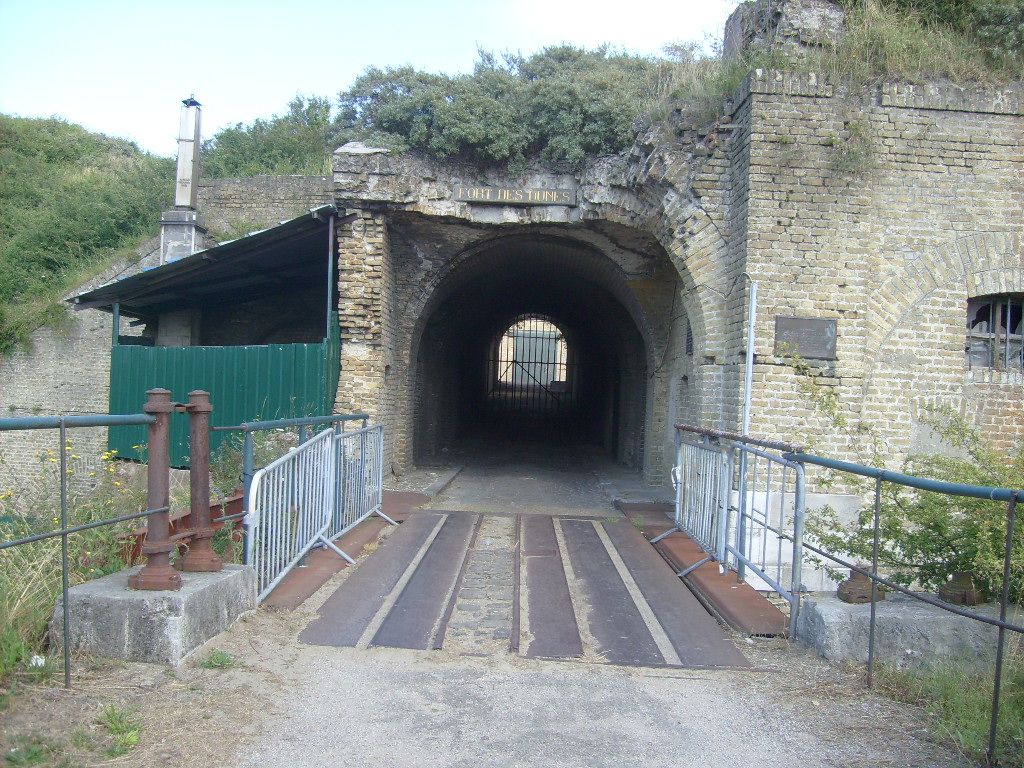
Fort Louis
Fort Louis is located south of the city of Dunkirk in the Nord department of France. This historic fortification has a layered military history dating back to the mid-17th century, reflecting the turbulent conflicts of the era and the evolution of military architecture.
Early history and construction
The original fortification at the site was a redoubt built in 1657 by the Army of Flanders, a Spanish force, intended to protect the strategic Canal de Bergues. This canal was a vital waterway for controlling access and transport in the region. The redoubt was a relatively simple defensive structure, designed for quick construction and immediate military needs.
In 1658, during the Battle of the Dunes, French forces captured the redoubt from the Spanish. Following this victory, the French recognized the strategic importance of the site and decided to replace the original redoubt with a more substantial fortification.
Vauban's redesign and fortification
In 1672, the renowned French military engineer Sébastien Le Prestre de Vauban was commissioned to design a new fort at this location. Vauban was famous for his expertise in fortification design during the Renaissance period, and his work significantly influenced European military architecture.
The new Fort Louis was constructed following Vauban's principles, featuring a moat and angled bastions designed to maximize defensive capabilities against artillery attacks. Vauban's design emphasized geometric precision and layered defenses, making the fort a formidable obstacle to enemy forces.
Military history and transformations
Fort Louis saw various military uses over the centuries. In 1712, during the War of the Spanish Succession, the fort was occupied by English forces. Two years later, in accordance with the Peace of Utrecht treaty, the fort was deliberately destroyed to prevent further military use.
Despite this destruction, the fort was rebuilt in 1744 and underwent modernization in 1783 to adapt to evolving military technologies and strategies. These upgrades ensured that Fort Louis remained relevant in the defensive network of the region.
19th and 20th century use and decline
In the early 19th century, Fort Louis was repurposed as a military prison, a function it retained until 1889. Following this period, the fort continued to serve various military purposes until it suffered significant damage during bombings in 1940 amid the conflicts of World War II.
The destruction in 1940 marked the end of Fort Louis's military role. In 1960, the municipality of Dunkirk acquired the site, initiating a transformation from a military site to a public recreational area.
Current status and visitor experience
Today, Fort Louis is part of the Bois des Forts (Wood of the Forts), a municipal park that includes another nearby fortification, Fort Vallières, located approximately 2 kilometers south along the canal. The fort retains its characteristic moat, a visible reminder of its defensive past.
While the interior of Fort Louis offers limited architectural or historical exhibits, the site provides a pleasant natural environment for visitors. The fort's grounds serve as a green space for recreation and leisure, accessible freely to the public. Its historical significance is primarily appreciated through its external features and its role in the military history of the Dunkirk region.
Architectural features
The fort's design reflects Vauban's influence, evident in its geometric layout and defensive structures such as bastions and a surrounding moat. Although much of the original fort has been lost or altered, these features highlight the military engineering advancements of the 17th century.
Relationship with fort vallières
Fort Louis and Fort Vallières collectively form the Bois des Forts, a greenbelt that preserves the military heritage of the area within a natural setting. Fort Vallières, located nearby, complements Fort Louis in historical significance and offers additional context for visitors interested in the region's defensive network.
Frequently asked questions (FAQ)
- How do I visit Fort Louis and what are the opening hours?
- Fort Louis is open daily with free access, allowing visitors to explore the grounds at their leisure without any entrance fee.
- What is the historical significance of Fort Louis?
- Fort Louis played a strategic role in the 17th and 18th centuries, especially during the Battle of the Dunes and the War of Spanish Succession, reflecting advances in military fortifications by Vauban.
- Can I see original architectural features at Fort Louis?
- Visitors can observe the fort's moat and bastion layout, which showcase Vauban's military engineering, although much of the interior structures have not been preserved.
- Is Fort Louis accessible for outdoor activities?
- Yes, the fort is now a municipal park known as Bois des Forts, offering a natural setting suitable for walking, picnicking, and enjoying the outdoors.
- What other historical sites are near Fort Louis?
- Fort Vallières, located about 2 kilometers south along the canal, is part of the same historical defensive network and is included in the Bois des Forts recreational area.
Information
Opening hours
Open daily, free access
Ticket prices
Free
Current owner
Municipality of Dunkirk
Address
Rue des Forts, Dunkirk, France
Loading map...
Visitor reviews
No reviews yet. Been here? Write the first review and help other travelers!
Write the first reviewVisited this castle? Share your experience
Your review helps other travelers and adds first-hand knowledge to our encyclopedia.