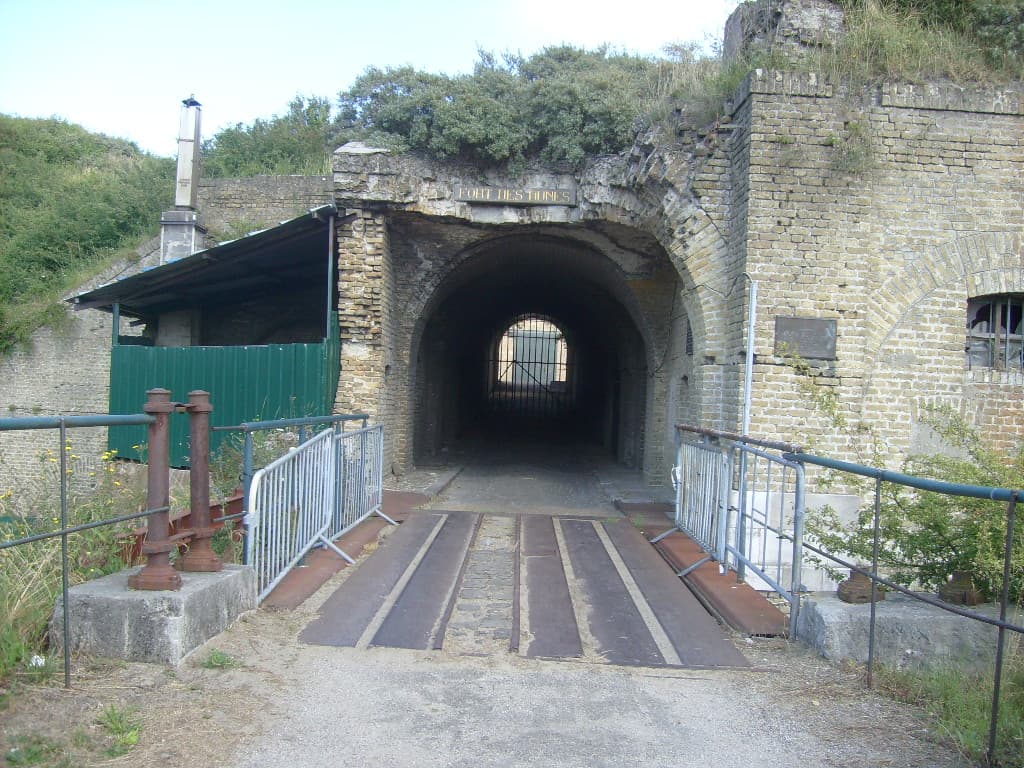
Fort des Dunes
Fort des Dunes, also known as Fort Leffrinckoucke or Fort de l'Est, is a bastioned fortress located in the commune of Leffrinckoucke in the Nord department of France. It lies approximately 6 kilometres east of Dunkirk and is situated within the coastal sand dunes just a few hundred meters from the English Channel. The fort was constructed between 1878 and 1880 as part of the Séré de Rivières system, a network of fortifications erected following the Franco-Prussian War to secure France's frontiers and coasts.
Strategic location and design
Fort des Dunes was designed as the westernmost stronghold in the Séré de Rivières defensive line, tasked with protecting the vital port city of Dunkirk from potential eastern attacks. Its rectangular plan is surrounded by a dry moat, and much of the structure is now covered by natural dunes and vegetation, blending it into the coastal landscape. The fort's design reflects late 19th-century military architectural principles emphasizing artillery defense and strong perimeter fortifications.
Architectural features
The fort was originally armed with approximately 25 artillery pieces and garrisoned by around 451 men. Its bastioned layout allowed for overlapping fields of fire, maximizing defensive coverage. Key structures included reinforced gun emplacements, barracks, ammunition magazines, and an entrance tunnel—the latter still bearing visible scars from wartime bombings.
Role during the world wars
World War I
During World War I, Fort des Dunes did not engage in combat as it was positioned well behind the front lines. It served primarily as an ammunition depot and was largely garrisoned by reservists. Its strategic value during this period was limited but vital for logistical support.
World War II and the Dunkirk evacuation
In World War II, the fort played a more active role during the Battle of France in 1940. It initially functioned as a processing center for large numbers of French and British soldiers arriving in the area. However, the fort was heavily bombed by the Luftwaffe during the Dunkirk evacuation, leading to its abandonment by Allied forces.
Following the evacuation, German forces occupied Fort des Dunes and integrated it into the Atlantic Wall coastal defenses. They constructed several additional bunkers on site. The fort was part of the defensive perimeter during the Siege of Dunkirk and remained under German control until the end of the war. After Germany's surrender, many German prisoners were detained within the fort's confines.
Post-war history and preservation
After World War II, Fort des Dunes fell into disuse and was abandoned for about two decades. Restoration efforts eventually began, driven by a local preservation association dedicated to maintaining the site's historical integrity. Today, the fort is restored and open to the public as a museum, offering visitors insight into its military history and architectural significance.
Current condition and visitor experience
The fort retains many of its original features, including the dry moat and the remnants of the entrance tunnel damaged during 1940 bombings. Its location amidst sand dunes and vegetation gives it a distinctive appearance compared to other fortifications. Visitors can explore the museum exhibits and the preserved structures for a fee, gaining a comprehensive understanding of the site's role in French military history.
Significance in French military architecture
Fort des Dunes exemplifies the modern bastioned fortress design of the late 19th century, reflecting the evolution of military engineering in response to advances in artillery technology. As part of the Séré de Rivières system, it represents France's strategic shift towards fortified defense lines after the Franco-Prussian War. Its adaptation and use during two world wars further underline its enduring military importance.
Today, Fort des Dunes stands as a preserved monument to France's coastal defenses, offering valuable insights into the country's military past and architectural heritage.
Frequently asked questions (FAQ)
- What is the historical significance of Fort des Dunes?
- Fort des Dunes is a bastioned fortress built in 1878 as part of the Séré de Rivières system to protect Dunkirk and its port. It played roles in both world wars and was later integrated into the Atlantic Wall defenses during World War II.
- Can I visit Fort des Dunes and what are the opening hours?
- Yes, Fort des Dunes is open to visitors as a museum. Visiting hours may vary seasonally, so it is best to check locally before planning your visit. The fort offers guided tours and exhibitions on its military history.
- How was Fort des Dunes used during World War II?
- During World War II, Fort des Dunes was initially used to process French and British soldiers during the Battle of France. It was heavily bombed during the Dunkirk evacuation, then occupied and fortified by German forces as part of the Atlantic Wall.
- What architectural features make Fort des Dunes unique?
- Fort des Dunes features a rectangular bastioned design surrounded by a dry moat, with artillery emplacements and an entrance tunnel that still shows damage from wartime bombings. Its location in coastal dunes adds to its distinctive character.
- Is Fort des Dunes accessible for people with limited mobility?
- Accessibility may be limited due to the fort's historic layout, uneven terrain, and preservation of original structures. Visitors with mobility concerns should inquire in advance about accommodations and accessible areas.
Photo gallery

Information
Address
Chemin du Fort, Leffrinckoucke, France
Loading map...
Visitor reviews
No reviews yet. Been here? Write the first review and help other travelers!
Write the first reviewVisited this castle? Share your experience
Your review helps other travelers and adds first-hand knowledge to our encyclopedia.


