Fort Knox, Maine
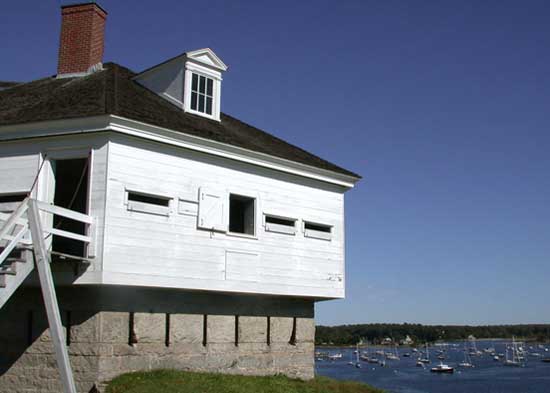
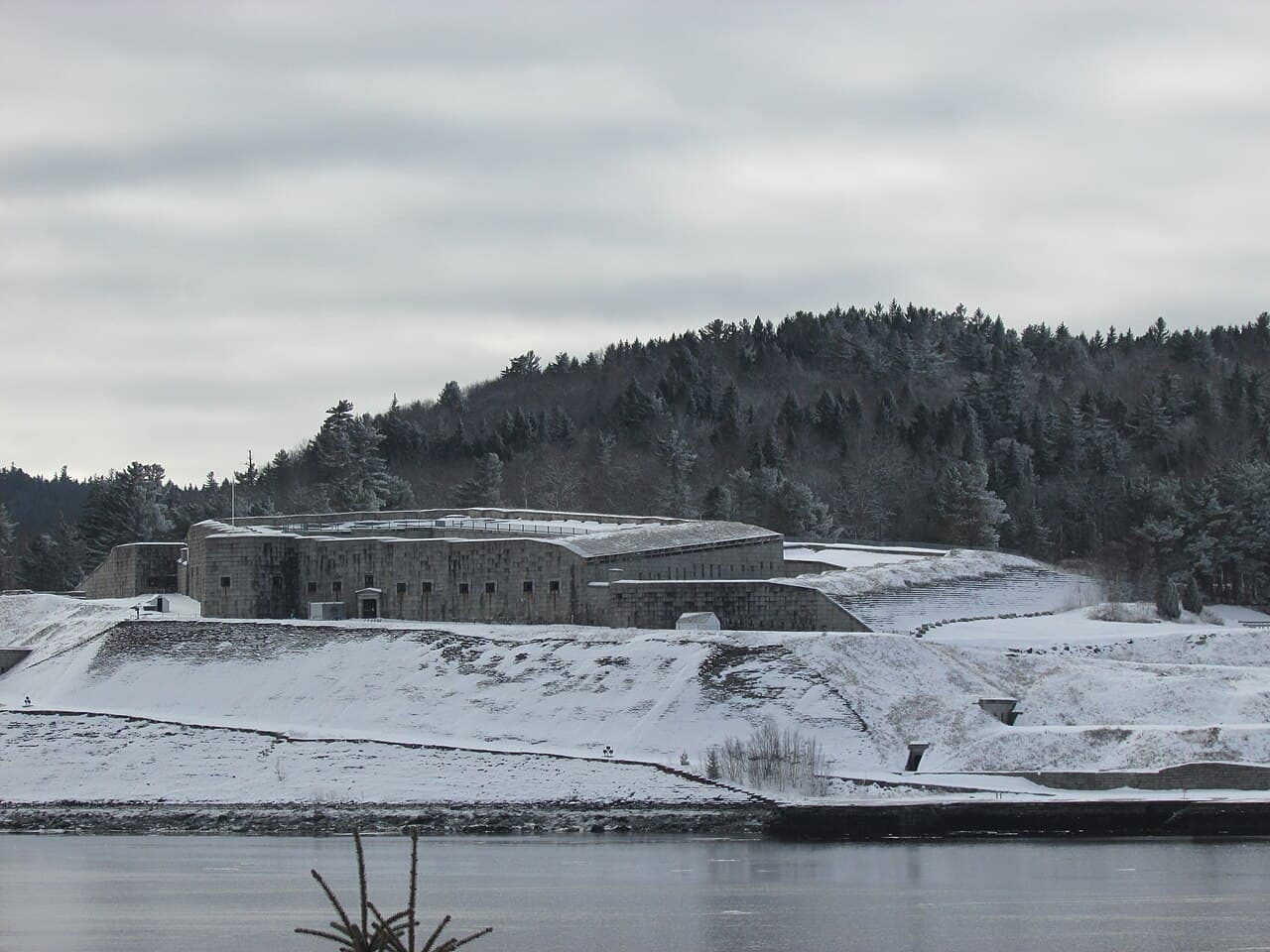
Fort Knox, located in the town of Prospect, Maine, stands as a significant example of 19th-century American coastal defense architecture. Positioned strategically on the western bank of the Penobscot River, approximately 5 miles from its mouth, this fortress was constructed between 1844 and 1869 during a period of heightened military fortification in the United States. It was the first fort in Maine to be built entirely of granite, marking a departure from earlier fortifications in the region that typically combined wood, earth, and stone materials.
Historical context and naming
The fort is named after Major General Henry Knox, a prominent figure in American history who served as the first U.S. Secretary of War and was Commander of Artillery during the American Revolutionary War. Knox spent his later years in nearby Thomaston, Maine, linking the fortress to his legacy. Fort Knox was part of a broader program of coastal defense improvements in the mid-19th century, intended to protect key harbors and waterways from potential naval threats.
Architectural design and construction
Fort Knox is a bastioned fortress, a style characterized by angular bastions projecting from the main walls to provide overlapping fields of fire, enhancing defensive capabilities. Its construction utilized massive granite blocks quarried locally, which contributed to its durability and imposing appearance. The fort's walls, bastions, and other defensive structures were designed to withstand artillery bombardment, reflecting advancements in military engineering of the period.
The fort's layout includes multiple bastions connected by curtain walls, a dry moat surrounding the structure, and heavy gates controlling access. Inside, the fort contained barracks, magazines for storing ammunition, and artillery platforms designed to mount heavy coastal guns. These features exemplify the typical mid-19th century coastal fortification intended to defend against naval attacks.
Military role and historical significance
Although Fort Knox was never engaged in combat, it served as a deterrent and a training facility for coastal artillery units. Its strategic position on the Penobscot River allowed control over access to inland areas and protected the important shipbuilding and maritime industries of Maine. The fort remained active through the American Civil War and into the late 19th century, reflecting the evolving military needs of the United States during this era.
Preservation and public access
Today, Fort Knox is preserved as Fort Knox State Park and a National Historic Landmark, recognized for its exceptional state of preservation as a granite coastal fortification. It was added to the National Register of Historic Places in 1969 and designated a National Historic Landmark on December 30, 1970. Visitors can explore the well-maintained walls, bastions, and interior spaces, gaining insight into 19th-century military architecture and coastal defense strategies.
The site also includes the observation tower for the Penobscot Narrows Bridge, which opened to the public in 2007. This modern addition offers panoramic views of the Penobscot River and surrounding landscape, linking the historic fort to contemporary infrastructure and tourism.
Architectural features and materials
The fort's use of granite is a defining characteristic, chosen for its strength and resistance to cannon fire. The massive stone blocks were precisely cut and fitted without mortar in many sections, demonstrating skilled masonry techniques. The bastions are equipped with embrasures for mounting artillery, and the walls are thick enough to absorb impact from enemy fire.
Additional features include sally ports for troop movements, casemates for protected artillery positions, and a complex system of ramps and staircases facilitating access to different levels of the fort. The dry moat surrounding the fort provided an additional layer of defense against infantry assaults.
Visiting Fort Knox
Fort Knox is open to the public seasonally, offering guided tours that explain the fort's history, architecture, and role in American coastal defense. Visitors can walk along the ramparts, enter the barracks and magazines, and learn about the daily lives of soldiers stationed there. The adjacent Penobscot Narrows Bridge observation tower adds a unique viewing experience, enhancing the site's appeal.
The park provides educational programs and hosts events that highlight the fort's historical importance. It is a valuable destination for those interested in military history, architecture, and Maine's maritime heritage.
Frequently asked questions (FAQ)
- What are the visiting hours for Fort Knox in Maine?
- Fort Knox State Park is typically open from late spring through early fall, with hours varying by season. Visitors should check the official website or local resources for current opening times and any special events.
- Is there an admission fee to enter Fort Knox?
- Admission to Fort Knox State Park is free, making it accessible to all visitors interested in exploring this historic coastal fortress.
- Can I climb the observation tower at the Penobscot Narrows Bridge?
- Yes, visitors can access the observation tower at the Penobscot Narrows Bridge, which offers panoramic views of the Penobscot River and surrounding areas. It is open seasonally and may have specific hours.
- What architectural style is Fort Knox built in?
- Fort Knox is designed as a bastioned fortress, featuring angular bastions and thick granite walls typical of mid-19th century coastal fortifications.
- Why was Fort Knox built entirely of granite?
- Granite was chosen for its durability and ability to withstand artillery bombardment, making Fort Knox one of the first granite forts in Maine and a robust coastal defense structure.
Photo gallery

Information
Current owner
State park
Loading map...
Visitor reviews
No reviews yet. Been here? Write the first review and help other travelers!
Write the first reviewVisited this castle? Share your experience
Your review helps other travelers and adds first-hand knowledge to our encyclopedia.