Fort Kearny
Fort Kearny was a significant military outpost established by the United States Army in 1848 during the 19th century, playing a crucial role in the westward expansion across the American frontier. Located near the modern city of Kearney, Nebraska, the fort was named after Colonel and later General Stephen Watts Kearny. This fortification became a vital anchor along the Great Platte River Road, serving as a key resupply and rest station for emigrants traveling the Oregon Trail and other westward routes.
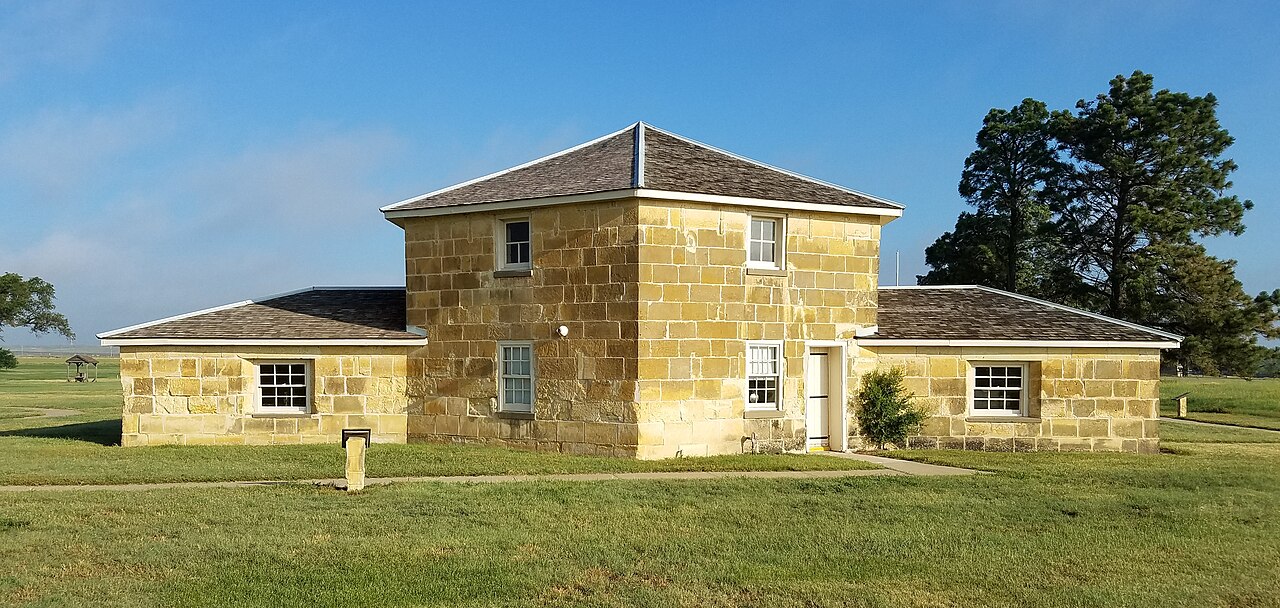
The fort's strategic placement allowed it to support wagon trains after they had completed approximately one-sixth of their journey westward. Emigrants and settlers found refuge within its bastioned fortress walls, which provided protection in an otherwise hostile and undeveloped landscape. The fort's facilities included a variety of buildings that expanded over time to more than 30 structures, encompassing barracks, officers' quarters, stables, storehouses, and administrative offices. These buildings were designed to support the fort's multiple functions as a military post, supply depot, and communication hub.
Military and civilian significance
Fort Kearny served as both a military stronghold and a civilian way station. It was instrumental in securing the safety of travelers and settlers moving west by providing a guarded resting place and a location to trade livestock and supplies. The fort also functioned as a key communications point, housing a telegraph station that linked the frontier with the eastern United States. Additionally, it was a stop for the Pony Express and the Overland Stage, two critical services that facilitated mail and passenger transport across the western territories.
Role in westward expansion
The establishment of Fort Kearny coincided with the peak period of migration along the Oregon Trail and other western routes. It provided essential military oversight and logistical support to emigrants facing the challenges of crossing vast and often dangerous terrain. The fort's presence helped to deter attacks from hostile groups and offered a semblance of order and security in the expanding frontier.
Architectural and structural features
Fort Kearny was classified as a bastioned fortress, a style characterized by angular bastions projecting outward from the main walls, allowing defenders to cover adjacent walls with overlapping fields of fire. This design was adapted to the fort's role as a defensive military installation in the open plains. The fort's layout included a central parade ground surrounded by the various functional buildings, all enclosed within protective earthworks and wooden palisades during its early years.
Over time, the fort's construction incorporated more permanent materials, including stone foundations and wooden structures, reflecting the evolving needs and resources available. The buildings were arranged to facilitate efficient military operations and civilian services, with stables and supply depots positioned for easy access by wagon trains and military units.
Legacy and preservation
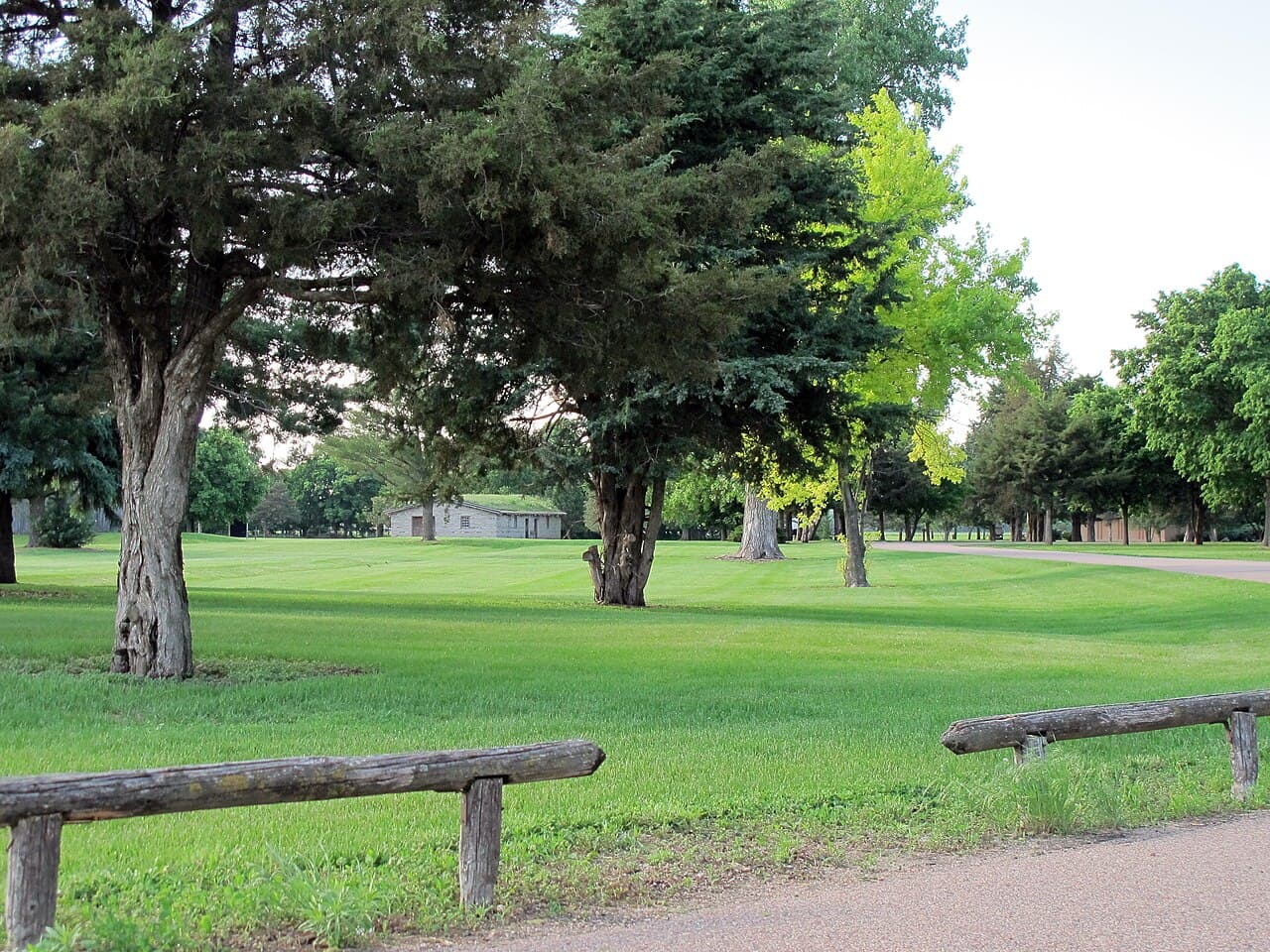
Although Fort Kearny was officially closed in 1871, its historical importance endures. The site is now preserved as Fort Kearny State Historical Park, managed by the Nebraska Game and Parks Commission. The park maintains a portion of the original fort grounds, including reconstructed buildings and interpretive exhibits that convey the fort's role in American history.
The nearby city of Kearney, Nebraska derives its name from the fort, with a slight spelling variation introduced by postal officials. The fort's legacy is commemorated through educational programs and public events held at the park, which attract visitors interested in the military, pioneering, and transportation history of the American West.
Visitor experience and educational value
Visitors to Fort Kearny State Historical Park can explore the reconstructed barracks, officers' quarters, and trading posts, gaining insight into the daily lives of soldiers and settlers during the mid-19th century. The park offers interpretive trails and displays that explain the fort's strategic importance, architectural features, and the broader context of westward migration.
The preservation efforts ensure that Fort Kearny remains an accessible and informative site, illustrating the challenges and achievements of frontier life and military presence in the American West during the 19th century.
Frequently asked questions (FAQ)
- When was Fort Kearny established and by whom?
- Fort Kearny was established in 1848 by the United States Army and named after Colonel Stephen Watts Kearny.
- What was the primary role of Fort Kearny during the 19th century?
- The fort served as a military outpost and a key resupply station for emigrants traveling west along the Oregon Trail.
- Can visitors explore Fort Kearny today?
- Yes, a portion of the original site is preserved as Fort Kearny State Historical Park, which includes reconstructed buildings and interpretive exhibits.
- Why is the nearby city spelled 'Kearney' instead of 'Kearny'?
- The spelling 'Kearney' was introduced by postal officials who consistently misspelled the town name after the fort.
- What architectural style characterizes Fort Kearny?
- Fort Kearny is classified as a bastioned fortress, featuring angled bastions designed for defensive coverage.
Photo gallery

Information
Current owner
Nebraska Game and Parks Commission
Loading map...
Visitor reviews
No reviews yet. Been here? Write the first review and help other travelers!
Write the first reviewVisited this castle? Share your experience
Your review helps other travelers and adds first-hand knowledge to our encyclopedia.