Fort Henry
Fort Henry National Historic Site is prominently situated on Point Henry in Kingston, Ontario, Canada. This elevated position commands a strategic vantage near the mouth of the Cataraqui River, where it flows into the St. Lawrence River at the eastern end of Lake Ontario. The fort and its location derive their name from Henry Hamilton, a former Lieutenant Governor of the Province of Quebec.
The origins of Fort Henry trace back to the War of 1812, when a smaller fortification was constructed to defend the Kingston Royal Naval Dockyard on Point Frederick from potential American attacks. This naval dockyard later became the site of the present-day Royal Military College of Canada. The initial fort's purpose was twofold: to protect the dockyard and to monitor maritime traffic along the vital waterways of the St. Lawrence River and Lake Ontario.
Construction of the larger fort in the 1830s
In the 1830s, a more extensive and formidable fortification replaced the original structure. This new bastioned fortress was designed to maintain the defense of the naval dockyard and to secure the southern entrance to the Rideau Canal, a crucial military and commercial waterway connecting Ottawa to Kingston. The fort's design reflects the military engineering principles of the period, incorporating bastions and thick stone walls to withstand artillery fire and provide overlapping fields of defensive fire.
Architectural features and defensive design
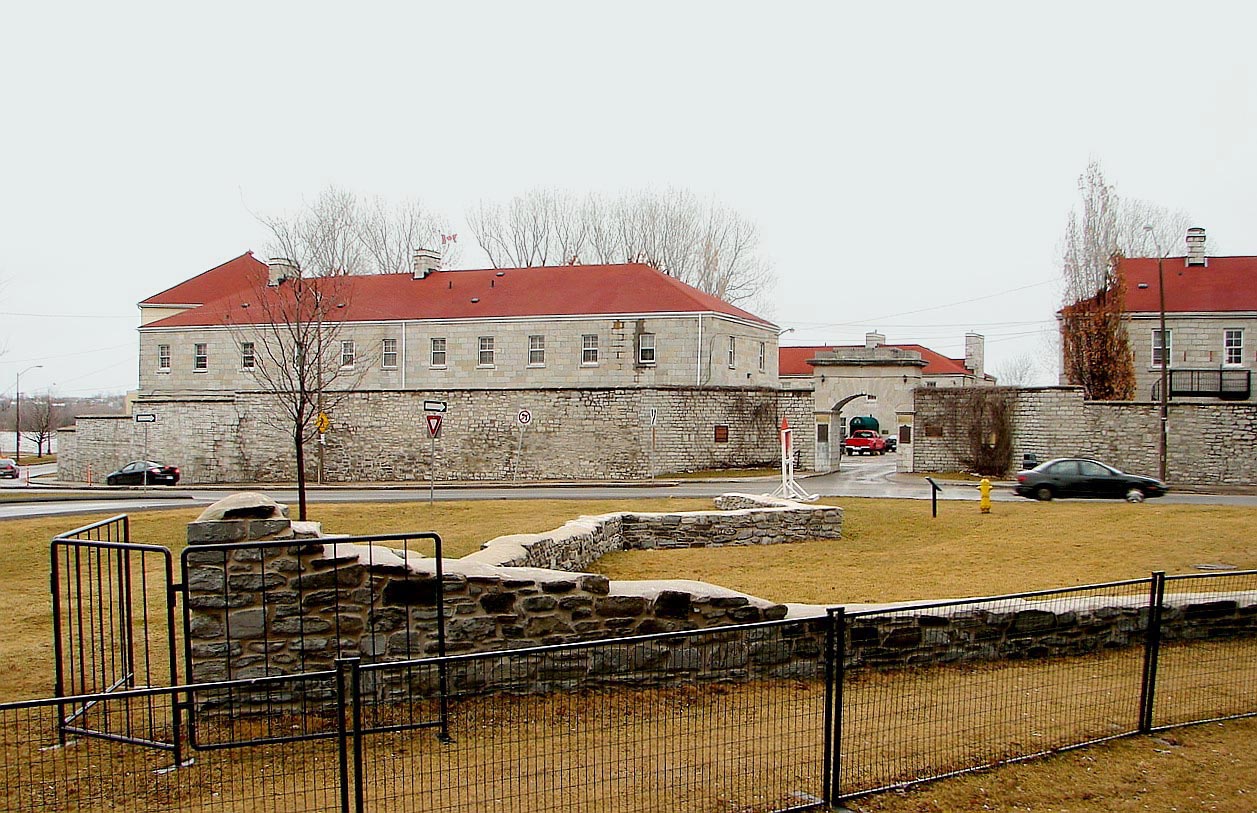
The fort's bastioned design includes multiple angled bastions that project outward from the curtain walls, enabling defenders to cover adjacent walls with gunfire and eliminate blind spots. The walls are constructed of robust stone masonry, providing substantial resistance to cannon fire. The fort is surrounded by a deep dry moat, which adds an additional layer of defense against infantry assault.
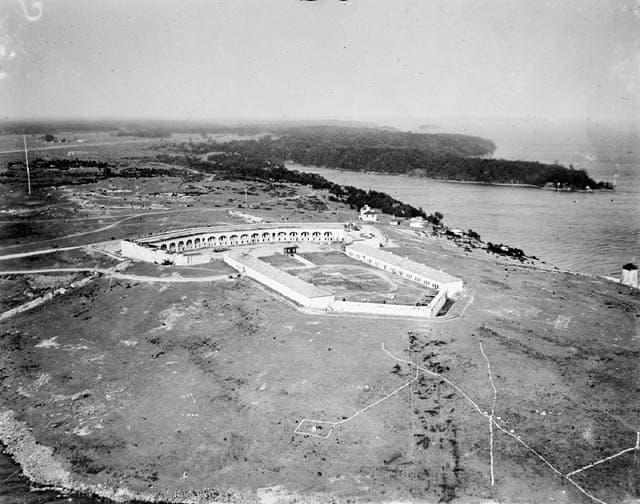
Access to the fort is controlled through a heavily fortified gatehouse featuring defensive elements such as machicolations and firing slits. Inside, the fort contains barracks for soldiers, magazines for storing ammunition, and various support buildings arranged around a central parade ground. The layout was designed to facilitate efficient military operations and rapid deployment of troops.
Historical significance and military role
Fort Henry played a critical role in the defense strategy of British North America throughout the 19th century. Its position overseeing the St. Lawrence River and the Rideau Canal made it a key point for controlling naval and commercial traffic, particularly during periods of tension with the United States.
Although Fort Henry never saw battle, its presence served as a strong deterrent against potential invasions or raids. The fort was garrisoned by British and later Canadian troops, adapting over time to changes in military technology and geopolitical threats. It remained an active military installation into the early 20th century.
Restoration and current status
In the 1930s, Fort Henry underwent extensive restoration to preserve its historical and architectural integrity. The restoration aimed to return the fort to its 1860s appearance, reflecting its peak period of military readiness. Today, Fort Henry is a National Historic Site of Canada and a popular tourist destination, offering visitors a chance to explore its well-preserved bastioned walls, military buildings, and historic interiors.
The site hosts living history demonstrations, including military drills, musket firing, and guided tours that provide insight into 19th-century military life. Fort Henry also serves as a venue for cultural events and educational programs, connecting visitors with Canada's colonial and military heritage.
Geographical and cultural context
Fort Henry's location on Point Henry offers commanding views over the Lake Ontario shoreline and the surrounding landscape. Its strategic position was chosen to maximize control over naval access routes and to protect critical infrastructure such as the Kingston Royal Naval Dockyard and the Rideau Canal.
The fort is part of a broader network of 19th-century military fortifications in the region, reflecting the geopolitical tensions of the era. Its preservation contributes to understanding the military architecture and defense strategies employed in British North America during the 19th century.
Frequently asked questions (FAQ)
- How do I get to Fort Henry in Kingston?
- Fort Henry is located on Point Henry in Kingston, Ontario. Visitors can reach the site by car, taxi, or public transit from downtown Kingston. There is parking available on-site.
- What is the historical significance of Fort Henry?
- Fort Henry was built to defend the Kingston Royal Naval Dockyard and control access to the Rideau Canal and St. Lawrence River. It played a key role in 19th-century military defense but never saw combat.
- Can I tour the interior of Fort Henry?
- Yes, visitors can explore the fort's interior, including barracks, magazines, and defensive structures. Guided tours and living history demonstrations are available during the open season.
- When is the best time to visit Fort Henry?
- The fort is open daily from 9:00 to 17:00, with the summer months offering the most activities and demonstrations. Spring and fall visits are quieter but still informative.
- Are there any special events at Fort Henry?
- Fort Henry hosts living history events, military reenactments, and cultural programs throughout the year, especially in summer. Check the official schedule for upcoming events.
- What are the ticket prices for Fort Henry?
- Admission fees are CA$14 for adults, CA$7 for children, and CA$12 for seniors. Group rates and seasonal passes may be available.
Photo gallery

Photo by McCarthy Aero Service Ltd.•Public domain
Information
Opening hours
9:00-17:00, daily
Ticket prices
Adults CA$14, children CA$7, seniors CA$12
Current owner
Parks Canada
Loading map...
Visitor reviews
No reviews yet. Been here? Write the first review and help other travelers!
Write the first reviewVisited this castle? Share your experience
Your review helps other travelers and adds first-hand knowledge to our encyclopedia.