Fort Frontenac
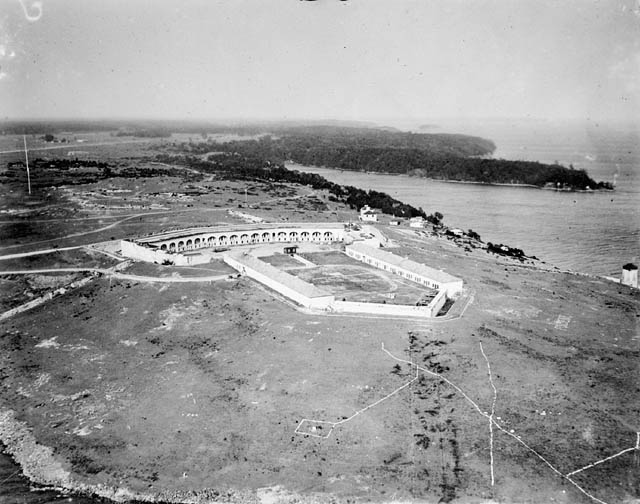
Fort Frontenac stands as a significant example of a bastioned fortress constructed in the 17th century during the Renaissance period. Located at the strategic confluence where the Cataraqui River meets the St. Lawrence River at the western end of the La Salle Causeway in present-day Kingston, Ontario, Canada, the fort was originally established by the French in July 1673. This site, traditionally known as Cataraqui, was chosen for its critical position controlling access to the Great Lakes and the interior of North America.
The initial fortification, known as Fort Cataraqui, was a simple wooden palisade designed primarily as a trading post and military outpost. It was soon renamed Fort Frontenac in honor of Louis de Buade de Frontenac, the Governor of New France, who played a pivotal role in its construction and expansion. The fort's design evolved over time, reflecting the military architectural advances of the Renaissance and adapting to the needs of colonial defense and trade.
Architectural features and fortifications
Fort Frontenac was originally constructed with wooden palisades but was later rebuilt and reinforced with stone and earthworks to form a bastioned fortress, a style characterized by angled bastions that allowed defenders to cover all approaches with cannon fire and reduce blind spots. This design was typical of European military engineering of the period, influenced by the work of architects like Vauban, though the fort's initial construction predated some of Vauban's innovations.
The fort's layout included defensive walls, bastions, and ramparts, along with interior buildings such as barracks, a powder magazine, and storage facilities. Its position on a promontory overlooking the river provided natural defensive advantages, while the surrounding waters served as a moat-like barrier against attack.
Historical context and military significance
Fort Frontenac was established to secure French interests in the fur trade and to assert control over the important waterways leading into the interior of the continent. It served as a key military and trading hub linking New France with indigenous peoples and European markets.
In 1689, the fort was abandoned and razed during conflicts with the Iroquois Confederacy but was rebuilt in 1695 to re-establish French presence in the region. During the Seven Years' War, the fort was captured and destroyed by British forces in 1758, marking a significant loss for French colonial power in North America.
Following the British conquest, the fort lay in ruins until it was reconstructed by the British in 1783. This reconstruction adapted the fort to British military standards and it continued to serve as a strategic military installation through the 19th century.
Transition to canadian military use and preservation
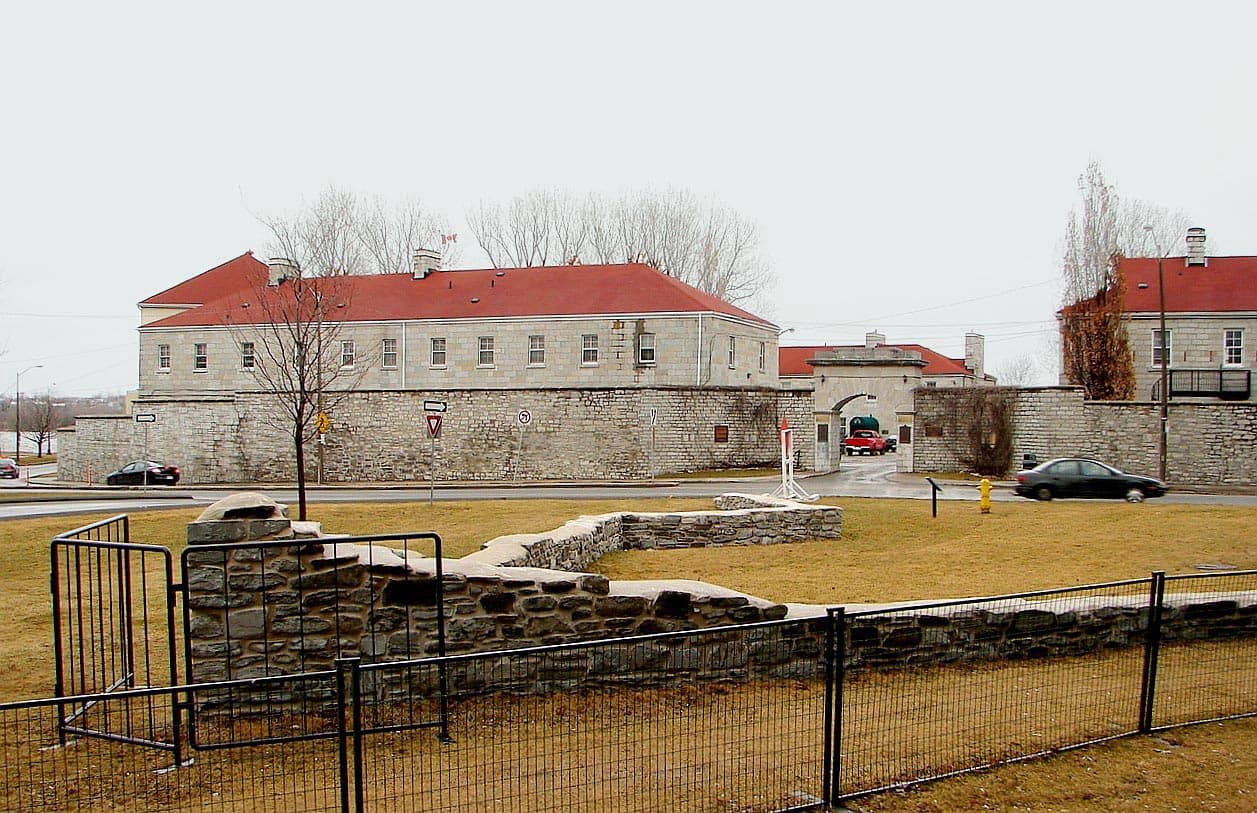
In 1870–71, control of Fort Frontenac was transferred to the Canadian military. Since then, it has been used for various military purposes, including training and administration. The fort remains a notable historic site within Kingston, reflecting layers of colonial and military history.
Today, Fort Frontenac is recognized for its heritage value and its role in the development of Canadian military architecture. Although much of the original structure has been altered or lost, the site retains elements that illustrate its evolution from a wooden trading post to a bastioned fortress.
Visitor information and historical legacy
Fort Frontenac's location in Kingston makes it accessible for visitors interested in Canadian history and military architecture. While the fort is primarily a military facility, its historical significance is commemorated through plaques and interpretive displays in the area.
The fort's story reflects the broader narrative of European colonization, indigenous relations, and military conflict in North America. It serves as a tangible link to the past, illustrating the strategic importance of fortifications in shaping the continent's history.
Frequently asked questions (FAQ)
- What is the historical significance of Fort Frontenac?
- Fort Frontenac was a key French military and trading post established in 1673 to control access to the Great Lakes and the interior of North America.
- Can I visit Fort Frontenac today?
- Fort Frontenac is primarily a military site, so public access is limited. However, visitors can view the site from nearby areas and learn about its history through local museums and plaques.
- When was Fort Frontenac originally built?
- The fort was originally constructed in July 1673 by the French at the mouth of the Cataraqui River, now part of Kingston, Ontario.
- Why was Fort Frontenac rebuilt multiple times?
- The fort was abandoned and destroyed during conflicts in 1689 and 1758, then rebuilt by the French and later by the British to maintain strategic control of the region.
- What architectural style characterizes Fort Frontenac?
- Fort Frontenac reflects Renaissance military architecture with bastioned fortifications designed to improve defense against artillery and infantry attacks.
Photo gallery

Information
Current owner
Canadian military
Loading map...
Visitor reviews
No reviews yet. Been here? Write the first review and help other travelers!
Write the first reviewVisited this castle? Share your experience
Your review helps other travelers and adds first-hand knowledge to our encyclopedia.