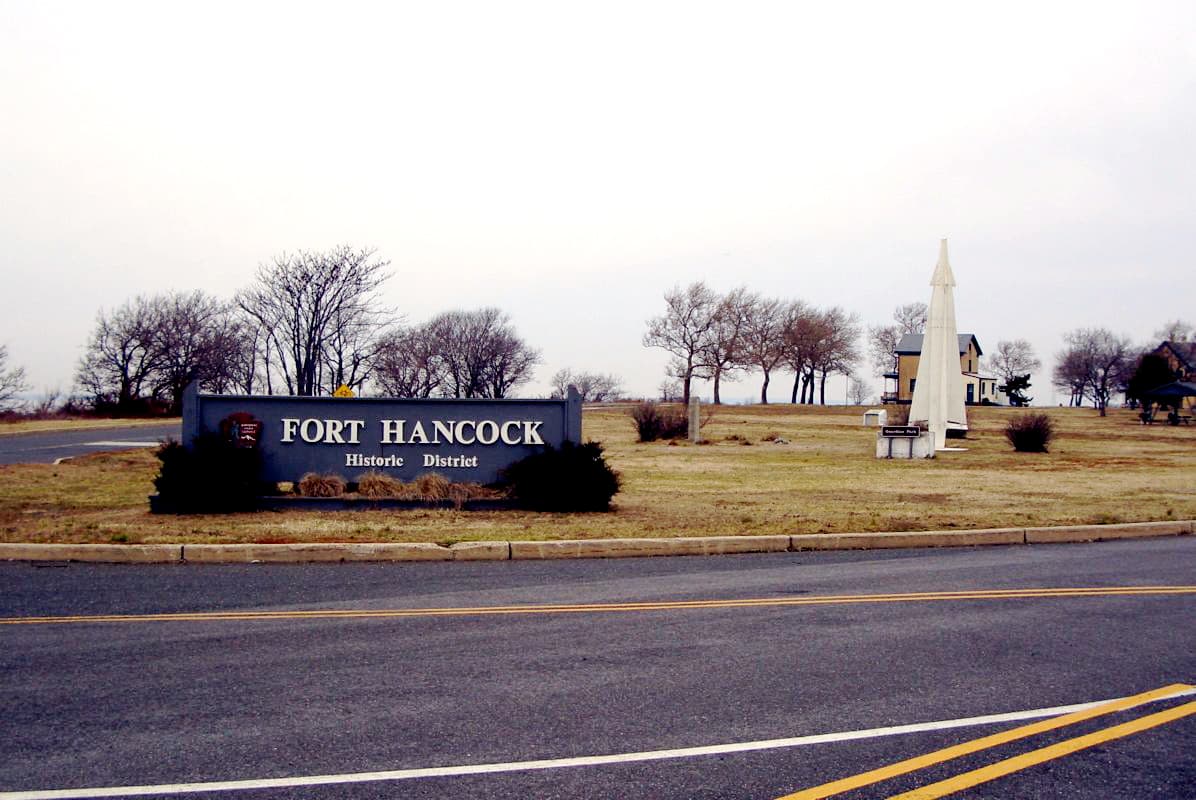
Fort Hancock
Fort Hancock is a significant historic military installation located at Sandy Hook in Middletown Township, New Jersey. Established as a coastal artillery base, it played a crucial role in defending the Atlantic coast and the strategic entrance to New York Harbor. The fort's first gun batteries became operational in 1896, marking the beginning of its active service period that extended until 1950. During this time, Fort Hancock was an integral part of the Harbor Defenses of New York and its predecessor organizations, which were responsible for protecting one of the United States' most important ports.
Historical background and military significance
The origins of Fort Hancock trace back to the earlier Fort at Sandy Hook, which was constructed between 1857 and 1867. This fortification was eventually demolished starting in 1885 to make way for the more modern installation that would become Fort Hancock. The new fort was designed to meet the evolving demands of coastal defense during a period of rapid military technological advancements in the late 19th century.
Fort Hancock's strategic location on Sandy Hook allowed it to control the vital maritime approaches to New York City. Throughout its operational years, the fort housed a variety of artillery pieces, including large caliber coastal guns mounted in bastioned fortifications, designed to withstand naval bombardment and provide overlapping fields of fire. These defenses were part of the broader Endicott Program, a nationwide initiative to modernize the United States' coastal fortifications in response to emerging naval threats.
Architectural features and fortifications
As a bastioned fortress, Fort Hancock exhibits classic features of late 19th-century coastal defense architecture. The fort's layout includes multiple gun batteries positioned to cover the approaches to New York Harbor, with reinforced concrete emplacements and protective earthworks. The design emphasizes both offensive and defensive capabilities, incorporating disappearing gun carriages that allowed artillery to be hidden behind parapets when not firing.
The fort also included extensive support facilities such as barracks, ammunition magazines, observation posts, and command centers. These structures were built to accommodate the large garrison required to operate the artillery and maintain the fort's readiness. The integration of these buildings within the fort's defensive perimeter reflects careful planning to ensure operational efficiency and protection against potential attacks.
Sandy hook proving ground
Adjacent to Fort Hancock was the Sandy Hook Proving Ground, operated by the United States Army from 1874 to 1919. This facility was used for testing artillery, ammunition, and other military ordnance. The proximity of the proving ground to Fort Hancock allowed for practical experimentation and rapid implementation of new artillery technologies within the fort's defenses.
The sandy hook light and cultural heritage
Within the grounds of Fort Hancock stands the Sandy Hook Light, constructed in 1764. It holds the distinction of being the oldest working lighthouse in the United States. This lighthouse has guided countless vessels safely through the treacherous waters near Sandy Hook for over two and a half centuries. Its presence on the fort's grounds adds a layer of maritime heritage and architectural interest to the site.
Post-military use and preservation
After its decommissioning in 1950, Fort Hancock transitioned from an active military installation to a historic site. It is now part of Fort Hancock Memorial Park, which preserves the fort's extensive structures and grounds for public education and commemoration. The park offers visitors a chance to explore the fort's remaining batteries, barracks, and other facilities, providing insight into coastal defense history and military architecture.
The preservation efforts have maintained much of the fort's character, allowing for interpretation of its role in national defense during the Modern period. The site's combination of military, architectural, and maritime history makes it a unique cultural landmark in the region.
Frequently asked questions (FAQ)
- What is the historical significance of Fort Hancock?
- Fort Hancock was established in the late 19th century as part of the coastal defense system for the United States. It played a crucial role during World War II, serving as a military installation to protect New York Harbor from potential attacks.
- When was Fort Hancock built?
- Fort Hancock was constructed between 1891 and 1895. It was part of the larger Sandy Hook Proving Ground and operated until it was decommissioned in 1974.
- What are the opening hours of Fort Hancock?
- Fort Hancock is typically open to visitors from 10 AM to 5 PM, Wednesday through Sunday. However, hours may vary seasonally, so it’s recommended to check the official website for the most current information before planning your visit.
- Is it possible to access Fort Hancock with a wheelchair?
- Yes, Fort Hancock is committed to accessibility, and many areas of the site are wheelchair accessible. However, some historic structures may present challenges, so it is advisable to contact the visitor center for specific accessibility information before your visit.
- Can I purchase tickets in advance for Fort Hancock?
- Yes, tickets for guided tours and special events at Fort Hancock can be purchased in advance online through the official website. This is recommended to ensure your spot, particularly during peak visiting seasons.
- What is the best time to visit Fort Hancock?
- The best time to visit Fort Hancock is during the spring and fall when the weather is mild, and the crowds are smaller. Summer can be quite busy, but it also offers a variety of special programs and events.
- Are there any nearby attractions to visit while at Fort Hancock?
- Yes, visitors to Fort Hancock can also explore the nearby Sandy Hook Beach and the historic Sandy Hook Lighthouse. Additionally, the Gateway National Recreation Area offers beautiful trails and scenic views of the area.
Photo gallery

Photo by Wikijazz at en.wikipedia•Public domain
Information
Loading map...
Visitor reviews
No reviews yet. Been here? Write the first review and help other travelers!
Write the first reviewVisited this castle? Share your experience
Your review helps other travelers and adds first-hand knowledge to our encyclopedia.



