Fort Christian
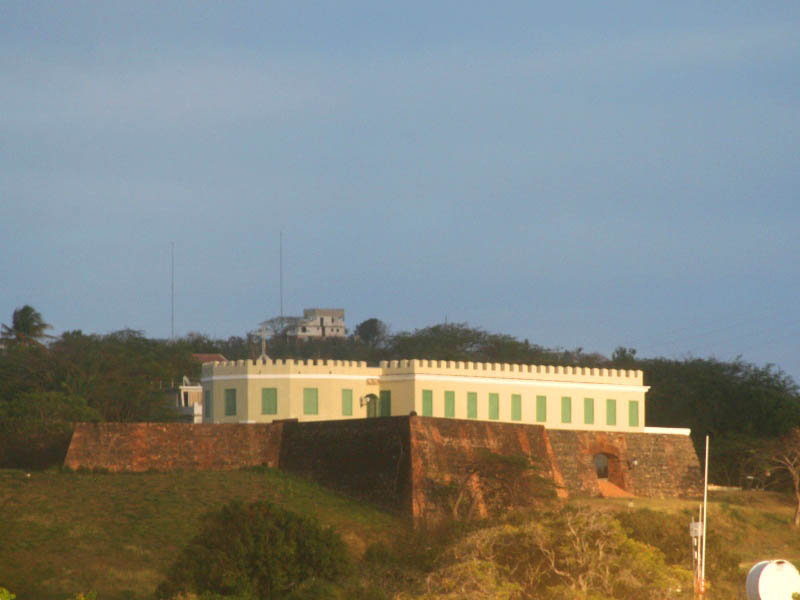
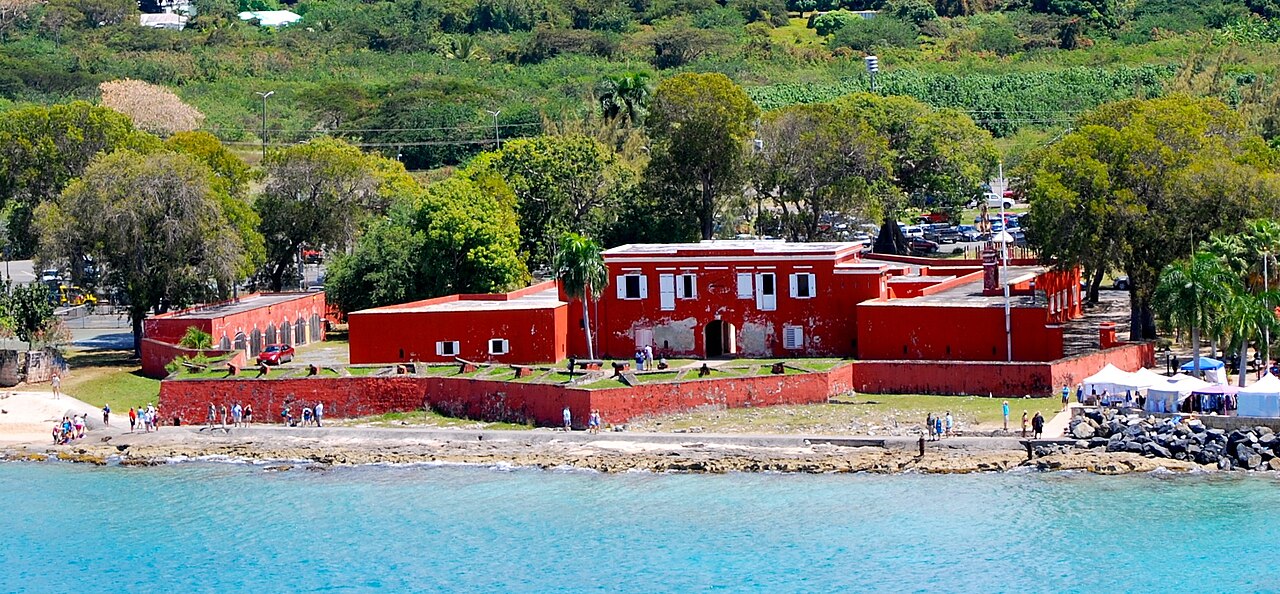
Fort Christian stands as the oldest standing structure in the U.S. Virgin Islands, located in Charlotte Amalie, Saint Thomas. Constructed between 1672 and 1680 by the Dano-Norwegian colonial administration, this bastioned fortress was integral to the island's defense and governance during the entire period of Danish rule, which lasted until the islands were sold to the United States in 1917.
Architectural design and fortifications
Fort Christian exemplifies the renaissance military architecture adapted for the Caribbean context. Its design features thick masonry walls constructed from local stone and coral, arranged in a roughly rectangular layout with bastions at the corners for defensive artillery placement. The fort's walls are punctuated by gun ports and embrasures designed to allow cannon fire while providing protection for the garrison.
The complex includes a central courtyard surrounded by various chambers that historically served as barracks, storage rooms, a chapel, and administrative offices. The bastions provided overlapping fields of fire to defend against naval attacks and potential land-based assaults. Its strategic location overlooking Charlotte Amalie harbor allowed control over maritime access to the island.
Historical significance and colonial role
Fort Christian was the first major fortification constructed by the Dano-Norwegian colonial government after establishing a permanent settlement on Saint Thomas. It played a crucial role in protecting the colony from rival European powers and pirates throughout the 17th and 18th centuries. The fort also functioned as the administrative center of the island, housing government offices and serving as the residence for the governor.
Throughout its history, the fort witnessed several military engagements and served as a symbol of Danish sovereignty in the Caribbean. Its presence helped secure the economic interests of the colony, particularly in the sugar trade, which was central to the island's prosperity during the colonial period.
Transition to american administration and preservation
Following the 1917 transfer of the Virgin Islands to the United States, Fort Christian ceased its military function but retained its importance as a cultural and historical landmark. It was designated as a U.S. National Historic Landmark in 1977, recognizing its significance in American and Danish colonial history.
From 1960 to 1975, the fort was part of the Charlotte Amalie National Historic Site, also known as the St. Thomas National Historic Site. After the site was disbanded, ownership was transferred to the Virgin Islands government, and it is now managed as a territorial park. Fort Christian remains a key contributing property within the Charlotte Amalie Historic District.
Museum and cultural heritage
Today, Fort Christian houses the St. Thomas Museum, which preserves and exhibits artifacts, artworks, and documents from the Dano-Norwegian colonial era. The museum offers visitors insights into the island's colonial past, including its military history, social life, and economic development. Exhibits include period weaponry, maps, furniture, and artworks that illustrate the cultural heritage of the Virgin Islands during Danish rule.
The fort's well-preserved structure and its museum functions make it a significant educational resource and tourist attraction, connecting present-day visitors with the complex history of Caribbean colonialism and the strategic importance of Saint Thomas in the Atlantic world.
Frequently asked questions (FAQ)
- What are the visiting hours of Fort Christian?
- Fort Christian is typically open to visitors daily from 9:00 AM to 4:30 PM. It is advisable to check locally for any seasonal changes or special closures before planning your visit.
- What can I see at the St. Thomas Museum inside Fort Christian?
- The museum features artifacts, artworks, and historical exhibits from the Dano-Norwegian colonial period, including weaponry, maps, and furniture that illustrate the island's history.
- Is Fort Christian accessible to people with mobility challenges?
- Efforts have been made to improve accessibility at Fort Christian, including ramps and pathways, but some areas may still be challenging due to the historic nature of the structure.
- Why was Fort Christian built?
- Fort Christian was constructed to defend the early Danish colonial settlement on Saint Thomas from naval attacks, pirates, and rival European powers, serving both military and administrative functions.
- When was Fort Christian designated a National Historic Landmark?
- Fort Christian was designated a U.S. National Historic Landmark in 1977 in recognition of its historical and architectural significance.
Photo gallery
Public domain
Information
Current owner
Virgin Islands government
Loading map...
Visitor reviews
No reviews yet. Been here? Write the first review and help other travelers!
Write the first reviewVisited this castle? Share your experience
Your review helps other travelers and adds first-hand knowledge to our encyclopedia.