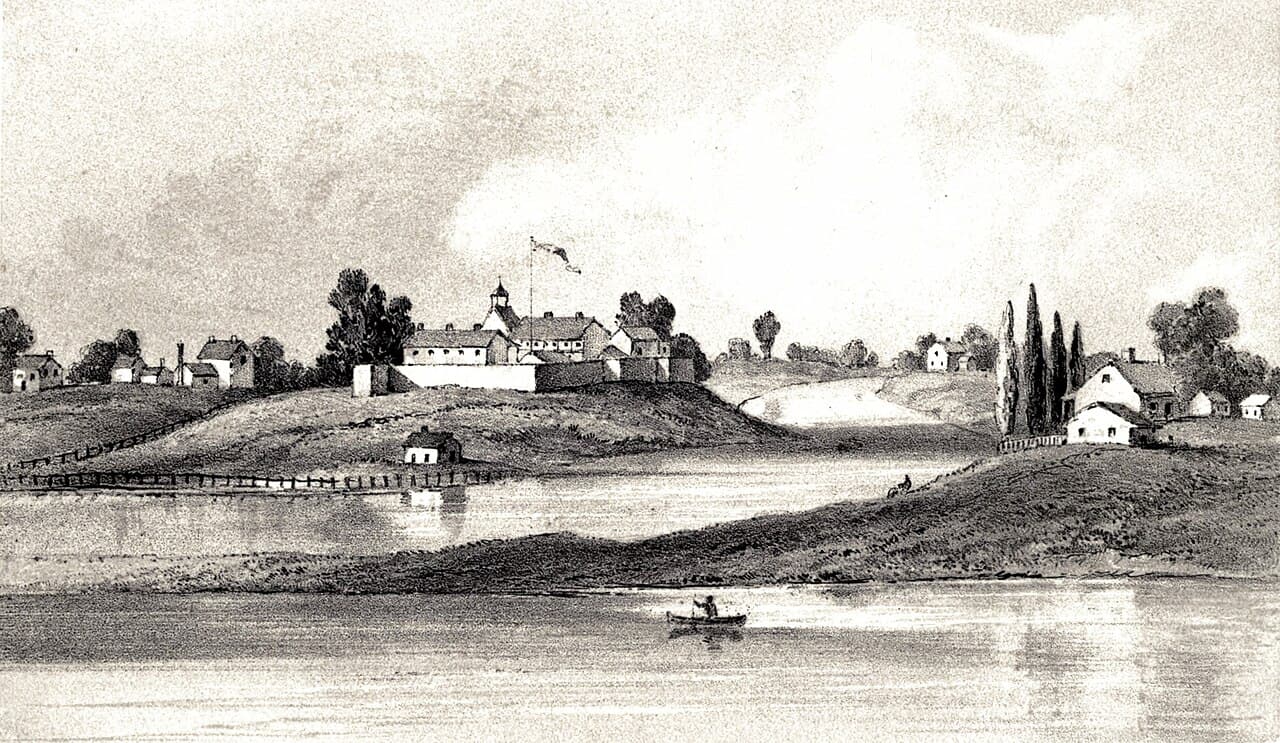
Fort Dearborn
Fort Dearborn was a significant early 19th-century United States military fortification located beside the Chicago River in what is now downtown Chicago, Illinois. Established in 1803 by U.S. troops under Captain John Whistler, the fort was named in honor of Henry Dearborn, the United States Secretary of War at the time. It was intended to establish a military presence in the Northwest Territory and to protect American interests in the rapidly developing frontier region.
Construction and strategic importance
The original Fort Dearborn was constructed as a wooden stockade fort, typical of early American frontier military architecture. It featured a rectangular layout with bastioned corners, wooden palisades, and blockhouses designed to provide defensive positions. The fort's location on the Chicago River was strategically chosen to control access to the interior of the continent via the Great Lakes and to serve as a trading post and military outpost.
Fort Dearborn played a key role in early American expansion and frontier defense. It was a focal point for interactions between the United States government, Native American tribes, and settlers moving westward. The fort's presence helped assert U.S. sovereignty in the region during a period of territorial disputes and shifting alliances.
The battle of fort dearborn and aftermath
During the War of 1812, Fort Dearborn was the site of a significant conflict known as the Battle of Fort Dearborn in August 1812. The fort was attacked by a coalition of Native American forces allied with the British. The battle resulted in the destruction of the original fort and heavy casualties among the American garrison and civilians attempting to evacuate.
Following the battle, the United States rebuilt Fort Dearborn on the same site in 1816. The new fort maintained similar defensive features but incorporated improvements based on lessons learned from the earlier conflict. It served as a military post until its decommissioning in 1837, as the frontier moved further west and Chicago grew into a major urban center.
Decline and destruction
After its military use ended, Fort Dearborn's site underwent significant changes. In 1855, parts of the fort were lost due to the widening of the Chicago River, a major engineering project to accommodate increasing commercial traffic. A fire in 1857 further damaged the remaining structures.
The final destruction of Fort Dearborn's physical remains occurred during the Great Chicago Fire of 1871, which devastated much of the city. By this time, the fort was already in ruins and no longer served any military function. Today, no visible structures remain at the site.
Legacy and historical significance
The site of Fort Dearborn is recognized as a Chicago Landmark within the Michigan–Wacker Historic District. It is located at the southern end of the DuSable Michigan Avenue Bridge, marking the historical footprint of the fort. While the fort itself no longer stands, its role in early American frontier history, military defense, and the development of Chicago is commemorated through markers and historical interpretation.
Fort Dearborn represents an important chapter in the story of American expansion, Native American relations, and urban growth. Its history reflects the challenges of frontier life, the impact of war, and the transformation of Chicago from a military outpost to a major metropolis.
Frequently asked questions (FAQ)
- What is the historical significance of Fort Dearborn?
- Fort Dearborn, established in 1803, played a crucial role in the early settlement of Chicago and was a strategic military outpost during the War of 1812. It served as a protector for American settlers and facilitated trade and transportation in the region. Today, it stands as a symbol of early American frontier life.
- When was Fort Dearborn built?
- Fort Dearborn was constructed in 1803 and was originally intended to secure the growing American presence in the area. It was rebuilt several times over the years, reflecting the changing needs of the military and the community. The fort's history is marked by its destruction and rebuilding, showcasing its importance to the region.
- Can I visit Fort Dearborn?
- Yes, Fort Dearborn is accessible to the public for tours and educational visits. Visitors can explore the fort's historical grounds and learn about its significance through guided tours and interpretive programs. It’s a great opportunity for history enthusiasts and families alike.
- What are the opening hours for Fort Dearborn?
- Fort Dearborn is typically open to visitors from 9 AM to 5 PM, Wednesday through Sunday. However, hours may vary seasonally or due to special events, so it’s advisable to check the official website before planning your visit. Make sure to arrive early to fully enjoy the site.
- Is Fort Dearborn accessible for visitors with disabilities?
- Yes, Fort Dearborn is committed to accessibility and provides facilities for visitors with disabilities. Wheelchair access is available in designated areas, and staff are trained to assist guests as needed. It's recommended to contact the fort in advance for any specific accessibility requests.
- What is the best time to visit Fort Dearborn?
- The best time to visit Fort Dearborn is during the spring and fall when the weather is mild, and the landscape is particularly beautiful. These seasons often feature special events and reenactments that enhance the visitor experience. Summer can be busy, so plan accordingly if you prefer a quieter visit.
- Are there any nearby attractions to Fort Dearborn?
- Yes, Fort Dearborn is located near several attractions, including the Chicago Riverwalk and the Museum Campus, which features the Field Museum and the Shedd Aquarium. Visitors can easily explore the vibrant downtown Chicago area, filled with dining and shopping options, after their visit to the fort. It's an excellent opportunity to experience the rich history and culture of the city.
- What are the ticket prices for visiting Fort Dearborn?
- Admission to Fort Dearborn is generally free, but there may be fees for special events, guided tours, or educational programs. It's best to check the official website for the most current pricing information and any special offers. This makes it an affordable option for families and history buffs alike.
Photo gallery

Photo by Napoleon Sarony•Public domain
Information
Loading map...
Visitor reviews
No reviews yet. Been here? Write the first review and help other travelers!
Write the first reviewVisited this castle? Share your experience
Your review helps other travelers and adds first-hand knowledge to our encyclopedia.



