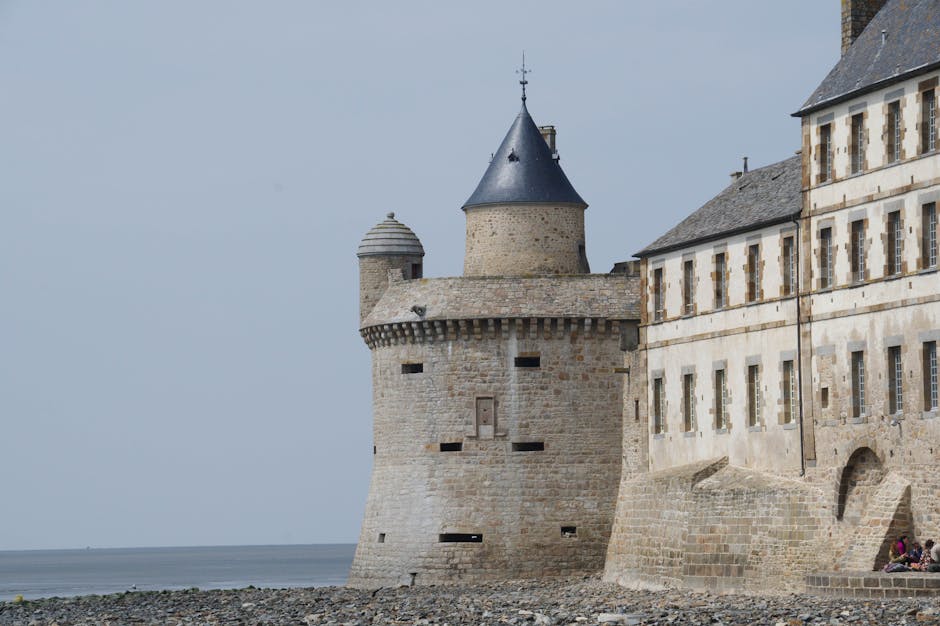
Fort de Pierre-Levée
Fort de Pierre-Levée, also known as La Citadelle, is a significant 19th-century fortress located on the Île d'Yeu off the coast of western France. Constructed between 1858 and 1866, this modern military structure was designed to accommodate up to 400 soldiers, reflecting the strategic military priorities of France during the mid-19th century. Its robust defensive architecture was intended to protect the island and its surrounding waters from naval threats, a concern heightened by France's geopolitical situation at the time.
The fortress features typical military architectural elements of the period, including thick stone walls, bastions for artillery placement, and a compact layout optimized for defense and troop accommodation. Its location on the island provided a commanding view of the sea, crucial for early detection of enemy vessels. The design reflects the evolution of fortification technology in the post-Napoleonic era, integrating advances in artillery and masonry to withstand bombardment.
Historical role and military use
After its completion, Fort de Pierre-Levée primarily functioned as a military garrison and defensive stronghold. From 1871 onward, its role expanded to include use as a barracks and a prison, adapting to changing military and political needs. The fortress's prison function became particularly notable during the 20th century, when it housed several prisoners of significance.
Philippe Pétain and the fortress prison
One of the most historically significant figures associated with the fort is Philippe Pétain (1856-1951), a French general who rose to the rank of Marshal of France. Pétain is best known for his leadership during World War I and later as the Chief of State of Vichy France during World War II. Following the war, he was imprisoned at Fort de Pierre-Levée, where he spent his final years until his death in 1951. His imprisonment at the fort marks it as a site of considerable historical interest, linking it directly to major events in French and European history.
Architectural features and preservation
The fortress's construction exhibits the military architectural style of the modern period, characterized by functional design focused on defense and durability rather than ornamental features. The thick masonry walls and strategic positioning of bastions and gun emplacements demonstrate the adaptation to artillery warfare prevalent in the 19th century. The internal layout includes barracks, guardrooms, and prison cells, reflecting its dual role as a military installation and detention facility.
Today, Fort de Pierre-Levée is recognized as a national monument, a status granted in 1984. This designation helps preserve its structural integrity and historical significance. The fortress remains a tangible link to France's military past and serves as a cultural heritage site attracting visitors interested in military history and architecture.
Visiting Fort de Pierre-Levée
The fortress is accessible to visitors who wish to explore its historic walls and learn about its multifaceted past. Its location on the scenic Île d'Yeu adds to the visitor experience, combining natural beauty with historical exploration. Guided tours often highlight the fort's construction, military use, and notable prisoners, providing insight into the complex history encapsulated within its walls.
Visitors can observe the defensive bastions, walk through the former barracks and prison cells, and appreciate the strategic maritime views that once made the fortress a key defensive position. The site offers a unique perspective on 19th-century military architecture and the historical events that shaped modern France.
Frequently asked questions (FAQ)
- What is the historical significance of Fort de Pierre-Levée?
- Fort de Pierre-Levée served as a strategic coastal fortress built between 1858 and 1866, later functioning as a barracks and prison. It is historically significant for housing Marshal Philippe Pétain, a key figure in French military history.
- Can I visit Fort de Pierre-Levée on Île d'Yeu?
- Yes, Fort de Pierre-Levée is open to visitors who want to explore its military architecture and history. Its location on Île d'Yeu offers scenic views and a glimpse into 19th-century coastal defense.
- When was Fort de Pierre-Levée declared a national monument?
- The fortress was designated a national monument in 1984, recognizing its historical and architectural importance.
- What architectural features define Fort de Pierre-Levée?
- The fortress features thick stone walls, bastions for artillery, barracks, and prison cells, reflecting 19th-century military design adapted for coastal defense.
- Why was Fort de Pierre-Levée used as a prison?
- After 1871, the fortress's role expanded to include a prison to detain military and political prisoners, including Marshal Philippe Pétain during the mid-20th century.
Information
Current owner
State museum
Loading map...
Visitor reviews
No reviews yet. Been here? Write the first review and help other travelers!
Write the first reviewVisited this castle? Share your experience
Your review helps other travelers and adds first-hand knowledge to our encyclopedia.