Fort de Barchon
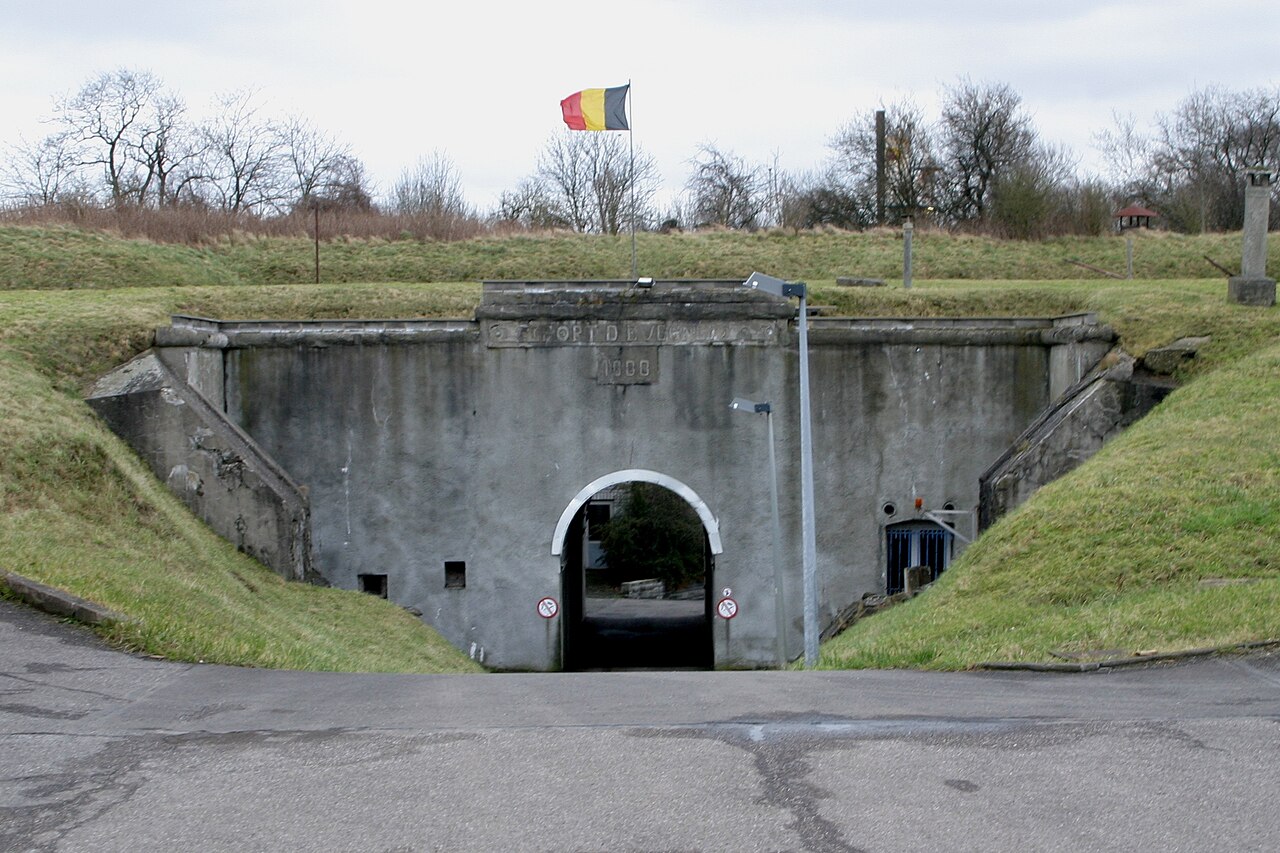
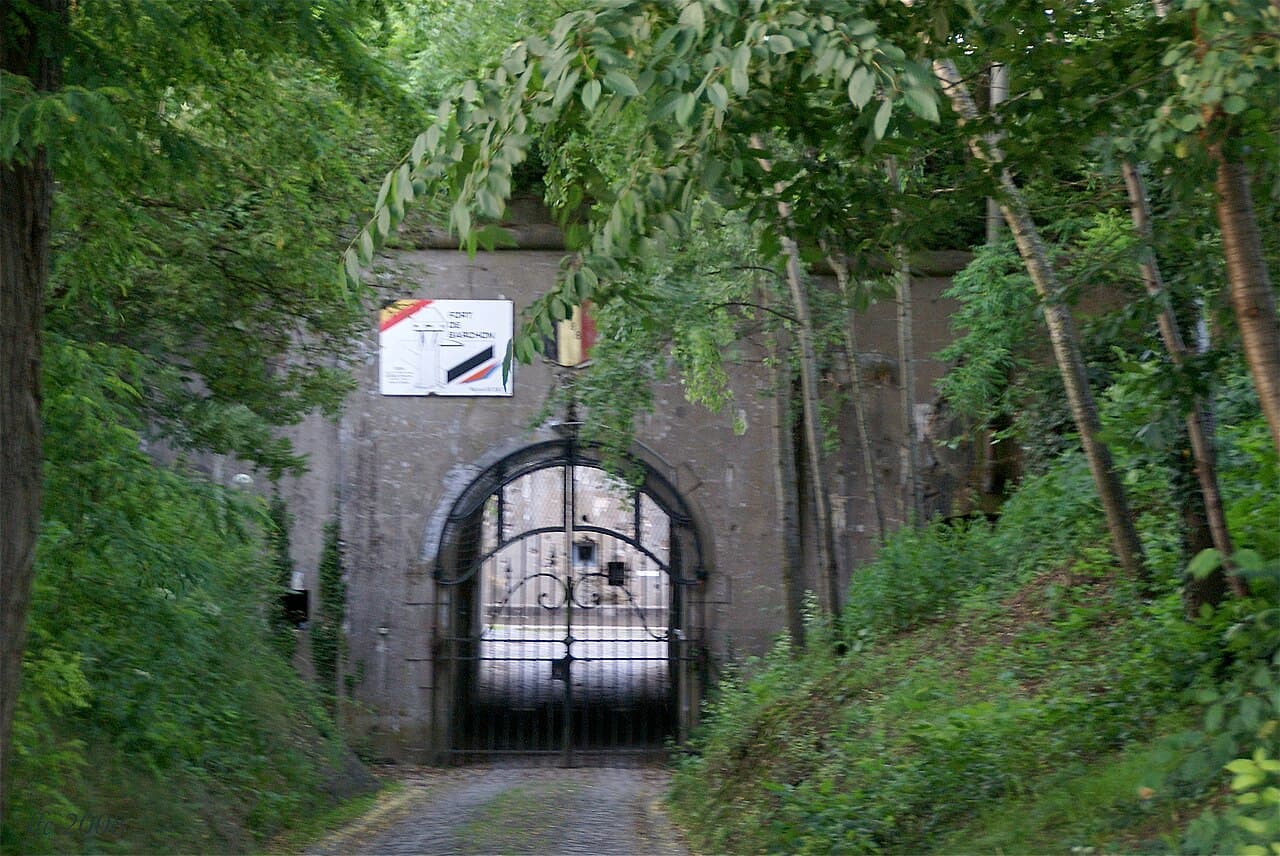
The Fort de Barchon is a significant bastioned fortress located near the city of Liège in Belgium. Constructed between 1881 and 1884, it was one of twelve forts forming the Fortified Position of Liège, a cornerstone of Belgium's National Redoubt. Designed by General Henri Alexis Brialmont, a prominent military engineer, the fort represents a pioneering use of unreinforced concrete in fortification construction, distinguishing it from contemporary French forts by Raymond Adolphe Séré de Rivières which primarily employed masonry.
Architectural design and construction
The fort's design embodies the principles of late 19th-century military architecture, emphasizing defensive resilience and artillery resistance. The use of unreinforced concrete was innovative at the time, allowing the fort to better absorb the impact of heavy shelling compared to traditional stone and brick. The structure includes bastions, casemates, and armored gun turrets strategically positioned to provide overlapping fields of fire. The layout features a central doughnut-shaped barracks surrounded by a deep moat and protected by caponiers for flanking fire. The fort's walls and turrets were designed to withstand bombardment from the powerful artillery of the era.
Historical military significance
Role in the Battle of Liège (1914)
During the First World War, Fort de Barchon played a crucial role in the Battle of Liège. It was subjected to intense bombardment by German heavy artillery, including the famous Big Bertha siege guns. Despite the fort's robust construction, the sustained artillery assault inflicted significant damage, demonstrating both the strengths and limitations of concrete fortifications against modern siege weaponry. The fort's defenders resisted for several days, contributing to delaying the German advance into Belgium.
Interwar upgrades and World War II action
In the 1930s, anticipating renewed threats from Germany, the fort underwent significant upgrades. These improvements included modernization of the armaments, reinforcement of defensive positions, and installation of updated observation and communication equipment. Despite these efforts, during the Battle of Belgium in 1940, the fort was again attacked and ultimately captured by German forces. Its capture marked a critical point in the German invasion of Belgium.
Preservation and public access
Today, Fort de Barchon is preserved as a museum and historical site. It offers visitors a detailed insight into late 19th and early 20th-century fortification design and military history. The museum displays include original artillery pieces, fortification plans, and exhibits on the fort's role in both world wars. Visitors can explore the fort's underground galleries, barracks, and defensive structures, gaining a tangible understanding of the challenges faced by its garrison.
Visitor information
The site is open to the public with guided tours available, providing educational context and historical narratives. It serves as a valuable resource for those interested in military history, engineering, and Belgian heritage. The fort's location near Liège makes it accessible for day trips and educational visits.
Frequently asked questions (FAQ)
- When was Fort de Barchon constructed and by whom?
- Fort de Barchon was constructed between 1881 and 1884 based on the designs of General Henri Alexis Brialmont, a leading Belgian military engineer.
- What materials were used in the construction of Fort de Barchon?
- Unlike many contemporary forts, Fort de Barchon was built using unreinforced concrete, a novel material at the time, rather than traditional masonry.
- What role did Fort de Barchon play in World War I?
- The fort was heavily bombarded during the Battle of Liège in 1914, resisting German artillery attacks and delaying their advance into Belgium.
- How was Fort de Barchon updated before World War II?
- In the 1930s, the fort underwent modernization including improved armaments and reinforced defenses to prepare for potential German aggression.
- Is Fort de Barchon open to visitors today?
- Yes, the fort is preserved as a museum and is open to the public, offering guided tours and exhibits on its military history.
Photo gallery

Information
Loading map...
Visitor reviews
No reviews yet. Been here? Write the first review and help other travelers!
Write the first reviewVisited this castle? Share your experience
Your review helps other travelers and adds first-hand knowledge to our encyclopedia.