Fort Charlotte
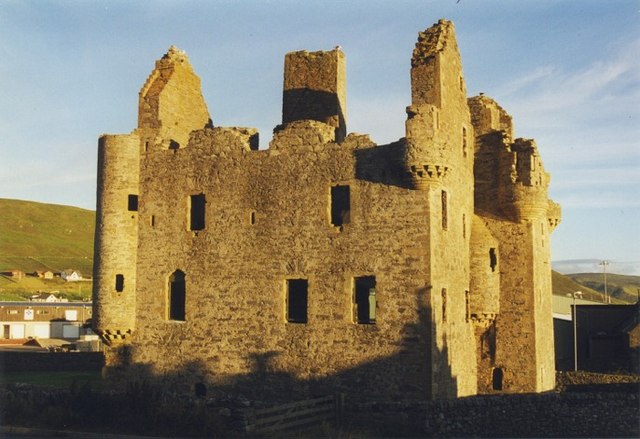
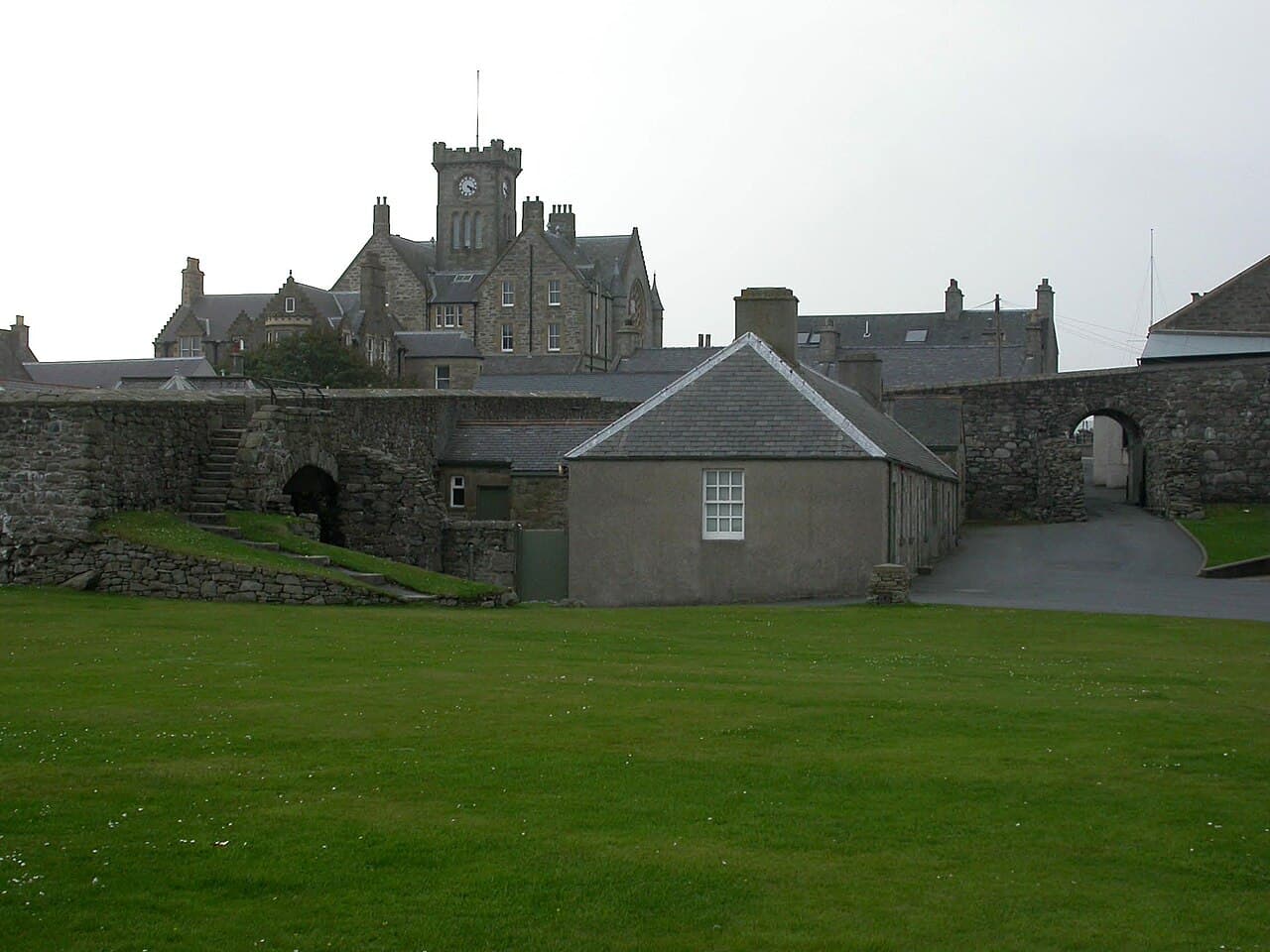
Fort Charlotte stands prominently in the centre of Lerwick, Shetland, as a notable example of a bastioned artillery fort constructed primarily for coastal defense. Its roughly five-sided layout features bastions on three landward corners and half-bastions on the seaward corners, designed to provide overlapping fields of fire and withstand naval attacks.
Early construction and strategic importance
The original fortification on this site was built between 1652 and 1653 during the First Anglo-Dutch War. Unfortunately, detailed records and physical remains of this initial structure have not survived, leaving its exact form and defensive capabilities largely unknown. The fort's location in Lerwick was strategically significant, controlling access to the Shetland Islands and serving as a deterrent against naval incursions.
Rebuilding under charles ii and military engagements
In 1665, at the outset of the Second Anglo-Dutch War, the fort was rebuilt on the same site under the direction of Robert Mylne, a prominent architect and engineer of the era. This reconstruction was commissioned by King Charles II and cost approximately £28,000, a substantial sum reflecting its military importance. Despite being unfinished and lightly armed, the fort successfully deterred a Dutch fleet in 1667, which overestimated its defensive strength. This incident highlights the fort's psychological as well as physical role in regional defense.
Damage, abandonment, and later reconstruction
Following the war, the government decided not to maintain a garrison at Lerwick, leading to the fort being deliberately slighted to prevent its use by enemies. During the Third Anglo-Dutch War in 1673, the fort was burnt by Dutch forces while unmanned. The current form of Fort Charlotte dates from a significant rebuilding in 1781, when it was named after the wife of King George III. This reconstruction enhanced the fort's defensive capabilities, although it never saw active combat thereafter.
Later uses and adaptations
Throughout the Napoleonic Wars, Fort Charlotte housed a garrison, serving as a key military installation in the Shetland Islands. In subsequent years, it was adapted for various civic and military functions, including use as a Royal Naval Reserve base. From 1837 to 1875, the fort was repurposed as the town jail and courthouse, reflecting its robust construction and central location. Later, it served as a custom house and a coastguard station, demonstrating its continued importance in local administration and maritime safety.
Architectural features and current condition
The fort's design reflects Renaissance military architecture principles, characterized by its bastioned layout intended to maximize defensive firepower and minimize blind spots. The walls, originally designed to mount artillery, are thick and angled to deflect cannonballs. However, due to extensive land reclamation and modern development, including docks and buildings constructed in front of the fort, its commanding view over the shoreline has been diminished. The overall shape of the fort is now best appreciated from aerial views, as nearby structures obscure much of its outline at ground level.
Management and public access
Today, Fort Charlotte is managed by Historic Scotland and serves as the base for Shetland's Territorial Army. The fort is not freely open to the public; visitors must arrange access in advance by contacting the management to obtain keys. This controlled access helps preserve the site while allowing interested visitors to explore its historical significance and architectural features.
Historical significance and legacy
Fort Charlotte exemplifies the evolution of coastal fortifications in the British Isles, particularly in remote northern locations like the Shetland Islands. Its history spans multiple conflicts, including the Anglo-Dutch Wars and the Napoleonic Wars, reflecting shifting military strategies and technologies over more than a century. The fort's varied uses—from military stronghold to civic institution—illustrate the adaptability of such structures in response to changing political and social needs.
Despite never engaging in combat since its late 18th-century reconstruction, Fort Charlotte remains a valuable cultural and historical landmark. Its preservation offers insights into 17th and 18th-century military engineering, the geopolitical importance of the Shetland Islands, and the broader narrative of British coastal defense.
Frequently asked questions (FAQ)
- How do I get to Fort Charlotte?
- Fort Charlotte is located in Lerwick, the capital of Shetland, United Kingdom. You can reach the castle by car, public transport, or by walking from the town center, which is just a short distance away. There are also local taxi services available for convenience.
- What is the historical significance of Fort Charlotte?
- Fort Charlotte was built in the 18th century to protect the town of Lerwick from foreign invasion and piracy. It played a crucial role in the defense of Shetland during the Jacobite uprisings and has since become a symbol of the region's rich maritime history.
- When was Fort Charlotte constructed?
- Construction of Fort Charlotte began in 1665 and was completed in 1690. The fort was named after Queen Charlotte, wife of King George III, and showcases military architecture from the period. Its strategic location offers stunning views of the harbor and surrounding landscape.
- Can I visit Fort Charlotte year-round?
- Yes, Fort Charlotte is open to visitors throughout the year, although opening hours may vary seasonally. It is advisable to check the official website or local tourism information for the latest details on accessibility and any potential seasonal events.
- Why is Fort Charlotte a popular attraction?
- Fort Charlotte attracts visitors due to its fascinating history, impressive architecture, and picturesque views of Lerwick and the harbor. It also provides a unique insight into Shetland's past and is a great spot for photography and exploration.
- Is it possible to access Fort Charlotte with limited mobility?
- While Fort Charlotte is an historical site, some areas may pose challenges for visitors with limited mobility. However, efforts have been made to enhance accessibility, and it is recommended to contact the site in advance for specific arrangements or assistance.
- What are the ticket prices for visiting Fort Charlotte?
- Entry to Fort Charlotte is usually free; however, there may be guided tours or special events that require a ticket. It is best to check the official website for any updates regarding pricing and special offerings during your visit.
- What are the opening hours for Fort Charlotte?
- Fort Charlotte typically opens from 10 AM to 5 PM, but these hours can vary depending on the season and weather conditions. It's advisable to verify the current opening hours before your visit to ensure you have ample time to explore.
- What nearby attractions can I visit when at Fort Charlotte?
- When visiting Fort Charlotte, you can also explore the Shetland Museum and Archives, which is just a short walk away. Other nearby attractions include the picturesque Lerwick waterfront and various local shops and cafes that showcase Shetland's culture and heritage.
Photo gallery

Information
Current owner
Historic Scotland
Loading map...
Visitor reviews
No reviews yet. Been here? Write the first review and help other travelers!
Write the first reviewVisited this castle? Share your experience
Your review helps other travelers and adds first-hand knowledge to our encyclopedia.