Fort Abercrombie
Fort Abercrombie stands as a significant military site in the history of the United States, located in what is now North Dakota. Established by an Act of Congress on March 3, 1857, this fort marked the first permanent military installation in the region, earning it the nickname "The Gateway to the Dakotas." The fort's establishment was part of a strategic effort to secure and control the northern frontier during a period of westward expansion and increasing tensions with Native American tribes.
Founding and location
The original authorization for Fort Abercrombie allocated twenty-five square miles of land along the Red River of the North in Dakota Territory. The specific site was chosen by Lieutenant Colonel John J. Abercrombie in 1858, who selected a location directly on the riverbank. This initial positioning was strategic for transportation and supply lines but proved problematic due to frequent spring flooding, which compromised the fort's operations and led to its temporary abandonment.
Reestablishment and construction
In 1860, the U.S. Army returned to the area and relocated Fort Abercrombie to higher ground to avoid the flooding issues that plagued the original site. This move allowed for more stable construction and better defense capabilities. The fort was designed as a bastioned fortress, a style characterized by angular bastions projecting from the curtain walls, which allowed defenders to cover adjacent walls with gunfire and minimized blind spots. This design was common in the 19th century for military installations requiring robust defense against both conventional and irregular threats.
Architectural features and military significance
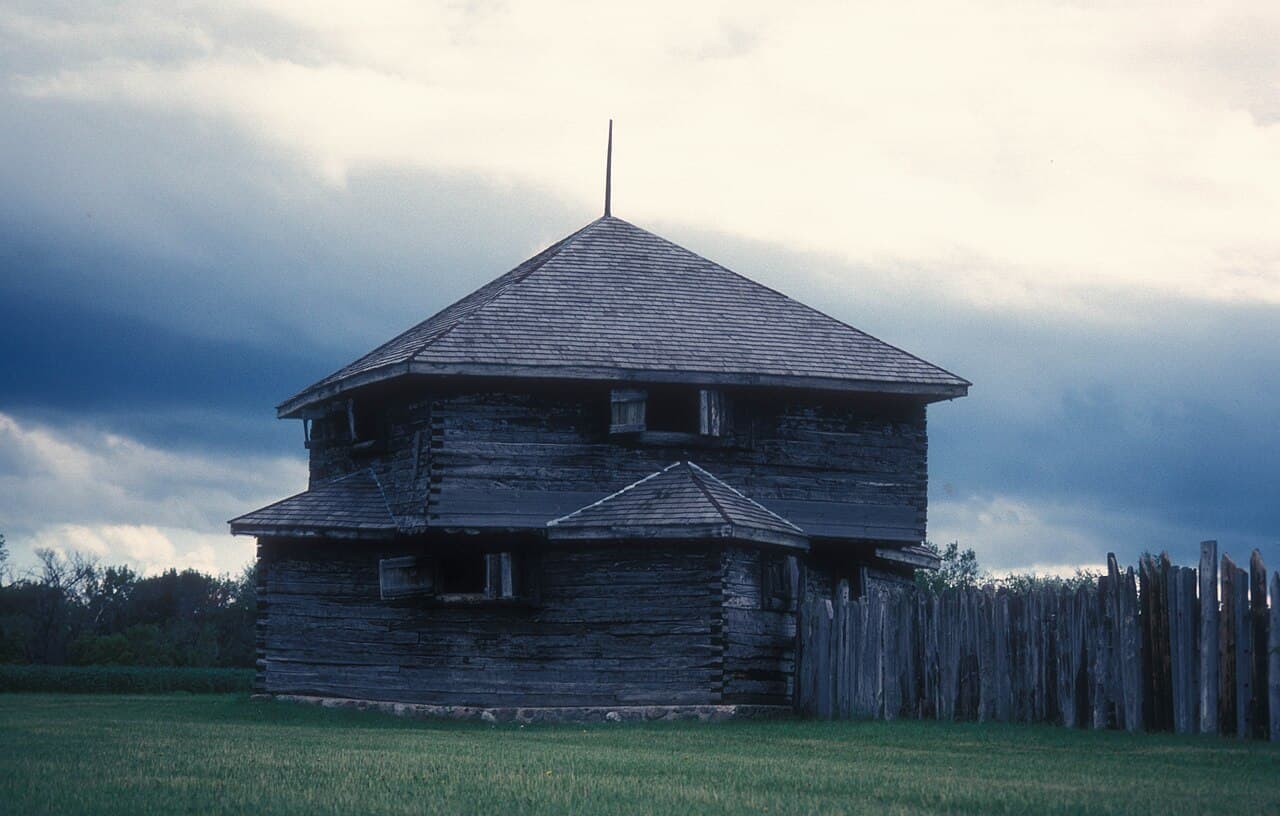
The fort's layout included earthworks reinforced with timber and stone, providing protection against artillery fire. The bastions were positioned to command the surrounding terrain, especially the river approaches. Inside the fort, there were barracks, officers' quarters, storage facilities, and defensive structures such as parapets and gun emplacements. The design reflected contemporary military engineering principles aimed at maximizing defensive strength while supporting the logistical needs of a remote outpost.
Defense and strategic role
Fort Abercrombie played a crucial role during the American Indian Wars, serving as a base for troops involved in campaigns against the Sioux and other tribes resisting U.S. expansion. Its position on the Red River also made it an important point for controlling river traffic and protecting settlers in the Dakota Territory. The fort's defenses were tested during the Sioux Uprising of 1862, when it withstood attacks and provided refuge for settlers and soldiers alike.
Later history and preservation
After its active military use diminished, Fort Abercrombie transitioned to a historical site. Today, it is preserved as a partially restored bastioned fortress and serves as a public park and museum. Visitors can explore the reconstructed earthworks, barracks, and other fortifications that illustrate mid-19th-century military architecture and frontier defense. The site provides valuable insights into the challenges of military life on the northern frontier and the broader history of U.S. westward expansion.
Cultural and educational importance
The fort is recognized for its cultural significance as a symbol of early military presence in the northern plains and as a testament to the complex interactions between the U.S. government, settlers, and Native American tribes during a turbulent period. Educational programs and interpretive displays at the site help visitors understand the historical context of the fort and its role in shaping the region's development.
Visiting fort abercrombie
Fort Abercrombie is open to the public seasonally, with facilities including a visitor center, walking trails, and interpretive signage. The site offers a unique opportunity to experience a well-preserved example of a bastioned fortress from the 19th century, set in the scenic landscape of North Dakota. Visitors interested in military history, architecture, and frontier life will find the fort an informative and engaging destination.
Frequently asked questions (FAQ)
- How do I get to Fort Abercrombie?
- Fort Abercrombie is located in North Dakota, easily accessible by car via the Interstate system. The nearest major city is Fargo, which is approximately 2 hours away. There are also signs along the highways to guide you to the fort.
- What is the historical significance of Fort Abercrombie?
- Fort Abercrombie was established in 1857 and served as a military outpost during the Indian Wars. It played a crucial role in the westward expansion of the United States and was pivotal in protecting settlers and trade routes. Today, it stands as a historical site reflecting the challenges and experiences of that era.
- When was Fort Abercrombie built?
- Fort Abercrombie was constructed in 1857 and was active until 1877. Its establishment marked a strategic point for military operations in the region. The fort has since been preserved as a historical site for visitors to explore.
- Can I tour Fort Abercrombie?
- Yes, visitors can tour Fort Abercrombie to learn about its history and architecture. Guided tours are usually available during the peak season, providing insights into the fort's significance and the lives of soldiers stationed there. Self-guided tours are also an option for those who prefer to explore at their own pace.
- Why is Fort Abercrombie an important architectural site?
- Fort Abercrombie features original military structures that showcase 19th-century military architecture. The design reflects the fort's purpose and the conditions of the time, providing visitors with a glimpse into the past. Its preservation allows for educational opportunities regarding historical building techniques and military life.
- Is it possible to visit Fort Abercrombie year-round?
- Fort Abercrombie is generally open to visitors seasonally, with the best time to visit being from late spring to early fall. During winter months, access may be limited due to weather conditions. It's advisable to check the official website for specific opening hours and seasonal events.
- What are the ticket prices for Fort Abercrombie?
- Admission to Fort Abercrombie is typically very affordable, with discounts often available for children, seniors, and military personnel. Some special events may have additional fees. It’s best to check the official site for the most current pricing and any available promotions.
- What are some nearby attractions to Fort Abercrombie?
- Nearby attractions include the scenic Sheyenne River Valley and several outdoor recreational areas perfect for hiking and wildlife viewing. The city of Wahpeton is also close by, offering additional cultural and historical experiences. Visitors can enjoy a full day of exploration in this beautiful region.
- What are the opening hours for Fort Abercrombie?
- Fort Abercrombie typically operates from late spring through early fall, with specific hours that can vary. Generally, the fort opens around 9 AM and closes around 5 PM. It’s recommended to verify the exact hours prior to your visit to ensure a smooth experience.
Photo gallery

Information
Loading map...
Visitor reviews
No reviews yet. Been here? Write the first review and help other travelers!
Write the first reviewVisited this castle? Share your experience
Your review helps other travelers and adds first-hand knowledge to our encyclopedia.