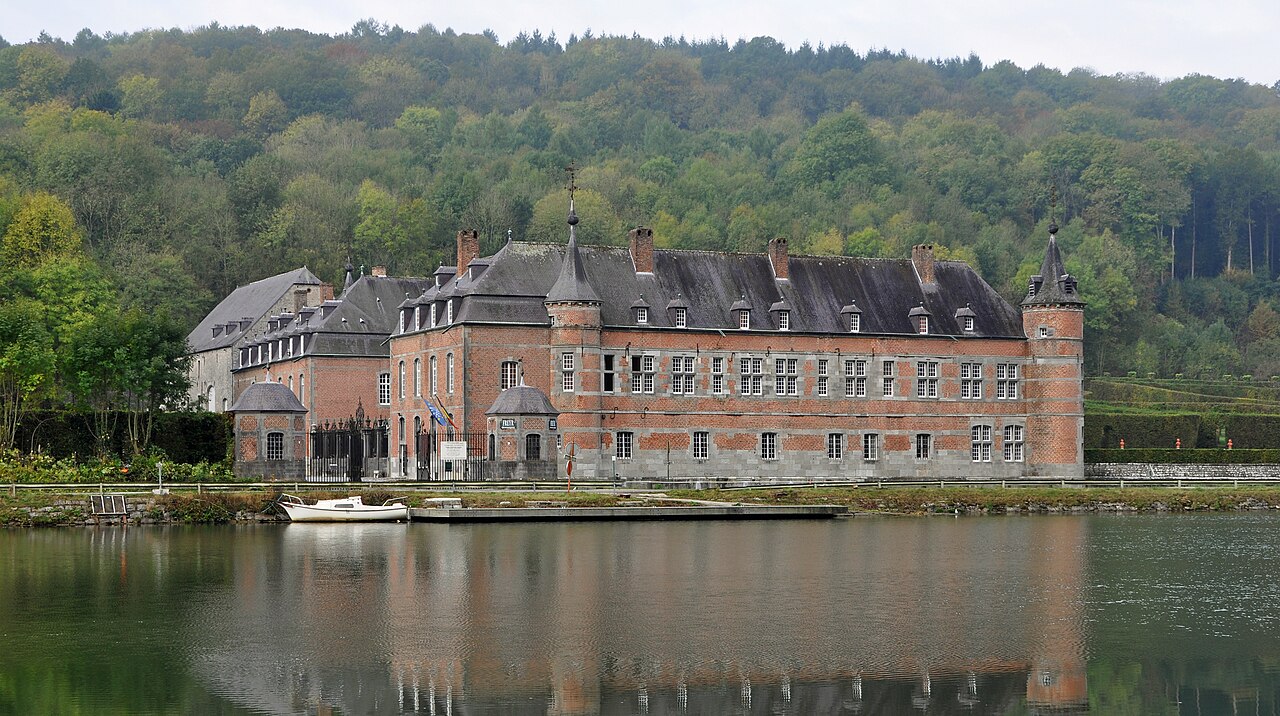
Fontaine Castle
Fontaine Castle, also known as Château de Fontaine, is a remarkable historic castle located in the municipality of Onhaye, south of the village of Anthée in the province of Namur, Wallonia, Belgium. This castle stands as a testament to centuries of architectural evolution and regional history, blending medieval origins with later neo-traditional renovations. It occupies a strategic position near the crossroads of important medieval trade routes connecting Namur to Luxembourg and Dinant to Liège.
The medieval origins and strategic significance
The castle was originally constructed in the 13th century during the high medieval period. It served as the seat of the seignory of Fontaine, a lordship that governed the villages of Anthée, Morville, and Miavoye. This territory was part of the County of Namur and the adjacent region of Agimont, which fell under the jurisdiction of the Prince-Bishopric of Liège. The castle's location near major roads provided both defensive advantages and control over trade and travel routes in the region.
Historical records mention that in 1289, the castle was owned by a noblewoman named Lady Yde de Fontaine, indicating the site's longstanding importance in local feudal society. The surviving square tower on the northeast corner is a significant remnant of this medieval fortress, offering insights into the defensive architecture of the time.
Architectural evolution from the 16th to 17th centuries
During the 16th and 17th centuries, Fontaine Castle underwent extensive reconstruction and expansion. The present castle structure incorporates elements of the original medieval fortress, particularly the northeastern square tower, which remains a prominent feature. Around the outer courtyard, buildings were added primarily for agricultural use, reflecting the castle's role not only as a noble residence but also as a center of estate management and farming.
The castle's layout is characterized by a U-shaped plan open to the south, constructed mainly from limestone. Towers are positioned at each corner, enhancing both the defensive capabilities and the aesthetic symmetry of the complex. The two-story main building, likely built in phases throughout the 16th century, exemplifies the transitional architectural styles of the late Renaissance period in the region.
Adjacent to the main castle, a farm complex was established to the east, mirroring the castle's U-shaped design with its open side facing the château, underscoring the integrated nature of noble residence and agricultural enterprise.
19th and early 20th-century ownership and neo-traditional restoration
In 1840, Fontaine Castle changed hands from the family of Jacquier de Rosée to the Count of Ribiano. Subsequently, through marriage, it passed to Baron Gustave de Senzeille via his wife Jeanne, the Count's daughter. After Jeanne's death without heirs, the property was bequeathed to Count Fernand de Beaufort. In 1907, Count Beaufort sold the castle to Viscount Eugène de Jonghe, who initiated a significant restoration project between 1907 and 1909.
This restoration embraced a neo-traditional architectural style, a movement that sought to revive and harmonize traditional forms with modern needs. The restoration involved raising the castle's towers, adding numerous windows, and unifying the exterior's aesthetic to create a cohesive appearance. These changes enhanced both the castle's grandeur and its functionality as a residence.
Current status and adaptive reuse
Today, Fontaine Castle remains private property and has been sensitively adapted to contemporary use. The castle buildings have been converted into several luxury apartments, allowing the historic structure to retain its architectural integrity while serving modern residential purposes. This adaptive reuse ensures the preservation of the castle's cultural heritage and offers a unique living experience within a historic setting.
Architectural features and cultural significance
The castle's most notable architectural feature is its medieval square tower, which anchors the northeast corner and serves as a visible link to its original defensive role. The limestone construction provides durability and a distinctive regional character, common in Wallonian castles. The U-shaped layout and corner towers reflect both practical defense strategies and aesthetic considerations typical of the Renaissance period's noble residences.
Fontaine Castle's history encapsulates the shifting political and social landscapes of the Namur region, from feudal lordship through Renaissance estate management to modern private ownership and restoration. Its location at a crossroads of important medieval routes highlights its historic role in regional control and communication.
As a well-preserved example of a castle that evolved over centuries, Fontaine Castle offers valuable insights into the architectural trends and historical developments of Wallonia. Its blend of medieval remnants and later neo-traditional modifications exemplifies the layered history common to many European castles.
Visiting and accessibility
While Fontaine Castle is private and not generally open to the public, its exterior can be admired from nearby public roads and paths. The surrounding natural landscape and proximity to the village of Anthée make it a point of interest for those exploring the cultural heritage of the Namur province. Visitors interested in castle architecture and Belgian history will find Fontaine Castle an intriguing subject for study and photography.
Frequently asked questions (FAQ)
- How do I get to Fontaine Castle?
- Fontaine Castle is located in Anthée, Belgium, easily accessible by car or public transport. If you're driving, you can find parking nearby. For those using public transport, check local bus and train schedules for the best routes.
- What is the historical significance of Fontaine Castle?
- Fontaine Castle dates back to the 18th century and is renowned for its beautiful architecture and rich history. It has served various purposes over the years, including as a residence and a venue for significant events. Its historical importance makes it a fascinating site for visitors interested in Belgium's past.
- When was Fontaine Castle built?
- The construction of Fontaine Castle began in the early 1700s and was completed in 1730. It reflects the architectural styles of that era and has been well-preserved, allowing visitors to appreciate its historical context. The castle's long history adds to its charm and allure.
- Can I take a guided tour of Fontaine Castle?
- Yes, guided tours of Fontaine Castle are available for visitors. These tours provide in-depth information about the castle's history, architecture, and the stories of its previous inhabitants. Reservations are recommended, especially during peak tourist seasons.
- Why is Fontaine Castle a popular tourist destination?
- Fontaine Castle attracts visitors for its stunning architecture, lush gardens, and rich history. Additionally, its picturesque location in the Belgian countryside offers a serene escape from urban life. The combination of cultural significance and natural beauty makes it a must-visit site.
- Is it possible to host events at Fontaine Castle?
- Yes, Fontaine Castle can be rented for various events, including weddings, corporate gatherings, and private celebrations. The castle's enchanting atmosphere and beautiful surroundings provide a unique setting for any occasion. It's advisable to contact the management well in advance to discuss availability and arrangements.
- What are the opening hours for Fontaine Castle?
- Fontaine Castle is typically open to the public from April to October, with varied hours depending on the day of the week. During peak season, the castle often opens earlier and closes later to accommodate visitors. Always check the official website for the most current opening hours before your visit.
- What are the ticket prices for visiting Fontaine Castle?
- Ticket prices for Fontaine Castle vary depending on age and whether you choose a guided tour. Generally, adult tickets are priced around €10, while discounts are available for students and children. It's always a good idea to check for any special promotions or family passes on the official website.
- What is the best time to visit Fontaine Castle?
- The best time to visit Fontaine Castle is during the spring and early autumn when the gardens are in full bloom and the weather is pleasant. This period allows visitors to enjoy both the interior of the castle and its beautiful outdoor spaces. Additionally, weekdays tend to be less crowded than weekends.
- Are there any nearby attractions to visit along with Fontaine Castle?
- Yes, several attractions are located near Fontaine Castle, including scenic walking trails and local eateries. The surrounding area features charming villages and historical sites worth exploring. Consider spending a day in Anthée to fully experience the region's culture and beauty.
Information
Loading map...
Visitor reviews
No reviews yet. Been here? Write the first review and help other travelers!
Write the first reviewVisited this castle? Share your experience
Your review helps other travelers and adds first-hand knowledge to our encyclopedia.