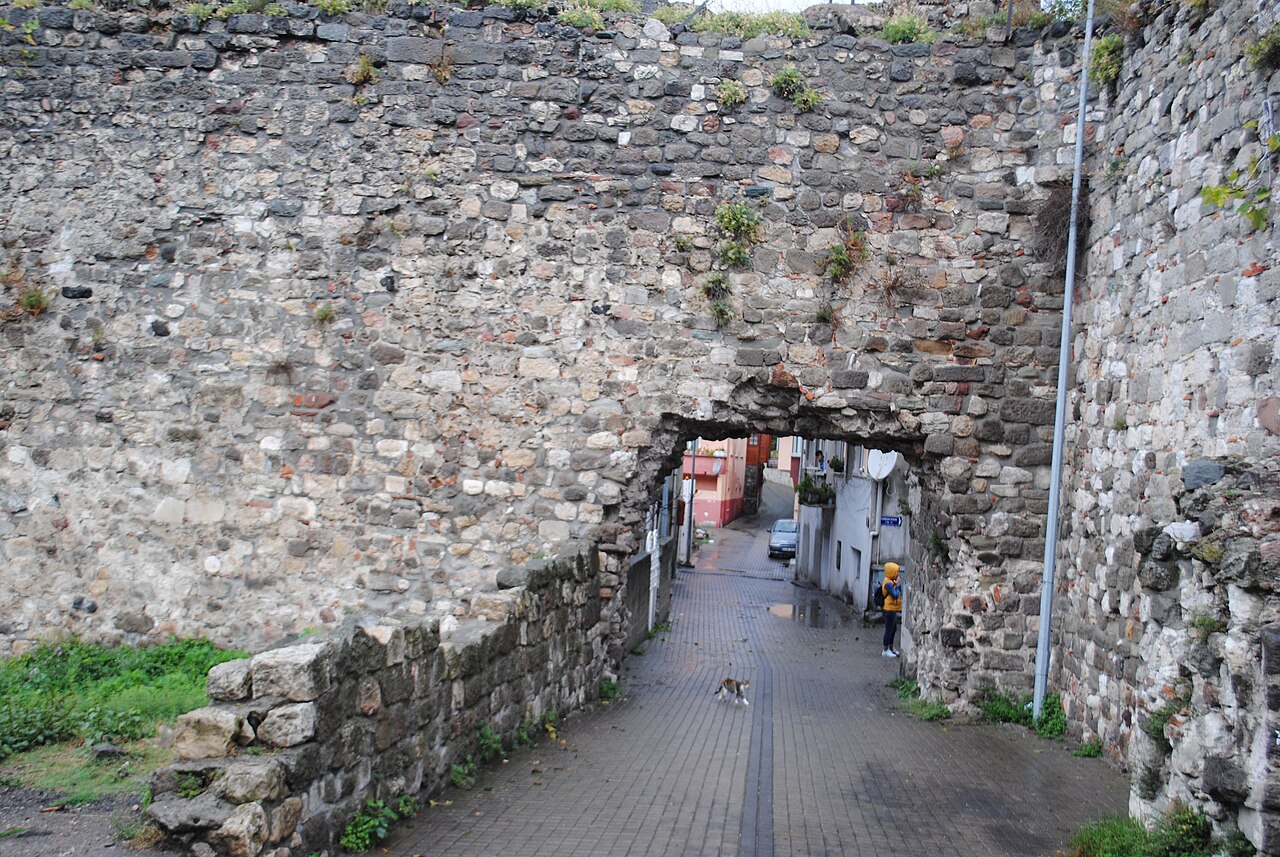
Filyos Castle

Filyos Castle: ancient acropolis and medieval fortress on the Black Sea coast
Filyos, Turkey
Early Medieval (5th–10th c.)
Ruins

Filyos Castle, locally known as Filyos Kalesi, is a historic fortress located on the Black Sea coast in the town of Filyos, within the province of Zonguldak, Turkey. This castle stands on a promontory that juts into the Black Sea, commanding a strategic view over the surrounding landscape and the ancient harbor beneath. Its origins trace back to the ancient city of Tium (also called Tios), which was founded as a colony by the Greek city of Miletus in the 7th century BC. The castle’s site originally functioned as the acropolis—the fortified high point—of this ancient city.

The ancient city of Tium and its acropolis

The city of Tium flourished during the Classical Greek period and continued to prosper through the Roman and Byzantine eras. The acropolis, initially a fortified citadel typical of Greek urban planning, evolved over centuries into a medieval castle. Archaeological remains around the castle site include a ruined amphitheater and a Roman basilica, both of which lie in a bowl-shaped valley just south of the castle. These ruins attest to the city's importance as a cultural and administrative center in antiquity.

Roman harbor and coastal defenses

Beneath the castle, there are also the remains of a partly submerged Roman harbor, highlighting the city’s significance as a maritime hub on the Black Sea. The harbor would have been essential for trade and military purposes, protected by the castle and its fortifications on the promontory above. The castle itself was constructed over several terraces carved into the hillside, although today only the middle terrace is accessible to visitors.

Medieval transformations and historical context

During the Byzantine period, the castle and the town continued to play a role as a fortified harbor settlement. Historical records mention the town in 1269, noting that it had escaped attacks by the Seljuk Turks. However, the exact date when Byzantine control ended is uncertain. By 1403, the famous Castilian traveler and ambassador Ruy González de Clavijo documented the town as inhabited by the Seljuks, though the castle itself was no longer garrisoned.

Architectural features and layout

The castle’s layout reflects its adaptation from an ancient acropolis to a medieval fortress. Its position on a promontory provided natural defensive advantages, with steep slopes protecting it on most sides. The terraced construction allowed for multiple defensive layers, although much of the original fortifications have not survived intact. Visitors today can explore the middle terrace, which offers views of the Black Sea and the surrounding archaeological remains.

Visiting Filyos Castle and surrounding heritage

Today, Filyos Castle is accessible to the public free of charge during opening hours. While the castle itself is modest in terms of surviving structures, its significance lies in its connection to the ancient city and the coastal landscape. The nearby ruins of the amphitheater, basilica, and Roman harbor enrich the visitor experience, providing a tangible link to the region’s layered history.

The castle’s location on the Black Sea coast offers scenic views and a sense of the strategic importance this site held over millennia. The combination of natural beauty and archaeological interest makes Filyos Castle a worthwhile destination for those interested in ancient Greek colonies, Byzantine history, and medieval fortifications.

Historical significance and cultural heritage

Filyos Castle serves as a physical reminder of the region’s long history of settlement, trade, and military activity. Its evolution from a Greek acropolis to a Byzantine and later medieval fortress illustrates the continuity and change in defensive architecture over time. The castle and its associated ruins contribute to the understanding of coastal fortifications in the Black Sea region and the interactions between Greek, Roman, Byzantine, and Seljuk cultures.

Preservation efforts have focused on maintaining the site’s accessibility and protecting the archaeological remains. Although much of the castle is in ruins, the site remains an important cultural landmark within Zonguldak Province, attracting historians, archaeologists, and tourists alike.

Frequently asked questions (FAQ)

How do I get to Filyos Castle?
Filyos Castle is located in Filyos, Turkey, and can be reached by car or public transportation from nearby cities like Zonguldak. The castle is situated near the coast, making it a scenic drive along the Black Sea. Local taxis and bus services also provide convenient access for visitors.
What is the historical significance of Filyos Castle?
Filyos Castle, originally built by the Genoese in the 14th century, played a crucial role in the region's trade and defense strategies. Its strategic location allowed it to control maritime routes, enhancing its importance throughout history. The castle reflects the architectural styles of its time and is a testament to the rich history of the area.
When was Filyos Castle built?
Filyos Castle was constructed in the 14th century, primarily by the Genoese as a fortress to protect their trade interests. Over the centuries, it has undergone various modifications and restorations, reflecting the changing architectural styles and needs of the time. Today, it stands as a historical monument showcasing its medieval origins.
Can I visit Filyos Castle year-round?
Yes, Filyos Castle is open to visitors throughout the year. However, the best time to visit is during the spring and fall when the weather is mild and pleasant for exploring. Be sure to check local conditions before planning your visit, as some areas may be less accessible in winter.
Why is Filyos Castle a popular tourist attraction?
Filyos Castle attracts visitors due to its stunning views of the Black Sea and its rich history. The architectural beauty combined with the surrounding natural landscape makes it a favorite spot for photography and exploration. Additionally, its historical significance adds an educational aspect for those interested in the region's past.
Is it possible to explore the interior of Filyos Castle?
Yes, visitors can explore the interior of Filyos Castle, although some areas may be restricted for safety reasons. Guided tours are often available, providing insights into the castle’s history and architecture. Be prepared for some climbing, as the castle's layout includes steep paths and steps.
What are the opening hours for Filyos Castle?
Filyos Castle typically opens to visitors from 9 AM to 6 PM, but hours may vary seasonally. It’s advisable to check the official tourism website or local information for the most current hours before your visit. Arriving early in the day can enhance your experience by avoiding crowds.
Are there any nearby attractions to visit?
Yes, there are several nearby attractions, including beautiful beaches, ancient ruins, and picturesque villages. The region is known for its natural beauty, making it a great place for hiking, swimming, and exploring local culture. Consider visiting the nearby town of Zonguldak for additional historical sites and dining options.
What are the ticket prices for Filyos Castle?
The entrance fee for Filyos Castle is generally affordable, making it accessible for most visitors. Discounts may be available for students, seniors, and groups. It's best to check for any special offers or changes in pricing before your visit to ensure an enjoyable experience.

Information

Hill Castle

Address

Filyos Kalesi Yolu, Turkey

Loading map...

Visitor reviews

No reviews yet. Been here? Write the first review and help other travelers!

Write the first review

Visited this castle? Share your experience

Your review helps other travelers and adds first-hand knowledge to our encyclopedia.

Write a review

(5/5)

0/2000 characters

Your review will be visible after admin approval

Nearby castles

14.2 km

Güzelcehisar Castle

Güzelcehisar, Turkey

Güzelcehisar Castle, locally known as Güzelcehisar Kalesi, is a historic fortress located west of the small hamlet sharing its name, in the province of Bartın, Turkey. This castle occupies a strategic position on a narrow rocky peninsula that juts into the Black Sea, guarding a bay to its south and offering commanding views of the sea to the north. Its location reflects the importance of coastal defenses in the medieval period, particularly for controlling maritime routes and protecting trading interests along the Black Sea coast. Historical background and origins The earliest fortifications on this site are believed to have been a watchtower, constructed to monitor the surrounding waters and warn of approaching ships or invaders. While the exact date of the initial construction remains uncertain, some sources speculate that an ancient watchtower existed here before the medieval period, possibly dating back to Byzantine times or earlier. However, the surviving remains of the castle primarily reflect a later phase of construction. The present remains of Güzelcehisar Castle are attributed to the Genoese, who established a significant presence along the Black Sea coast from the mid-13th century onwards. After the Byzantine Empire granted the Genoese trading privileges around 1261, the Genoese built or enhanced fortifications to secure their commercial interests. This situates the castle's construction or major rebuilding between approximately 1261 and 1460, the latter date marking the Ottoman conquest of the region. Architectural features and layout The castle was built on a rocky promontory, a natural defensive advantage that limited access and provided excellent visibility. The fortress was designed to control both land and sea approaches. Although much of the structure has fallen into ruin, key elements remain, including the eastern bastion, which likely housed the main gate, and portions of the defensive walls on the western side. The eastern bastion's position suggests it was an important defensive and access point, possibly featuring battlements and arrow slits to repel attackers. The walls, constructed from local stone, would have enclosed a courtyard and interior buildings, though none survive above ground today. Over time, vegetation has overtaken the interior, obscuring the castle's original layout and any internal structures. Decline and current condition Following the Ottoman conquest around 1460, the castle likely lost its strategic importance as the Ottomans consolidated control over the Black Sea coast. It probably fell into disuse and gradual decay during the Ottoman period. Historical records indicate that the ruins remained substantial until the early 20th century, but subsequent neglect and natural erosion have reduced the visible remains. Today, only fragments of the castle survive, primarily the eastern bastion and some western walls. The site is heavily overgrown, and no intact buildings remain. The interior is inaccessible due to dense vegetation and safety concerns, especially given the proximity of a steep cliff dropping into the sea nearby. Visiting Güzelcehisar Castle The castle is freely accessible to visitors willing to undertake a moderate walk. Reaching the site requires a roughly 20-minute trek along a path through fields and bushes, which may be uneven and overgrown in places. Visitors should exercise caution near the cliff edge, as the terrain is steep and potentially hazardous. Despite its ruined state, Güzelcehisar Castle offers a glimpse into the medieval coastal defenses of the Black Sea region and stands as a testament to the Genoese presence in northern Anatolia. Its commanding location provides scenic views of the sea and surrounding landscape, making it a site of interest for history enthusiasts and hikers alike.

Late Medieval (14th–15th c.)
Details
35.5 km
Amasra Castle — Turkey castle

Amasra Castle

Amasra, Turkey

Amasra Castle, known locally as Amasra Kalesi, is a historic fortress complex located in the coastal town of Amasra, in the province of Bartın, Turkey. This hill castle stands prominently on the Black Sea coast, commanding views over the sea and the surrounding landscape. The castle is notable for its dual structure, comprising two main parts: Zindan Castle and Sormagir Castle, each with distinct historical and architectural significance. The origins of Amasra Castle date back to antiquity, with the town itself mentioned by Homer as Sesamus. The site gained prominence in the 3rd century BC under the rule of Amastris, niece of the Persian King Darius III, who renamed the town after herself. The castle's earliest fortifications likely began during this period, though the existing structures predominantly reflect later Byzantine, Genoese, and Ottoman modifications. Geographical setting and castle layout Amasra Castle is uniquely situated on a narrow rocky peninsula extending east to west, connected to the mainland by a slender isthmus. This peninsula hosts the Zindan Castle, also known as Kaleiçi or Içkale. The isthmus, originally a sandy strip between two bays, is now built over, integrating the castle into the town's fabric. Across a narrow strait, about 20 meters wide, lies Boztepe Island, the site of Sormagir Castle. The two parts are linked by the historic Kemere Bridge, also called the Boztepe Arch. The natural cliffs on the north and west sides of Boztepe Island provided formidable defenses, making walls unnecessary on those sides. Historical development and strategic importance Ancient and Byzantine periods The site of Zindan Castle likely served as the acropolis of the ancient town of Sesamus. During the Early Medieval period, particularly under the Byzantine Empire, the fortress was rebuilt and strengthened to defend against Arab raids. The Byzantines also fortified Boztepe Island, enhancing the castle's defensive capabilities. Medieval conflicts and Genoese control Amasra's strategic location on the Black Sea made it a contested site during the turbulent 13th century. In 1204, it was captured by a Georgian army led by David Komnenos and incorporated into the Empire of Trebizond. Shortly after, it fell briefly to the Seljuks before returning to Byzantine control. In 1263, the Genoese were granted trading rights along the Black Sea coast by the Byzantines, taking control of Amasra Castle. The Genoese undertook extensive rebuilding and fortification efforts throughout the 14th and 15th centuries, adapting the castle to the military technologies and needs of the time. Their work included the construction of robust walls, towers, and bastions, many of which survive today. Ottoman era and later history The castle fell to the Ottoman Empire in 1461 during the reign of Sultan Mehmed II the Conqueror. The Ottomans garrisoned the fortress with a hundred soldiers and stationed two ships to secure the harbor. They also settled Turkmen from the Eflani region in Amasra to consolidate control and integrate the town culturally. Architectural features and preservation Amasra Castle exhibits a complex architectural history with layers from various periods. The walls of the fortress stretch extensively: the eastern walls between the northeast and southeast measure about 65 meters; the southern walls, reinforced by eight bastions, extend approximately 300 meters; and the northern walls, mostly destroyed, once spanned around 200 meters from the Kemere Bridge. The Zindan Castle peninsula features multiple towers, gates, and interior divisions. The Genoese coats of arms are prominently displayed on several walls, alongside sculptural reliefs including figures of Eros, Medusa, an eagle, and an ox head. These decorative elements highlight the Genoese influence and their attention to heraldic and symbolic detail. The natural cliffs on the north and northwest sides of Sormagir Castle provided sufficient defense, so no walls were constructed there. However, much of the eastern, northeast, and western walls have been lost over time, with only a 50-meter section of the western walls near the gate remaining intact. Today, the castle remains are integrated into the town center of Amasra and are accessible to visitors. The site is considered partly restored and well preserved, with ongoing efforts to maintain its historical fabric. The castle is also listed on the UNESCO Tentative List of World Heritage Sites, recognizing its cultural and historical significance. Visiting Amasra Castle Visitors to Amasra Castle can explore the extensive fortification walls, climb towers, and walk across the Kemere Bridge connecting the two castle parts. The castle's location offers panoramic views of the Black Sea and the surrounding town. The nearby Amasra History Museum provides additional context about the region's past, including the castle's role through various empires. While the site is somewhat touristy, it offers a valuable glimpse into the medieval and early modern military architecture of the Black Sea region. Amasra's combination of natural defenses, layered historical construction, and scenic setting make it a notable example of a hill castle that evolved over centuries to meet changing strategic needs.

Early Medieval (5th–10th c.)
Details
91.2 km

Asar Castle

Hisarköy, Turkey

Asar Castle, also known locally as Asar Kalesi or Hisar Kalesi, is a historic fortress located in the village of Hisarköy in the Izmir province of Turkey. This castle is a notable example of a Roman-Byzantine period fortress that later underwent restoration during the rule of the Aydinoglu Principality and subsequently under Ottoman rule. The site presents a rich layering of historical influences that reflect the strategic importance of the region through centuries. Historical background and significance The origins of Asar Castle trace back to the Roman-Byzantine era, as evidenced by archaeological finds such as pottery shards discovered on the castle rock and surrounding fields. These artifacts suggest that the castle was initially constructed as a small fortification to control and protect the local area. The castle's position on a rocky ridge beside a small river underscores its strategic placement for defense and surveillance. During the medieval period, the castle saw significant restorations under the Aydinoglu Principality, a regional power in western Anatolia during the 14th century. Later, the Ottoman Empire also undertook maintenance and modifications to the structure, ensuring its continued military and administrative relevance. This sequence of restorations highlights the castle's enduring importance across different ruling entities. Architectural features and layout Asar Castle has an irregular ground plan that follows the natural contours of the ridge it occupies. The castle is situated adjacent to a small river, which would have provided a natural defensive barrier. The main gate is located on the northwest side, a common strategic choice to control access and monitor approaching threats. The castle's walls, although largely in ruins today, once enclosed a fortified area integrated with the surrounding village structures. The village itself is partly built into and against the castle walls, creating a unique blend of residential and defensive architecture. This integration suggests the castle was not only a military installation but also a center of local community life. Currently, the most visible remains include a wall on the east side of the castle rock, which is believed to have been near the original entrance. The rocky outcrop on which the castle stands features a cave on the north face, which local legend connects to a secret tunnel running beneath the river, providing a hidden escape or access route for villagers during times of danger. Surrounding environment and accessibility The castle is set in a green, rural landscape that enhances its historical ambiance. Visitors approach the site via a short walk from a nearby road west of the castle, passing through fields and a disused marble quarry. While the quarry itself is not a significant attraction, the natural surroundings offer a pleasant setting for exploration. Asar Castle is freely accessible to the public, allowing visitors to explore the ruins and the adjoining village. The site appeals particularly to enthusiasts of Byzantine and Ottoman architecture as well as those interested in the layered history of Anatolian fortifications. Legend and local traditions Local tradition holds that a settlement once existed on a hill east of the castle, across the river. This settlement is said to have been connected to the castle by a secret tunnel running beneath the stream, linking to the cave on the north face of the castle rock. This tunnel would have served as a refuge route, enabling villagers to seek shelter inside the castle during attacks or sieges. Though the tunnel has not been archaeologically verified, such legends reflect the castle's role as a protective stronghold and its significance in local folklore. Preservation status and visitor information Today, Asar Castle is in a state of ruins, with only partial walls and foundations visible. The site has not undergone extensive restoration, preserving its authentic medieval character. Visitors should exercise caution when exploring the rocky terrain and ruins due to uneven surfaces and limited infrastructure. The castle's integration with the village offers a unique opportunity to experience historical architecture within a living community context. Visitors interested in medieval fortifications, Byzantine history, or Ottoman heritage will find Asar Castle an intriguing destination.

Late Medieval (14th–15th c.)
Details